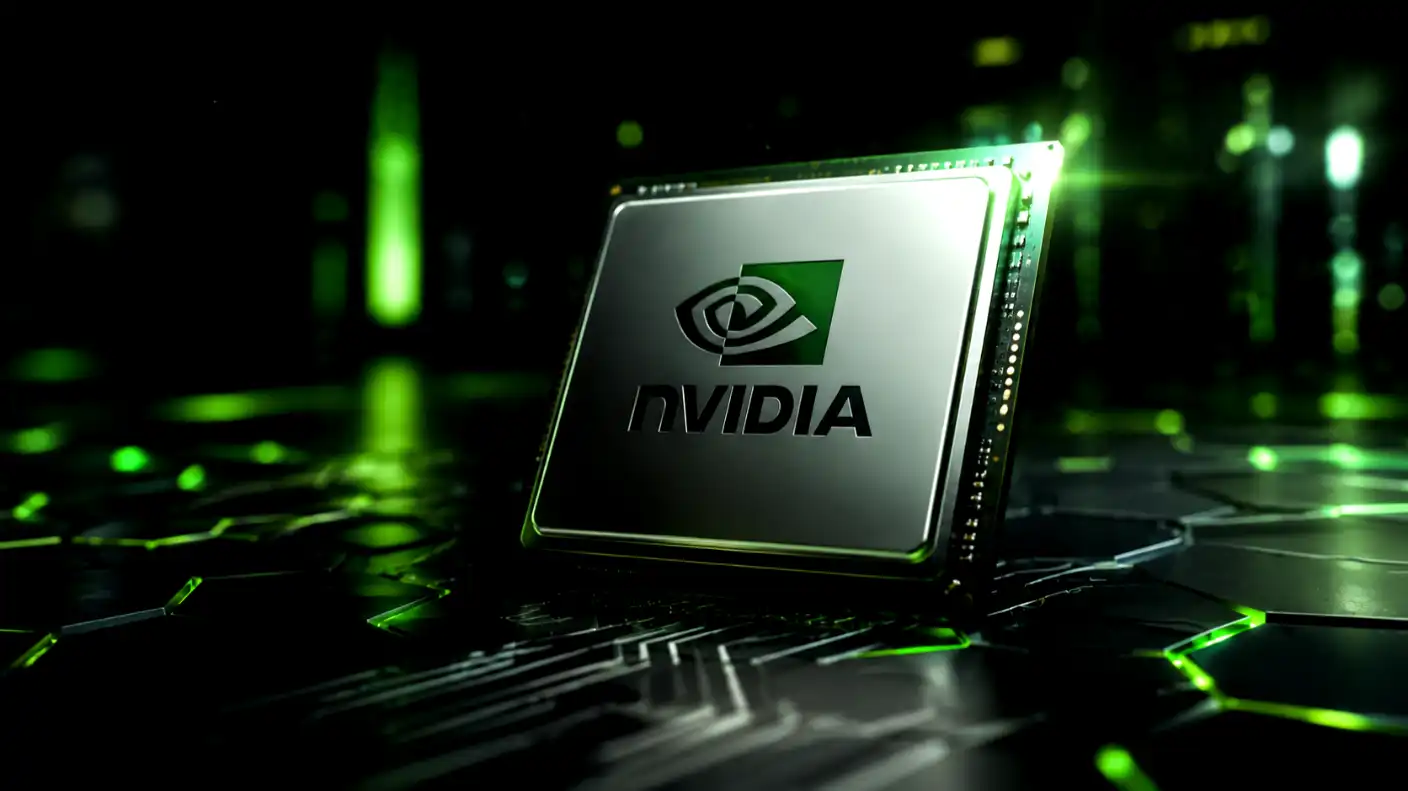
The geopolitical chess match over artificial intelligence dominance is exposing a massive disconnect between high-level diplomatic announcements and the physical reality of the global technology supply chain. In a major testimony before the House Foreign Affairs Committee, a senior U.S. trade official confirmed that despite the administration’s high-profile policy shift to permit limited exports of Nvidia’s advanced artificial intelligence processors to approved Chinese buyers, actual physical deliveries have been practically non-existent.
Jeffrey Kessler, the Under Secretary of Commerce for Industry and Security, testified that only a “trivial” and “very small” quantity of Nvidia’s H200 artificial intelligence chips have actually been shipped to customers in China. This confirmation arrived during a tense congressional hearing where lawmakers demanded that the Bureau of Industry and Security, which oversees U.S. export control programs, implement even tighter restrictions to prevent advanced computing technology from reaching foreign military installations.
The revelation highlights the immense friction that governs the international trade of critical technologies. On paper, a trade truce reached late last year promised a strategic opening, allowing American semiconductor giant Nvidia to monetize some of its most powerful graphics processing units in the world’s largest hardware market. In reality, a combination of strict federal guardrails, deep-reaching national security reviews, and administrative backlogs has strangled the transaction volume to almost zero, proving that the wall surrounding America’s most prized technology remains virtually impenetrable.
The Strategic Shift: Understanding the H200 Export Loophole
The path to these approved but stalled shipments began during a highly watched diplomatic summit in South Korea, where the leaders of the United States and China brokered a tentative trade truce. As part of this temporary agreement, the U.S. pledged to postpone certain restrictive export rules, creating a narrow, highly regulated pathway for American chipmakers to resume limited sales of advanced silicon to approved Chinese commercial buyers.
Following this summit, the administration formally authorized Nvidia to sell its high-performance H200 chips to select Chinese customers. The decision represented a significant, highly controversial easing of the strict semiconductor embargoes that had been in place. The H200, which features superior memory capacity and bandwidth, was the most powerful artificial intelligence accelerator on the commercial market until the company introduced its next-generation Blackwell architecture.
However, the authorization came with strict, unprecedented strings attached. Exporters had to agree to a steep 25% revenue surcharge paid directly to the U.S. Treasury, while buyers had to submit to rigorous, invasive “Know Your Customer” security audits. The Bureau of Industry and Security formalized this shift, officially changing its licensing review process from a strict “presumption of denial” to a case-by-case evaluation.
The Secret Licenses: Alibaba’s Ten-Billion-Dollar Theoretical Backlog
Following the policy shift, the Bureau of Industry and Security reportedly approved export licenses for approximately 10 major Chinese technology firms. Among the approved buyers was e-commerce and cloud giant Alibaba, with the issued licenses theoretically covering hundreds of thousands of H200 units.
Industry analysts estimate that the total value of these approved licenses approached a staggering $10 billion. For Nvidia, this promised a massive, high-margin revenue stream that would help offset the loss of its traditional Chinese market share.
However, these massive orders have remained almost entirely on paper. While the licenses were technically approved, the physical delivery of the chips requires navigating a multi-layered gauntlet of administrative clearances, contract reviews, and physical facility audits, ensuring that the vast majority of the licensed hardware has never actually left the factory floor.
Secretary Howard Lutnick’s Warning: “Nvidia Must Live with the Guardrails”
The slow pace of the shipping approvals is the direct result of a highly conservative regulatory culture in Washington. In a congressional hearing, U.S. Commerce Department Secretary Howard Lutnick delivered a blunt warning to the semiconductor industry, stating flatly that Nvidia and other manufacturers must strictly live with the detailed licensing terms negotiated with the State Department.
The core of the dispute centers on the invasive “Know Your Customer” requirements. The U.S. government demands that Nvidia and its distribution partners physically verify that the final, end-use customers of these advanced processors have absolutely no ties to the Chinese military or state-backed defense laboratories.
Nvidia has reportedly struggled to satisfy these stringent verification parameters on the ground in China, as local buyers are highly reluctant to expose their internal operational networks to American auditors. Rather than risk violating federal law and facing massive corporate penalties, the chipmaker has held back shipments, choosing to prioritize compliance over raw sales volume.
Why the Tech Pipeline Stalled: The Multi-Layered Bottlenecks
The “trivial” volume of H200 shipments highlighted by Under Secretary Kessler is not the result of a single policy failure. It is the consequence of a highly complex, multi-layered bottleneck that has introduced massive operational friction at every stage of the transaction pipeline.
These bottlenecks span both sides of the Pacific, combining American administrative backlogs with Chinese regulatory pushback. As a result, the strategic trade corridor established under the trade truce has slowed to a crawl, proving that even a politically sanctioned loophole can be effectively closed by the sheer weight of bureaucratic oversight.
This massive gap between theoretical approvals and physical deliveries is clear in the numbers. While the total value of approved licenses approached ten billion dollars, covering about ten large Chinese technology firms, the actual physical shipments have remained trivial and near-zero. This stark contrast demonstrates how effectively regulatory hurdles have choked off the intended trade path.
The Intense Bureaucratic Backlog at the BIS
The primary administrative bottleneck resides within the Bureau of Industry and Security itself. Evaluating license applications for advanced semiconductor exports is an incredibly complex task, requiring investigators to trace the ownership structures, capital partners, and customer portfolios of overseas buyers through multiple corporate layers.
The agency has faced a massive backlog of cases, as its limited staff struggles to keep pace with the thousands of requests generated by the global artificial intelligence boom. Because the consequence of accidentally allowing advanced technology to leak to a hostile military is so high, investigators are taking an exceptionally slow, cautious approach to every single transaction. A single licensing review can drag on for several months, completely disrupting the fast-moving, just-in-time logistics schedules that technology manufacturers rely on to run their businesses.
Chinese Customs and Retaliatory Import Friction
The administrative friction is not confined to Washington. On the receiving end, Chinese customs authorities and state trade regulators have implemented their own complex, slow-moving inspection protocols for incoming American technology shipments.
Beijing’s regulatory pushback is largely a political protest against the 25% revenue surcharge imposed by the U.S. government on the H200 licenses. Chinese trade officials view the surcharge as an unfair, unilateral tax on their domestic technology sector, and they have responded by delaying shipments at import terminals, demanding additional licensing documentation, and subjecting the cargo to lengthy, redundant quality inspections. This retaliatory friction on the ground in China has further discouraged American exporters, who find the administrative cost of completing a sale increasingly difficult to justify.
The Closing of the Overseas Subsidiary Loophole
The logistical challenges of the H200 trade were further compounded when the U.S. Commerce Department moved to close the “overseas subsidiary” loophole. Under previous guidelines, while Chinese firms could not import advanced processors directly to their mainland offices, they could legally ship them to their wholly owned subsidiaries located in neutral third countries like Singapore and Malaysia.
The Commerce Department’s Bureau of Industry and Security issued new, binding guidance clarifying that an export license is required for advanced computing chips going to any business whose ultimate parent company is headquartered in China or Macau, regardless of where that business is physically operating. This regulatory adjustment has frozen the broader Asian chip trade. It has forced Nvidia to more than halve its authorized customer list in Southeast Asia, shutting down the intermediate distribution channels that many brokers used to route chips toward China and ensuring that the flow of advanced silicon remains restricted to a very narrow, heavily audited group of Western-aligned buyers.
Congressional Heat: Lawmakers Demand Even Tighter Silicon Walls
The testimony of Under Secretary Kessler before the House Foreign Affairs Committee took place in a highly charged political atmosphere. Bipartisan lawmakers expressed deep frustration with the administration’s decision to allow any advanced chip shipments to China, arguing that the trade truce had introduced a dangerous vulnerability into the nation’s technology defense strategy.
Committee Chairman Brian Mast led the aggressive questioning, pressing Kessler on why the Commerce Department was allowing Nvidia to export its H200 processors at all. Mast charged that even a “trivial” number of advanced chips represents a significant risk, as Chinese engineers are incredibly skilled at clustering older-generation processors together to train powerful, military-grade artificial intelligence models.
Demands to Target the Blackwell Line
The primary focus of the congressional committee was preventing China from accessing Nvidia’s next-generation Blackwell architecture, which is currently entering high-volume production. Mast and other lawmakers urged the Commerce Department to preemptively ban any licensed exports of the Blackwell line, warning that the technology possesses significant military utility.
Lawmakers are pushing for the implementation of strict, blanket prohibitions that would completely eliminate the case-by-case licensing review process for advanced hardware. They want to establish an absolute, legally binding wall around the nation’s computing intellectual property, ensuring that U.S. companies cannot export their most advanced systems under any circumstances, regardless of whether a diplomatic trade truce is in place.
The Pentagon Watchlist and the Threat of Entity List Upgrades
During the hearing, Chairman Mast specifically pressed Kessler on whether the Commerce Department planned to add major Chinese technology conglomerates—including ChangXin Memory Technologies, Yangtze Memory Technologies, Tencent Holdings, and Alibaba Group—to the formal Entity List. All four of these companies are currently on a Pentagon watch list of entities suspected of aiding the Chinese military, yet they have historically been allowed to purchase certain licensed American technologies.
Upgrading these companies to the formal Commerce Department Entity List would have devastating consequences for their operations. It would place a near-total ban on their ability to purchase any American-made hardware, software, or manufacturing equipment, effectively cutting them off from the global technology ecosystem. While Kessler declined to comment on specific future listing decisions, he acknowledged that the Bureau of Industry and Security is constantly reviewing its enforcement parameters and will not hesitate to take aggressive action if an investigation reveals that a company is actively supporting military modernization programs.
The Long-Term Outlook for the US-China Tech Divide
The “trivial” volume of H200 shipments confirmed by Kessler is a powerful indicator of the permanent fragmentation occurring across the global technology market. It proves that despite high-level diplomatic announcements of trade truces and strategic cooperation, the real-world policy of the United States remains one of strict, unyielding containment.
This reality is forcing a major, permanent shift in China’s domestic technology strategy. Recognizing that they can no longer rely on American chipmakers for their computing infrastructure, Chinese tech giants are pouring billions of dollars into domestic research and development. Companies are making significant progress in developing sovereign silicon platforms built on domestic supply chains, using mature manufacturing processes to design highly competitive alternatives.
As Washington continues to tighten its silicon walls and enforce strict, in-person compliance audits on its global distributors, the technology industry must adapt to a deeply fractured world. The era of a single, unified global supply chain is officially over. It has been replaced by a highly polarized digital landscape where access to computing power is determined by political alliances, and where the most advanced technologies are kept secured behind strict, government-monitored walls. The “trivial” shipments of the H200 serve as a historic monument to this transition, proving that in the modern era of great-power competition, national security will always take precedence over commercial trade.