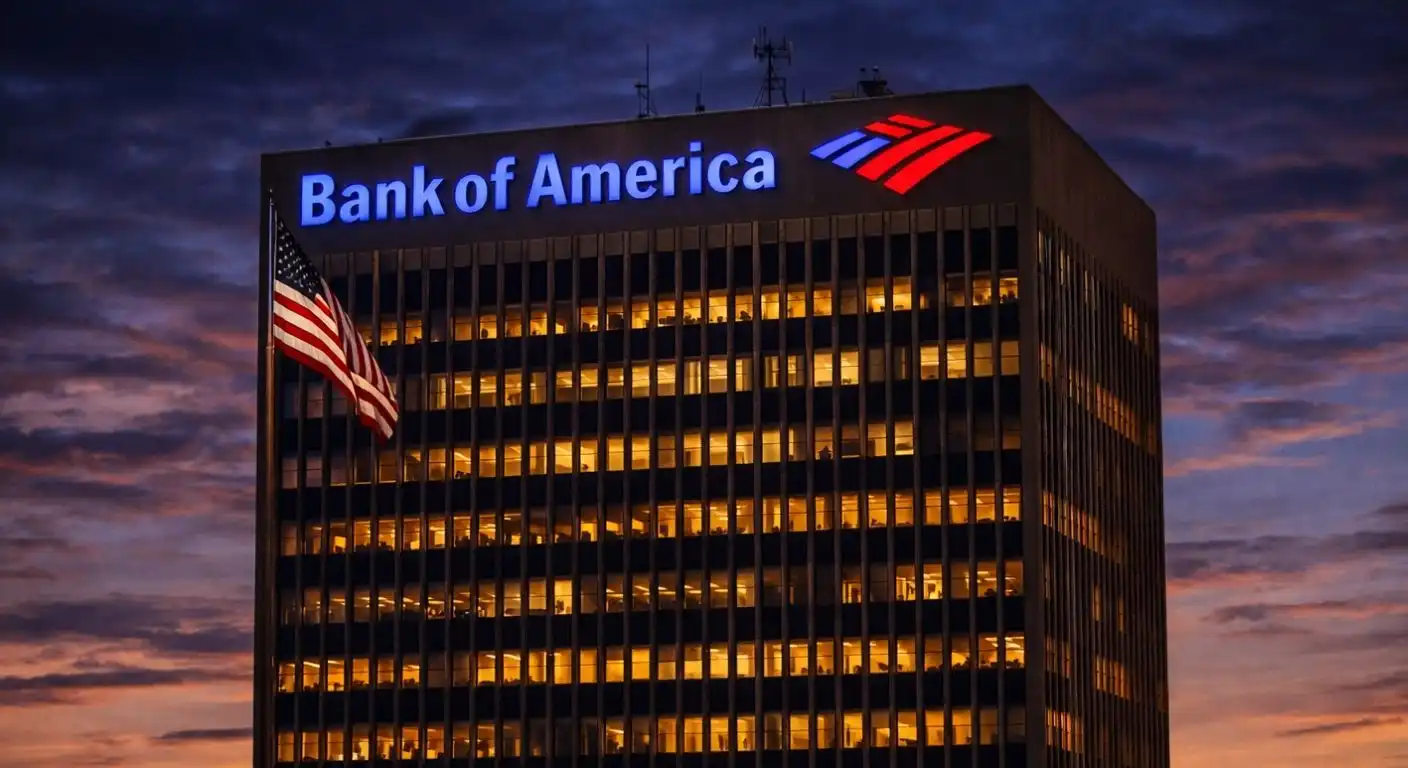
The global financial services industry has entered an intense, highly competitive technology transition. No longer treated as an experimental back-office novelty, artificial intelligence has emerged as the primary competitive battleground for the world’s largest investment banks and commercial lenders. In a major strategic realignment designed to accelerate the deployment of advanced software-defined systems across its trading and platform networks, Bank of America has announced several senior appointments within its global markets division.
The executive changes, detailed in an internal corporate memo circulated recently on a Friday, represent a major, coordinated push to bring technological innovation to the absolute center of the bank’s global markets group. The changes align directly with the company’s broader, multi-billion-dollar technology roadmap, designed to automate complex trading workflows, streamline risk modeling, and build out secure infrastructure for the emerging digital asset economy. By placing experienced technology and analytics leaders in key, newly created roles, Bank of America is attempting to build an impenetrable digital moat around its global markets business.
This high-level restructuring follows a period of stellar financial performance for the Charlotte, North Carolina-based lender. During its second-quarter earnings call, Bank of America reported that its employees are generating more than 400,000 prompts a day across more than 300 approved artificial intelligence use cases, helping to drive significant cost savings, improve trading efficiency, and expand profit margins. By moving these technologies directly onto the trading desk, the bank is preparing to capture a larger share of global transactions, proving that in modern investment banking, data-driven automation is the ultimate engine of wealth generation.
The Strategic Realignment: Inside the Global Platforms Restructuring
The executive changes outlined in the internal memo were announced by Ashok Krishnan, the Head of Platforms within Bank of America’s global markets group. Krishnan’s division has spent years leading the bank’s efforts to modernize its technology architecture, reduce manual processing errors, and roll out generative artificial intelligence tools across its global operations.
The restructuring is designed to break down the traditional silos that have historically separated research, data analytics, and trading technology. In the modern, high-frequency trading environment, these divisions must work in absolute synchronization. A quantitative trading desk cannot execute profitable transactions if its risk models rely on stale data or if its software platforms suffer from high latency. By consolidating these functions under a unified platforms group, the bank is attempting to build a highly responsive, automated trading engine that can adapt to changing market conditions in real time.
Dismantling the Technical Silos: The Key Executive Appointments
The newly announced appointments bring some of the bank’s most experienced technology and data specialists into prominent leadership roles. These executives are tasked with transforming how the bank processes data, evaluates risk, and executes transactions across its global markets network, ensuring that the firm remains highly competitive against other Wall Street giants.
By placing these proven leaders at the helm of its platforms division, Bank of America is preparing for a highly automated, software-driven future. The firm is systematically upgrading its internal infrastructure, paving the way for a more integrated and resilient digital financial system.
Kevin Milsom Named Head of Platforms AI Transformation
The most critical appointment in the newly restructured division is the naming of Kevin Milsom as the Head of Platforms AI Transformation. In this newly created role, Milsom will report directly to Ashok Krishnan, taking on the responsibility for leading the physical rollout, testing, and deployment of generative artificial intelligence tools across the global markets platforms.
Milsom’s primary objective is to translate the bank’s massive artificial intelligence investments into tangible, real-world productivity gains for its traders and analysts.
He will lead the engineering teams responsible for developing custom, secure large language models capable of scanning massive market databases, identifying hidden financial trends, and generating automated trade recommendations in seconds.
By automating these highly complex data-analysis tasks, the platform will allow the bank’s human traders to focus entirely on high-level relationship management and strategic portfolio allocation, significantly reducing transactional latency and improving overall client service.
Integrating the Analytics, Modelling & Insights (AMI) Team Under Amy Avery
To support this automated transformation, the bank is executing a major restructuring of its data analytics division. The memo announced that Amy Avery and her specialized Analytics, Modelling & Insights team will officially join the global platforms group.
Under Avery’s leadership, the unified AMI team will oversee data-driven insights and advanced analytics across the entire global markets division.
This integration is a major strategic victory, bringing the bank’s most advanced predictive modeling and risk-analysis capabilities directly into the technology platform division.
By having the data scientists and the software developers working in the same room, the bank can ensure that its AI models are constantly fed with high-quality, real-time data, significantly improving the accuracy of its trading algorithms and reducing the risk of costly model errors.
Sonali Theisen Takes the Reins of the Global Digital Assets Platform
The third major appointment highlighted in the memo involves the rapidly evolving world of decentralized finance and tokenized assets. Bank of America has named Sonali Theisen as the Head of the Global Digital Assets Platform, an expansion of her current responsibilities as the Head of Global FICC E-Trading and Markets Strategic Investments.
FICC stands for Fixed Income, Currencies, and Commodities, which represents one of the largest and most complex trading markets in global finance.
By linking the leadership of FICC electronic trading with the digital assets platform under a single, highly experienced executive, Bank of America is preparing for a future where traditional financial instruments—such as corporate bonds, sovereign currencies, and physical commodities—are traded as tokenized assets on private and public blockchains.
Theisen’s expanded mandate will allow the bank to develop the secure custody, clearing, and settlement systems required to process these digital transactions, ensuring that Bank of America remains the primary clearing bank for global commerce in the digital age.
The Financial Powerhouse Supporting the AI Transition: Q2 Earnings Review
The aggressive technology push within the global markets group is supported by the bank’s exceptional financial health. While regional lenders and smaller financial institutions struggle to fund basic digital upgrades, Bank of America’s massive scale allows it to spend billions of dollars annually on technology, research, and development.
This financial strength was on full display during the bank’s recent second-quarter earnings release, where the firm reported numbers that easily exceeded Wall Street expectations.
The bank’s strong capital position and consistent, high-margin cash generation from its core business lines have provided the executive board with the financial confidence to support these massive, long-term technological investments.
Analyzing the Consumer Banking Ten-Percent Profit Boom
The primary driver of the bank’s strong financial performance was its consumer banking division. Bank of America reported that consumer banking net income rose by an impressive 10% year-over-year to reach $3.3 billion, on total revenues of $11.3 billion.
CEO Brian Moynihan praised the “good economics” of the bank’s artificial intelligence investments during the earnings call, pointing out that digital automation has successfully reduced the cost of customer acquisition, improved customer retention, and lowered overall operating expenses.
By using digital assistants like Erica to automate millions of routine customer service interactions monthly, the bank has successfully improved its worker productivity while freeing up its human staff to focus on higher-value client advisory services, translating directly into higher operating margins.
Trading Record Windfalls and Volatility Capture
At the same time, the bank’s global markets group rode a wave of intense macroeconomic volatility to post record-breaking trading results, providing the cash flow required to fund the multi-billion-dollar technology war chest.
Geopolitical tensions in the Middle East, unpredictable inflation prints, and changing interest rate expectations have triggered massive, rapid re-valuations across the bond, commodity, and currency markets, driving heavy transaction volumes.
By providing consistent liquidity to these desperate buyers and sellers, Bank of America’s trading desks minted historic profits, demonstrating that while macroeconomic volatility is a challenge for traditional corporate planning, it remains a major profit engine for Wall Street’s dominant market makers.
The new appointments are designed to ensure the bank can continue to capture this volatility more efficiently, using advanced algorithms and automated trading systems to optimize its execution speeds and protect its market share.
The Strategic Battle: BofA vs. JPMorgan and Goldman Sachs
The executive restructuring at Bank of America is occurring within a highly competitive, multi-trillion-dollar technology arms race among the elite institutions of Wall Street. As artificial intelligence advances, the traditional methods of financial service delivery are being completely rewritten, and the bank that successfully automates its operations first will capture an immense, long-term competitive advantage.
Other major investment banks are pursuing similarly aggressive, highly funded technology strategies:
- JPMorgan Chase: Spends an estimated $15 billion annually on technology, running Onyx, its proprietary blockchain network, and deploying advanced AI models across its entire global treasury and settlement pipeline.
- Goldman Sachs: Launched its comprehensive “OneGS 3.0” technology initiative, using artificial intelligence to automate client onboarding, streamline lending processes, and generate real-time regulatory reports.
- Morgan Stanley: Formed a highly successful partnership with OpenAI, deploying specialized, on-device AI assistants to help its financial advisors manage over $4.5 trillion in wealth management assets.
This intense competition has triggered a massive, highly expensive talent war on Wall Street.
Investment banks are aggressively recruiting elite software engineers, data scientists, and blockchain developers directly from Silicon Valley and top academic institutions, offering premium compensation packages to secure the human capital required to run their advanced digital networks.
By placing proven technology leaders like Kevin Milsom and Sonali Theisen in key positions, Bank of America is signaling that it is prepared to match the spending and innovation of its primary competitors, ensuring that its global markets division remains a world-class technology leader.
Looking Ahead: The Future of Sovereign, Tokenized Finance
As the new leadership team takes control of Bank of America’s global markets platforms, the strategic focus is shifting toward the future of tokenized finance. Over the past year, the line separating traditional finance from digital asset infrastructure has begun to dissolve rapidly, driven by the passage of comprehensive stablecoin laws in the United States and the European Union.
Major financial institutions are realizing that the legacy, slow-moving payment and settlement systems of the previous century are fundamentally incompatible with the speed of the digital economy.
A cross-border transaction executed via traditional bank wires can take three to five business days to clear, while costing companies significant fees in intermediary charges and currency conversion spreads.
Tokenized assets and well-regulated digital currencies solve these inefficiencies, allowing global corporations and financial institutions to execute real-time, 24/7/365 settlements across borders in seconds.
By building a secure, high-capacity digital assets platform under Sonali Theisen, Bank of America is positioning itself to lead this transition.
The bank is ensuring that when the multi-trillion-dollar global markets eventually migrate to blockchain-based infrastructure, its systems will be fully prepared to handle the volume, clear the transactions, and secure its status as the primary clearing bank for global commerce in the digital age.
The transition of the financial services sector into a highly automated, software-defined era is an absolute, non-negotiable reality of the modern economy. By taking personal responsibility for the technology roadmap, executing brilliant strategic consolidations under the global platforms division, and placing world-class leaders in key, high-impact roles, Bank of America is demonstrating the strategic vision required to lead.
As these new systems begin to process data, automate trades, and manage digital assets across the globe, they will ensure that the bank’s global markets division remains a resilient, highly profitable powerhouse, ready to navigate the challenges of the digital age and deliver exceptional value to its clients and shareholders alike for decades to come.