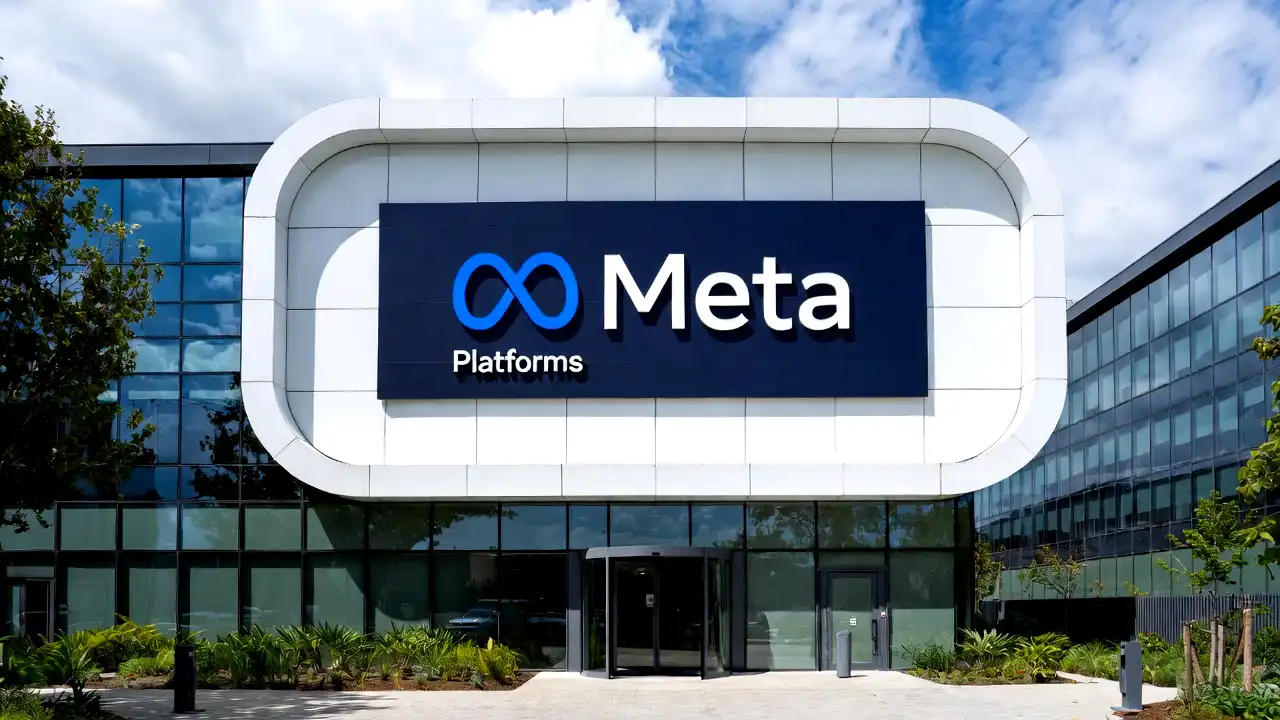
The global artificial intelligence and cloud computing markets are experiencing a profound, highly strategic realignment. In an extraordinary development that has completely upended the competitive dynamics of the technology sector, Meta Platforms is in advanced negotiations to sign a massive, multi-year $10 billion computing partnership with prominent AI startup Anthropic. The proposed transaction, first disclosed in an investigative report by the New York Times, represents a major structural shift in how tech giants build, fund, and monetize the physical infrastructure of the digital age.
The deal’s potential scale is truly historic. Under the proposed terms, Meta would lease a significant portion of its massive, state-of-the-art data center clusters directly to Anthropic, granting the startup access to more than 100,000 of its most advanced graphics processing units and high-speed network connections. For Meta, this transaction represents a dramatic pivot in its corporate strategy. The social media giant is transforming itself from a pure-play digital advertising company into a major commercial cloud computing landlord, attempting to prove to Wall Street that its massive capital expenditures can generate immediate, predictable revenue.
For Anthropic, the potential partnership is an essential lifeline. The San Francisco-based developer of the highly acclaimed Claude models has spent the past year battling severe, systemic hardware shortages that have threatened to slow down its technological progress. By securing a massive, dedicated supply of computing power outside of its existing, highly restrictive relationships with Amazon and Google, Anthropic can rapidly accelerate the training of its next-generation models while establishing its absolute corporate independence ahead of its highly anticipated initial public offering.
The Cloud Landlord: Inside Meta’s Shift to Infrastructure Monetization
The strategic decision by Meta to lease its raw computing power directly to a third-party developer represents a direct response to growing skepticism from the investment community. Throughout the first half of the year, major technology conglomerates faced intense pressure from Wall Street regarding their massive, unselective capital expenditures on artificial intelligence.
Meta, in particular, spent heavily to build out its physical infrastructure, guiding toward an extraordinary capital expenditure budget of $115 billion to $135 billion for the year.
This level of spending, which accounts for over 35% of the total capital spending among the world’s largest tech companies, triggered deep-seated anxieties among shareholders.
Investors worried that these massive cash outlays would severely compress the company’s profit margins if it could not prove that the physical data centers were generating immediate, bottom-line financial returns.
Resolving the CapEx Crisis of Faith
The potential $10 billion contract with Anthropic provides the perfect, high-volume answer to this investor anxiety. By converting its excess data center capacity into a commercial leasing service, Meta can immediately begin recouping its massive capital investments.
A $10 billion deal spread over several years would generate billions of dollars in highly predictable, recurring revenue, transforming what was once viewed as a highly risky, speculative expense into a steady cash-generating asset class.
This financial validation helps defend the premium valuation multiples of Meta’s stock, giving investors the confidence to support continued capital investments in the sector.
By proving that it can successfully monetize its cleanrooms, electricity grids, and server racks, Meta is establishing a new corporate standard.
The company is demonstrating that in the AI era, the ultimate winner is not necessarily the one who writes the best consumer software application, but the one who can build and lease the physical foundations of compute most efficiently.
The Five Gigawatt-Scale “Titan” Datacenter Clusters
The physical infrastructure that Meta is preparing to share with Anthropic is an extraordinary achievement in civil and electrical engineering. The company is currently constructing five massive, gigawatt-scale data center campuses across the United States, internally referred to as the Titans.
The largest of these clusters, named Prometheus and located in Ohio, has expanded to an active, physical footprint of over three gigawatts, spanning 27 individual data centers distributed across six distinct campuses.
To connect these massive server farms and ensure they can operate as a single, coherent supercomputer, Meta deployed its proprietary AI-Backbone network architecture.
This system delivers a bi-directional networking capacity of 22 petabits per second, utilizing advanced coherent optical systems to link data centers located up to 2,000 kilometers apart.
By granting Anthropic access to this highly advanced, low-latency network, Meta is offering a level of computing performance that traditional, legacy cloud platforms cannot easily match.
Securing the Frontier: Why Anthropic Needs Meta’s Silicon Power
The strategic rationale for Anthropic to pursue this massive compute deal is deeply rooted in the physical requirements of modern model training. The company has spent the past several years locked in an intense, highly expensive technological race with OpenAI and Google DeepMind to develop the world’s most capable large language models.
To stay competitive, the company is preparing to launch its next-generation Claude 4 and Claude 5 architectures, which require a staggering, exponential increase in raw computing power.
While the company successfully raised billions of dollars in private venture capital from tech giants like Google and Amazon, those funding rounds were largely provided in the form of cloud credits tied to their respective platforms, restricting Anthropic’s ability to diversify its research across different physical networks.
Navigating the Nineteen-Billion-Dollar Data Center Lease
The financial pressure on Anthropic’s leadership team escalated significantly after the company signed a massive, twenty-year data center lease valued at approximately $19 billion.
This contract secured access to an advanced, custom-built supercomputing cluster, but the long-term lease also represents a massive, highly risky liability on the company’s balance sheet.
To fund this lease and support its ongoing research, the startup is preparing to launch a highly anticipated initial public offering as early as October, targeting an ambitious valuation of up to $60 billion.
By securing a massive, additional $10 billion compute agreement with Meta, Anthropic is proving to public market investors that it possesses the long-term infrastructure guarantees needed to hit its technological milestones, significantly improving its corporate valuation ahead of the roadshow.
Reclaiming Corporate Independence from Amazon and Google
The potential partnership with Meta also provides a vital, highly strategic benefit for Anthropic’s corporate governance. Since its founding in 2021 by siblings Dario and Daniela Amodei alongside other former OpenAI executives, the company has prioritized safety, independence, and research neutrality.
However, the massive, multi-billion-dollar investments from Amazon and Google have drawn intense, highly disruptive antitrust scrutiny from regulatory agencies in the United States and the European Union, who worry that these tech giants are using their investment positions to turn independent startups into captive research divisions.
By leasing its computing capacity from Meta, which does not hold a direct equity stake in the company, Anthropic can successfully diversify its operational dependencies.
The company can prove to regulators and public market investors that it operates as an independent, platform-agnostic developer that cannot be controlled by any single cloud monopoly.
Shifting the Balance of Power: Direct Competition with the Cloud Oligopoly
The successful implementation of the $10 billion compute deal will permanently reshape the competitive dynamics of the global cloud computing market, directly challenging the dominant, multi-decade monopoly currently held by Amazon Web Services, Microsoft Azure, and Google Cloud.
Historically, these three major hyperscale providers were the only entities capable of hosting and delivering advanced, scale-out artificial intelligence workloads to international businesses.
By transforming its own internal data center clusters into a commercial hosting service, Meta is entering this lucrative market as a formidable, highly disruptive competitor, utilizing its vast hardware reserves to undercut the traditional players on price and efficiency.
The Cost Advantage of Custom Infrastructure
Meta’s entry into the high-performance cloud hosting market is highly competitive because the company does not carry the same structural overhead as traditional cloud providers.
Legacy giants like AWS and Microsoft must maintain massive, highly expensive enterprise sales teams, customer support divisions, and complex regional business consulting networks to support their customers.
Meta, by contrast, operates a highly streamlined, lean, and automated infrastructure division.
The company does not need to sell its services to thousands of small, diverse retail customers; it can simply lease out massive, gigawatt-scale clusters to a handful of sophisticated, high-volume technology companies under long-term contracts.
This low-overhead model allows Meta to offer highly competitive, low-margin computing rates that are far cheaper than the prices charged by traditional public clouds, forcing a major price war across the entire infrastructure sector.
The Technical Integration: NVIDIA Blackwell and Coherent Optics
To support the massive data transfer demands of Anthropic’s models, the joint venture will deploy the most advanced hardware currently available on the market.
The data center clusters will be outfitted with next-generation NVIDIA Blackwell processors, which offer massive improvements in processing speed, memory bandwidth, and thermal efficiency compared to previous generations of silicon.
To connect these advanced processors, the network will utilize high-capacity co-packaged optics (CPO), which replace traditional electrical copper connections with high-speed, low-power laser beams.
This optical integration allows data to travel between different processor racks at the speed of light, virtually eliminating the latency delays and heat accumulation that traditionally plague massive server installations.
By combining this world-class hardware with Meta’s proprietary AIBB network architecture, the partnership will deliver a highly optimized, high-performance computing environment that represents the absolute frontier of modern computer science.
The proposed $10 billion compute agreement between Meta Platforms and Anthropic is a defining, historic milestone for the global technology industry. By successfully converting its massive, cash-burning infrastructure investments into a highly profitable commercial leasing business, Meta has proved that physical scale is the ultimate economic multiplier in the digital age.
At the same time, by securing a massive, independent source of silicon power ahead of its highly anticipated October IPO, Anthropic has defended its corporate sovereignty, ensuring that the future of advanced machine learning remains diversified, secure, and competitive.
As the two companies finalize their historic negotiations, they are proving that the next phase of the digital revolution will be decided not in the abstract software realm of the cloud, but in the highly secure, master-planned cleanrooms of the physical data center.