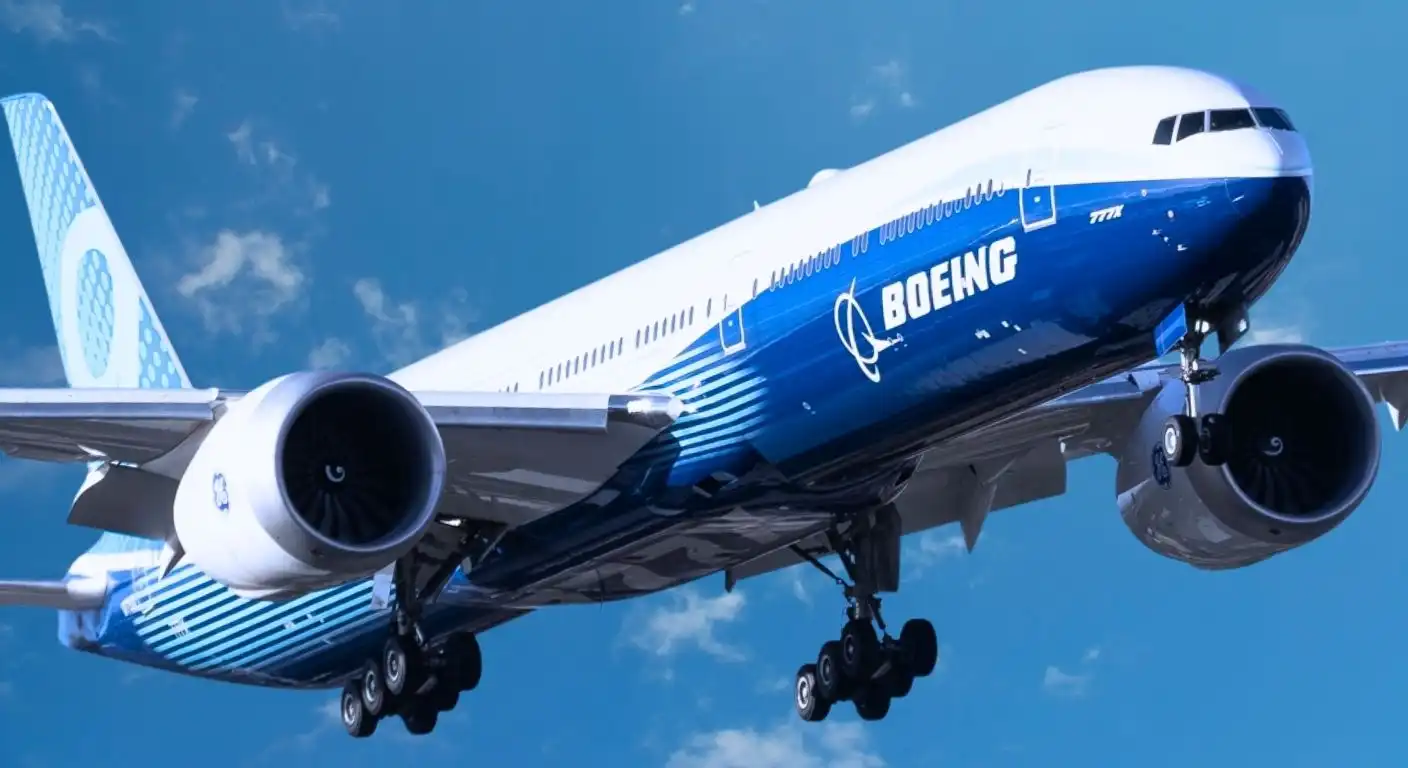
The commercial aviation industry is preparing for a major operational shift as the world’s most scrutinized aircraft manufacturer begins to regain the trust of its regulators. In a massive operational breakthrough that marks the beginning of the end of its decade-long regulatory nightmare, Boeing has received authorization from the Federal Aviation Administration to resume issuing its own airworthiness certificates for newly built 737 MAX and 787 Dreamliner aircraft.
The decision by the federal regulator to restore this delegated authority represents a monumental victory for Boeing’s new leadership team. For several years, the FAA had stripped the company of its self-certification privileges, forcing government inspectors to physically examine and approve every single aircraft off the assembly line before it could be delivered to airline customers. By returning this authority to Boeing’s in-house quality-control teams, the FAA is signaling that the aerospace giant has made sufficient progress in overhauling its manufacturing processes to merit a return to normal regulatory procedures.
For Boeing, this operational milestone is a critical financial lifeline. The company is currently sitting on a massive, highly expensive inventory of over 200 completed but undelivered aircraft parked on runways across Washington and California. By taking over the airworthiness certification process internally, the company can dramatically accelerate its delivery schedules, clearing its multi-billion-dollar backlog, generating massive free cash flows, and beginning the long, difficult process of repairing its heavily leveraged balance sheet.
The Long Road to Regulatory Redemption: Why This Move Matters
The loss of Boeing’s delegated certification authority was one of the most severe punishments ever inflicted on an aerospace manufacturer by the U.S. government. Under the traditional “Organization Designation Authorization” framework, the FAA historically allowed trusted manufacturers like Boeing to use their own, government-approved quality inspectors to issue airworthiness certificates, ensuring a fast, streamlined manufacturing-to-delivery pipeline.
This relationship collapsed entirely following the dual, tragic crashes of the 737 MAX in 2018 and 2019, which led to a 20-month global grounding of the aircraft. Subsequent investigations revealed that Boeing had systematically misled regulators, downplayed critical software risks, and compromised quality-control standards to accelerate production.
Faced with a complete breakdown in safety culture, the FAA stripped Boeing of its self-certification privileges, taking over direct, physical inspection authority of every single newly built 737 MAX.
The regulatory pressure intensified several years later when inspectors discovered manufacturing defects in the carbon-fiber fuselages of the 787 Dreamliner. Tiny, microscopic gaps between the fuselage sections did not meet the company’s own strict engineering tolerances, forcing the FAA to halt deliveries of the flagship widebody jet and take over its physical certification as well.
This double-blockade created a massive logjam at Boeing’s factories, as the FAA lacked the personnel and resources to inspect hundreds of complex aircraft quickly, causing delivery rates to plunge and costing Boeing billions of dollars in delayed payments and penalty fees.
The Financial Lifeline: Unlocking Billions in Parked Inventory
The financial stakes of the certification standstill have been extraordinarily high. Over the past five years, the accumulation of undelivered aircraft has acted as a massive, cash-devouring drag on Boeing’s balance sheet.
The company is currently storing an estimated 220 completed 737 MAX jets and several dozen 787 Dreamliners.
Maintaining this parked fleet is an incredibly expensive logistical hassle.
The aircraft must undergo constant, rigorous maintenance—including engine rotations, software updates, and battery checks—to ensure they do not degrade while exposed to the elements on the runways.
Furthermore, this parked inventory represents an estimated $20 billion in tied-up working capital that Boeing cannot access until the planes are physically delivered to their buyers.
Shifting the Cash Flow Paradigm with Accelerated Deliveries
The return of self-certification is a game-changer for Boeing’s cash flow dynamics. In the aviation industry, the financial terms of aircraft purchase agreements are heavily back-loaded. While airlines pay modest progress payments during the initial manufacturing phases, they pay the bulk—typically 60% to 70%—of the total contract value upon physical delivery of the completed aircraft.
By resuming the issuance of its own airworthiness certificates, Boeing can bypass the lengthy queues of FAA inspectors and schedule deliveries at its own operational speed.
The company expects to clear its parked inventory backlog rapidly, unlocking billions of dollars in deferred payments.
This massive cash infusion will allow Boeing to begin paying down its heavy $58 billion debt load, lower its interest-service expenses, and fund its ongoing, highly expensive engineering programs without requiring further dilutive stock sales or high-interest corporate bond offerings.
Easing the Strain on Global Airlines
The acceleration of Boeing’s delivery pipeline will also provide much-needed relief to the global airline industry. Major carriers across the world—including United Airlines, Southwest Airlines, and Ryanair—have been forced to repeatedly trim their growth forecasts, cancel flights, and keep older, less fuel-efficient planes in service longer than planned due to the persistent delays in receiving their new Boeing jets.
By clearing the manufacturing backlog, Boeing can finally deliver on its long-standing contracts, allowing airlines to expand their passenger capacities, lower their fuel expenses, and modernize their fleets.
This normalization of deliveries will significantly improve Boeing’s relationships with its most important commercial clients, who have grown increasingly frustrated by the years of operational delays, and help restore the brand’s standing as a reliable, world-class supply partner.
Inside the Quality Reforms of CEO Kelly Ortberg
The restoration of Boeing’s delegated certification authority is the direct result of a comprehensive, top-to-bottom corporate transformation executed under CEO Kelly Ortberg. A respected aerospace veteran, Ortberg took over the top job with a clear mandate to clean up the manufacturing mess, restore the company’s engineering-first culture, and rebuild the shattered relationship with the FAA.
Ortberg recognized that the primary source of the company’s manufacturing defects was an overemphasis on short-term financial metrics and Wall Street expectations over basic engineering discipline.
To address this, he moved his executive office from the corporate headquarters in Virginia back to the factory floor in Seattle, Washington, placing senior leadership directly alongside the machinists and engineers assembling the planes.
Rebuilding the Engineering-First Corporate Culture
Under Ortberg’s leadership, the company has implemented a series of sweeping, highly rigorous quality-control reforms across its manufacturing centers. The company completely redesigned its assembly line processes, slowing down production speeds to ensure that workers had the time required to complete every task with absolute precision.
Furthermore, the company established a new “Quality Management System” that empowers factory workers to halt the entire assembly line instantly if they detect a defect, a complete reversal from the previous corporate culture where employees faced intense pressure to keep the line moving despite known defects.
The company also invested hundreds of millions of dollars to upgrade its worker training programs, establishing new, high-tech simulation labs to ensure that its manufacturing workforce possesses the high-level skills needed to handle modern carbon-fiber and advanced avionic systems.
Restructuring the ODA and the Role of Embedded Inspectors
The newly restored self-certification authority will not operate as a return to the laissez-faire oversight of the past. The FAA has established a highly strict, zero-trust framework for the restored Organization Designation Authorization program.
Under the new agreement, Boeing’s internal quality inspectors will operate under the continuous, real-time supervision of embedded FAA auditors.
These federal auditors will maintain full, unrestricted access to the factory floor, holding the legal authority to audit any stage of the assembly process and veto any airworthiness certificate issued by Boeing’s team if they detect even a minor compliance issue.
This hybrid oversight model ensures that while Boeing gains the speed and efficiency of self-certification, the FAA retains absolute, uncompromised control over safety, creating a powerful check against any potential return to corporate complacency.
The Operational Runway: Ramping Up Production
The return of self-certification provides the physical foundation for Boeing to aggressively scale up its manufacturing rates. For the past year, the company’s production has been severely restricted by an FAA-imposed cap of 38 to 42 737 MAX jets per month, designed to ensure that the factories prioritized quality over raw speed.
With the new quality systems verified and self-certification restored, Boeing’s leadership team can confidently plan a ramp-up in production.
The company expects to increase its 737 MAX output toward 52 planes per month by early 2027.
This production increase is essential for satisfying the company’s massive backlog of nearly 6,000 commercial aircraft orders, ensuring that it can defend its market share against rival Airbus and generate the long-term, high-margin revenues needed to secure its financial future.
Coordinating the Downstream Supplier Network
The acceleration of Boeing’s assembly lines will also bring vital stability to its vast, highly complex downstream supplier network. The aerospace industry operates on a highly integrated supply chain, where thousands of specialized companies produce everything from microscopic titanium fasteners to massive fuselage sections and high-thrust jet engines.
When Boeing was forced to slow down its production lines, these suppliers faced immediate, severe cash-flow crises.
Major suppliers like Spirit AeroSystems, which manufactures the fuselages for both the 737 and 787 programs, had to execute mass layoffs and secure emergency credit lines to survive the drop in orders.
The normalization of Boeing’s production and delivery rates will stabilize these suppliers, allowing them to confidently plan their own capital investments, hire back skilled workers, and rebuild the industrial capacity of the entire aerospace sector.
The restoration of Boeing’s delegated airworthiness certification authority is a defining milestone in the history of modern aviation. By successfully overhauling its manufacturing processes, slowing down its production lines to prioritize precision, and collaborating transparently with the FAA, the company has proved that it is serious about rebuilding its safety culture.
While the road to absolute financial and operational recovery remains long and challenging, the company’s new leadership has successfully cleared the single largest obstacle standing in its path.
The upcoming deliveries of these parked jets will inject billions of dollars of cash back into the business, stabilizing its suppliers, satisfying its frustrated airline clients, and ensuring that Boeing’s iconic aircraft can continue to fly passengers safely and sustainably across the globe for generations to come.