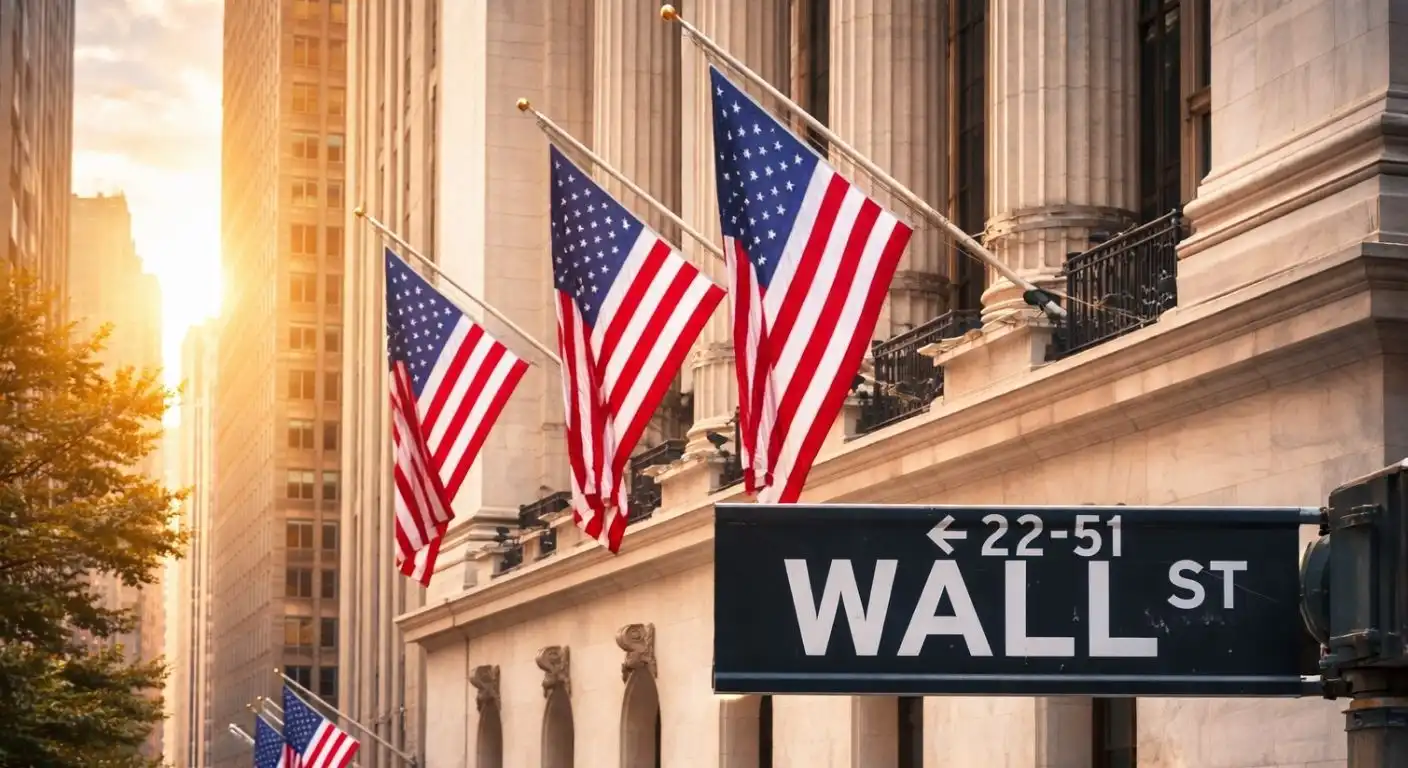
The second-quarter earnings season of 2026 has delivered a massive, historic windfall for Wall Street’s largest investment banks, completely redefining the profit outlook for the global financial sector. While macroeconomic analysts spent much of the year focusing on the potential risks of sticky inflation, high interest rates, and stagnant corporate investment, the trading desks of the world’s most dominant financial institutions experienced a near-unprecedented profit boom. This spectacular surge was powered by a highly potent dual-engine catalyst: the rapid, highly volatile “tech rotation” driven by the artificial intelligence supercycle, and the profound macroeconomic volatility triggered by the escalating military conflict in the Middle East.
The financial results reported by the banking giants highlight the incredible scale of this trading bonanza. JPMorgan Chase led the charge, reporting that its global markets division posted a massive 35% increase in total trading revenue, with its equity markets trading division recording an extraordinary 86% year-on-year surge. Other premier Wall Street firms—including Goldman Sachs, Morgan Stanley, and Bank of America—reported similar, highly lucrative double-digit expansions in their equity and derivatives trading revenues, proving that during periods of extreme global uncertainty, the company’s trading desks serve as the ultimate, high-speed profit engines of the financial markets.
For investors analyzing the banking sector, the spectacular trading performance has offset slower growth in traditional lending divisions. While high borrowing costs have kept loan volumes relatively flat, the extreme volatility across global asset markets has forced institutional investors, pension funds, and multinational corporations to aggressively adjust their portfolios. By acting as the primary market makers and liquidity providers for these desperate buyers and sellers, Wall Street’s financial titans have turned global instability into a massive, multi-billion-dollar source of recurring fee revenue, demonstrating that the structural health of the banking sector remains incredibly robust.
The New Profit Engine: Inside the Interconnected Trading Desks
To understand why the bank trading desks performed so well during the second quarter, one must analyze the physical and mechanical structures of modern market making. A market maker does not make money by taking speculative, long-term bets on whether a stock will rise or fall. Instead, they make money by providing liquidity—standing ready to buy or sell securities at any moment to ensure the market remains orderly.
When the global financial markets are calm and predictable, the difference between the price at which a bank is willing to buy a stock and the price at which it is willing to sell it—known as the bid-ask spread—is incredibly narrow, resulting in modest transaction fees.
However, when sudden geopolitical shocks or major technology shifts hit the market, uncertainty skyrockets.
To protect themselves from rapid price movements, market makers naturally widen their bid-ask spreads.
At the same time, the volume of transactions surges as institutional investors scramble to hedge their exposures.
This combination of wider spreads and high trading velocity is the ultimate goldmine for Wall Street trading desks, allowing them to capture a massive risk premium on every single transaction.
The AI Tech Rotation: Shifting Capital from Chips to Platforms
The first major engine of the second-quarter trading boom was the massive, highly volatile reallocation of capital within the technology sector. For over two years, global investors operated under a high-conviction, near-universal belief in the physical infrastructure of artificial intelligence. They poured hundreds of billions of dollars into semiconductor designers, high-speed memory manufacturers, and advanced packaging suppliers, driving their valuations to historic heights.
By the middle of the year, that hardware-first narrative began to run into severe financial friction. Investors began to realize that the massive capital expenditures deployed by major cloud providers would take much longer to generate high-margin software revenues than the market originally anticipated.
This timing mismatch triggered a severe, highly coordinated selloff in chip stocks, bringing the benchmark semiconductor index into a technical bear market and erasing an estimated $3.3 trillion in market value globally in less than a month.
The Decoupling of the Semiconductor Supercycle
This massive, three-trillion-dollar semiconductor correction forced quantitative mutual funds, trend-following algorithms, and high-leverage hedge funds to execute a rapid, highly painful deleveraging process. To meet margin calls and protect their capital, these institutional players had to dump their high-flying chip stocks at any price.
The sheer volume of these automated sell orders generated massive, highly profitable transaction flows for Wall Street’s prime brokerage divisions, which handle the clearing, settlement, and financing of trades for the world’s largest hedge funds.
Furthermore, because these funds did not want to retreat entirely to cash, they immediately rotated their capital into defensive, high-moat consumer platforms like Apple, which reclaimed its crown as the world’s largest company after securing critical artificial intelligence regulatory approvals in China.
This constant, high-speed shifting of billions of dollars across the technology sector created the perfect storm of transactional fee generation, allowing the banks’ equity desks to capture massive revenues at both ends of the rotation.
The Collapse of the Long-Short Momentum Trade
The severity of the tech rotation was heavily amplified by the unwinding of one of the most popular, crowded trading strategies on Wall Street: the long-chips, short-hyperscaler trade. Many hedge funds had spent the previous year betting heavily on high-flying semiconductor designers while shorting the massive software and cloud providers who were paying the bills, assuming that the hardware suppliers were guaranteed to capture the cash first.
When the market narrative shifted, this crowded trade backfired catastrophically, transforming into what traders call a “pain trade.”
As semiconductor stocks plummeted and the megacap software giants held their ground, hedge funds were forced to rapidly buy back their short positions while liquidating their long chip holdings to cover their losses.
This violent, synchronized unwind of multi-billion-dollar positions generated extraordinary trading volumes and massive commission fees for Wall Street’s prime brokers, demonstrating how a localized crisis on the technology exchange can translate directly into a massive financial windfall for the banks’ trading desks.
The Geopolitical Catalyst: How the Iran War Shook Global Capital
While the tech rotation drove the equity desks, the second major engine of the trading boom was the rapid, highly dangerous escalation of military hostilities in the Middle East. The active war involving the United States, Israel, and Iranian forces has introduced a massive, persistent risk premium into the global financial system, completely altering the trading patterns of international capital.
The conflict has targeted some of the world’s most critical energy infrastructure and maritime shipping channels, including the strategic Strait of Hormuz, through which roughly 20 percent of the world’s oil and liquefied natural gas shipments transit daily.
The threat of a prolonged military blockade or active fighting in these waters has injected extreme volatility into the commodity and energy markets, forcing multinational corporations, utility companies, and sovereign wealth funds to aggressively hedge their exposures.
The Strait of Hormuz Oil Shock and the Return of Inflation Fears
The geopolitical energy shock has had a direct, highly regressive impact on global price stability. As oil traders priced in the threat of a maritime blockade, Brent crude oil benchmarks jumped back above $85 per barrel, driving up transportation, manufacturing, and agricultural costs worldwide and reviving fears that inflation could remain sticky and elevated well into next year.
This inflationary threat has completely altered the outlook for global monetary policy.
Instead of proceeding with the rapid, highly anticipated interest rate cuts that investors had priced into their models, central banks are being forced to adopt a highly cautious, hawkish posture.
This shifting rate path has driven real U.S. Treasury yields higher, with the benchmark 10-year yield trading near 4.569%, creating immense volatility across the fixed-income and interest-rate derivatives desks as investors scramble to adjust their portfolios to the higher-for-longer reality.
The Resurgence of the Dollar and the Sovereign Debt Squeeze
The combination of high domestic interest rates and rising geopolitical risk has also triggered a massive flight to safety, driving global capital out of emerging markets and volatile foreign currencies and redirecting it into the absolute security of the United States dollar.
This resurgent greenback has created a severe currency squeeze for international corporations and heavily indebted foreign governments, who must spend significantly more of their local currencies to service their dollar-denominated debt and purchase essential commodities.
To manage this currency risk, multinational enterprises are executing massive volumes of foreign exchange trades, utilizing advanced derivatives, swaps, and hedging contracts provided by the major global investment banks to protect their balance sheets.
This high-velocity currency trading has generated historic, high-margin fee revenues for the banks’ foreign exchange desks, proving that during times of international crisis, the major global clearing banks are the primary financial ports of call for the entire world.
Bank-by-Bank Breakdown: Dissecting the Trading Champions
The extraordinary trading performance of the financial sector was not a uniform event; rather, it was dominated by a small group of Wall Street giants who possess the massive scale, global reach, and technological infrastructure required to dominate the market-making business.
These financial titans successfully leveraged their premier prime brokerage platforms and advanced algorithmic trading systems to capture the massive transaction volumes generated by the tech rotation and the Middle East crisis, cementing their status as the undisputed leaders of global finance.
JPMorgan Chase: The Undisputed King of the Trading Desk
JPMorgan Chase delivered a masterclass in market-making execution during the second quarter of the year, leading the entire banking sector with its historic trading results. Under the leadership of CEO Jamie Dimon, the bank’s markets division posted a record-breaking performance, with its equity trading revenue surging by an extraordinary 86 percent year-on-year.
JPMorgan achieved this spectacular outperformance by successfully leveraging its massive, $4.4 trillion balance sheet and its premier institutional trading platforms to capture the bulk of the global transaction volume.
The bank’s advanced automated trading systems processed millions of trades per second during the peak of the tech rotation, allowing the firm to capture massive, high-margin spreads with absolute precision, while its diversified business model successfully insulated it from the credit risks that have squeezed smaller regional lenders.
Goldman Sachs and Morgan Stanley: Dominating Prime Brokerage
The recovery in the capital markets was also highly profitable for Wall Street’s premier investment banking and advisory specialists, Goldman Sachs and Morgan Stanley. Both firms reported double-digit expansions in their equity trading revenues, driven primarily by strong performances in their high-margin prime brokerage divisions.
These firms serve as the primary financial partners for the world’s largest hedge funds and quantitative asset managers.
When the market enters a period of high volatility and rapid sector rotation, these institutional clients must execute massive, highly complex trades across multiple global jurisdictions, requiring advanced clearing, settlement, and margin-financing services.
By providing these critical services at scale, Goldman Sachs and Morgan Stanley generated historic fee revenues, proving that their deeply entrenched institutional relationships remain their most valuable corporate assets.
The Future of the High-Velocity Trading Era
The historic trading windfalls recorded by the major investment banks in the second quarter of 2026 are a clear, undeniable demonstration of how the modern financial system is evolving. The traditional, low-volatility banking models of the previous decade have been permanently replaced by a highly dynamic, fast-moving, and technology-driven environment.
As artificial intelligence continues to disrupt traditional business models and regional geopolitical conflicts introduce permanent risk premiums to the energy and commodity markets, the global financial system will likely remain in a state of constant, high-velocity adjustment.
While this volatility presents significant challenges for corporate planners and long-term asset managers, it remains the ultimate profit engine for Wall Street’s dominant market makers.
By continuing to invest billions of dollars annually to upgrade their automated trading systems, secure high-speed data networks, and expand their prime brokerage platforms, the major global clearing banks are ensuring that they will continue to capture the massive, high-margin wealth generated by the structural realignments of the modern digital world.