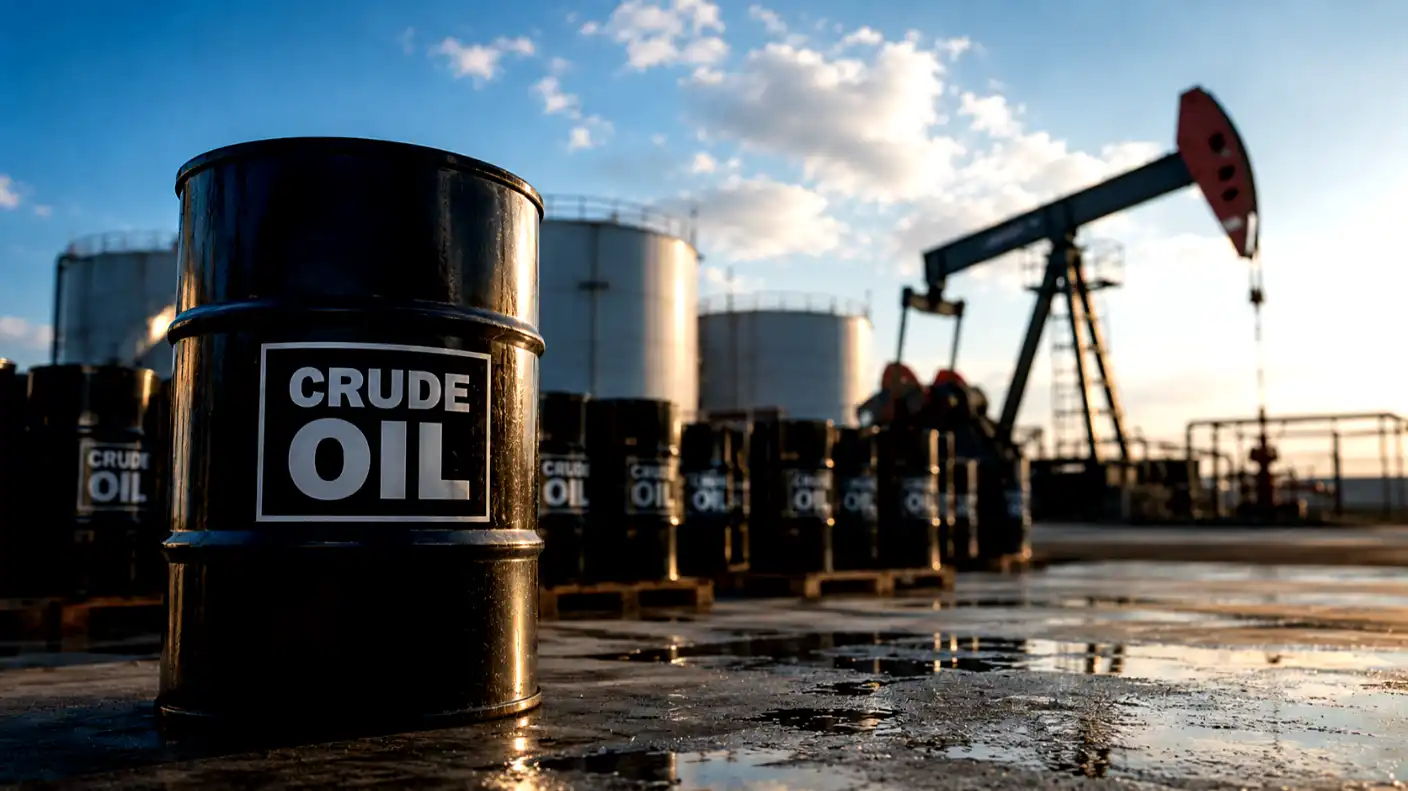
The global economy faces a perfect storm of energy insecurity. While policymakers spent the last few years declaring the transition to renewable power a done deal, the physical reality of the current energy landscape tells a much grimmer story. Nations across the developed and developing world are struggling to maintain power supplies as they fight an energy stranglehold occurring on three distinct, high-stakes fronts. From military blockades in vital maritime chokepoints to the massive, insatiable electricity demands of artificial intelligence data centers and the physical degradation of aging power grids, the world’s energy architecture is buckling under unprecedented pressure.
This energy squeeze is not a localized event. It is a systemic threat to global industrial production, inflation control, and national security. The convergence of these three fronts—geopolitical conflict, technological infrastructure demand, and grid obsolescence—has created a new era of energy volatility. For industrial firms, the era of cheap, reliable, and predictable electricity has ended, replaced by an environment of scarcity and extreme price fluctuation. As governments scramble to keep the lights on, the cost of this energy crisis will be paid by businesses, taxpayers, and consumers, likely suppressing economic growth for the remainder of the decade.
The Maritime Chokepoint: How Geopolitical Conflict Shreds Supply Chains
The first and most immediate front of the global energy stranglehold is the systematic disruption of vital maritime trade routes. The Strait of Hormuz, a narrow marine passage through which roughly 20 percent of the world’s seaborne oil and petroleum products historically flow, has become the focal point of a major geopolitical conflict. Military hostilities between regional powers and global coalitions have made this waterway a high-risk zone for commercial tankers, causing shipping insurance premiums to skyrocket and forcing energy companies to divert their vessels onto longer, much more expensive routes.
The impact of this blockade on global energy prices is immediate and profound. When tankers cannot safely transit the strait, the global supply of crude oil and liquefied natural gas contracts instantly, creating a physical scarcity that forces refineries to pay premium prices for replacement volumes. This energy-driven inflation is a massive, highly regressive tax on the global economy, as it flows directly through the transportation, manufacturing, and agricultural sectors, pushing up the cost of food, medicine, and industrial components.
The Fragility of Global Liquefied Natural Gas (LNG)
The shift toward liquefied natural gas as a primary energy carrier has significantly increased the vulnerability of the global energy system. Unlike pipeline gas, which flows through secure, terrestrial infrastructure under long-term, state-to-state contracts, LNG must be transported across the oceans in highly specialized, vacuum-insulated cryogenic vessels. This reliance on maritime logistics makes the global energy market extremely sensitive to geopolitical disruption.
A single maritime blockade or a regional conflict can trap millions of barrels of energy cargo in the middle of the ocean, unable to reach its intended destination. The reliance on this mobile energy supply has created a “just-in-time” delivery model for nations like Japan, South Korea, and many European states. When these supply chains are broken, the market has virtually no operational buffer. The price volatility that follows is not a function of lack of raw energy, but a function of the physical inability to move that energy to the consumers who need it the most.
Rerouting Cargo and the 15 Percent Logistics Premium
When shipping lines are forced to avoid conflict zones, the logistical consequences are severe. A standard tanker journey from the Persian Gulf to European ports typically takes around 20 days. By diverting around the Horn of Africa, that journey extends to more than 35 days. This 75 percent increase in transit time creates a massive, multi-billion-dollar logjam in global shipping capacity.
The immediate economic impact is a 15 percent premium on total logistics costs, as shipping companies must pay for the additional bunker fuel, crew wages, and maritime security patrols required to navigate longer, more dangerous routes. These costs are not absorbed by the shipping lines; they are passed directly to the importers and, eventually, to the end consumer, ensuring that geopolitical instability in the Middle East remains a permanent, upward pressure on global inflation indices.
The AI Power Crunch: Silicon Valley’s Insatiable Energy Appetite
The second front of the global energy stranglehold is the exponential surge in electricity demand driven by the rapid, unchecked expansion of artificial intelligence infrastructure. For nearly two decades, electrical grid operators planned for slow, flat growth in energy demand, driven by efficiency improvements in residential appliances and industrial equipment. This assumption of stability allowed grid operators to slowly phase out coal and gas power plants without risking supply shortages.
The rise of generative artificial intelligence has completely shattered these forecasting models. Technology giants are constructing massive, gigawatt-scale data center campuses that consume more electricity than mid-sized American cities. These data centers are not merely “tech hubs”; they are industrial-scale electrical consumers that run 24 hours a day, 365 days a year.
According to recent industry audits, U.S. data centers are on track to consume a massive 20 percent of the nation’s total electricity by 2035. This demand surge is colliding with a grid that has not been upgraded in decades, forcing utility companies to hold back on connecting new industrial and manufacturing projects to prevent localized blackouts for residential consumers.
Gigawatt-Scale Infrastructure vs. The Stagnant Transmission Grid
Building a 1-gigawatt data center campus—enough power to sustain nearly 750,000 residential households—requires more than just plugging into a wall. It requires massive, multi-year investments in high-voltage transmission lines, regional substations, and dedicated, firm-power generation plants. Most existing electrical grids were never designed to transmit that level of concentrated power to a single location.
Utility providers are currently facing a colossal $100 billion backlog of transmission upgrade projects that remain stalled in permitting and financing bottlenecks.
As tech companies demand gigawatts of new power, grid operators are forced to prioritize these data centers, sometimes at the expense of other essential industrial, commercial, or residential developments.
This creates a highly contentious, localized political fight, as communities are increasingly forced to choose between the promises of the “AI revolution” and the physical necessity of having a reliable, affordable power grid.
The Return of Nuclear and Natural Gas as Baseloud Heroes
The absolute refusal of data center operators to accept intermittent power—the “always-on” nature of AI—is forcing a dramatic, highly controversial return to baseload fossil fuel and nuclear generation. Tech giants cannot power their models on solar or wind alone, as their operations are highly sensitive to even a millisecond of voltage variation.
To secure this reliability, technology companies are directly financing the construction of dedicated, behind-the-meter natural gas and small modular nuclear reactors to power their campuses.
This trend has triggered a massive, global scramble to secure natural gas supplies and restart decommissioned nuclear facilities, placing artificial intelligence developers in direct competition with traditional utilities and heavy industrial manufacturers for the same, highly limited pool of carbon-free or low-carbon energy assets.
The Grid Obsolescence Crisis: Physical Degradation and Maintenance Deficits
The third and most dangerous front of the energy stranglehold is the physical, mechanical degradation of the electrical grid itself. The vast majority of the Western world’s power transmission infrastructure was constructed in the post-war era, between 1950 and 1970. These systems were built for a different world—a world of static, predictable, and largely centralized power generation.
The integration of millions of decentralized solar panels, electric vehicle chargers, and massive AI data centers has pushed this aging network to the absolute brink of systemic failure.
The grid is suffering from three major physical failures: transformer aging, line capacity exhaustion, and systemic protection-system instability. The hardware simply was not built for the bidirectional, high-voltage, and highly variable nature of a decentralized energy transition. When you try to push three times the electrical load through a 60-year-old transmission line, the copper and aluminum conductors expand, sag, and eventually fail, leading to localized, cascading equipment damage that can paralyze entire regional grids.
The Multibillion-Dollar Transformer Shortage
A massive, invisible industrial bottleneck is currently crippling the energy sector: the global shortage of high-voltage transformers. Transformers are the massive, oil-filled metal boxes that step up or step down the electrical voltage in the power grid. They are the absolute, non-negotiable link between power plants and end consumers.
A single large-scale utility transformer costs over $2 million and often weighs more than 200 tons.
The manufacturing base for these critical components has been decimated over the past thirty years, leaving the United States and Europe almost entirely reliant on a handful of specialized manufacturers in East Asia and Mexico.
Current lead times to secure a utility-scale transformer have ballooned to over 140 weeks, meaning that a power plant or a data center built today might have to wait nearly three years just to get the equipment needed to connect to the grid.
This bottleneck is slowing down the entire energy transition, effectively freezing new renewable energy projects and preventing grid operators from connecting the necessary new power generation capacity, creating a self-reinforcing loop of scarcity and price inflation.
Aging Infrastructure and the Risk of Cascading Blackouts
The maintenance deficit is a ticking time bomb. Public utility commissions have historically allowed private power companies to prioritize dividend payouts to shareholders over capital-intensive physical maintenance, leading to decades of deferred investment.
The result is a system of “brittle” grids that possess zero redundancy. In a robust, healthy grid, if one line fails, the power automatically reroutes through other paths.
In the current, aging system, a single blown transformer or a sagging line during a heatwave can trigger a cascading, grid-wide failure.
As AI data centers place ever-higher loads on these brittle connections, the risk of a regional, systemic blackout increases. The cost of modernizing the grid is estimated to be over $1.5 trillion by the year 2040, but the public utility commissions are struggling to find a politically viable way to charge ratepayers for this massive, multi-billion-dollar industrial bill.
Navigating the Energy Trilemma: Sovereignty, Sustainability, and Stability
The world is now forced to manage an energy “trilemma”: it must simultaneously achieve energy sovereignty, satisfy ambitious sustainability goals, and ensure absolute price stability for the domestic consumer. The recent volatility in the European gas market and the strain on the American power grid show that current policies are failing to solve all three.
The reliance on imported liquefied natural gas and international shipping chokepoints has made it impossible to secure true energy sovereignty. The pursuit of rapid, poorly planned green energy transitions has forced a reliance on unreliable, intermittent power sources that require expensive, industrial-scale fossil fuel backups. And finally, the massive, unchecked electricity demand of artificial intelligence is destroying the price stability that the industrial manufacturing sector depends on to survive.
Why Industrial Policy Must Now Prioritize Power
Governments must pivot their economic focus from broad, speculative climate targets to a highly disciplined, power-first industrial policy. This means that every major economic development project—from building a semiconductor fab to constructing a massive data center—must first receive a rigorous, physical power-security assessment.
Politicians must stop promising rapid industrial growth if the regional grid cannot physically handle the load.
Energy security must be treated as a prerequisite for national security and economic prosperity, not a secondary consideration that can be solved after the fact.
This requires billions of dollars in direct, state-backed investment in long-distance, high-voltage transmission networks, advanced grid-scale battery storage, and localized small modular nuclear reactors, ensuring that the country’s physical infrastructure is fully prepared to support the limitless demands of the automated century.
Building Resilience for the Next Decade
The current energy stranglehold is a sobering reality check for the global economy. The transition to an automated, AI-driven future is not a path of least resistance; it is a monumental, physically heavy industrial challenge.
If the world fails to secure the necessary energy foundations, the digital revolution will grind to a halt, leaving nations trapped in a cycle of rationing, high costs, and systemic supply-chain instability.
By prioritizing grid reliability, investing in long-term infrastructure, and fostering a pragmatic, market-driven approach to energy sourcing, the world can break the current stranglehold and build a more stable, affordable, and prosperous future.
The technology sector has proved it can write the code to change the world; now, it must prove it can work with engineers and utility planners to generate the physical power to keep that world running. The coming years will be the ultimate test of our ability to balance the digital and the physical, and the outcome will define the economic prosperity and security of the global community for generations to come.