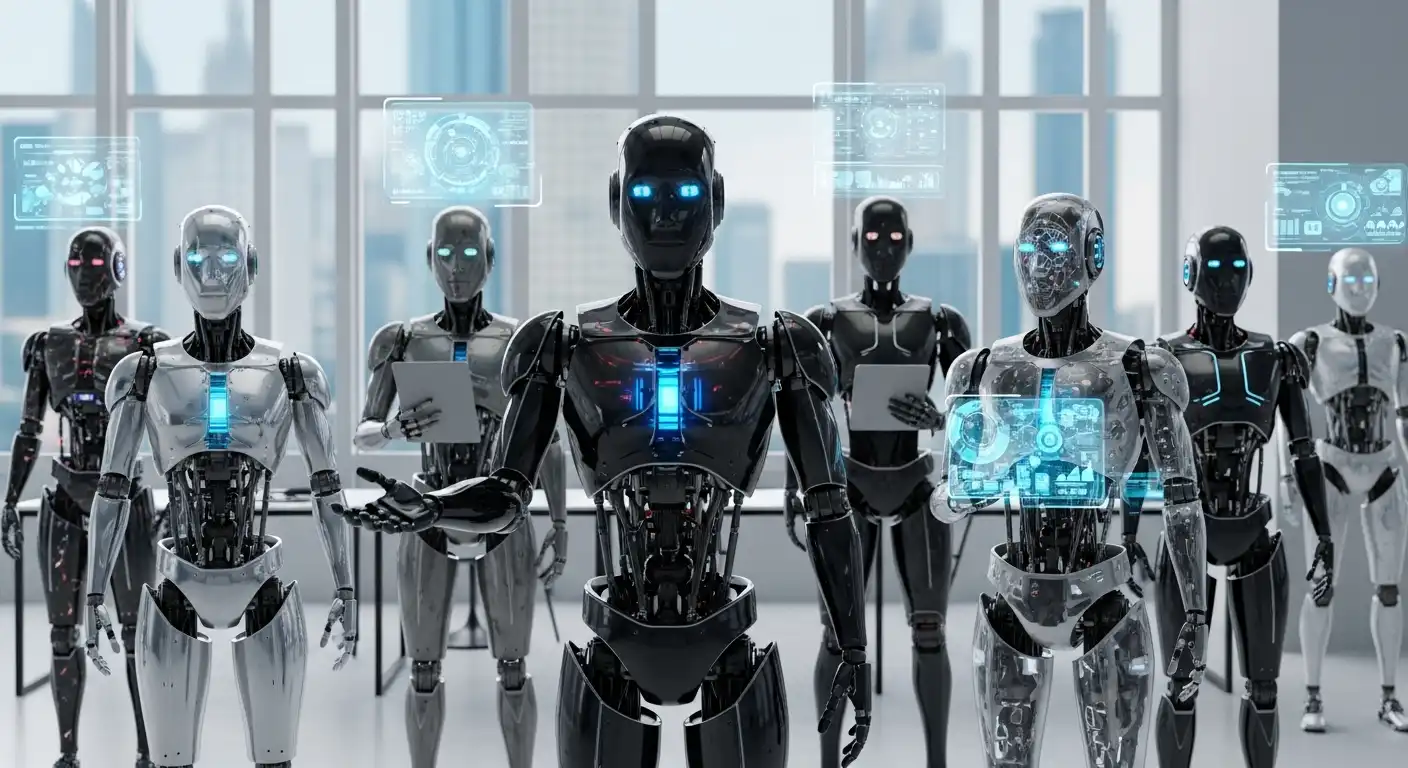
Robotics companies worldwide have achieved extraordinary physical breakthroughs over the past three years. Bipedal humanoid machines can now perform backflips, walk smoothly across uneven gravel, lift 25-kilogram crates, and execute delicate finger movements using custom electric actuators and tactile sensors. However, despite these hardware triumphs, the commercial deployment of general-purpose humanoid robots remains constrained by a fundamental challenge: artificial intelligence models still lack the spatial intelligence, real-world reasoning, and real-time adaptability required to function autonomously in unstructured environments.
While large language models can write complex software code, draft legal briefs, and score in the 99th percentile on standardized academic exams, they do not understand how physical objects interact in three-dimensional space. Teaching a robot to understand gravity, surface friction, material compliance, and sudden physical obstacles in real time requires a fundamentally different type of artificial intelligence. This gap between physical hardware capability and cognitive world modeling has created the humanoid robot brain bottleneck.
Capital investment into the sector has reached unprecedented levels. Corporate backers and venture capital funds have poured over $3.8 billion into humanoid robotics enterprises, driving corporate valuations into the billions. Industry forecasts project that the global market for humanoid assistants could expand to $38 billion by 2035, with more than 1.2 million enterprise units deployed across manufacturing facilities, logistics hubs, and commercial healthcare facilities. Yet, unlocking this commercial market depends entirely on whether software engineers can build embodied neural networks capable of mastering physical reality.
TechGolly provides a comprehensive technical and strategic analysis of the humanoid robotics industry, evaluating hardware maturity, vision-language-action models, the sim-to-real data gap, edge computing latency, factory deployment realities, and the future roadmap for artificial general intelligence in physical form.
Unpacking the Great Divergence Between Robotic Hardware and AI Minds
The rapid acceleration of humanoid hardware engineering has caught many technology analysts by surprise. A decade ago, bipedal robots were heavy, slow, tethered to external power supplies, and prone to violent balance failures when encountering minor floor bumps. Today, electric actuators featuring high-torque density, custom strain-wave gearing, and advanced battery chemistry allow machines like the Tesla Optimus, Figure 02, Boston Dynamics Electric Atlas, and Sanctuary AI Phoenix to operate untethered for 2 to 4 continuous hours.
Mechanically, modern humanoids offer up to 50 individual degrees of freedom, including multi-articulated hands equipped with micro-load cells and piezoresistive tactile skin on every fingertip. These physical components allow robots to manipulate tools designed for human hands, carry heavy industrial totes, and navigate standard doorway thresholds. Hardware reliability has reached a point where physical components can operate for thousands of hours without mechanical breakdown.
However, mechanical capability does not equal operational autonomy. The industry is grappling with Moravec’s paradox, a landmark principle in artificial intelligence observation which notes that reasoning tasks that humans find difficult—such as playing grandmaster chess or solving advanced calculus—are computationally simple for computers, while motor skills that human toddlers perform effortlessly—such as picking up a slippery piece of soap or folding a wrinkled shirt—are extraordinarily difficult for artificial systems.
When a human reaches for an object, the brain continuously integrates visual feedback, spatial depth estimation, muscle memory, and real-time tactile force adjustments. A human does not calculate precise mathematical coordinates for every joint; instead, the human motor cortex utilizes intuitive physics models developed through millions of movement iterations. Translating this fluid human intuition into deterministic computer code or neural network weights remains one of the hardest technical hurdles in modern computer science.
Vision-Language-Action Models and Spatial Grounding Constraints
To bridge the gap between digital reasoning and physical action, AI researchers developed Vision-Language-Action (VLA) models. These multimodal architectures combine visual processing, natural language understanding, and motor control outputs into a unified neural network. A user can provide a natural language prompt, such as “pick up the red screwdriver on the workbench,” and the VLA model processes camera feeds to identify the object, plan a trajectory, and output motor torque commands to the robot’s arms and fingers.
Despite promising initial demonstrations, VLA models face severe spatial grounding limitations. Traditional large language models process text as sequential 1D tokens, whereas the physical world operates in continuous, dynamic 3D space with complex temporal changes. When an AI model processes a 2D camera image, it must infer precise 3D spatial depth, lighting variations, reflections, and object occlusions.
A position estimation error as small as 2 millimeters can cause a humanoid robot to crush a delicate glass container, drop an industrial tool, or collide its mechanical hand into a solid metal workbench. Furthermore, VLA models struggle with physical causality. An AI system might recognize a hammer visually, but it does not inherently understand that dropping a heavy steel tool onto a glass panel will cause the panel to shatter.
Translating abstract linguistic concepts into precise physical control requires mapping human commands into complex mathematical matrices governing 30 to 50 individual joint motors simultaneously. Because neural networks generate probabilistic outputs rather than guaranteed deterministic results, a 1% failure rate in joint trajectory calculation can lead to catastrophic hardware damage or severe safety hazards in shared human workspaces.
The Embodied Data Drought and Sim-to-Real Transfer Barriers
The primary reason artificial intelligence models excel at language processing while struggling with physical robotics is the availability of training data. Large language models were trained on trillions of text tokens scraped from decades of internet creation, digital books, academic papers, and software repositories. In stark contrast, there is no internet-scale dataset containing millions of hours of high-fidelity physical touch, force dynamics, and joint torque readings.
Robotics companies cannot simply scrape the internet to teach a machine how to feel friction or balance on an icy surface. To collect real-world physical data, companies rely heavily on teleoperation. Human operators wear motion-capture suits, virtual reality headsets, and haptic gloves to manually control humanoid robots, recording sensor telemetry as they perform tasks like opening doors, stacking boxes, and assembling electronic components.
However, teleoperation is slow, labor-intensive, and expensive. Collecting 100,000 hours of teleoperated task data requires teams of human operators working in dedicated laboratory facilities for months, generating only a microscopic fraction of the data used to train modern language models.
To overcome this embodied data drought, engineering teams utilize high-physics computer simulations like Nvidia Isaac Sim and MuJoCo. In virtual environments, developers can instantiate thousands of simulated humanoid robots operating in parallel, running billions of training iterations in accelerated real-time. Through reinforcement learning, simulated robots learn to balance, walk, and manipulate objects through continuous trial and error.
The fundamental obstacle with this approach is the “sim-to-real transfer gap.” Computer simulations rely on mathematical approximations of physical laws. Virtual simulators struggle to perfectly model sub-millimeter material deformations, micro-surface friction variations, cable tension fluctuations, sensor noise, and thermal expansion inside electric motors. When a neural network trained entirely in a pristine digital simulator is transferred onto physical robot hardware in a real factory, subtle real-world physics discrepancies frequently cause the robot’s control policies to fail.
Latency Constraints and On-Device Edge Computing Balances
In physical robotics, computational latency is not merely a user-experience inconvenience; it is an immediate physical point of failure. Human motor control relies on fast, subconscious reflex loops that process balance adjustments and tactile feedback at sub-10 millisecond intervals. If a human trips on an uneven rug, the spinal cord and brainstem execute automatic muscle contractions in milliseconds to prevent a fall before the conscious mind even registers the obstacle.
Large frontier AI models hosted in remote cloud data centers require 200 to 500 milliseconds of round-trip network latency to process camera frames, run inference through multi-billion-parameter neural networks, and transmit motor commands back over Wi-Fi or 5G cellular connections. A half-second delay between sensing an obstacle and executing a physical response means a 70-kilogram humanoid robot will lose balance, fall over, and potentially damage surrounding equipment before receiving the corrective command.
Consequently, critical reflex, balance, and fine motor control policies must execute locally on edge computing hardware installed directly inside the robot’s torso or head. However, integrating high-performance AI inference chips inside a mobile robot chassis introduces severe power and thermal constraints.
Edge compute modules must operate within a strict electrical power budget, typically between 150 Watts and 300 Watts, to avoid draining the onboard lithium-ion battery pack within an hour. Furthermore, cooling high-density processing chips inside a sealed, moving metallic frame requires lightweight passive heat sinks or compact liquid-cooling loops.
As a result, modern humanoid architectures deploy a split-brain processing model. Onboard edge processors handle high-frequency 1,000 Hertz sensorimotor reflex loops, joint state estimation, and dynamic balance stability. Simultaneously, larger cloud-based foundation models manage low-frequency 1 Hertz task planning, high-level natural language understanding, and global environment mapping, balancing local execution speed with cloud-scale intelligence.
Enterprise Deployments: From Structured Assembly Lines to Unstructured Homes
Given the current limits of spatial reasoning, robotics developers are strategically focusing commercial deployments on structured industrial environments rather than complex domestic households. Global automotive manufacturers, including BMW, Mercedes-Benz, Hyundai, and Tesla, are running active pilot programs deploying humanoid robots inside production plants.
Automotive assembly facilities offer an ideal intermediate testing ground for embodied AI. Factory floors feature smooth, level concrete surfaces, predictable overhead lighting, standardized safety corridors, and fixed operational workflows. Robots are assigned highly repetitive, structured tasks, such as moving plastic component totes between conveyor belts, picking up specific metal brackets, or sequencing parts for human assembly line workers.
In these structured environments, engineers can minimize unpredictable edge cases. If a robot’s task is restricted to lifting a specific 5-kilogram battery module from a fixed bin and placing it onto an automated guided vehicle 2 meters away, software developers can program precise operational boundaries, dramatically reducing the risk of unexpected algorithmic errors.
In stark contrast, domestic household environments represent the absolute summit of physical robotics difficulty. A typical home is chaotic and completely unstructured. Floors are covered in soft carpets, scattered toys, and electrical cords. Objects vary wildly in shape, weight, texture, and fragility—ranging from heavy ceramic coffee mugs to soft, flexible clothing.
Furthermore, domestic environments contain unpredictable dynamic obstacles, such as playing children and roaming household pets that move suddenly into a robot’s swinging arm path. A 70-kilogram humanoid constructed from rigid aluminum and high-torque motors poses a severe physical injury risk if its vision systems fail to detect a child sitting on the floor. Until safety systems achieve verified 99.9999% operational reliability under chaotic home conditions, commercial residential deployment will remain commercially unfeasible.
Economic Unit Economics and Mass Production Thresholds
While software intelligence remains the primary bottleneck, the economic equation governing humanoid deployment is improving rapidly. Three years ago, prototype bipedal humanoids cost upwards of $150,000 to $250,000 per unit to build manually in boutique research laboratories. High component costs for specialized harmonic drive gearboxes, frameless torque motors, and custom tactile sensor arrays made widespread commercial adoption economically impossible.
As supply chains scale and major manufacturing conglomerates enter the component market, the hardware bill of materials (BOM) for enterprise humanoids is falling dramatically. Industry analysts project that once production volumes reach 50,000 units annually, manufacturing costs per robot will decline toward $30,000 to $50,000—a price point comparable to a standard industrial robotic arm or a mid-sized passenger automobile.
From a corporate return-on-investment perspective, calculating labor parity is straightforward. If a humanoid robot costs $40,000 to manufacture and maintains an operational lifespan of 5 years with minimal maintenance, its fully burdened operational cost sits at approximately $5 to $8 per hour. In North American and European industrial markets, where fully burdened human manufacturing wages range between $25 and $45 per hour, a functional humanoid robot pays for itself within 12 to 18 months of continuous factory operation.
This compelling labor economic narrative explains why industrial conglomerates are investing heavily in early pilot deployments despite current software limitations. Executives recognize that as soon as embodied AI models cross the threshold of basic operational reliability, the commercial transition from human manual material handling to automated robotic labor will occur rapidly across global supply chains.
Strategic Roadmap for Next-Generation Robotic Brains
Solving the humanoid robot brain bottleneck requires fundamental innovations in neural network design, spatial representations, and training methodologies. Computer scientists and AI research laboratories are actively pursuing several promising architectural paths to endow machines with true spatial intuition and physical reasoning.
One major research vector focuses on spatial world models. Unlike traditional language models that predict the next text token in a sentence, world models attempt to predict the future 3D state of a physical environment based on current sensory inputs and proposed physical actions. By learning an internal mental simulation of physics, a robot can mentally evaluate the consequences of an action—such as predicting whether a stack of boxes will tip over if pushed from the side—before physically moving its mechanical arm.
Another critical development is the emergence of self-supervised foundation models for physics perception. By processing millions of hours of video feeds paired with IMU motion data, force sensors, and depth maps, these foundation models build unified spatial representations that allow robots to estimate object mass, center of gravity, structural stability, and surface friction simply by observing an object visually and making initial light contact.
Hybrid control architectures are also gaining widespread commercial favor. Rather than relying entirely on end-to-end neural networks, where a black-box model directly outputs motor voltages from camera pixels, hybrid frameworks combine the adaptability of deep learning with traditional, deterministic control theory.
In a hybrid architecture, neural networks handle high-level visual perception, object recognition, and adaptive motion planning. However, the output of the neural network passes through a deterministic physical safety layer that uses established mathematical equations to enforce absolute balance stability, joint velocity limits, and maximum collision force boundaries. This hybrid approach guarantees that even if a deep learning model experiences a software glitch, the robot’s physical safety layer overrides the command to prevent physical damage or human injury.
Key Takeaways for Robotics Executives and Industrial Automators
The current evolution of the humanoid robotics industry delivers vital strategic takeaways for corporate decision-makers, industrial automation leaders, technology investors, and software engineers.
First, hardware is no longer the primary gating factor for enterprise adoption. Companies evaluating humanoid automation must evaluate vendor software architectures, spatial perception capabilities, and real-time control latency rather than focusing solely on impressive mechanical walking demonstrations or payload specifications.
Second, industrial data collection must become a primary strategic priority. Organizations operating factories and warehouse facilities possess a massive strategic advantage: access to real-world operational environments. Partnering with robotics developers to collect high-fidelity physical interaction data will accelerate the development of specialized task models tailored to specific industrial sectors.
Third, commercial deployment must follow a phased, risk-managed progression. Organizations should initiate pilot implementations in highly structured, low-risk operational zones—such as night-shift tote transport or dark warehouse sorting—before attempting to integrate humanoids into high-speed, collaborative human assembly lines.
Finally, the convergence of high-density electric hardware and embodied spatial intelligence represents a paradigm shift in physical automation. While humanoids still lack the general physical reasoning of a human child today, the continuous refinement of spatial world models, synthetic training environments, and hybrid control systems ensures that physical artificial intelligence will fundamentally reshape global industrial operations over the coming decade.