Wall Street equity research desks are issuing major rating upgrades, target price revisions, and “Top Pick” designations as the technology sector enters a crucial second-quarter earnings reporting cycle. Leading financial analysts from top global investment banks are recalibrating their portfolio models, directing institutional capital toward a concentrated group of high-conviction artificial intelligence market leaders. The overarching theme across research notes signals a clear rotation away from speculative software narratives toward physical hardware enablers, custom semiconductor designers, hyperscale cloud infrastructure providers, and high-bandwidth memory manufacturers.
The urgency behind these analyst rating moves reflects the sheer financial scale of the ongoing artificial intelligence infrastructure buildout. Global technology hyperscalers are committing between $195 billion and $210 billion each in annual capital expenditures to construct liquid-cooled server halls, procure high-density graphics processors, and secure long-term electrical power grid interconnections. Simultaneously, global investor demand has driven record capital flows into exchange-traded funds, with total United States ETF inflows crossing $1 trillion in the first six months of the year alone.
To help institutional investors and corporate decision-makers navigate the upcoming earnings flood, Wall Street analysts have highlighted five primary stock moves. These top stock picks include semiconductor giant Nvidia, cloud and e-commerce leader Amazon, digital search and cloud titan Alphabet, high-density server manufacturer Supermicro, and the global high-bandwidth memory semiconductor triad led by SK Hynix and Micron Technology.
TechGolly provides a comprehensive financial and technology analysis of these five major analyst moves, evaluating price target upgrades, cloud revenue reacceleration, custom silicon commitments, liquid-cooled server architectures, memory contract pricing supercycles, and strategic takeaways for long-term equity investors.
Move 1: Nvidia Retains Top Pick Status as Blackwell Ramps and Demand Outstrips Supply
Wall Street equity research teams across multiple top-tier investment banks unanimously reaffirmed Nvidia as their top overall pick heading into the second-quarter earnings release. Equity analysts raised their 12-month price targets on the graphics processing unit pioneer to a range between $160 and $175 per share, citing an accelerating manufacturing ramp for its next-generation Blackwell architecture and insatiable global customer demand.
At the center of analyst optimism is the commercial rollout of Nvidia’s Blackwell product lineup, including the high-density B200, GB200 NVL72, and GB300 Grace Blackwell liquid-cooled server architectures. Supply chain channel checks confirm that manufacturing capacity for Blackwell systems is fully booked through mid-2027. Major cloud service providers, enterprise technology teams, and sovereign nation data center initiatives are placing advance multi-billion-dollar orders, guaranteeing high factory utilization rates for Nvidia’s foundry partners.
Analyst research notes emphasize that fears of a temporary vacuum between legacy Hopper chips and incoming Blackwell architecture have proven unfounded. Demand for Nvidia’s H100 and H200 processors remains exceptionally strong as cloud hyperscalers deploy available hardware immediately to handle real-time inference workloads. Consequently, Wall Street consensus estimates project Nvidia’s quarterly data center revenue to exceed $30 billion, representing a multi-fold increase compared to historical baselines.
Furthermore, Nvidia’s gross operating margins are projected to remain at industry-leading levels near 73% to 75%. While initial production yields for complex advanced packaging systems traditionally carry higher early manufacturing costs, Nvidia’s immense pricing power allows the company to pass input costs directly to enterprise buyers, insulating corporate profitability from input cost inflation.
Custom Silicon and Networking Multipliers: Spectrum-X and NVLink
A secondary catalyst driving analyst price target upgrades for Nvidia is the rapid expansion of its high-speed networking division. Modern artificial intelligence training clusters require massive network bandwidth to synchronize calculations across tens of thousands of interconnected GPUs without creating data packet bottlenecks.
Nvidia’s networking portfolio, led by its Quantum InfiniBand platform and its open-standard Spectrum-X Ethernet switches, has evolved into a multi-billion-dollar annual business unit. The Spectrum-X platform, engineered specifically for multi-tenant artificial intelligence cloud data centers, delivers up to 1.6 times higher networking performance than traditional Ethernet switches, allowing cloud operators to maximize GPU compute utilization.
Simultaneously, Nvidia’s proprietary NVLink inter-GPU interconnect technology creates an insurmountable competitive moat. By enabling direct GPU-to-GPU memory communications at 1.8 Terabytes per second per chip, NVLink allows 72 individual Blackwell GPUs in a single liquid-cooled rack to operate as a single, unified mega-processor. This hardware-level integration locks enterprise software developers into Nvidia’s CUDA software ecosystem, making it difficult for competing accelerator chips to capture market share in frontier model training.
Move 2: Amazon Picked as Cloud Leader as AWS Reaccelerates Past 30 Percent
Investment research desks at major global banks designated Amazon as their top mega-cap internet pick ahead of its July 30 financial report, elevating 12-month price targets into the $310 to $335 price range. The primary fundamental thesis driving Wall Street enthusiasm is a dramatic reacceleration in revenue growth at Amazon Web Services, the company’s high-margin cloud computing division.
After experiencing a temporary growth slowdown as corporate clients optimized cloud software budgets during prior quarters, AWS has entered a fresh expansion cycle. Financial analysts project AWS quarterly revenue growth to reach between 31% and 33% year-over-year, supported by a massive contracted order backlog of $364 billion. AWS is operating at an annualized revenue run rate of $150 billion, proving that enterprise technology buyers are committing massive capital to expand cloud workloads.
A major driver of AWS cloud reacceleration is Amazon’s proprietary custom silicon strategy. Amazon’s custom-designed artificial intelligence processors, led by Trainium accelerator chips and Graviton general-purpose CPUs, are operating at an annualized revenue run rate exceeding $20 billion. Management confirmed that total customer commitments for Trainium chips passed $225 billion, anchored by multi-billion-dollar infrastructure agreements with leading artificial intelligence research labs, including a $100 billion-plus commitment from Anthropic.
Furthermore, enterprise adoption of Amazon Bedrock, the company’s managed artificial intelligence software platform, is expanding exponentially. Bedrock processed more API tokens in a single quarter than in all prior operating periods combined, driven by enterprise integration of frontier models like Anthropic’s Claude 3.5 Sonnet and OpenAI’s GPT-5.6. Workloads tied directly to Anthropic are estimated to contribute over $1.5 billion in sequential AWS revenue growth, delivering immediate top-line expansion.
Retail Efficiency, Advertising Yields, and Free Cash Flow Recovery
While AWS generates the majority of consolidated operating income, Amazon’s core retail and digital advertising operations are providing powerful cash flow support.
Amazon’s digital advertising division has emerged as one of the fastest-growing and highest-margin revenue streams in global media. Generating over $17.2 billion in quarterly advertising revenue—a 22% increase year-over-year—Amazon is successfully monetizing high-intent retail search traffic and expanding sponsored ad formats across Prime Video and third-party publisher networks.
Simultaneously, North American retail operations are delivering strong profit margin expansion. By reorganizing its fulfillment architecture from a single centralized national network into eight regional fulfillment hubs, Amazon drastically reduced average package delivery distances, cut logistics expenses, and improved inventory placement. These operational efficiencies expanded North America retail operating margins to 7.9%, generating $8.3 billion in quarterly operating income.
This high operational profitability across retail and advertising allows Amazon to fund its unprecedented $200 billion to $210 billion 2026 capital expenditure program while maintaining a healthy balance sheet, reassuring institutional investors that near-term cash outlays will yield high-margin recurring cloud revenues over time.
Move 3: Alphabet Cloud Acceleration Offsets Search Nuances
Wall Street equity analysts issued positive research updates on Alphabet following its second-quarter financial disclosures, emphasizing that extraordinary acceleration in Google Cloud outweighs minor nuances in core digital search advertising. Analysts reiterated buy ratings and maintained price targets in the $210 to $230 range, highlighting Alphabet’s transition into an enterprise artificial intelligence powerhouse.
Google Cloud delivered a historic performance, generating $24.8 billion in quarterly revenue, representing an 82% annual growth rate that thoroughly surpassed Wall Street expectations of $22.2 billion. The cloud division demonstrated massive financial operating leverage, as segment operating income surged to $8.8 billion, pushing operating margins up to 35.6% from 20.7% in the prior-year period.
Future revenue visibility reached record levels as Google Cloud’s contracted order backlog expanded to $514 billion, up from $462 billion in the preceding quarter. Global enterprise corporations are signing multi-year infrastructure hosting contracts to secure guaranteed access to Google’s custom Trillium Tensor Processing Units and high-speed global fiber network.
On the software side, Alphabet’s flagship foundation model, Gemini, achieved rapid enterprise market penetration. Management reported that nearly 90% of Fortune 100 corporations now deploy active commercial installations of Gemini Enterprise across their operational units. Enterprise systems process over 22 billion API tokens per minute through Google Cloud infrastructure, while the standalone Gemini app reached 950 million active monthly users.
The $205 Billion Capex Reality and Private Equity Gains
To sustain this cloud growth momentum, Alphabet executed an unprecedented physical buildout, spending $44.9 billion on capital expenditures in a single 90-day window and raising full-year 2026 capital expenditure guidance to between $195 billion and $205 billion.
While negative quarterly free cash flow of -$5.9 billion initially triggered short-term market caution, financial analysts emphasize that Alphabet’s vertical integration creates an irreplaceable structural moat. By designing proprietary custom silicon (Trillium TPUs), operating private global dark fiber networks, training proprietary foundation models (Gemini), and managing enterprise developer platforms (Vertex AI), Alphabet controls its entire technical stack, dramatically reducing its long-term cost per processed token.
Furthermore, Alphabet’s balance sheet received a massive boost from non-operational paper gains. The company recognized $98 billion in pre-tax unrealized gains on its private equity portfolio, driven primarily by upward valuation re-ratings for its early venture capital investments in SpaceX and Anthropic.
These paper investment gains highlight Alphabet’s strategic positioning across the global technology ecosystem, providing immense balance sheet strength to absorb near-term data center construction expenses.
Move 4: Supermicro and Infrastructure Enablers Capture Server Market Share
As high-density artificial intelligence server racks push physical power and thermal limits to historical highs, Wall Street analysts are aggressively upgrading hardware infrastructure enablers that specialize in high-efficiency server design and advanced liquid cooling.
Super Micro Computer, Inc. captured prominent analyst upgrades following the official launch of its next-generation H15 server portfolio. Powered by 6th Generation AMD EPYC 9006 Series processors, Supermicro’s new server family delivers up to 256 cores and 512 execution threads per dual-socket node, featuring a 1.7x generational CPU performance boost based on SPECint Rate 2017 benchmarks.
The H15 portfolio addresses the rapid rise of agentic artificial intelligence, where autonomous software agents execute multi-step reasoning tasks concurrently across enterprise networks. To prevent server processing bottlenecks, H15 systems deliver 33% more CPU cores, twice the PCIe I/O bandwidth, and 2.6 times higher memory bandwidth compared to prior-generation builds.
A major differentiator elevating Supermicro’s market position is its complete mastery of direct-to-chip liquid cooling technology. The company introduced its AMD Helios Platform, a fully integrated 72-GPU liquid-cooled rack-scale system combining 72 AMD Instinct MI455X GPUs, 6th Gen EPYC processors, and high-speed AMD Pensando Pollara 400 AI NIC open Ethernet networking into a single supercomputing rack.
Additionally, Supermicro introduced two new 5U PCIe GPU servers—the AS-5126GS-TNRT and AS-5126GS-TNRT2—engineered to host up to ten AMD Instinct MI350P GPUs, each equipped with 144GB of high-speed HBM3e memory. Utilizing direct-to-chip liquid cooling plates cuts facility fan power consumption by up to 40%, enables 85% physical server consolidation, and reduces three-year total cost of ownership by over 60%, positioning Supermicro as a primary hardware supplier for energy-constrained data centers.
Move 5: Memory Chipmakers Experience Historic Price Supercycle
The fifth major analyst move centers on a historic price supercycle across global memory semiconductor markets, prompting research desks to name memory titans SK Hynix, Micron Technology, and Samsung Electronics as top structural buys for the remainder of the year.
The rapid deployment of artificial intelligence data centers has created a severe physical supply squeeze in high-bandwidth memory (HBM) and high-density server DRAM. High-bandwidth memory stacks, which are vertically stacked directly alongside GPU processing dies using advanced TSV micro-bumps, provide the massive memory bandwidth required to prevent processing starvation during large language model inference.
South Korea’s SK Hynix has established an undisputed leadership position in the HBM market, controlling between 50% and 62% of global HBM shipments and acting as the primary HBM supplier for top-tier GPU systems. SK Hynix recently completed a historic $26.5 billion American depositary receipt offering in the United States, utilizing the capital to expand domestic fab capacity and fund a $518 billion semiconductor mega-cluster in South Korea. Driven by 40% quarter-over-quarter increases in server DRAM prices and 50% gains in NAND flash prices, SK Hynix’s quarterly revenue is projected to surge over 260% year-over-year.
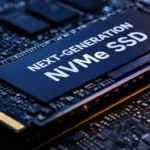
Market leader Samsung Electronics delivered equally staggering preliminary metrics, forecasting a second-quarter operating profit of approximately $58.4 billion—a nearly 19-fold increase compared to the prior-year period—and a 129% jump in quarterly revenue. Samsung is deploying $40 billion in capital expenditures to mass-produce HBM4 architecture and supply high-capacity enterprise solid-state drives for data center storage.
Similarly, Japanese NAND specialist Kioxia Holdings prepared an American depositary share listing on the New York Stock Exchange following a 300% stock rally that elevated its corporate valuation to $177 billion. Kioxia reported a 314% quarter-over-quarter jump in operating profit to $4.1 billion, driven by explosive demand for enterprise SSDs that store massive AI training datasets.
Key Takeaways for Institutional Investors and Technology Leaders
The wave of Wall Street analyst AI stock moves delivers critical strategic insights for corporate executive officers, technology architects, portfolio managers, and individual investors evaluating the technology market.
First, physical infrastructure represents the primary bottleneck and highest-conviction investment domain in artificial intelligence. Capital is flowing decisively toward companies that supply raw computing hardware, advanced semiconductor packaging, high-bandwidth memory, high-voltage electrical transformers, and direct-to-chip liquid cooling systems.
Second, custom silicon is reshaping cloud economics. Hyperscalers like Amazon and Alphabet that design proprietary custom processors (Trainium, Trillium) provide lower cost per token to enterprise buyers while protecting internal operating profit margins against third-party silicon price inflation.
Third, liquid cooling has transitioned from a niche supercomputing feature into a mandatory enterprise requirement. Server manufacturers that master direct-to-chip liquid cooling will capture outsized market share as data centers consolidate physical server footprints to operate within rigid electrical grid power constraints.
Finally, the artificial intelligence supercycle is generating multi-year earnings visibility across the entire technology supply chain. By aligning investment capital with physical supply chain realities, cloud infrastructure expansion, and verified corporate order backlogs, global market participants can capture sustained capital growth throughout the Q2 earnings season and into the years ahead.