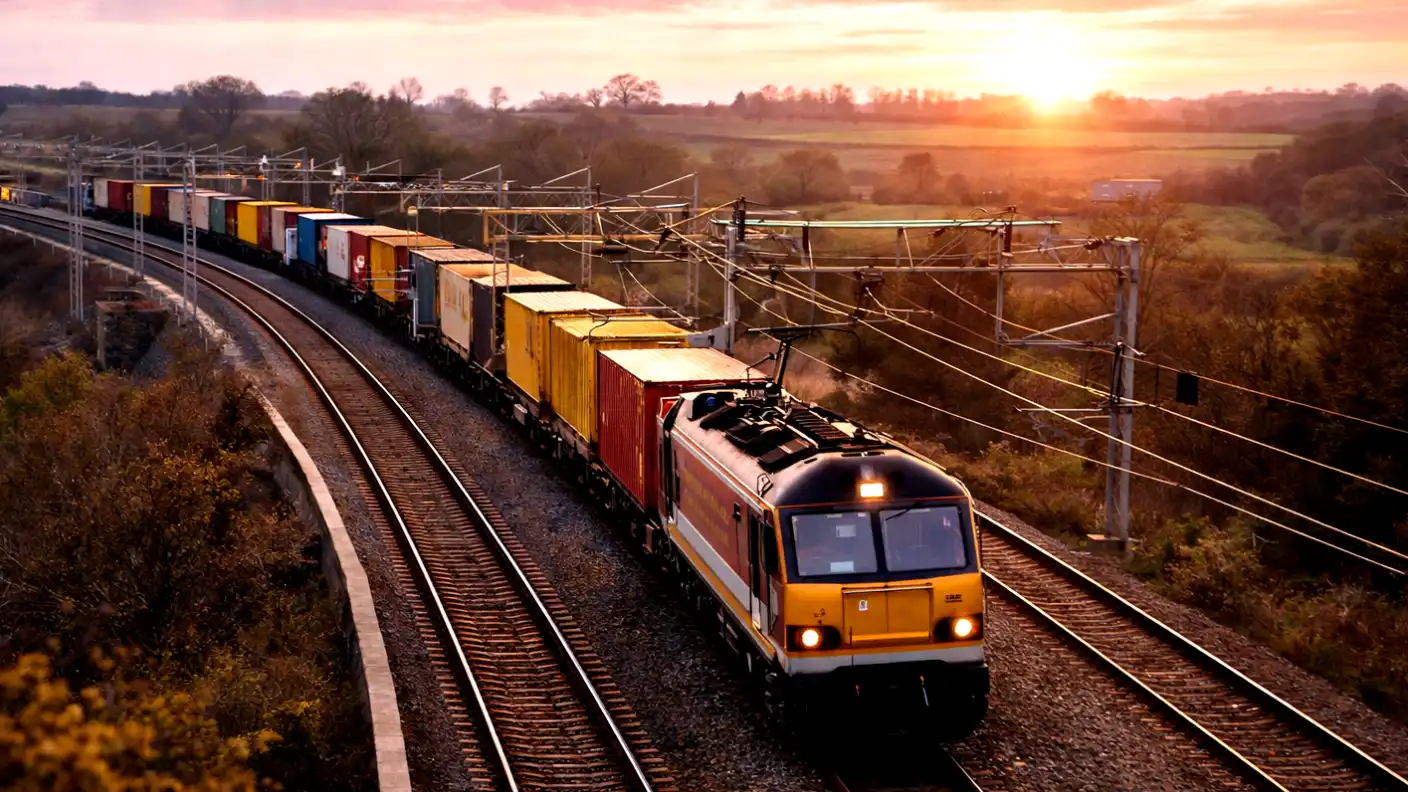
The global transportation sector is witnessing a massive, highly strategic shift in how rail networks manage environmental extremes. European transit authorities are turning to Chinese rolling stock manufacturers to modernize their aging fleets, specifically choosing trains that feature advanced, high-capacity heating, ventilation, and air conditioning systems. As record-breaking heatwaves regularly shatter historical temperature records across the continent, the simple ability to maintain a comfortable cabin environment has become the primary requirement for railway operators fighting to keep passengers on trains and off the roads.
This influx of high-tech Chinese train cars is not just about passenger comfort. It represents a significant, long-term industrial pivot. While legacy European rail manufacturers struggled with long production backlogs, complex regulatory friction, and rising domestic labor costs, Chinese firms like CRRC Corporation managed to scale their production of advanced, climate-controlled rolling stock at an unprecedented pace. These manufacturers are now flooding the European market with trains that arrive ahead of schedule, meet strict environmental efficiency standards, and, crucially, keep passengers cool during the increasingly common 40-degree Celsius summer days.
The economic impact of this equipment migration is significant. By exporting thousands of train cars to markets in Central and Eastern Europe, Chinese manufacturers are not only capturing multi-billion-dollar government contracts but also establishing a permanent, high-visibility presence in the European transport ecosystem. For policymakers, this provides a quick, cost-effective solution to the growing crisis of “heat-stress” public transportation. For domestic European manufacturers, however, the trend serves as a warning that without rapid innovation and supply chain reform, they risk losing their own backyard to more efficient, highly aggressive global competitors.
The Engineering Behind the Climate-Ready Cabin
The technical specifications of the new generation of Chinese trains are designed to thrive in environments that previously paralyzed older European models. Many legacy trains operating in Central and Eastern Europe were originally built in the 1980s and 1990s, an era when air conditioning was considered a luxury rather than a public health necessity. These aging vehicles frequently lack the electrical capacity or the structural insulation to handle the intense, prolonged heat loads of modern summers.
Chinese engineers solved this problem by integrating industrial-grade HVAC technology directly into the train’s primary power distribution network. The new units feature high-efficiency heat exchangers and advanced sensor arrays that monitor the cabin’s temperature in real-time, automatically adjusting airflow to maintain a consistent, cool environment regardless of the temperature outside. These systems are significantly more robust than the retrofit solutions often installed by European operators, which frequently fail when internal temperatures exceed 35 degrees Celsius.
Beyond simple cooling, the new rolling stock incorporates advanced, highly reflective exterior coatings and double-paned solar-control glass. These materials act as a passive shield, preventing the greenhouse effect from turning the train car into an oven during direct sunlight exposure. By lowering the total thermal load before the air conditioning system even activates, the trains consume roughly 15 percent less electricity than standard models, helping transit authorities reduce their overall energy expenses while significantly improving the passenger experience.
The Strategic Expansion into Central and Eastern Europe
The primary beachhead for these technology exports is Central and Eastern Europe, where transit agencies face an acute, immediate need to modernize their infrastructure. Countries like Serbia, Hungary, Poland, and Romania have faced immense political pressure to offer commuters a viable, comfortable alternative to private automobiles. With traffic congestion and air pollution rising in major urban centers, these nations are investing heavily in railway expansion, and Chinese manufacturers are moving quickly to fulfill the orders.
The growth is not just concentrated in a single country. In Serbia, for instance, Chinese-built high-speed electric train sets have become a regular sight on the busy Belgrade-to-Novi Sad line. The performance of these trains, which feature full-spectrum climate control and high-speed Wi-Fi, has garnered immense praise from local commuters, creating a strong brand reputation that makes it difficult for domestic politicians to ignore the technology during future bidding rounds.
The success of these regional projects creates a “reference case” effect. Once a transit authority in one country successfully integrates these high-capacity, air-conditioned trains into its daily schedule, it provides empirical evidence to neighboring agencies. This demonstration of reliability and passenger satisfaction helps the manufacturers win additional contracts, creating a virtuous cycle of export growth that allows them to scale their presence across the continent.
The Economic Collision: China’s Industrial Power vs. European Manufacturing
The rapid arrival of Chinese rolling stock is triggering a fierce, highly polarized debate over the future of Europe’s own rail manufacturing base. Organizations like Alstom in France and Siemens in Germany have spent decades dominating the high-end European market. They argue that the influx of Chinese equipment represents unfair competition, backed by massive state subsidies and low-cost financing that no private European firm can ever hope to match.
The European rail industry has faced years of severe structural challenges. High energy costs, fragmented national safety standards, and slow-moving public procurement processes have allowed more agile global competitors to undercut them on price and delivery timelines. When a transit agency needs 50 new trains by next summer, a domestic manufacturer might promise delivery in three years due to supply chain backlogs, while a Chinese manufacturer commits to delivery in twelve months at a significantly lower price point.
For cash-strapped local governments, the choice is financially obvious. They must deliver better services to their citizens while managing shrinking municipal budgets. The political fallout is significant. Unions and industry associations are pressuring Brussels to implement stricter local-content requirements, similar to the rules governing the automotive sector, to prevent the total hollowing out of the European railway manufacturing industry.
The Rise of High-Speed Rail Ambitions
A critical factor driving the demand for these new trains is the European Union’s broader, long-term strategic plan to connect all major cities with high-speed rail. The bloc wants to shift millions of travelers from short-haul flights to high-speed trains to meet its 2050 climate neutrality goals. This requires a continental-scale expansion of track infrastructure and the acquisition of thousands of new, high-speed train sets.
The sheer volume of this requirement means that traditional European manufacturers simply lack the capacity to supply the demand alone. They are already running at near-maximum production capacity for existing rail orders.
This supply deficit effectively forces the hand of transit authorities. They have to open their doors to international competitors to ensure they can hit their decarbonization targets.
Chinese companies are the only global players with the massive, existing manufacturing infrastructure capable of scaling up production to meet this multi-billion-euro equipment gap, ensuring that the rail expansion remains on track despite the manufacturing limitations of the legacy European firms.
Maintaining Market Power through Local Partnerships
Chinese firms have also matured their strategies, moving beyond a simple “import-only” business model. To avoid the political label of being “dumpers” of cheap hardware, they are aggressively pursuing local manufacturing partnerships. They are actively scouting for underutilized European factories where they can establish final assembly lines, train local workers, and source a significant percentage of their components from European suppliers.
By transforming their export model into a localized assembly model, Chinese manufacturers are satisfying the political requirements for “made in Europe” content. This approach builds deep, high-value relationships with local communities, secures the support of local political representatives, and minimizes the risk of sudden, retaliatory trade tariffs.
This sophisticated, long-term strategy demonstrates that these companies are not merely looking for a quick sale, but are committed to establishing a permanent, industrial presence that can serve the European market for decades.
The Technology Arms Race: Moving Toward Autonomous Smart Trains
The competition between Europe and China in the rail sector is no longer just about metal, air conditioning, and track speed. It is increasingly about software-defined intelligence. Chinese manufacturers are pioneering the use of advanced sensors, real-time data monitoring, and predictive artificial intelligence to minimize downtime and optimize the operation of their trains.
These “smart trains” transmit terabytes of operational data to central monitoring stations, identifying potential mechanical failures in wheels, bearings, or cooling motors before they can result in service interruptions. This predictive maintenance model is revolutionary for transit agencies, who have traditionally relied on scheduled, manual inspections that are both slow and expensive.
Integrating Advanced Artificial Intelligence for Safety
Safety remains the absolute, non-negotiable priority for railway operators. Chinese manufacturers are integrating high-definition, AI-powered computer vision systems into the front and sides of their trains. These cameras continuously scan the tracks for foreign objects, unauthorized people, or debris that might pose a collision risk.
The AI system can identify a hazard, alert the driver, and automatically apply the emergency brakes in a fraction of a second, significantly improving the safety threshold of the entire network.
European operators, who deal with older, more complex track systems, are finding these integrated safety features to be highly compelling.
They help reduce the overall cost of safety monitoring and enhance the confidence of passengers, making the trains a safer alternative to the increasing risks of high-speed highway traffic during the chaotic, unpredictable heatwaves of modern summers.
Transforming the Commuter Experience
The push toward high-tech, climate-controlled, and automated trains is fundamentally altering the passenger experience. Commuters are demanding a mobile office and entertainment suite as the baseline standard for any modern public transport journey.
The new Chinese-supplied fleets integrate high-speed Wi-Fi, localized information displays, and advanced sound-dampening materials that make the cabin as quiet and comfortable as a modern luxury vehicle.
By prioritizing passenger comfort through advanced environmental engineering, these manufacturers are successfully winning the war for the commuter’s loyalty, proving that a reliable, climate-controlled train car is the ultimate weapon for convincing citizens to leave their cars behind.
As the European rail network accelerates its modernization, the influx of advanced Chinese rolling stock serves as a powerful, unavoidable reminder of the global nature of modern industrial competition. The challenge for European manufacturers is clear: they must either adopt the rapid, high-tech manufacturing and climate-adaptive engineering standards of their new competitors, or risk losing their role as the primary providers for the continent’s most critical public transit infrastructure.
The future of European rail travel is being built in the factories of China, and the resulting revolution is one that every daily commuter will feel the moment they step into a cool, air-conditioned train car during the sweltering heat of August. This technological migration is reshaping the continent’s industrial landscape and proving that in the race to save our public transit systems, the primary priority is no longer just about connecting cities—it is about keeping passengers comfortable, safe, and moving in a world that is rapidly warming.