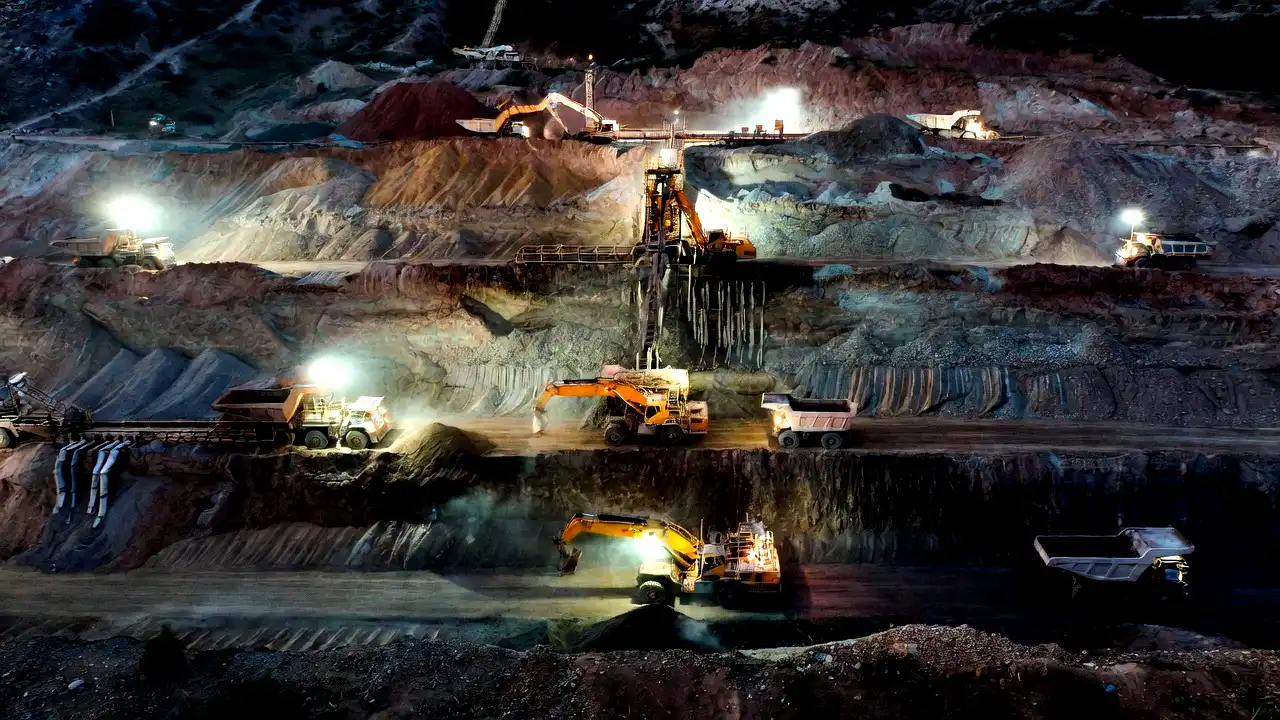
For over a decade, the threat of a Chinese rare earth export embargo hung over the global technology sector like a sword of Damocles. Beijing’s dominance in the mining, refining, and processing of these seventeen critical elements gave it immense geopolitical leverage. Technology giants in the United States, Europe, and Japan built their business models on the assumption that they could cheaply source these foundational materials from a single, state-controlled supply chain. Today, that leverage is rapidly eroding. The weaponization of rare earth minerals is failing because the rest of the world has finally stopped panicking and started building.
The market power that once allowed Beijing to dictate terms to Western defense contractors and electric vehicle manufacturers is transforming into a liability. High prices and the constant threat of supply disruption pushed Western nations and private firms to launch one of the most ambitious industrial re-shoring campaigns in modern history. By investing more than $12 billion into domestic refining capabilities, advanced recycling technologies, and alternative magnetic materials, the global industry has effectively engineered its way out of dependency.
This shift signifies a permanent change in the geopolitics of the periodic table. Rare earth elements are no longer the exclusive tools of one nation’s foreign policy; they are now the foundation of a competitive, globalized industrial strategy. As China continues to tighten export controls on these critical components, it inadvertently accelerates the pace at which Western markets develop independent, self-sustaining alternatives. The rare earths weapon is losing its force because the international supply chain has become decentralized, resilient, and increasingly immune to the sudden, unilateral trade mandates of any single government.
The Physical Reality of Rare Earth Scarcity and Market Dominance
To understand the changing power dynamics, one must first dismantle the myth that these elements are physically rare. In reality, elements like neodymium, dysprosium, and terbium are geologically abundant, appearing in concentrations similar to common metals like copper or nickel. The true bottleneck has always been the chemical complexity and environmental intensity of the refining process. Separating these elements from raw ore requires massive, highly specialized chemical plants that generate significant hazardous waste, an industrial burden that Western nations willingly offloaded to China during the late 1990s and early 2000s.
This offshoring strategy gave China a near-total monopoly. At its peak, the nation controlled roughly 90 percent of the world’s refined rare earth output. This dominance allowed the country to influence global prices, stifle domestic Western manufacturing, and force technology companies to keep their production facilities in Asia. However, this monopoly also created a massive, systemic risk for the global economy. When military conflicts, trade disputes, or shipping blockades emerged, the entire high-tech supply chain could be brought to a halt.
Breaking the Chemical Refining Monopoly
The re-shoring movement has focused entirely on fixing this refining gap. Massive capital has poured into constructing independent, high-purity separation facilities across North America, Australia, and the European Union. These facilities utilize modern, environmentally conscious technologies that avoid the toxic liquid waste ponds that characterized traditional Chinese operations. For example, new U.S.-based refineries are using advanced liquid chromatography and ionic separation processes that occupy less than 10 percent of the physical footprint of legacy plants, allowing them to operate safely within strictly regulated Western industrial zones.
This new infrastructure is finally hitting its stride. Projections from global mining analysts suggest that Western-controlled output of refined rare earth oxides will grow by 15 percent annually through 2030. This creates a diversified supply base that prevents any single government from shutting down global production with a single administrative decree. As this supply network expands, the price volatility that previously defined the sector is smoothing out, removing the primary incentive for companies to panic-buy during minor diplomatic rifts.
The Technological Pivot: Engineering Out the Need for Rare Earths
While building domestic refineries provides a defensive shield, the ultimate solution to the rare earth dependency lies in technological innovation. Engineers are working around the clock to design high-performance motors, sensors, and electronic components that do not rely on the most expensive and volatile rare earth metals. This “dematerialization” of technology is arguably the most powerful factor in neutralizing the rare earths weapon.
The electric vehicle industry offers a perfect example of this technological evolution. For years, the gold standard for high-efficiency EV motors was the permanent magnet motor, which relies heavily on neodymium and dysprosium. These motors are powerful and compact, but they are expensive and highly susceptible to supply chain shocks. In response, automakers are rapidly shifting toward wound-rotor synchronous motors and high-efficiency induction motors that generate the necessary electromagnetic fields using copper wiring rather than rare-earth magnets.
These alternative motor designs have already captured a 25 percent market share among new European and American electric vehicle models. While they require more copper and a different manufacturing setup, they provide automakers with the ultimate strategic asset: the ability to manufacture their own powertrains without worrying about the daily price fluctuations or export quotas of foreign metals.
The Rise of Advanced Recycling and Urban Mining
The third front in the battle for material sovereignty is the explosive growth of “urban mining.” With millions of electric vehicles, wind turbines, and high-tech consumer devices reaching the end of their operational lifespans, the amount of rare earth elements currently locked in existing hardware is immense. Recycled rare earth magnets can be processed and purified to create new, high-performance magnets that are indistinguishable from those made with freshly mined ore.
New, highly efficient recycling plants are using thermal processing and chemical leaching to reclaim neodymium and dysprosium from discarded hard drives and motor assemblies. These facilities are incredibly capital efficient because they avoid the high cost of exploration, environmental permitting, and initial ore extraction.
The industry is currently capturing roughly 1.5 percent of total global rare earth supply through recycling, but investment analysts project this could grow to 8 percent of the market by 2032. Every magnet recycled is a magnet that does not need to be imported, turning the world’s current stock of technology into a massive, highly accessible, and decentralized “virtual mine” that spans the entire globe.
Geopolitical Realignment: Reducing the Leverage of Export Controls
The weaponization of trade has accelerated the diversification of supply chains, forcing the global technology industry to embrace a more resilient, multi-polar approach. When Beijing implemented strict export controls on critical materials like gallium, germanium, and antimony last year, it expected the move to trigger a panic and force Western governments back to the negotiating table. Instead, the move accelerated the deployment of domestic alternative sources, reduced the long-term utility of the minerals, and encouraged innovation in synthetic replacements.
This response demonstrates the “rebound effect” of protectionist trade policy. By forcing Western tech companies to solve their dependency problems, the Chinese government inadvertently catalyzed a massive industrial investment in the West. The current landscape is defined by this new, structural reality: every time a nation attempts to use its raw material dominance as a political weapon, it only shortens the window of time it has to monetize that dominance before the rest of the world engineers a replacement or secures an alternative source.
The Role of Sovereign Capital in Mineral Security
National governments have moved beyond simply asking private companies to secure their supply chains; they are now actively financing the infrastructure themselves. This is visible in the recent surge of state-backed initiatives designed to secure the “future metals” pipeline.
From the United States Department of Defense providing $1 billion in direct grants to mine and refine critical minerals, to the European Union’s Critical Raw Materials Act establishing a multi-billion-euro fund to support domestic projects, the scale of public commitment is unprecedented.
These sovereign funds ensure that the private sector has a guaranteed buyer and a reliable, long-term partner in building essential midstream refining plants.
The strategy essentially turns critical mineral production into a national security utility, treated with the same level of oversight and support as the electrical grid or the satellite communications network.
By de-risking these massive capital projects, the state ensures that the raw materials needed for defense and high-tech manufacturing remain available, even during periods of intense international trade friction.
Future Projections: How the Market Adjusts to Decentralization
The next phase of the rare earth and critical minerals market will be defined by normalization and structural price stabilization. The extreme, volatility-driven price spikes that characterized the last few years are unsustainable for a technology sector that requires long-term planning and cost predictability. As new mines in the United States, Canada, Brazil, and Vietnam finally come online, the market will shift from a state of artificial scarcity to a state of competitive abundance.
Analysts project that the total global output of rare earth oxides will expand by at least 40 percent by the year 2030, significantly easing the supply constraints that previously empowered monopolistic actors. As supply capacity spreads across more geographic regions, the ability of any one country to manipulate prices will decline toward zero.
The market will also see the rise of transparent, digital commodity trading exchanges for rare earth elements. These exchanges will provide standardized pricing and futures contracts, allowing companies to hedge their exposure to material costs and reducing the power of shadow-market middlemen.
The Emergence of Ethical Mineral Supply Chains
As the global market matures, the environmental and labor practices associated with mineral extraction will become a primary competitive differentiator. Companies can no longer source materials from operations that violate international labor standards or cause severe environmental degradation without risking massive reputational damage and legal liability.
This focus on ethical supply chains is driving the adoption of “digital product passports.”
These blockchain-enabled certificates provide an immutable, unforgeable history of a material’s journey from the mine to the final consumer product.
For high-end technology brands, being able to prove that their magnets and semiconductors were sourced from ethically run, carbon-neutral facilities is now a mandatory requirement for selling into Western markets.
This transparency shift prevents the use of low-cost, black-market minerals, ensuring that the entire industry adheres to a common standard of corporate and environmental responsibility.
Long-Term Value in the Industrial Foundation
Ultimately, the global economy is in the middle of a massive, long-term transition. The technology of the future—from ultra-efficient AI data centers and next-generation power grids to mass-market electric vehicles—requires an entirely new, sophisticated industrial foundation.
The rare earth minerals are not disappearing, and their importance is only going to increase as the world scales its green energy transition.
However, the days of relying on an insecure, monopolized supply chain are over.
The ongoing, multi-billion-dollar investments in domestic mining, high-purity chemical refining, and synthetic alternatives have successfully shifted the global balance of power.
By diversifying the sources of our physical building blocks and fostering a truly global, competitive market, the international technology community is ensuring that the physical foundation of our digital civilization remains resilient, accessible, and affordable for the decades to come.