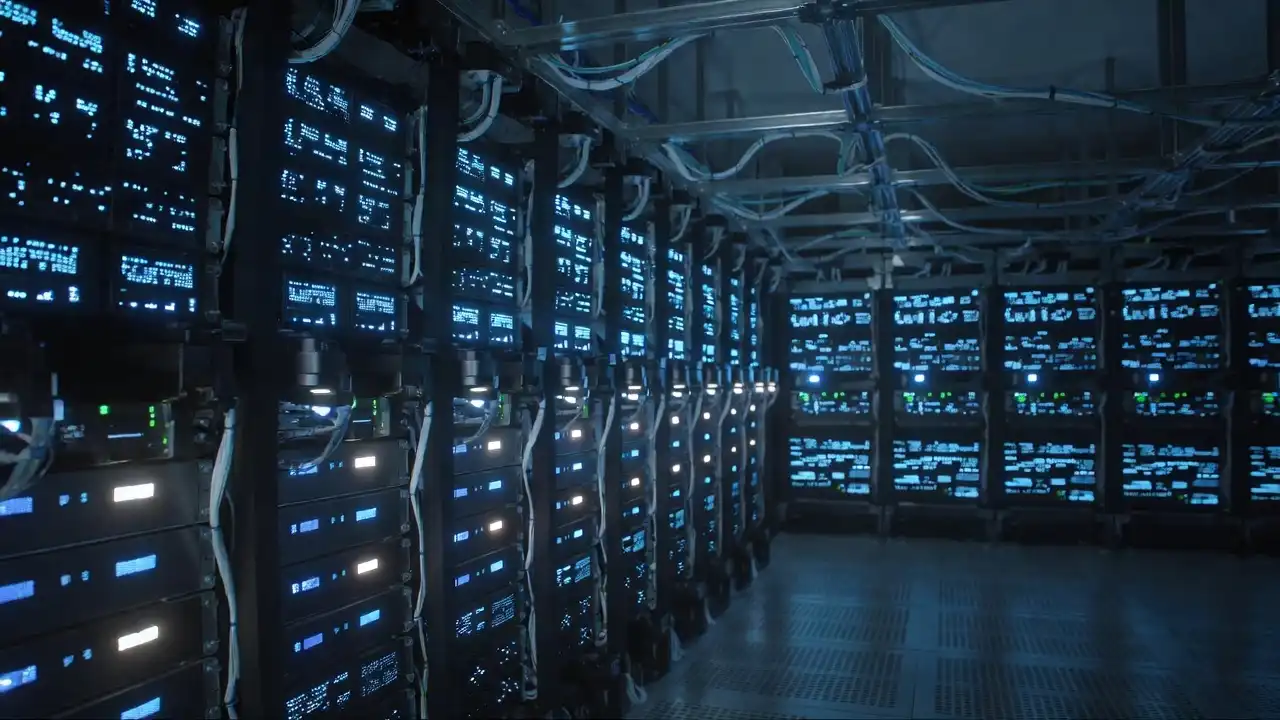
The global artificial intelligence infrastructure race is no longer just about the chip designers; it is about the manufacturing titans who turn silicon wafers into the massive server racks powering the digital economy. In a financial performance report that stunned even the most bullish market analysts, Taiwanese electronics manufacturer Wistron Corporation announced a spectacular 128% surge in quarterly net profit. This historic gain confirms that the demand for high-end AI server hardware remains absolutely unrelenting, despite recent global market volatility and concerns over the timing of AI software monetization.
Wistron, which functions as one of the world’s primary contract manufacturers for the high-end server hardware used by cloud hyperscalers, reported that its second-quarter performance was fueled almost entirely by the unprecedented demand for GPU-powered server clusters. As the race to train larger, more capable language models intensifies, technology giants like Microsoft, Amazon, and Meta Platforms are placing massive, multi-billion-dollar orders for Wistron’s assembly services. The company’s ability to scale its manufacturing operations—managing the complex assembly of high-voltage liquid-cooled racks—has turned it into an indispensable, highly profitable anchor of the global AI supply chain.
This profit explosion is forcing a major re-evaluation of how Wall Street assesses the “hardware-to-software” transition. For much of the year, investors panicked over the perceived slowdown in tech spending, fearing that the hardware buildout had reached its physical peak. Wistron’s results prove that the infrastructure cycle is far from finished. Instead, the company is successfully executing on its strategic roadmap, aggressively expanding its production capacity in Taiwan, Mexico, and Vietnam to keep pace with the massive, long-term procurement commitments signed by the world’s most influential technology corporations.
The Manufacturing Engine Driving the AI Supercycle
To understand the scale of Wistron’s success, one must consider the physical complexity of building an AI server. These are not standard, off-the-shelf business computers. A modern AI server rack, specifically designed to house high-density graphics processing units, represents the absolute pinnacle of electrical and thermal engineering. Each rack can consume nearly 100 kilowatts of electricity, requiring highly advanced, dedicated liquid cooling systems, specialized power-delivery components, and intricate, low-latency signal-routing motherboards.
Wistron has effectively mastered the “system-integration” stage of the AI supply chain. While chip designers like Nvidia and AMD focus exclusively on the silicon, they rely on partners like Wistron to design the chassis, manage the power distribution, assemble the networking stacks, and conduct the rigorous stress-testing required to ensure these systems don’t fail under the extreme pressures of model training. This manufacturing expertise has become an incredibly rare and valuable commodity. With few global competitors capable of handling the extreme thermal and electrical demands of modern AI hardware, Wistron commands immense pricing power, enabling it to push its profit margins to record highs even as it scales its global output.
Scaling Global Assembly Lines for Hyperscaler Giants
The 128% profit growth was not an accidental windfall. Wistron spent the previous three years aggressively retooling its global manufacturing footprint to focus exclusively on high-performance enterprise hardware. The company systematically exited lower-margin, high-volume consumer electronics segments—like basic smartphone assembly and standard laptop manufacturing—to free up factory space for massive server-assembly lines.
This strategic pivot allowed the firm to allocate its most skilled electrical engineers, automated testing robots, and specialized logistics staff to the AI-ready server lines. By concentrating its industrial expertise, Wistron achieved dramatic improvements in manufacturing yields and production speed. When a customer like Microsoft or Amazon requires 5,000 custom-designed AI server racks for a new data center expansion, they choose Wistron because the manufacturer can deliver that volume with the necessary technical reliability and strict adherence to quality-assurance protocols.
Breaking the Physical Bottlenecks in GPU Rack Assembly
While the semiconductor shortage captured the headlines earlier this year, the real supply chain bottleneck is currently the physical assembly of the server racks themselves. Even if a cloud provider successfully secures ten thousand high-performance processors, those chips are useless until they are integrated into a functioning server system, connected to the network fabric, and housed inside a cooling-optimized chassis.
Wistron’s manufacturing hubs, particularly its massive, modern production centers in Vietnam and Mexico, have become the critical, non-negotiable chokepoints of the global AI trade.
The company is currently investing an additional $1.2 billion to construct three new, specialized assembly facilities that focus purely on liquid-cooled, high-density AI server hardware.
This aggressive physical capacity expansion guarantees that Wistron will remain the primary hardware partner for its hyperscaler clients, providing a highly predictable, long-term revenue stream that is completely decoupled from the day-to-day volatility of the global stock market.
The Shift to High-Performance Liquid Cooling Systems
One of the most significant, highly profitable technological trends driving Wistron’s revenue growth is the industry-wide transition from traditional air cooling to advanced liquid cooling. As GPU power requirements climb toward 1,000 watts per individual chip, the physical laws of heat transfer make it impossible for traditional fans and air vents to keep the hardware stable. If a rack gets too hot, the processor throttles its speed, severely increasing the time required to train an artificial intelligence model.
Wistron’s engineering teams are at the absolute forefront of this liquid-cooling revolution. The company has moved from being a simple box-builder to a sophisticated, thermal-engineering partner. They now integrate closed-loop liquid cooling manifolds directly into the server chassis, pumping coolant through microscopic channels located just millimeters away from the hottest processing cores.
This thermal optimization is a massive value-add. It allows tech giants to pack more processors into a single, compact cabinet, effectively lowering their cost-per-compute and increasing their operational efficiency.
Engineering the Next Generation of AI Cabinets
The move toward liquid cooling has dramatically raised the barriers to entry for manufacturing competitors. Building a reliable, leak-proof, and highly efficient liquid cooling system requires a level of engineering precision that standard consumer electronics factories simply do not possess.
Wistron’s proprietary fluid-management systems, developed in close partnership with advanced materials science laboratories, represent a major technological advantage.
The firm’s ability to design, test, and manufacture these cooling systems at scale has made it a preferred vendor for companies looking to deploy next-generation, ultra-high-density compute platforms.
By owning this critical link in the hardware chain, the manufacturer secures its long-term profit margins and makes itself a permanent, indispensable partner in the design phase of future silicon architectures.
Revenue Contributions from Thermal Engineering Services
The transition to advanced cooling is also changing the company’s revenue model. It no longer just sells the hardware; it sells the overall thermal solution. By providing specialized engineering services, thermal-stress testing, and custom airflow design for its largest clients, Wistron captures a much higher%age of the data center’s total value.
Each server rack shipped today carries a significantly higher average selling price than those shipped just twenty-four months ago, reflecting the inclusion of these advanced thermal and power management technologies.
Market analysts estimate that these high-end, liquid-cooled configurations deliver profit margins that are nearly 40% higher than traditional, air-cooled server units, serving as a primary contributor to the 128% profit expansion reported during the latest quarterly results.
Geopolitical Realignment and the Manufacturing Reshoring Wave
The success of Wistron’s high-volume, high-tech manufacturing strategy is a clear, numbers-driven sign that the global technology sector is permanently decentralizing its supply chain. Washington, Brussels, and Tokyo have all implemented strict policies to reduce the concentration of advanced manufacturing in any single region, recognizing that a geopolitical disruption in one part of the world could paralyze the entire global AI buildout.
Wistron is perfectly positioned to capture this regionalized demand. By building and maintaining large-scale, enterprise-ready manufacturing centers in Mexico, Vietnam, and Southeast Asia, the company offers its clients a “China plus one” strategy, enabling them to build, test, and ship their hardware within proximity to major markets in North America and Western Europe. This geographic diversification is not just a logistical convenience; it is a vital, non-negotiable risk-management strategy for companies facing intense political pressure to protect their supply lines.
Vietnam and Mexico: The New Industrial Tech Titans
Wistron’s massive manufacturing expansion into Vietnam and Mexico is the cornerstone of its post-pandemic operational strategy. These two regions provide a perfect, highly cost-effective blend of engineering talent, logistical access, and proximity to the world’s largest consumer and enterprise technology markets.
In Vietnam, Wistron has built a high-tech facility that focuses specifically on high-complexity final assembly and advanced hardware testing. The location allows the company to serve the rapidly expanding tech markets across Southeast Asia and India with zero-tariff access, while the local labor pool provides a highly capable, technical workforce.
In Mexico, Wistron has constructed a massive manufacturing hub that acts as a physical gatekeeper for the North American market.
By building server racks just a few hours’ drive from the United States border, the company provides American cloud giants with the ability to truck high-volume AI hardware directly into their data centers, completely bypassing the cost and the logistical uncertainty of trans-Pacific shipping.
This geographic proximity is a massive, highly sought-after capability, ensuring that Wistron remains the primary vendor for the largest cloud providers in the Western hemisphere.
Mitigating the Risks of the US-China Tech Trade War
The escalating, multi-front trade war between the United States and China has created an incredibly difficult environment for every major player in the semiconductor supply chain. By proactively shifting its manufacturing footprint to neutral, reliable jurisdictions, Wistron has shielded its operations from the worst of these geopolitical shocks.
The company has maintained a policy of absolute, verifiable transparency regarding its component sourcing and assembly processes, ensuring that it remains fully compliant with the latest U.S. export controls.
This high level of regulatory compliance is a major competitive advantage, as international clients can sign multi-year contracts with Wistron knowing that their shipments will not be blocked, delayed, or seized at the border due to trade-related sanctions.
In a world defined by geopolitical fragmentation, this reliability is the ultimate, high-value commodity, and it is a primary reason why the world’s leading technology companies continue to flood the firm with massive, multi-billion-dollar infrastructure orders.
Long-Term Outlook: The Indispensable Role of Assembly
The financial performance of Wistron provides a vital reality check for those who believe the AI market is solely about software and silicon. The artificial intelligence revolution is fundamentally a physical, industrial project. It requires the deployment of tens of millions of tons of steel, copper, high-performance microchips, and cooling fluid, all arranged in precisely calibrated, factory-built server racks.
As the industry matures and the focus shifts from speculative model training to the actual, enterprise-grade deployment of intelligence, the value of reliable, large-scale hardware assembly will only continue to rise. Wistron’s 128% profit growth is just the beginning of this trend.
The company is currently constructing the massive industrial infrastructure required to support the next decade of digital growth, proving that it can scale its operations, maintain world-class quality control, and deliver the physical machinery that powers the next era of human technological advancement.
As other manufacturers struggle to resolve their engineering bottlenecks and navigate the complex, shifting landscape of global trade, Wistron’s success as a reliable, high-volume partner to the world’s largest tech giants has secured its position as the indispensable foundation of the digital world. The company is actively building the hardware and software pathways of the future, ensuring that as humanity develops smarter, more capable intelligence systems, we maintain the physical, industrial capacity required to power them safely, sustainably, and reliably for generations to come.