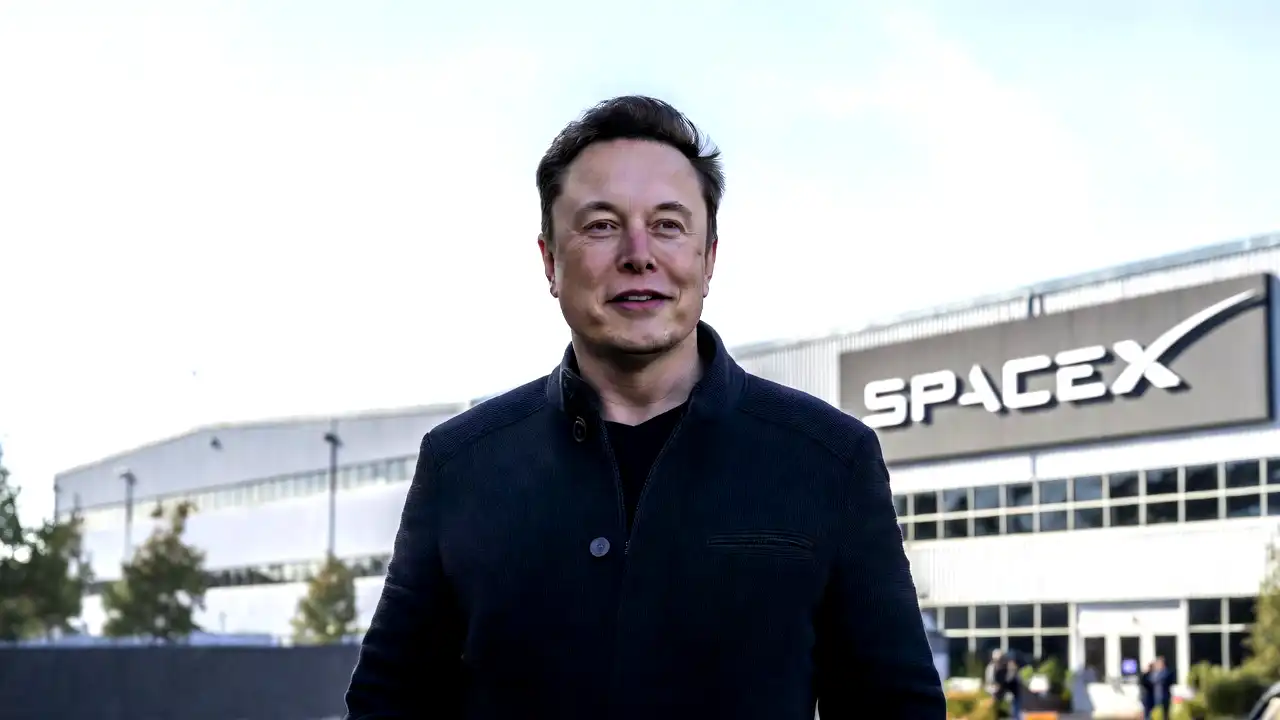
Global financial markets braced for unprecedented volatility as the largest insider share lock-up expiration in United States stock market history arrived. In August 2026, approximately 911.5 million shares of Space Exploration Technologies Corporation, widely known as SpaceX, became eligible for public trading. Valued at roughly $100 billion, this massive block of insider-held equity represented a major supply test for the recently listed aerospace giant.
Despite widespread market anxiety that a flood of insider selling would trigger a sharp downward spiral, the stock demonstrated remarkable resilience. During early trading on NASDAQ, the share price held steady, fluctuating between minor losses and gains of up to 5%. Over 120 million shares changed hands within the first hour of trading, as institutional buyers stepped in to absorb the newly available supply.
The calm market reaction brought significant relief to Wall Street. SpaceX completed its historic initial public offering in June 2026, pricing its shares at $135 each and valuing the company at just under $1.8 trillion. In the weeks following the IPO, the stock experienced a volatile slide, falling nearly 50% from its post-IPO highs to trade near $108 per share. The successful absorption of the first major share unlock suggests that long-term investors still maintain deep confidence in the company’s underlying fundamentals, despite recent market turbulence.
The Mechanics of the Unprecedented $100 Billion Stock Unlock
A post-IPO lock-up period is a standard regulatory mechanism designed to protect public investors. It prevents company founders, early-stage venture capitalists, and employees from immediately dumping their shares on the open market after an initial public offering. Standard lock-up periods typically restrict insider sales for 90 to 180 days, ensuring that the initial public float has time to stabilize before a flood of new supply arrives.
Staggered Releases to Prevent a Market Overhang
To manage its historic listing, SpaceX opted for an unusual, highly complex staggered lock-up schedule rather than a single release date. Instead of making all insider shares tradable at once, the company designed a structured release program to gradually introduce liquidity over multiple months. This approach reduces the risk of a massive market overhang, where a giant wall of potential supply artificially depresses the stock price.
Under this staggered structure, the unlock that occurred in August 2026 represented up to the first 20% of eligible insider shares. This release expanded the company’s public float to approximately 1.55 billion shares, up from the roughly 639 million shares that were freely tradable immediately after the June IPO.
While a larger pool of tradable shares naturally increases potential selling pressure, it also solves a persistent problem for institutional investors: liquidity. Many large mutual funds and pension managers require highly liquid stocks to build significant positions. By expanding the public float, SpaceX has made it easier for these large-scale buyers to accumulate shares without causing dramatic price spikes.
Future Milestones and Elon Musk’s Impending 2027 Unlock
While the initial 20% unlock represents a major hurdle cleared, investors are keeping a close eye on the company’s long-term lock-up schedule. The staggered releases will continue at regular intervals throughout late 2026, with additional tranches of shares becoming eligible for sale following the company’s upcoming quarterly earnings reports.
However, the most significant milestone on the horizon is scheduled for June 2027. That is when the lock-up restrictions expire on Elon Musk’s personal holding of 6.4 billion Class A common shares.
As the company’s founder and largest shareholder, Musk’s holdings represent the ultimate concentration of equity value in SpaceX. While analysts do not expect Musk to liquidate a substantial portion of his shares, the sheer scale of his position means that the June 2027 unlock date will remain a major focus for market models and risk assessments for the next year.
Navigating Post-IPO Volatility and AI Spending Shock
The timing of the $100 billion share unlock was particularly challenging for SpaceX, as the event arrived just two days after the company published its first-ever quarterly earnings report as a public company. The financial results, released after the market closed on August 4, 2026, triggered a wave of intense investor scrutiny.
Managing the Heavy Costs of Artificial Intelligence Partnerships
For the second quarter, SpaceX reported robust revenue figures that neared $6.9 billion, up sharply from the $4.69 billion reported in the preceding quarter. This top-line performance beat consensus Wall Street estimates, driven by strong growth in the Starlink satellite internet division and a packed launch manifest for its Falcon 9 and Falcon Heavy rockets.
However, the market’s attention quickly shifted to the company’s soaring capital expenditures. In its financial disclosures, SpaceX revealed that its capital spending had jumped sixfold to an astonishing $18.4 billion for the quarter.
The vast majority of this capital outflow went directly toward artificial intelligence infrastructure. SpaceX has entered into massive, high-stakes partnerships with leading AI firms like Anthropic, Google, and Reflection AI, utilizing its Starlink network and dedicated data centers to support large-scale AI model training and data routing.
While these partnerships could eventually generate up to $28 billion in annualized revenue once fully ramped, the immediate cash burn caught investors off guard. The higher-than-expected spending sparked a sharp sell-off on August 5, causing the stock to plunge 13.61% in a single session. This single-day drop wiped out billions of dollars in paper wealth, causing Elon Musk’s net worth to slide by over $87 billion according to real-time billionaire trackers.
The Market Valuation Correction from Post-IPO Highs
This earnings-induced drop added to an ongoing correction that began shortly after the June listing. In its first three days of public trading, intense retail and institutional hype pushed SpaceX’s valuation to a staggering $2.6 trillion.
Many market analysts warned that this valuation was highly speculative, arguing that it was difficult for the market to justify valuing SpaceX as one of the ten most valuable companies on Earth based on its current revenue run rate.
As the initial post-IPO excitement faded, a wave of profit-taking dragged the stock down. By the time the lock-up expiration arrived, the share price was trading well below its $135 IPO price.
However, even with the stock trading near $108, early-stage venture capitalists, long-time employees, and institutional backers who participated in private funding rounds over the last decade still hold massive, multi-fold unrealized gains. The fact that these insiders chose to hold their positions rather than rushing to sell on the first day of eligibility indicates that they view the current price drop as a temporary valuation correction rather than a structural decline.
The Short-Squeeze Setup: Bears, Short Sellers, and Hidden Value
The resilience of the stock on its unlock day can also be attributed to a highly complex technical setup in the options and lending markets. As the share price steadily declined throughout July, bearish investors and hedge funds built up massive short positions, betting that the lock-up expiration would trigger a total collapse.
Short Sellers Build a Twenty-Five Billion Dollar Position
According to market data compiled by S3 Partners, short interest in SpaceX reached a staggering 36% of the tradable float immediately before the unlock. This meant that short sellers had borrowed and sold roughly $25 billion worth of SpaceX stock, making it one of the most heavily shorted names on Wall Street.
These short sellers had already accumulated paper gains exceeding $9 billion from the stock’s post-IPO decline. However, by crowding so heavily into a single bearish trade, they inadvertently set up a classic short-squeeze scenario.
A short squeeze occurs when a heavily shorted stock begins to rise unexpectedly, forcing short sellers to buy back shares to close out their positions and limit their losses. This buying activity adds fresh upward momentum to the stock, pushing the price even higher.
Insiders Refuse to Underwrite the Bearish Narrative
When the trading session opened on August 6, the massive wave of insider selling that short sellers had anticipated failed to materialize. While some employees and early backers sold limited tranches to secure liquidity, the vast majority of eligible insider shares remained locked up voluntarily by their owners.
Many insiders recognized that selling their shares at a multi-month low, immediately after a temporary AI-related earnings drop, would be financially foolish. Many preferred to wait for the stock to recover toward its IPO price before executing any sales.
When the market realized that the actual volume of insider selling was much lighter than expected, short sellers rushed to cover their positions to protect their paper profits. This frantic buying activity acted as a powerful support mechanism, driving the share price up by 2% to 5% and completely neutralizing any downward pressure from the actual insider sales.
Evaluating the Long-Term Outlook for Starlink and Space Flight
With the initial lock-up hurdle cleared, Wall Street analysts are refocusing on the long-term operational performance of SpaceX’s three core divisions: heavy rocket launch services, the Starlink satellite internet constellation, and its emerging artificial intelligence segment.
Starlink’s Rapid Global Subscriber Expansion
The Starlink division remains the primary engine of near-term revenue growth. After ending March 2026 with 10.3 million active global subscribers, the service has continued to expand rapidly into lower-income international markets and maritime and aviation sectors.
Investors are closely watching whether the average revenue per user holds up as the company adjusts its pricing to attract customers in emerging economies. If Starlink can maintain its high-margin subscription revenues while continuing to lower the manufacturing costs of its consumer terminals, the division is expected to achieve consistent, highly profitable free cash flow by the end of the year.
This robust cash flow is critical because it directly funds the development of Starship, the company’s next-generation, fully reusable super-heavy launch system. Once Starship becomes fully operational, it will allow SpaceX to deploy thousands of upgraded Starlink satellites in a single launch, radically lowering its deployment costs and securing an unbreakable monopoly over the global space-based communications market.
National Security and Government Launch Domination
At the same time, SpaceX continues to dominate the high-value government and military launch sectors. The company recently secured another massive, multi-billion-dollar contract with the United States Pentagon to support national security military satellites.
While competitors like United Launch Alliance and Blue Origin continue to develop their own heavy launch vehicles, SpaceX’s Falcon 9 has established a level of reliability and cost-efficiency that rival firms cannot currently match.
This stable, high-margin government revenue provides a secure financial foundation for the company, ensuring it can continue to fund capital-intensive research and development projects even during periods of broader economic uncertainty. For long-term institutional investors, this government-backed revenue stream makes SpaceX a highly unique defensive asset in the high-growth technology sector.
Adapting to a High-Float Reality
The steady performance of SpaceX shares represents a major corporate victory for Elon Musk’s space firm. By successfully absorbing a historic $100 billion share unlock with minimal price disruption, the company has proven that its investor base is mature, disciplined, and focused on long-term value creation rather than short-term trading gains.
As the staggered lock-up schedule continues to expand the public float over the coming months, the stock will transition from a highly volatile, scarcity-driven asset into a more stable, liquid equity. While the high costs of artificial intelligence infrastructure and the ongoing challenges of scaling global space operations will continue to cause temporary price swings, the successful navigation of this historic unlock proves that SpaceX has built a financial launchpad capable of supporting its most ambitious inter-planetary goals.