The international agricultural market is experiencing an era of unprecedented volatility. In August 2026, a prominent Chinese diplomat warned that the ongoing trade conflict between the United States and China is creating a highly tortuous path for the global agricultural sector, with the humble soybean caught directly in the crossfire. The comments highlight the deep structural friction that remains between the world’s two largest economies, even as Chinese state-owned grain buyers execute massive, politically motivated purchases to show good faith ahead of an upcoming presidential summit.
Despite these heavy purchases, the underlying trade flows are far from stable. The diplomat pointed out that unilateral trade policies, fluctuating tariff rates, and legal battles in Washington have made it incredibly difficult for private commercial buyers to plan their long-term import schedules. While state-run enterprises can temporarily absorb the financial losses of buying heavily taxed American crops to satisfy political agreements, the private market is increasingly turning its back on the United States, seeking more stable and predictable suppliers in South America and Africa instead.
This unstable environment has left American soybean farmers in a precarious position. While the White House continues to use aggressive tariff threats as a negotiating tool to force Beijing to purchase American goods, the resulting retaliatory measures have disrupted global agricultural supply chains. As the trade dispute drags on, the long-term viability of the United States agricultural export program remains highly uncertain, raising fears of a permanent structural decline for Midwestern farming communities.
The Flurry of Good-Faith Purchases: Nearing a Quarter of the Target
The warnings of trade friction arrived during a week of frenzied purchasing activity by Chinese state-owned grain buyers. In early August 2026, Chinese state traders booked a massive flurry of United States soybean cargoes, capitalizing on a recent price drop on the Chicago Board of Trade to fulfill outstanding trade commitments.
Breaking Down the Six-Million-Tonne Buying Flurry
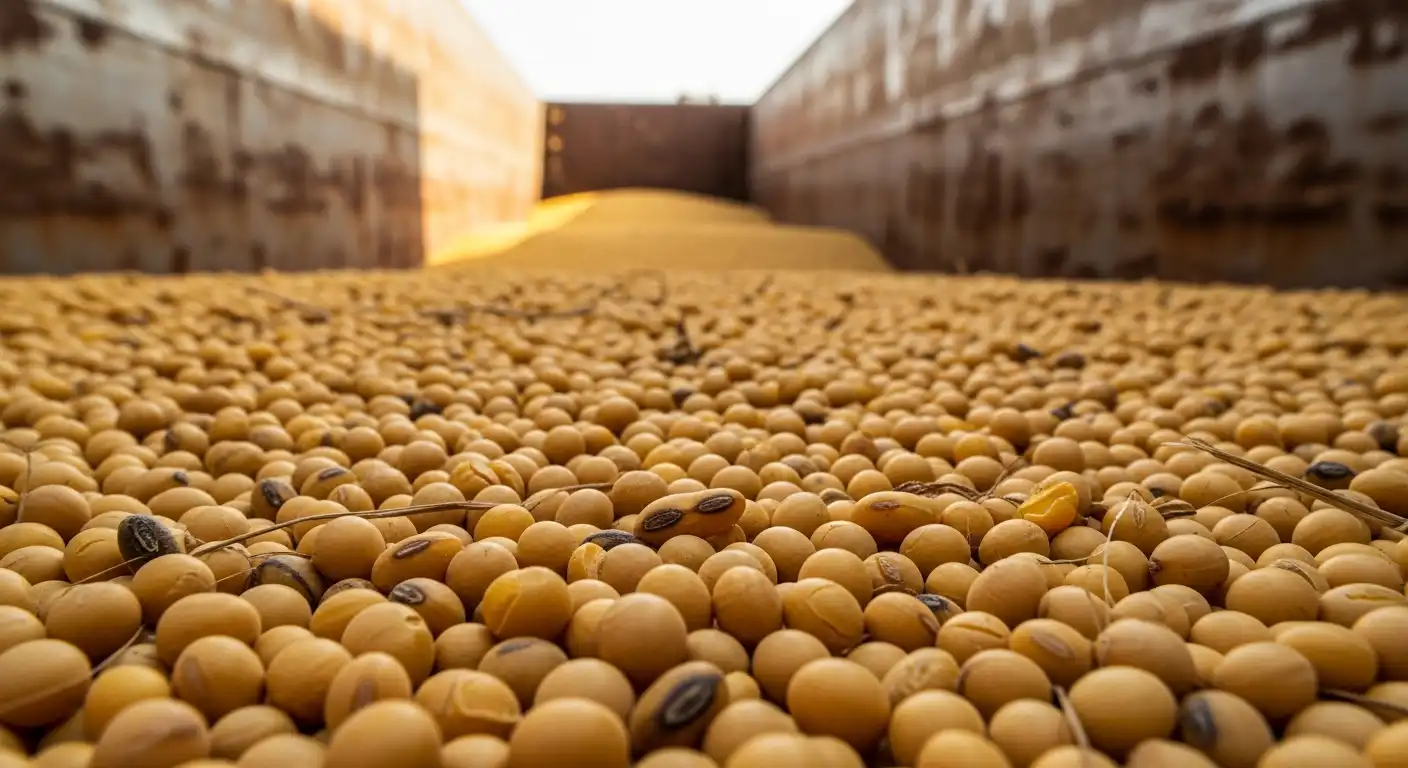
According to market data, China’s state-owned grain buyers, led by Sinograin and COFCO, purchased at least 13 more US soybean cargoes—representing roughly 800,000 metric tons—during the first week of August. This massive purchase came on top of a 488,000-metric-ton transaction announced by the United States Department of Agriculture, which marked the largest single-day sale to China of the year, and an additional 132,000 metric tons booked earlier in the week.
This sudden buying spree brings China’s total soybean purchases for the 2026/2027 marketing year, which officially begins on September 1, to approximately 6 million metric tons.
This total puts the country close to a quarter of the way toward meeting the annual target of at least 25 million metric tons of US soybeans that the White House has insisted China must buy through late 2028. While this rapid procurement has provided some short-term relief to American grain exporters, agricultural economists warn that these state-directed purchases are highly artificial, driven by diplomatic timelines rather than genuine market demand.
The Good-Faith Gestures Ahead of the September Summit
The timing of this massive buying flurry is highly strategic. The purchases arrived just weeks before a highly anticipated summit between President Donald Trump and his Chinese counterpart, Xi Jinping, scheduled for late September 2026.
By directing its state-owned enterprises to buy large volumes of American soybeans, Beijing wants to present a cooperative front, demonstrating that it is actively working to fulfill the purchase pledges made during their previous trade truces.
The agricultural targets were first established during a landmark bilateral meeting in Busan, South Korea, where Chinese negotiators agreed to resume large-scale agricultural purchases. The commitment was further expanded during a subsequent meeting in Beijing in May 2026, after which the United States announced that China would buy at least $17 billion of US agricultural products annually over the same period, on top of the 25 million metric ton soybean pledge.
By executing these purchases ahead of the September summit, Beijing is attempting to buy diplomatic leverage, hoping to head off further tariff threats from the Trump administration.
The “Tortuous” Tariff Web: Section 122 and Retaliatory Duties
The primary factor making the agricultural trade so difficult to navigate is the unstable, rapidly changing tariff structure enforced by both Washington and Beijing. Over the past year, the legal and regulatory frameworks governing US-China trade have experienced constant, disruptive shifts.
The Supreme Court Blow to Executive Tariff Power
The trade relationship suffered a major legal shock on February 20, 2026, when the United States Supreme Court delivered a historic 6-3 ruling in a landmark customs case. The high court ruled that the president had exceeded his executive authority under the International Emergency Economic Powers Act of 1977 when he unilaterally imposed sweeping, country-specific tariffs on Chinese goods. The ruling effectively struck down the administration’s flagship “fentanyl” and “reciprocal” tariffs, throwing United States trade policy into chaos.
However, the administration refused to back down. To bypass the Supreme Court’s ruling, the White House immediately invoked Section 122 of the Trade Act of 1974, a separate, powerful trade statute that allows the executive branch to impose temporary global duties of up to 15% for 150 days to address severe international trade imbalances.
By applying a temporary 15% global tariff on almost all imported goods, the administration managed to keep its protectionist barriers in place while its legal teams launched new national security investigations to justify permanent duties.
The Mechanics of the Thirteen-Percent Chinese Import Levy
This aggressive use of temporary tariffs has prompted a swift, retaliatory response from Beijing. In response to Washington’s continued trade barriers, China has maintained a strict 13% import duty on all United States-origin soybeans. This total levy consists of a 10% retaliatory tariff first introduced in April 2025, combined with a standard 3% most-favored-nation import rate.
This 13% tax makes American soybeans significantly more expensive for private Chinese oilseed crushers and livestock feed processors. Under normal market conditions, private Chinese buyers cannot afford to pay a 13% premium for American crops, forcing them to purchase cheaper, tax-free soybeans from South America instead.
Consequently, the United States export program has become entirely dependent on state-directed buying. Because only state-owned enterprises like Sinograin can secure government waivers to import American crops without paying the retaliatory duties, the natural commercial relationship between American farmers and Chinese buyers has been completely severed, replaced by politically managed trade flows that can be shut off at any moment.
The Agricultural Squeeze: Midwest Farmers Caught in the Crossfire
The political posturing and tariff battles in Washington and Beijing have had devastating consequences for the farming communities of the American Midwest. From Nebraska and Illinois to Iowa and Minnesota, family farms are facing a severe financial squeeze that is threatening the long-term survival of their businesses.
The Double Whammy of Trade Tariffs and Middle East Conflicts
The financial pressure on American farmers is being driven by a combination of high production costs and low crop prices. Over the past year, the cost of farming inputs—including seed, chemical treatments, tractor parts, and specialized equipment—has skyrocketed.
This cost inflation was significantly worsened by the outbreak of the 2026 Iran war, which choked off maritime traffic through the vital Strait of Hormuz. Because the Middle East is a primary supplier of global fertilizer ingredients, the transport blockades sent domestic fertilizer prices to near-record highs.
At the same time, high interest rates have driven up the cost of financing farm machinery. Major agricultural equipment manufacturers like John Deere have projected a steep 15% to 20% drop in large equipment sales, directly blaming the administration’s steel and manufacturing tariffs for driving up their production costs and reducing farmer purchasing power.
Faced with record-high input costs and low international grain prices caused by a global supply glut, many Midwest producers are operating below their financial breakeven points.
The Domestic Crushing Boom vs. the Export Chokehold
While export-dependent farmers struggle, the domestic agricultural processing sector is experiencing a highly unique, positive boom. Major agricultural processors, including ADM and Bunge Global, are actively expanding their domestic processing capacities to serve a rapidly growing domestic biofuels market.
In July, ADM announced plans to upgrade four of its primary North American crushing facilities, expanding its annual soybean processing capacity by 700,000 metric tons. Similarly, Bunge reported that its second-quarter soybean crushing volume had surged by 24% compared to the prior year, with profits in its refining and processing division climbing 75% to $804 million. This domestic biofuels boom offers a vital, long-term source of demand for American soybeans, helping to cushion the agricultural sector against the loss of international export markets.
However, building new crushing plants takes years of capital investment, and the domestic biofuels market cannot yet absorb the massive volumes of soybeans that American farmers produce every year, leaving the industry highly dependent on the volatile, politically charged Chinese export market to clear its annual harvest.
China’s Diversification Strategy: Brazil, Argentina, and South Africa
Perhaps the most damaging long-term consequence of the ongoing trade war is that it has forced China to permanently diversify its agricultural supply chains away from the United States. Beijing is actively funding and developing alternative grain corridors, ensuring that it will never again be dependent on American farms for its food security.
Brazil’s Unshakeable Dominance in the Global Oilseed Market
The primary beneficiary of the US-China trade rift has been Brazil. Over the past decade, Brazil has expanded its agricultural frontier rapidly, investing billions of dollars to build highly efficient transport railways and deepwater ports capable of handling massive export volumes.
The trade data for 2026 illustrates how successfully Brazil has displaced the United States as China’s primary oilseed supplier:
- In June, China imported 12.08 million metric tons of soybeans from Brazil, representing a 13.7% increase compared to the previous year.
- In contrast, imports from the United States plummeted 20.9% year-on-year to just 1.27 million metric tons.
- Over the first half of the year, Brazil supplied a massive 48.32 million metric tons of soybeans to Chinese ports, establishing an unshakeable dominance over the global market.
Because Brazilian farmers can produce high-quality soybeans at a lower cost, and because Brazilian shipments are completely free from the threat of retaliatory tariffs, Chinese commercial buyers have developed a strong, permanent preference for South American supply. Even if the United States and China eventually resolve their current tariff disputes, Chinese processors are highly unlikely to return to their previous levels of dependence on American farms, leaving US agribusiness permanently crowded out of its largest historical market.
Zero-Tariff African Agreements and the Search for Alternative Supplies
To further reduce its dependence on North American supply, Beijing is also building new agricultural partnerships across the African continent. In August 2026, South African trade organizations confirmed that South Africa is set to export an unprecedented 200,000 metric tons of soybeans to China in November.
This landmark transaction is a direct result of a major policy shift implemented by Beijing. In May, China introduced a sweeping zero-tariff policy covering 53 African nations that maintain formal diplomatic relations with Beijing.
Previously, South African soybeans faced a 3% import duty at Chinese ports. Under the new zero-tariff arrangement, South African exporters enjoy a significant cost advantage of approximately $15 per ton over their South American and North American competitors.
While South Africa’s total export volume remains small compared to Brazil’s massive output, the deal demonstrates that China is successfully utilizing its diplomatic and trade networks to build a highly diversified, resilient global supply chain, ensuring its long-term food security while permanently marginalizing United States agricultural exports.
The Structural Limits of Tariff Diplomacy
The warnings of Chinese diplomats regarding the tortuous path of the soybean trade highlight the structural limits of tariff-driven economic policy. While the Trump administration’s aggressive use of duties and emergency trade statutes has successfully forced Beijing to execute massive, politically motivated grain purchases ahead of high-profile summits, these short-term diplomatic victories have come at a steep long-term cost to American agriculture.
By using the humble soybean as a primary weapon in a high-stakes trade war, policymakers have forced their largest global customer to permanently restructure its supply chains. As China continues to deepen its partnerships with Brazil, Argentina, and zero-tariff African nations, the United States is gradually losing its historic agricultural dominance.
While the upcoming presidential summit in September may produce another temporary agricultural purchase agreement, the long-term reality is clear: the unconstitutional use of executive tariffs has set American agriculture on a difficult path, and Midwestern farming communities will continue to pay the price for this high-stakes economic conflict for years to come.