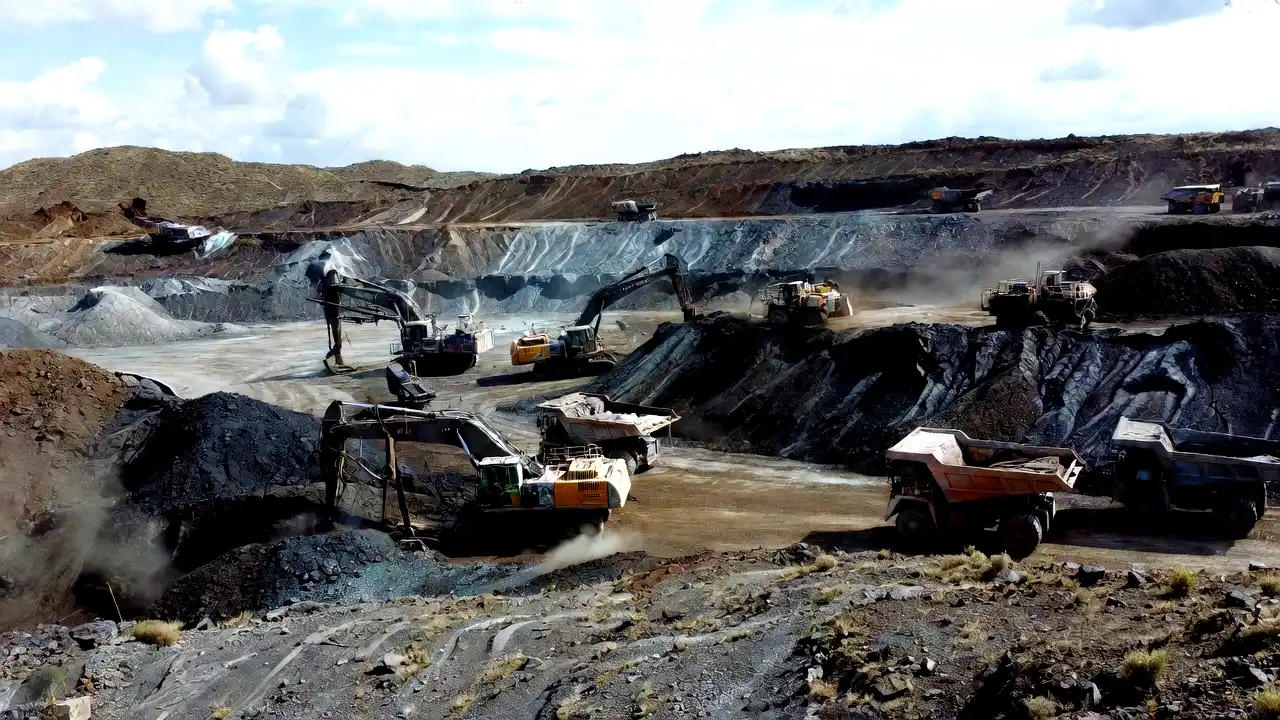
The United States government is taking an unprecedentedly direct, interventionist role to secure the raw materials of the modern economy. In August 2026, President Donald J. Trump held a historic critical minerals roundtable at the State Department, gathering more than 200 mining executives, investors, and educators. During the meeting, the administration announced a massive $3 billion wave of federal financing commitments designed to revitalize the domestic mining and processing sectors, including more than $2 billion in direct funding pledges for advanced battery materials and critical mining projects.
This historic funding initiative represents a fundamental shift in United States industrial policy. For decades, the nation’s critical mineral supply chain steadily contracted, even as demand for these essential materials skyrocketed. By deploying billions of dollars in federal loans, guarantees, and grants, the administration wants to rebuild domestic capacity in mining, refining, and recycling. The goal is to aggressively wean the country off foreign suppliers, particularly China, which currently controls an outsized share of the global critical mineral supply chain.
At the core of this initiative is the recognition that mineral security is directly linked to national security. The materials targeted by these federal investments—including lithium, silicon, graphite, scandium, boron, and rare-earth-free magnets—are the essential building blocks for advanced defense systems, commercial automobiles, aerospace equipment, and consumer electronics. By funding domestic production, the administration is building a secure, self-reliant industrial base capable of withstanding global supply shocks.
Reclaiming Mineral Superpower Status: The Geopolitical Driver
The aggressive push to fund domestic mining and processing is being driven by worsening geopolitical tensions and the vulnerabilities of global supply chains. As foreign adversaries increasingly utilize their raw material monopolies as economic weapons, Washington has realized that it can no longer rely on open-market imports for its strategic survival.
Ending the Strategic Dependence on Chinese Suppliers
The primary source of the administration’s anxiety is China’s dominant position in the global critical minerals market. While the United States and Europe have spent years developing advanced clean energy and digital technologies, China has quietly secured a near-monopolistic grip on the mining and refining of the minerals required to build those technologies.
Recent export restrictions implemented by Beijing on vital materials like gallium, germanium, antimony, and tungsten have exposed the fragile nature of Western supply chains, demonstrating that foreign trade blockades could easily paralyze American defense manufacturing and high-tech industries.
In response, the United States has launched a massive, defensive counter-offensive. During his address at the roundtable, President Trump emphasized that the country is actively reclaiming its rightful place as the minerals superpower of the world. By funding domestic mining and processing facilities, the administration wants to ensure that the raw materials of American strength are mined, refined, and manufactured entirely within the United States, neutralizing the threat of foreign supply disruptions.
The Critical Role of the Department of War and the Office of Strategic Capital
To execute this strategic pivot, the federal government is utilizing its national defense apparatus to directly finance commercial mining projects. The Department of War is taking a central role in this effort, deploying capital through its newly established Office of Strategic Capital.
This defense-centric financing model represents a major departure from traditional government grant programs. Rather than acting as a passive lender, the Office of Strategic Capital is extending massive, multi-million-dollar conditional loan commitments to high-impact projects, treating mineral security as an active national defense priority.
By utilizing these defense-centric funding channels, the administration can bypass standard bureaucratic delays and deploy capital with immense speed, ensuring that critical supply chain projects can scale up quickly to meet the country’s immediate national security requirements.
Inside the Blockbuster Two Billion Dollar Battery and Mining Deals
The bulk of the newly announced $3 billion financing package consists of direct capital allocations to high-priority battery materials and mining companies, targeting key vulnerabilities in the domestic energy storage and defense manufacturing sectors.
Sila Nanotechnologies and the Moses Lake Silicon-Anode Project
The single largest allocation in the new funding package is a massive $1.4 billion conditional loan commitment from the Department of War to privately held, California-based battery materials maker Sila Nanotechnologies. Sila plans to utilize this massive capital injection to expand the production of its proprietary silicon-carbon battery anodes at its manufacturing facility in Moses Lake, Washington.
In addition, the funds will support the construction of a state-of-the-art lithium-ion battery cell manufacturing plant at the same site. Sila’s advanced silicon-carbon anodes deliver significantly higher energy density and faster charging speeds than traditional graphite anodes, making them highly valuable for both commercial electric vehicles and specialized military applications.
By funding this large-scale domestic manufacturing facility, the government is securing a reliable, high-performance battery supply chain to power everything from military satellites and unmanned aerial systems to advanced defense munitions and electric troop transports.
Sunrise Energy Metals and the Scandium Value Chain
The second major allocation is a $400 million conditional loan commitment from the Department of War’s Office of Strategic Capital to Sunrise Energy Metals, an Australian publicly listed company. Sunrise owns the Syerston Scandium Project in New South Wales, Australia, which hosts one of the highest-grade deposits of the rare metal in the world.
Scandium is an exceptionally rare and valuable metal that, when added to aluminum in tiny quantities, creates an alloy that is incredibly strong, lightweight, and highly heat-resistant. This advanced alloy is vital for manufacturing aerospace components, fighter aircraft, and spacecraft.
Currently, no primary mine-source scandium supply exists globally, with foreign competitors controlling roughly 80% of global mining production and nearly 100% of the refining capacity.
With this $400 million investment, alongside private capital, Sunrise will develop a fully integrated scandium value chain, from primary mining to finished additive manufacturing products. In exchange for the funding, the United States Department of War will secure a valuable right of first offer on the company’s output, ensuring that American defense contractors have guaranteed access to this critical aerospace metal.
Niron Magnetics and Rare-Earth-Free Permanent Magnets
The administration also announced a $150 million conditional loan commitment to Minnesota-based Niron Magnetics to scale up the production of its proprietary, rare-earth-free permanent magnets. Permanent magnets are essential components in electric vehicle motors, wind turbines, defense electronics, and industrial machinery, yet China currently refines and manufactures an outsized share of the world’s rare-earth magnets.
Niron Magnetics has developed an innovative technology that utilizes iron nitride—a compound made from abundant, low-cost raw materials—to manufacture high-performance permanent magnets that require zero rare-earth elements.
By funding the expansion of Niron’s manufacturing facilities, the government is establishing a completely domestic, secure supply of permanent magnets, breaking China’s monopoly over this critical technology and protecting the defense industrial base from potential foreign export restrictions.
EXIM Bank’s Multi-Million Dollar Rare Earth and Mineral Loans
In addition to the Department of War’s massive loans, the Export-Import Bank of the United States has approved a $58 million financing package to support three critical mineral projects, focusing on securing essential raw materials for electronics and battery manufacturing.
Fueling Alabama Graphite with Westwater Resources
The Export-Import Bank is directing a $25 million loan to Westwater Resources to support the development of its Coosa Graphite Deposit in Alabama. Graphite is the largest metal by volume used to build lithium-ion battery anodes, making it a critical component of the global transition to electric transportation and energy storage.
The United States currently has no active, commercial-scale graphite mines, leaving domestic battery manufacturers entirely dependent on imports, primarily from China.
The $25 million loan will allow Westwater to accelerate the construction of its Alabama mining and processing facilities, establishing a reliable, domestic source of battery-grade graphite. This project will help domestic battery makers comply with the strict sourcing requirements of federal programs, protecting the local battery manufacturing sector from foreign supply disruptions.
Tantalum, Niobium, and Boron Sourcing Strategies
The remaining portion of the EXIM Bank package is divided between two other critical mineral developers:
- A $25 million loan to privately held Global Advanced Metals to expand its processing capacity for tantalum and niobium. The company mines the metals in Australia and processes them at its facilities in Pennsylvania. Tantalum is a vital component used to make capacitors for smartphones, automobile electronics, and defense guidance systems, while niobium is used as an alloy to harden steel for pipelines, aerospace applications, and military aircraft.
- An $8 million loan to 5E Advanced Materials to support its 5E Boron Americas project in California. Boron is a versatile critical mineral used in the manufacturing of permanent magnets, high-tech glass, and semiconductors, making it an essential raw input for multiple high-growth technology sectors.
By funding these diversified mineral projects, the Export-Import Bank is establishing a secure, multi-layered supply chain for the metals that power modern electronics, ensuring that American manufacturers can access these vital raw materials without relying on opaque, high-risk international markets.
Solving the Workforce Crisis: Investing in American Mining Education
Securing the physical raw materials of the technology age requires more than just funding mines and factories; it requires a massive, highly skilled domestic workforce. Decades of industrial decline have left the United States with a severe shortage of qualified geologists, metallurgists, and mining engineers, creating a human capital bottleneck that threatens to slow down the national mining recovery.
A Hundred Million Dollar Grant to Revitalize Mining Schools
To address this workforce crisis, President Trump announced more than $180 million in federal investments dedicated to mining education and workforce development. The centerpiece of this initiative is a $100 million grant program from the Department of Energy designed to support the nation’s 14 accredited mining schools.
These federal grants will be used to modernize academic curricula, upgrade laboratory equipment, and fund student scholarships.
The administration has set an ambitious goal of doubling the number of mining-related graduates at the nation’s universities within two years. By actively encouraging more bright students to enter the field, the government wants to rebuild the academic pipeline, ensuring that the domestic mining recovery is led by a new generation of highly trained American scientists and engineers.
Rebuilding the Academic Pipeline for Geologists and Metallurgists
The remaining portion of the education funding consists of an $80 million investment from the Department of War into three selected universities to establish major technology innovation hubs and advanced geology programs.
These academic hubs will focus on developing advanced extraction techniques, improving mineral processing efficiencies, and training students in state-of-the-art metallurgical processes.
This educational push represents a vital, long-term investment in national resilience. By rebuilding the academic foundations of the domestic mining sector, the government is ensuring that the United States possesses the internal expertise required to discover, extract, and refine its own mineral wealth, securing the country’s technological and economic independence for decades to come.
Rebuilding the Industrial Base
The completed announcement of over $2 billion in direct financing commitments for battery materials and mining projects marks a historic milestone in the modern era of United States industrial policy. By utilizing the Defense Production Act, the Department of War, and the Export-Import Bank to directly fund domestic resource extraction and processing, the Trump administration has asserted that mineral security is an absolute pillar of national defense.
While these massive federal loans and education grants will require years of sustained effort to eliminate America’s dependence on foreign suppliers, they have successfully established a resilient, self-reliant foundation for the high-tech industries of the future.
As the country continues to build out Sila Nanotechnologies’ silicon-anode plant in Washington, expand Sunrise Energy’s scandium project, and train a new generation of mining engineers, this aggressive, coordinated critical minerals offensive will ensure that the United States remains the undisputed leader of the global digital and industrial economies.