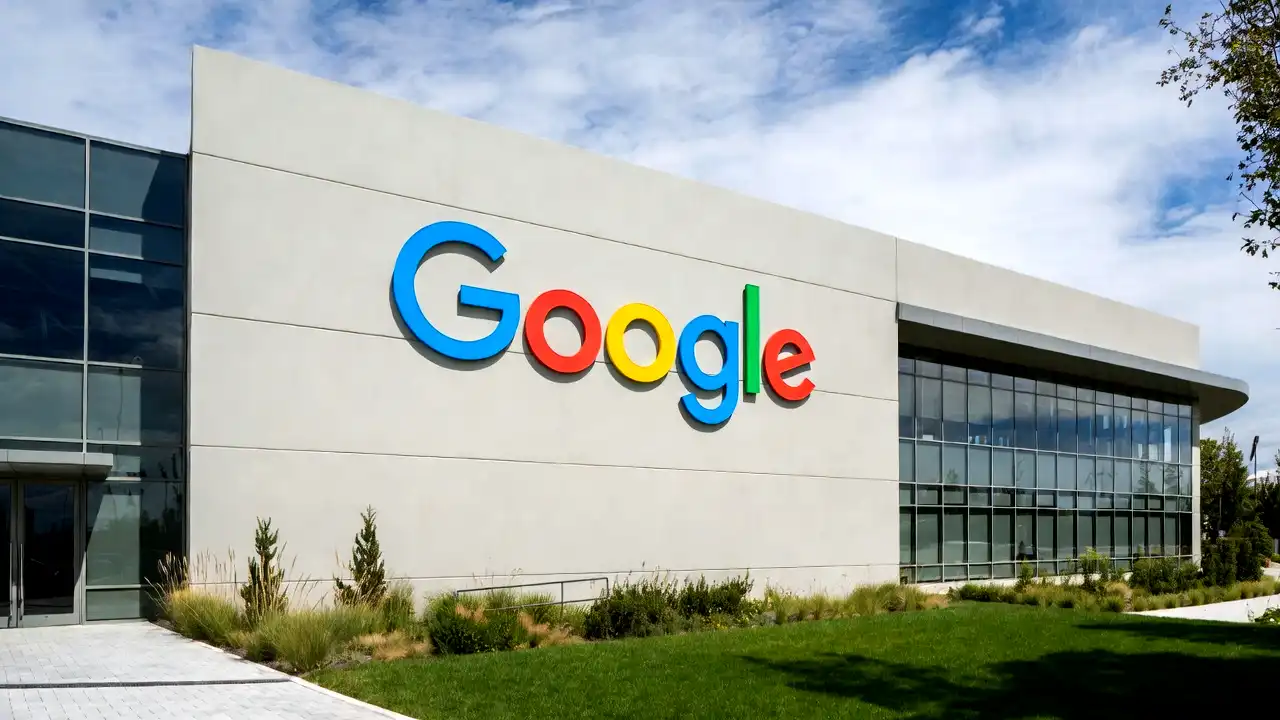
The corporate investment landscape has experienced a historic realignment, signaling a major transition at the world’s most watched investment conglomerate. In August 2026, Berkshire Hathaway Inc. filed its highly anticipated second-quarter 13F portfolio disclosure with the Securities and Exchange Commission. The regulatory filing revealed a massive, unprecedented portfolio shift: Berkshire boosted the size of its holding in Google and YouTube parent company Alphabet Inc. by a staggering 83%, making the technology giant its third-largest U.S.-listed stock investment.
This dramatic capital deployment marks the official end of a long, cautious era of cash hoarding in Omaha, Nebraska. For 14 consecutive quarters, dating back to late 2022, Berkshire operated on a strict net-selling playbook, selling more equities than it purchased while its cash and Treasury bill pile swelled toward record territory. By deploying more than $23 billion into corporate equities last quarter, the conglomerate’s newly appointed Chief Executive Officer, Greg Abel, has broken this selling streak, proving that the firm is highly willing to put its capital to work when it identifies high-purity, long-term opportunities.
By expanding its Alphabet position to nearly 106 million shares, Berkshire has initiated a new “dual-core” era for its technology portfolio. For decades, the conglomerate’s tech exposure relied almost exclusively on its massive stake in Apple Inc. The substantial new investment in Alphabet establishes a second powerful technology anchor on its balance sheet, proving that even the most conservative value-investing models must adapt to the high-growth, infrastructure-heavy realities of the digital age.
The Anatomy of the $38 Billion Position
The massive expansion of Berkshire’s Alphabet holding was executed through a highly strategic combination of private placement agreements and open-market purchases, demonstrating immense corporate conviction in the technology giant’s long-term value.
The Ten-Billion-Dollar Private Placement and Open-Market Buys
According to the stock exchange filings, Berkshire’s Alphabet holding rose from 57.8 million shares at the end of the first quarter to nearly 106 million shares by June 30. A significant portion of this 48.1 million share increase was secured through a massive, direct $10 billion private placement completed in June.
The private transaction was split evenly across two distinct share classes:
- $5 billion was allocated to purchase Class A common stock (GOOGL) at a price of $351.81 per share.
- $5 billion was deployed to purchase Class C capital stock (GOOG) at a price of $348.20 per share.
- The remaining $7.8 billion required to complete the 83% position boost was purchased directly on the open market during the quarter.
The $10 billion private placement was a key component of a larger, $80 billion equity fundraising campaign launched by Alphabet to help finance its rapidly expanding, capital-intensive artificial intelligence infrastructure. By directly underwriting this capital raise, Berkshire has secured a vital, long-term relationship with the world’s leading search provider, ensuring that its investment directly supports the physical data centers and processing hardware that will power the next century of global computing.
Reconfiguring the Portfolio Hierarchy: Surpassing Coca-Cola and Bank of America
The massive scale of the Alphabet purchase has completely reshuffled Berkshire’s traditional equity hierarchy. At a quarter-end valuation of $37.8 billion, the Alphabet holding has vaulted past longtime portfolio staples that have sat at the core of the conglomerate’s identity for decades.
Alphabet has successfully overtaken consumer giant Coca-Cola Company, which sits in the fourth spot with a valuation of approximately $32.5 billion, and banking giant Bank of America Corporation, which occupies the fifth spot at roughly $31.8 billion.
The only two positions that remain larger than Alphabet in Berkshire’s U.S. equity portfolio are its massive, $66 billion stake in Apple Inc. and its $51.3 billion position in American Express Company. This rapid ascent proves that the conglomerate’s leadership has fundamentally re-evaluated its risk parameters, elevating a high-growth technology company to the absolute peak of its long-term investment strategy.
The Transition of Power: Greg Abel Breaks the Fourteen-Quarter Selling Streak
The aggressive stock purchases executed during the second quarter represent a defining moment in the corporate history of Berkshire Hathaway, serving as the first major portfolio demonstration of the firm’s new leadership team.
Shifting from Cash Hoarding to Active Equities Buying
For three years, under the direction of legendary value investor Warren Buffett, Berkshire maintained an exceptionally cautious, cash-generative investment strategy. Buffett chose to sell more stocks than he bought, quarter after quarter, raising the firm’s cash and Treasury reserves to record heights while waiting for a suitable, large-scale acquisition or a major market correction to emerge.
This cautious playbook changed dramatically following Buffett’s retirement as CEO at the end of December. The second-quarter operational filings submitted on Friday show that his successor, Greg Abel, wasted no time putting the company’s massive cash pile to work.
During the quarter, Berkshire purchased a total of $23.5 billion in corporate equities while selling only $3.7 billion. This net equity purchase of approximately $19.8 billion represents the largest quarterly buying campaign for the conglomerate since 2022, proving that Abel is actively transitioning the firm from a passive cash-holder into an active, aggressive buyer of corporate value.
The Decrease in the Conglomerate’s Historic Cash Pile
The aggressive equities buying, combined with a parallel $4.5 billion share buyback program, has resulted in a notable, highly anticipated reduction in the conglomerate’s historic cash reserves.
The consolidated cash flow statement reveals a significant capital deployment:
- Berkshire’s total cash, cash equivalents, and short-term Treasury bill holdings fell to $364.7 billion on June 30.
- This represents a notable decline from the record $380.2 billion held by the company on March 31.
- This capital reduction proved that the new management team possesses a high appetite for on-site corporate investment, choosing to redeploy its cash into high-purity equity assets rather than letting the capital sit idle in low-yielding Treasury bills, a strategy that is highly valued by Wall Street and public-market investors alike.
The Tech “Dual-Core” Era: Why Alphabet Fits the Buffett Moat Philosophy
The decision to make Alphabet the third-largest holding represents a significant, highly symbolic shift in Berkshire’s corporate identity. For most of his six-decade career, Warren Buffett famously avoided technology stocks, arguing that the rapid pace of technological change made it impossible to predict their long-term cash flows or verify their competitive moats.
Reconciling Tech Investments with Value Investing
Apple was the long-standing exception to Buffett’s tech-averse rule, as he chose to treat the iPhone maker not as a speculative technology startup, but as a dominant, high-margin consumer products company with an incredibly loyal customer base.
The massive expansion of the Alphabet holding officially transitions Berkshire into a “dual-core” technology era, with Apple and Alphabet collectively representing nearly 35% of its $299.3 billion U.S. listed stock portfolio.
The investment carries Buffett’s explicit endorsement. In his final public interviews before retiring as CEO, Buffett confirmed that the initial decision to invest in Alphabet in the third quarter of 2025 was his idea, and that he and Abel had spent months analyzing the company’s competitive advantages.
While Abel now manages day-to-day stock-picking decisions, the massive expansion of the position proves that both leaders are fully aligned, recognizing that Alphabet’s dominant software and digital services fit perfectly within the firm’s historical, value-based investment parameters.
The Near-Monopoly Moats of Search, YouTube, and Cloud
To a traditional value investor, Alphabet possesses one of the most powerful, unassailable economic moats in corporate history. The company’s core Google search business continues to operate as an absolute monopoly, capturing over 90% of the global search market and generating highly stable, high-margin advertising revenues.
Furthermore, its YouTube platform reaches over 2.7 billion monthly active users, serving as the dominant, irreplaceable global gateway for online video consumption.
Additionally, the company’s enterprise cloud computing division, Google Cloud, has successfully achieved commercial scale, generating highly profitable, recurring subscription revenues from large-scale corporate clients.
These highly stable, recurring cash flows are protected by massive entry barriers, as building a competitive global search engine, video platform, or cloud network would require tens of billions of dollars in upfront capital investments, making Alphabet’s business model highly resilient against short-term economic downturns.
Other Key Portfolio Realignments: Exiting Constellation and Backing Airlines
While the massive Alphabet purchase dominated the financial headlines, Berkshire’s second-quarter 13F filing also revealed several other significant portfolio adjustments, showing that Abel is actively restructuring the conglomerate’s holdings to align with his long-term investment outlook.
Eliminating the Year-and-a-Half Stake in Constellation Brands
The most notable divestiture in the Q2 report was the complete elimination of Berkshire’s investment in Constellation Brands, Inc.
The conglomerate chose to exit the major alcoholic beverages producer entirely, selling off its remaining shares and ending an investment relationship that had lasted for approximately eighteen months.
While the company did not disclose the specific reasons for the exit, market analysts note that the consumer beverages sector has faced intense margin pressures due to rising raw material costs, changing consumer preferences among younger generations, and high transportation expenses.
By exiting Constellation, Abel is successfully reducing Berkshire’s exposure to low-margin consumer segments, redirecting that capital into higher-growth, more resilient technology and financial assets.
Adding to Delta Air Lines, Macy’s, and The New York Times
At the same time, Berkshire made significant, targeted additions to several existing positions, reinforcing its confidence in companies it first began buying during the first quarter of the year.
The regulatory filing detailed several key purchases:
- The conglomerate added 17.5 million shares of Delta Air Lines Inc., building on its initial position and confirming a bullish outlook on the commercial aviation recovery.
- The firm purchased 4.3 million shares of department store operator Macy’s Inc., expanding its exposure to the retail sector.
- The company added 3.1 million shares of homebuilder Lennar Corporation, capitalizing on the high demand for new housing starts.
- The firm also added a small stake of 553,000 shares in The New York Times Company, demonstrating a highly active, diversified approach to corporate investments under Greg Abel’s leadership.
These diverse additions prove that Berkshire’s new investment strategy is highly multi-layered.
While the bank is aggressively building out its tech-heavy “dual-core” structure with Apple and Alphabet, it is also maintaining its traditional value-investing discipline, buying high-quality, undervalued businesses in mature industries like transport, retail, and homebuilding, where even a 1.5% dividend yield expansion can attract billions in global capital, and where large-scale institutional mandates require over $1 billion in capital investments to execute successfully.
Securing the Legacy of Value Investing
The completed publication of Berkshire Hathaway’s second-quarter 13F holdings represents a historic milestone for the global investment community. By demonstrating an 83% surge in its Alphabet holding to reach a massive $37.8 billion, the conglomerate has proven that its new leadership team is fully prepared to navigate the high-stakes, capital-heavy realities of the digital age.
Through the proactive management of its massive cash reserves—including the $10 billion private placement to help fund Alphabet’s AI data centers and the $4.5 billion share buyback program—CEO Greg Abel has successfully ended a 14-quarter net-selling streak and established a resilient, tech-heavy “dual-core” portfolio structure that can generate steady, reliable profits under any market conditions.
As the digital economy continues to expand, and as technology giants like Alphabet and Apple continue to dominate their respective global markets, Berkshire’s disciplined, value-driven investment strategy will ensure that the conglomerate remains the undisputed capital of global finance, providing investors with the advanced tools, stable assets, and long-term security required to protect their wealth and generate sustainable returns for decades to come.