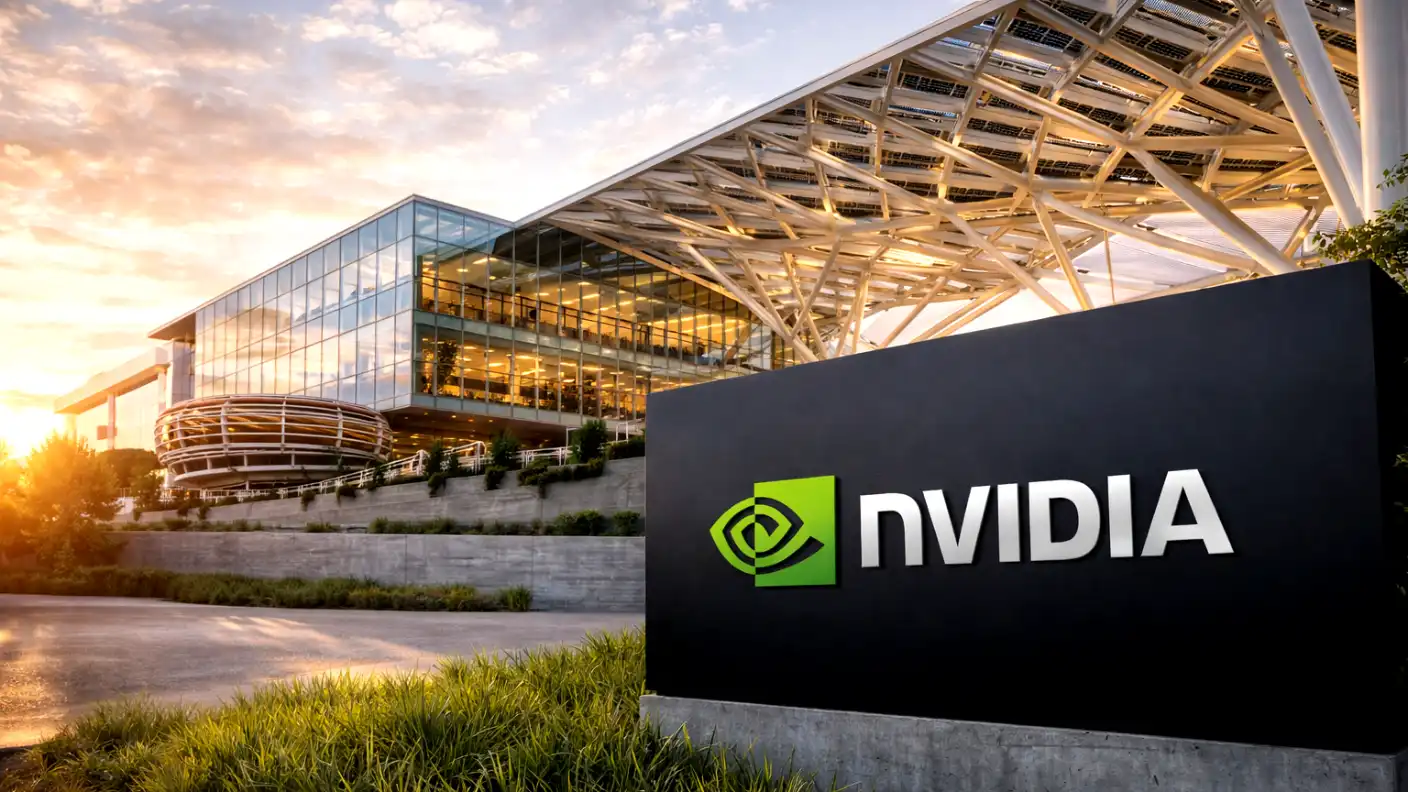
The financial and operational parameters of the global artificial intelligence race have reached an extraordinary level of scale and complexity. In August 2026, details emerged regarding a massive, multi-billion-dollar strategic partnership that directly connects the world’s leading graphics processor manufacturer with its largest customer and one of Japan’s most powerful investment conglomerates. Technology giant Nvidia Corporation is in advanced negotiations to invest up to $3 billion in SB Energy, the renewable energy and infrastructure subsidiary of SoftBank Group Corp., to accelerate the development of a massive planned data center campus in southern Ohio for OpenAI.
The proposed $3 billion equity investment, first reported by industry insiders on August 15, 2026, represents a landmark consolidation of capital and technology. The transaction is being negotiated alongside a broader credit support package, where Nvidia will provide approximately $100 billion in direct debt guarantees to support OpenAI’s long-term lease obligations at the Ohio site. By committing billions of dollars in both equity and debt backstops, Nvidia is transitioning from a mere hardware supplier into a massive “capital-mobilization engine,” ensuring that the physical systems of the AI era can scale up to meet the insatiable demands of the global market.
For OpenAI, the successful completion of this deal is an absolute necessity. The San Francisco-based startup, which continues to operate at a loss while relying primarily on private equity funding, has struggled to secure the massive, low-cost bank loans needed to construct its own physical computing infrastructure. By having Nvidia and SoftBank underwrite the project’s immense capital requirements, OpenAI can move closer to controlling its own dedicated, high-performance computing campuses, permanently reducing its dependency on traditional captive cloud providers like Microsoft Azure.
The Mechanics of the Three Billion Dollar Equity Investment
The proposed $3 billion equity investment is structured as a highly calculated, multi-stage transaction designed to optimize Nvidia’s financial flexibility while providing SB Energy with immediate, robust growth capital.
Splitting the Three-Billion-Dollar Allocation
According to individuals familiar with the negotiations, Nvidia plans to execute the $3 billion investment in two equal tranches:
- The first tranche, consisting of $1.5 billion in direct cash, will be injected into SB Energy immediately upon the signing of the formal Ohio data center project agreement.
- The remaining $1.5 billion will be deployed as a cornerstone investment during SB Energy’s planned initial public offering, which is expected to take place as early as next month.
- This multi-stage funding model ensures that Nvidia can secure a significant ownership stake in the infrastructure developer at an attractive valuation, while providing the project with the immediate liquidity needed to begin grading land and laying foundation concrete.
For SB Energy, having the world’s most valuable semiconductor company act as a lead investor is an extraordinary operational and reputational win. While the SoftBank subsidiary has built a solid track record in developing renewable energy projects, it possesses relatively limited experience in constructing and operating high-density, liquid-cooled data center complexes. The direct participation of Nvidia’s engineering and architecture teams will ensure that the new Ohio facilities are designed to the absolute highest technical standards, optimized specifically to host next-generation graphics processor clusters with maximum efficiency.
Anchoring SB Energy’s Upcoming Five-Billion-Dollar IPO
The second half of Nvidia’s $3 billion commitment is closely tied to SB Energy’s upcoming public market debut. The infrastructure developer is preparing to launch a highly publicized initial public offering on the Tokyo Stock Exchange, aiming to raise at least $5 billion in fresh capital to fund its long-term development pipeline.
By acting as a cornerstone investor and committing to purchase $1.5 billion worth of IPO shares, Nvidia is providing the public offering with an unparalleled level of institutional credibility.
No major asset manager or pension fund wants to be left out of a public listing that is actively backed by the world’s leading AI hardware provider.
This cornerstone commitment is expected to trigger a massive wave of oversubscription during the book-building process, ensuring that SB Energy can successfully raise its $5 billion target and secure the long-term capital required to underwrite over $30 billion of additional digital infrastructure developments.
The Broader Credit Support Package: Navigating the Hundred-Billion-Dollar Ceiling
While the $3 billion equity investment has captured the immediate attention of equity traders, the most significant component of the three-way negotiations is a massive, parallel credit support package designed to protect the project’s lenders.
Providing $100 Billion in Credit Support
Under the framework of the proposed agreement, Nvidia, OpenAI, and SB Energy are actively discussing a massive $100 billion credit support package for the southern Ohio data center campus. This specialized financial package, often referred to as a “credit wrap,” will be used to guarantee OpenAI’s long-term lease payments and construction debts.
Because OpenAI operates as a private company and lacks an investment-grade credit rating, traditional commercial banks and infrastructure funds are reluctant to lend billions of dollars to construct custom data centers on its behalf.
By having Nvidia—which possesses massive cash reserves, a pristine credit rating, and a market capitalization exceeding $5 trillion—guarantee the lease payments, the project successfully bypasses this credit rating bottleneck.
This financial engineering allows the developers to secure the required construction financing at highly competitive interest rates, demonstrating how a creditworthy partner can bolster the financial standing of a less creditworthy party.
Scaling Back the Initial Guarantee to Under $120 Billion
The $100 billion credit support package represents a highly calculated, risk-managed adjustment from the company’s initial, much larger financing plans.
Earlier in the week, reports surfaced that Nvidia and OpenAI were in the final stages of negotiating a massive $250 billion financial guarantee to support the 10-gigawatt Ohio project.
However, as public market investors express growing anxiety over the high risk, massive capital expenditure, and potential overcapacity of the AI infrastructure boom, Nvidia’s management team decided to scale back its exposure.
Under the revised, downsized framework, the initial financial guarantee will be restricted to less than $120 billion.
This reduction of over 50% successfully protects Nvidia’s balance sheet from extreme credit concentration risks, while still providing more than enough financial backing to fully fund the early construction phases of the massive Ohio campus.
Inside the Ohio Mega-Campus: Powering OpenAI’s Dedicated Infrastructure
The physical scale of the data center project that Nvidia and SoftBank are backing is almost unprecedented, representing the largest and most ambitious digital infrastructure initiative ever pursued.
Shifting Away from Captive Cloud Dependencies
Since its breakout success with ChatGPT, OpenAI has relied almost exclusively on Microsoft’s Azure cloud network to host its models and run its calculations. While this partnership has been highly successful, it has also created a significant operational vulnerability.
OpenAI must compete for computing capacity with Microsoft’s own internal product divisions, leaving it vulnerable to hardware shortages and scheduling delays.
By partnering with SoftBank’s SB Energy and Nvidia to build its own dedicated data center campus in Ohio, OpenAI is taking a major step toward technological and operational independence.
The new campus will provide the startup with its own private, high-performance computing cloud, completely under its own operational control.
This dedicated infrastructure will allow OpenAI to train its next-generation, high-reasoning frontier models with maximum flexibility, free from the constraints of sharing servers with other cloud tenants, and allowing the company to protect its proprietary technology more securely.
The Ultimate Physical Footprint: Ten Gigawatts of Computational Power
The planned southern Ohio data center complex represents a mega-symbol of the massive power and infrastructure demands of the AI era. Once fully completed, the campus is projected to add a staggering 10 gigawatts of power capacity, which is crucial for supporting OpenAI’s long-term technology roadmap.
Operating a 10-gigawatt campus is a monumental industrial achievement:
- The first phase of the project consists of an 800-megawatt (MW) facility, scheduled for completion in 2028.
- To put its scale in perspective, an 800-megawatt facility requires enough electricity to support hundreds of thousands of traditional households, placing immense strain on the local electrical grid.
- Deciding which companies gain access to the site’s power capacity has become a key priority for U.S. Commerce Secretary Howard Lutnick.
- The electricity needed to power the massive data center is being funded separately by Japan under a recent bilateral trade deal tied to Tokyo’s $33 billion investment in an advanced natural gas plant.
By combining Japanese capital, American grid allocations, SoftBank’s real estate development, and Nvidia’s financial guarantees, the partners are constructing a highly resilient, geopolitically secure computing hub.
This collaborative effort proves that the battle for technological supremacy has moved far beyond the borders of Silicon Valley, transforming the physical data center into a vital, highly contested asset of international diplomacy, where even a 1.5% improvement in processing latency or a 1.5% reduction in energy overhead can save global developers millions of dollars in annual operating expenses.
The Geopolitical and Economic Realities of the AI Arms Race
While the strategic benefits of the Nvidia-OpenAI-SoftBank partnership are immense, the project must also navigate a highly complex and volatile economic environment that is beginning to weigh on corporate credit markets.
The global financial markets are currently dealing with persistent inflationary pressures, fluctuating central bank policies, and major geopolitical disruptions in the Middle East.
The ongoing standoff in the Strait of Hormuz has driven global energy costs to near-record heights, stoking fears that the Federal Reserve will have to keep interest rates elevated for longer to prevent a fresh inflation spike.
For capital-intensive sectors like technology, high interest rates increase the ongoing cost of servicing debt, making investors increasingly sensitive to any rise in corporate leverage.
However, because Nvidia has maintained an exceptionally strong, investment-grade credit rating, and because its interest coverage ratios remain among the healthiest on Wall Street, the company’s bonds are treated as a premium “safe haven” asset.
This high credit standing ensures that even if broader credit markets experience tightening, Nvidia can continue to borrow money on highly favorable terms, utilizing its financial strength to out-navigate its competitors.
By strategically deploying its massive capital reserves to finance the physical data centers that will house its chips, Nvidia is ensuring that its hardware remains the preferred choice for developers worldwide, securing its technological and economic leadership for decades to come.
Reforming the Capital Structure for the Machine Age
The planned $3 billion equity investment in SB Energy by Nvidia Corporation represents a historic milestone in the corporate history of the technology sector. By utilizing a highly structured, multi-stage transaction to secure long-term, fixed-rate funding at incredibly narrow spreads over Treasuries, the company has successfully optimized its capital structure without diluting its existing shareholders.
Through its strategic partnerships with SoftBank and OpenAI, and its massive investments in the upcoming 10-gigawatt Ohio data center project, Nvidia is successfully building a highly resilient, physical defense against the supply and capital constraints of the digital age.
As the company continues to expand its data center CPU and GPU businesses and prepares for the launch of its next-generation Turin server processors, this massive capital commitment will ensure that the chipmaker has the financial resources required to challenge its rivals, out-compete its competitors, and deliver the physical building blocks of computation to the global marketplace for decades to come.