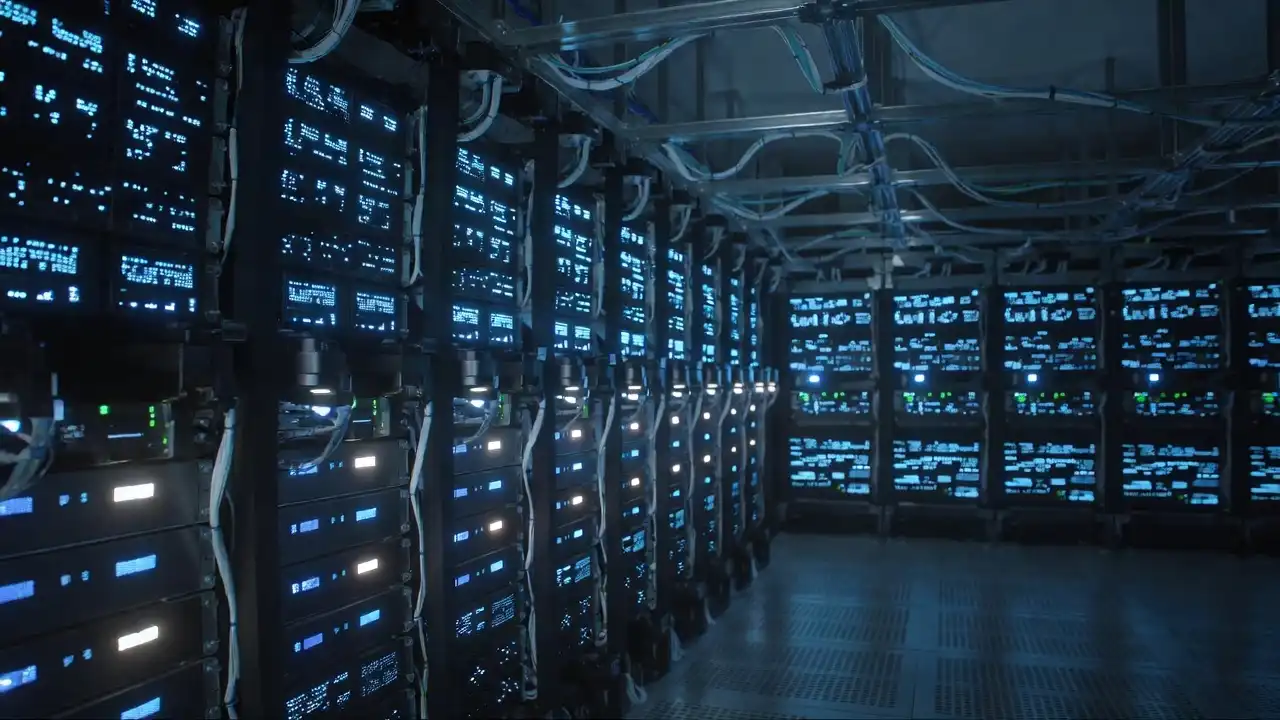
The rapid, relentless expansion of artificial intelligence infrastructure is no longer confined to the technology hubs of Silicon Valley or the balance sheets of cloud hyperscalers. In August 2026, a comprehensive economic analysis by industry observers and federal agencies revealed that the physical requirements of the digital age are executing a massive, structural transformation across traditional American manufacturing. This industrial phenomenon, driven by the historic US data center boom, is radiating directly through factory supply chains, creating an unprecedented wave of demand for heavy machinery, specialized electrical equipment, and raw building materials.
From the outback fabrication plants of Wisconsin to the high-purity steel foundries of Ohio, traditional manufacturers are experiencing a powerful, unexpected economic renaissance. Businesses that historically built backyard backup generators or heavy-duty industrial bearings are rapidly reorganizing their factories, hiring thousands of new workers, and expanding their production capacities to meet the insatiable demands of the data center sector. This massive infrastructure buildout is successfully reversing a multi-year manufacturing slump, proving that the virtual power of artificial intelligence remains completely dependent on the physical concrete, steel, and copper of the material world.
While political debates over trade tariffs, environmental regulations, and local power allocations continue to create background noise, the sheer momentum of this industrial recovery is undeniable. By acting as the primary funding catalyst for the nation’s factory floor, the data center boom has transformed the utility and equipment sectors into some of the most dynamic, high-growth segments of the modern economy. This deep integration is permanently reshaping how the country’s industrial base operates, proving that the next major breakthrough in technology will be won in the physical cleanrooms of traditional manufacturing.
Generac’s Two-Hundred-and-Fifty-Million Dollar Bet on Data Center Power
The most prominent and visible example of this industrial transformation is the rapid operational pivot of Waukesha, Wisconsin-based generator manufacturer Generac Holdings Inc.
Inside the Two-Hundred-and-Fifty-Million Dollar Factory Reorganization
Generac is best known to American consumers for manufacturing the compact, reliable backyard backup generators that rumble to life after a severe storm knocks out local power lines. However, the rapid expansion of the artificial intelligence sector has forced the company to execute the most ambitious corporate realignment in its history.
Generac is spending $250 million by the end of next year to completely reorganize and re-equip multiple domestic factories.
The goal is to manufacture massive, beefed-up, utility-scale backup generators engineered specifically to support the extreme power and cooling requirements of modern data center campuses.
This massive capital commitment is a direct response to a historic accumulation of corporate orders.
Generac disclosed that its order backlog for these massive, customized data center generators has reached an extraordinary $1.6 billion, representing a significant multi-year pipeline.
To meet this demand, the company expects to expand its manufacturing workforce by approximately 1,000 new employees, marking a substantial 10% increase in its national headcount.
Generac Chief Executive Officer Aaron Jagdfeld emphasized the scale of the transition, noting that while the company built its brand around residential backup power, artificial intelligence and data center infrastructure have officially become its newest, highest-growth frontier.
The Challenge of Meeting Long-Horizon Industrial Demand
For Generac and its competitors, the rapid rise in data center orders has raised a critical, high-stakes question: how long will this massive infrastructure buildout last?
Unlike traditional consumer electronics, which operate on short, predictable product cycles, building a national network of gigawatt-scale data centers is a slow, capital-intensive process.
Because many of these planned projects require years of planning, local permitting, and utility negotiations before they can break ground, developers must secure their equipment pipelines years in advance. This long-horizon demand provides Generac with unprecedented revenue visibility, allowing the company to confidently commit $250 million to long-term factory upgrades. However, it also requires absolute operational discipline, as any unexpected slowdown in the global tech cycle could leave manufacturers with massive, unmonetized excess capacity.
The Multi-Industry Ripple Effect: From Steel Bearings to Prefab Walls
The economic windfall from the data center boom is not limited to generator manufacturers. It is radiating rapidly through every layer of the industrial supply chain, creating a powerful, interconnected web of demand that is lifting companies across multiple sectors.
Timken’s Engineered Bearings and the Construction Windfall
The extensive supply chain connections are clearly visible in the operations of Timken Company, a Canton, Ohio-based manufacturer of highly engineered steel bearings and power transmission products. Timken’s products are essential components used to stabilize and reduce friction in the massive rotating shafts of industrial gas turbines, ventilation fans, and heavy construction equipment.
Timken Chief Executive Officer Lucian Boldea revealed that the data center boom has added a highly lucrative new leg of growth to the company’s order book, supplementing its traditional revenue streams in the aerospace and defense sectors.
Boldea explained that constructing a modern, gigawatt-scale data center requires a massive physical footprint, including extensive road networks, large-scale utility substations, and heavy gas turbines—all of which require Timken’s precision steel bearings to operate.
By acting as a key component supplier for these heavy machinery manufacturers, Timken is successfully converting the digital tech boom into a highly reliable source of domestic industrial revenue.
Squeezing the Raw Materials Market: Wire, Pipes, Cement, and Metal
The demand generated by these massive construction projects quickly filters down to the basic raw materials industries, providing a powerful economic tailwind for companies that manufacture the foundational building blocks of the physical world.
As developers construct massive, warehouse-style data center facilities across rural America, they are consuming unprecedented volumes of basic industrial materials:
- Wire Cables and Copper Piping: High-density server racks and liquid cooling systems require miles of high-conductivity copper cabling and high-pressure piping to route electricity and coolant through the facility.
- Industrial Cement and Concrete: Pouring the massive, reinforced concrete slabs required to support the immense weight of thousands of heavy server racks and backup generators has driven up local cement demand.
- Prefabricated Metal Walls: To speed up construction schedules and meet tight developer timelines, builders are increasingly utilizing massive, prefabricated metal walls, providing a major sales boost to local steel and aluminum fabricators.
This broad-based demand has turned the construction of data centers into a highly lucrative market for regional material suppliers. Even a minor 1.5% improvement in local construction margins or a 1.5% reduction in transport overhead can translate into millions of dollars in saved capital for developers, making efficient, localized supply chains an absolute necessity for the industry’s continued expansion, representing a major investment where even a small efficiency gain can yield massive savings.
Squeezing the Labor Market: A Reversal of the Factory Job Slump
The rapid expansion of the data center supply chain is also having a profound, highly positive impact on the domestic labor market, helping to reverse a multi-year hiring slump that had plagued the American manufacturing sector.
Adding Thirty-One Thousand Factory Jobs Year-to-Date
The positive impact of the infrastructure boom is clearly documented in national employment statistics. According to the United States Labor Department, U.S. factories added a net 5,000 jobs during the month of July, bringing the total number of manufacturing jobs created since the beginning of the year to a robust 31,000.
This hiring surge represents a dramatic, highly encouraging reversal from the previous year.
In 2025, high interest rates, cooling consumer demand, and post-pandemic inventory corrections forced U.S. manufacturers to execute painful cost-cutting measures, resulting in the elimination of 113,000 industrial jobs nationwide.
The rapid rise in data center and semiconductor factory construction has successfully neutralized this downward trend, providing a powerful source of stable, high-paying employment for American workers and proving that the high-tech transition can successfully revitalize traditional blue-collar communities.
Reaching a Four-Year High in Manufacturing Activity
The hiring boom is supported by a significant, broad-based recovery in industrial output. The Institute for Supply Management’s monthly manufacturing index revealed that national manufacturing activity hit its highest level in more than four years during July, reflecting a sharp increase in new orders, production volumes, and factory utilization rates.
While some economic analysts point out that other policy factors are also at work—including a massive, federally subsidized surge in the construction of domestic semiconductor fabrication plants under the CHIPS and Science Act—the data center boom remains a primary, ongoing driver of this recovery.
By demanding a continuous supply of heavy generators, cooling systems, and electrical transformers, the digital economy has built a highly resilient, non-discretionary market for American manufacturers, ensuring that the country’s industrial base remains highly active even during periods of broader economic uncertainty.
The Seventy-Billion-Dollar Equipment Boom: Squeezing the Grid
The most significant and challenging aspect of the data center boom is the massive, unprecedented demand it is placing on the national electricity infrastructure, creating a severe supply chain crisis that is forcing manufacturers to make difficult choices.
Wood Mackenzie Projections: Doubling the Market in Five Years
To satisfy the immense, non-stop power requirements of artificial intelligence training and inference workloads, the United States utility sector must undergo a massive, multi-billion-dollar modernization campaign.
The global energy consultancy Wood Mackenzie projects that the electrical equipment market tied directly to U.S. data centers will surge from $33 billion in 2025 to an extraordinary $66 billion by 2030, representing a complete doubling of the market in just five years.
This rapid expansion has placed immense pressure on electrical equipment manufacturers.
The demand for high-voltage transformers, switchgear, and circuit breakers has completely outstripped the available manufacturing capacity, creating a severe, multi-year supply chain bottleneck that threatens to delay data center construction schedules across the country.
Siemens Energy’s High-Stakes Factory Retrofit
The severity of this equipment bottleneck is forcing major global manufacturers to make difficult, highly unusual capital allocation decisions to satisfy their customers’ urgent demands.
German industrial giant Siemens Energy AG has initiated a major, high-stakes retrofit at one of its primary manufacturing facilities in the United States.
Faced with an acute, long-term shortage of large power transformers, Siemens Energy decided to convert an existing, highly successful gas turbine manufacturing facility in the U.S. to produce high-voltage power transformers instead.
This decision represents a major, expensive gamble, as retrofitting a highly specialized turbine factory requires millions of dollars in capital expenditures and months of operational downtime.
However, because the backlog for power transformers has stretched past three years, and because these components represent a critical, high-margin bottleneck for data center developers, the company concluded that the massive financial returns of the transformer market fully justified the sacrifice, demonstrating how the AI boom is actively reconfiguring the physical layout of global manufacturing.
Navigating the Challenges of High-Tech Industrialization
While the rapid expansion of the data center supply chain is delivering historic revenues to American manufacturers, the industry must also navigate significant, highly complex political and economic challenges.
The primary hurdle facing the industrial sector is the highly volatile trade and tariff policies of the federal government.
The administration’s aggressive use of trade barriers, including import tariffs on foreign steel, aluminum, and advanced components under the “America First” banner, has directly fanned inflation, driving up the cost of raw materials for domestic manufacturers.
Furthermore, because many U.S. factories rely heavily on importing advanced, highly specialized machinery from Europe and Japan to expand their production lines, these tariff barriers have created significant administrative delays and capital cost increases, slowing down the pace of factory expansions.
Despite these challenges, the economic momentum of the data center boom remains virtually unstoppable.
By building a highly integrated, multi-billion-dollar supply chain that connects high-tech software developers with traditional, heavy industrial manufacturers, the technology sector has successfully built a powerful economic engine.
As the country continues to invest trillions of dollars in domestic manufacturing and green-energy transitions, the success of this industrial boom will ensure that the United States remains the undisputed leader of the global digital economy, proving that the ultimate winners of the AI revolution will be the nations that can successfully integrate advanced intelligence with the physical building blocks of national commerce.