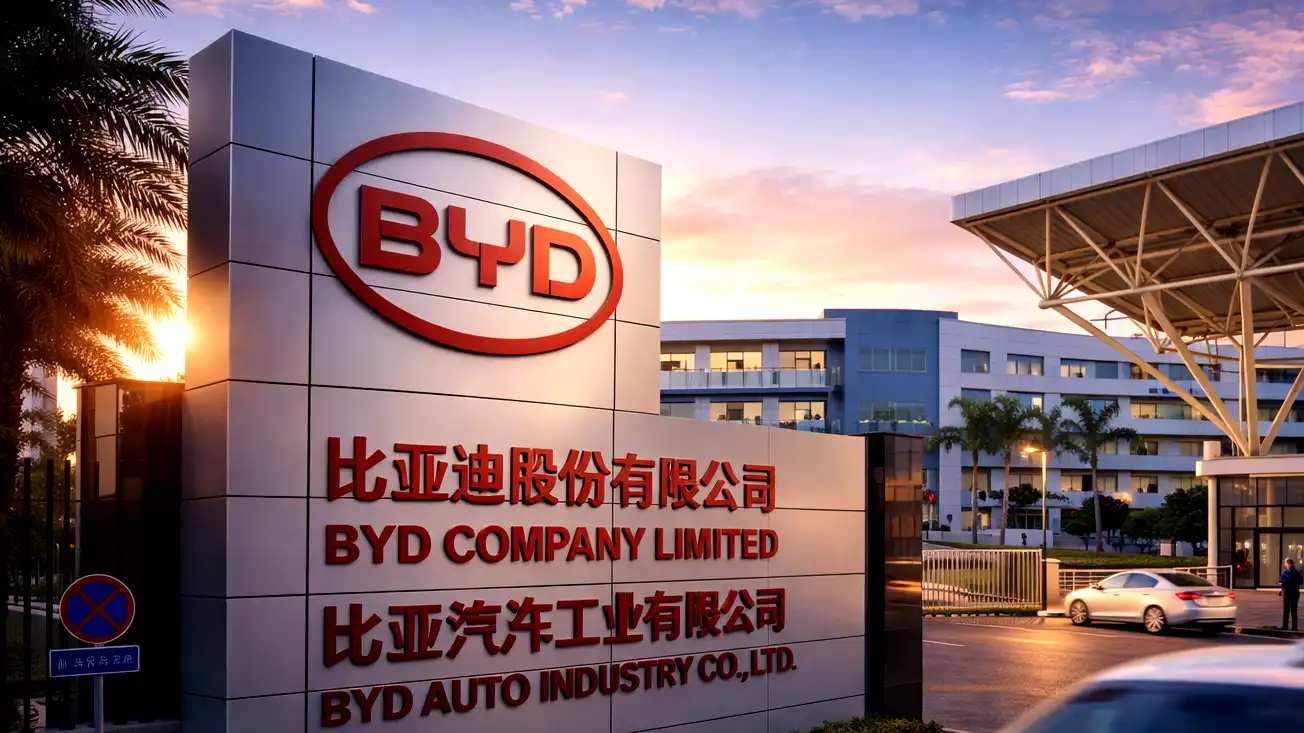
The global electric vehicle landscape has reached a historic, highly unpredictable milestone. In August 2026, Chinese electric vehicle giant BYD Co. announced that its first-ever “kei” (mini) electric vehicle, the BYD Racco, has secured over 1,000 orders in just its first two weeks on the Japanese market. The Hangzhou-based company officially launched the compact microvan on July 28, 2026, representing a landmark corporate offensive that is sending shockwaves through Japan’s highly protected domestic automotive industry.
By successfully introducing the Racco, BYD is going where no foreign brand has gone before. The ultra-compact, lightweight “kei” car segment is the single most important vehicle category in Japan, yet it has historically functioned as an unassailable fortress, dominated entirely by local giants like Toyota, Suzuki, Honda, Daihatsu, and Nissan. For decades, foreign auto giants like General Motors, Ford, and Hyundai struggled to win over conservative Japanese buyers in this segment, eventually executing painful corporate retreats from the island nation.
The rapid, record-breaking demand for the Racco has shattered this historical precedent. Priced at just $13,000 (approximately ¥2.14 million), the mini EV undercuts its domestic competitors on price while comfortably beating them on driving range and advanced software features. This combination of affordability, efficiency, and high technology has captured the immediate attention of Japanese motorists, proving that the tech-rich Chinese electric vehicle is ready to challenge the established order of the global automotive world.
The Mechanics of the “Racco” Mini-EV: Undercutting the Best-Selling Sakura
The primary competitive advantage that has allowed the Racco to achieve its rapid, record-breaking sales momentum is a highly advanced, ultra-efficient engineering package designed specifically for the unique physical realities of the Japanese market.
Technical Specifications of the Unprecedented Microvan
The physical dimensions of the Racco have been meticulously engineered to comply with Japan’s strict legal “kei-jidosha” (light vehicle) standards. The super-compact microvan stands exactly 180 centimeters high, measures up to 1.4 meters in width, and has a maximum length of 3.4 meters. This compact, highly agile footprint is tailored specifically to navigate the narrow, crowded residential backstreets and tight rural byways that characterize the Japanese built environment.
The heart of the vehicle’s physical platform is its high-efficiency electric powertrain. The base Racco 200 utilizes a 22.4 kilowatt-hour lithium iron phosphate (LFP) Blade Battery, developed entirely by BYD’s proprietary battery division.
This advanced battery pack delivers a highly competitive WLTC driving range of 210 kilometers (approximately 130 miles) on a single charge.
By utilizing its specialized, highly efficient battery design, BYD has successfully built a lightweight, low-maintenance commuter vehicle that can easily handle daily city driving and short-range regional travel.
Beating the Best-Selling Nissan Sakura on Price and Range
The commercial significance of the Racco’s technical specifications is most visible when compared directly to Japan’s best-selling electric mini-car, the Nissan Sakura.
The comparison highlights a severe competitive threat for Japanese automakers:
- The Nissan Sakura starts at a retail price of approximately ¥2.44 million and has a maximum driving range of only 180 kilometers when fully charged.
- The BYD Racco undercuts its rival significantly, starting at a suggested retail price of ¥2.145 million, which falls below the ¥2 million ($12,210) mark after incorporating Japan’s national and regional green vehicle subsidies.
- Despite costing nearly $2,000 less than the Sakura, the Racco delivers an additional 30 kilometers of driving range on a single charge, representing a substantial value-for-money upgrade that is proving highly attractive to budget-conscious Japanese drivers.
This massive price-to-performance advantage has forced local analysts to reconsider their assumptions. Many prominent auto economists had predicted that Japanese drivers would refuse to buy Chinese-made electric vehicles due to long-standing nationalistic preferences and concerns over resale values. The rapid 1,000-order milestone has successfully refuted these claims, proving that when offered a highly reliable, high-performance vehicle at an irresistible price point, consumers will happily choose technological value over traditional brand loyalty.
The “Kei” Car Fortress: Why Foreign Brands Historically Failed
The success of the Racco is a major historical milestone because it represents the first successful foreign incursion into what is widely regarded as the most heavily guarded segment of the global automotive industry.
The Forty Percent Share of Japan’s Auto Market
To understand the strategic importance of the mini-car segment, one must examine its immense economic footprint within Japan. Lightweight, ultra-compact “kei-jidosha” cars represent a massive 40% of all new vehicle sales in the country, serving as the essential, daily transport backbone for millions of rural families, small-business delivery drivers, and elderly residents.
For generations, this massive, multi-billion-dollar market was protected by a powerful combination of unique, highly specific regulatory size standards, specialized tax incentives, and deep-seated consumer habits.
Because foreign manufacturers focused primarily on building massive, heavy-duty sedans and SUVs for their domestic markets, they did not possess the specialized engineering or the small-scale platforms needed to manufacture compliant, competitive mini-cars, leaving the segment dominated entirely by local giants.
The Legacy of Failed Foreign Incursions
The historical record of foreign carmakers attempting to enter Japan is a long story of financial loss and corporate retreat. Major American and European conglomerates—including General Motors, Ford, and Hyundai—spent decades and invested billions of dollars trying to establish a foothold in the country, attempting to convince Japanese buyers to adopt their larger, left-hand-drive vehicles.
These foreign campaigns failed completely.
Unable to navigate the island’s narrow roads, find parking spaces in dense urban centers, or compete with the low purchase and maintenance costs of local mini-cars, foreign brands struggled to achieve even a 1% share of the market, eventually executing painful corporate retreats.
By developing the Racco specifically for the Japanese market and building its first-ever right-hand-drive mini-EV platform, BYD has successfully broken this historical pattern of failure, demonstrating that a foreign brand can crack the “fortress” if it is willing to invest in localized, highly specialized engineering.
The Software-Defined Vehicle (SDV) Advantage: A Smartphone on Wheels
Beyond its low purchase price and competitive driving range, the primary factor driving the rapid adoption of the Racco is its advanced, software-defined vehicle architecture, which has turned the small microvan into a highly capable digital companion.
Constant Over-the-Air Software Upgrades
Traditional Japanese mini-cars are engineered primarily as simple, mechanical tools designed to get drivers from point A to point B with minimal fuss. While they are highly reliable, their technology remains static, with the features of the car remaining unchanged from the day it rolls off the assembly line.
The BYD Racco has completely redefined this experience. The vehicle is designed from the ground up as a highly advanced “software-defined vehicle,” meaning its physical hardware is integrated with an advanced, cloud-connected computer operating system.
The vehicle receives regular, over-the-air software updates that add new safety features, optimize battery thermal management, improve navigation systems, and introduce new digital entertainment options over time, acting much like a smartphone on wheels.
For tech-savvy Japanese consumers, this digital capability represents a major lifestyle upgrade, ensuring that their vehicle remains modern and capable throughout its operational life.
Premium Trims Dominate Early Orders
The consumer preferences revealed during the initial two-week sales window indicate that Japanese buyers are not just looking for the cheapest possible transportation; they are actively seeking out high-end technology and premium features.
The sales data highlights this strong preference for quality:
- Approximately 80% of early buyers chose the more expensive Racco 300 Premium trim, which incorporates advanced driver-assistance systems, automated parking features, and an upgraded interior cabin.
- 14% of buyers selected the mid-tier Plus trim, while only 6% opted for the base 200 model.
- The survey data also revealed a highly encouraging trend in home infrastructure: 55.4% of early buyers already had dedicated EV charging equipment installed at their homes, proving that the Racco is successfully attracting experienced, tech-savvy green drivers who are ready to integrate the vehicle into their daily routines.
This strong demand for premium trims has significantly boosted the profitability of the project.
While market analysts initially estimated that BYD was not looking to make a massive profit on the entry-level Racco, using it instead primarily to raise its brand awareness, the high concentration of premium orders has transformed the vehicle into a highly reliable cash generator, proving that Japanese consumers are willing to pay for advanced technology and high craftsmanship, even on a small-scale vehicle.
The Macroeconomic Squeeze: Realigning Japan’s Auto Industry
The rapid, highly successful launch of the BYD Racco is already beginning to reshape the competitive and financial dynamics of the broader Japanese automotive sector.
Forcing Consolidation Among Financially Weak Japanese Brands
Industry analysts warn that if Chinese EV manufacturers successfully penetrate the massive “kei” car market, it will place immense, unmanageable pressure on financially weak Japanese automakers.
Toyota’s group companies, Suzuki Motor and Daihatsu, along with Honda Motor, collectively control about 80% of the minicar market, but smaller firms lack the massive capital reserves and advanced EV technologies needed to defend their market share.
The rising competitive pressure is expected to accelerate a major, long-term wave of corporate consolidation across the Japanese auto sector.
Financially weaker manufacturers, who are already struggling to fund their own multi-billion-dollar electric vehicle transitions, may be forced to merge or form strategic alliances with larger partners like Toyota to survive.
This corporate restructuring represents a major economic realignment, proving that the entry of a highly capable foreign competitor can successfully force an entire national industry to consolidate to protect its long-term survival, especially in a market where even a 1.5% improvement in motor efficiency can save consumers thousands of dollars in annual running costs.
BYD’s Rapid Expansion in the Japanese Retail Network
To support its long-term sales ambitions and maintain the momentum of the Racco launch, BYD is aggressively expanding its physical presence across the country, building a robust, permanent retail network that can rival its domestic competitors.
The company’s expansion metrics illustrate this long-term commitment:
- The Chinese carmaker has established 77 sales locations across Japan, including 56 official, full-service dealerships.
- The company is firmly on track to deliver its 10,000th vehicle in Japan by the end of this month, marking a major operational milestone since its passenger-car entry in 2023.
- The firm has established an ambitious sales target of securing 10,000 orders for the Racco alone by the end of 2026, which would represent a massive expansion of its local market share.
By committing substantial capital to build out this extensive physical network, and hiring popular Japanese actress Alice Hirose to lead its high-profile national advertising campaigns, BYD is proving to Japanese consumers that it is not a temporary player.
The company is demonstrating that it is building a permanent, highly supportive corporate presence in the country, providing local buyers with the guaranteed, high-quality after-sales support and parts availability they need to invest in its green technology with absolute peace of mind, especially as it participates in large-scale projects requiring over $1 billion in capital upgrades to construct local charging networks.
Powering the Future of Compact Transportation
The record-breaking launch of the BYD Racco on the Japanese market represents a landmark milestone in the corporate and technological history of the global electric vehicle industry. By securing over 1,000 orders in just its first two weeks on the market, the Chinese EV giant has proven that the highly protected “fortress” of the Japanese minicar market is no longer unassailable.
Through its advanced LFP Blade Battery technology, its highly competitive pricing that undercuts the best-selling Nissan Sakura, and its software-defined vehicle architecture, the Racco has successfully established a new global benchmark for compact, zero-emission transportation.
As the company continues to expand its physical dealer network, integrates its advanced hybrid and electric models, and prepares to meet its ambitious 10,000-order target by the end of the year, this innovative microvan will ensure that BYD remains a dominant, highly resilient leader in the global automotive transition, proving that the ultimate winners of the green era will be the companies that can successfully combine technological innovation with absolute capital discipline to deliver affordable, high-quality electric vehicles to the global marketplace.