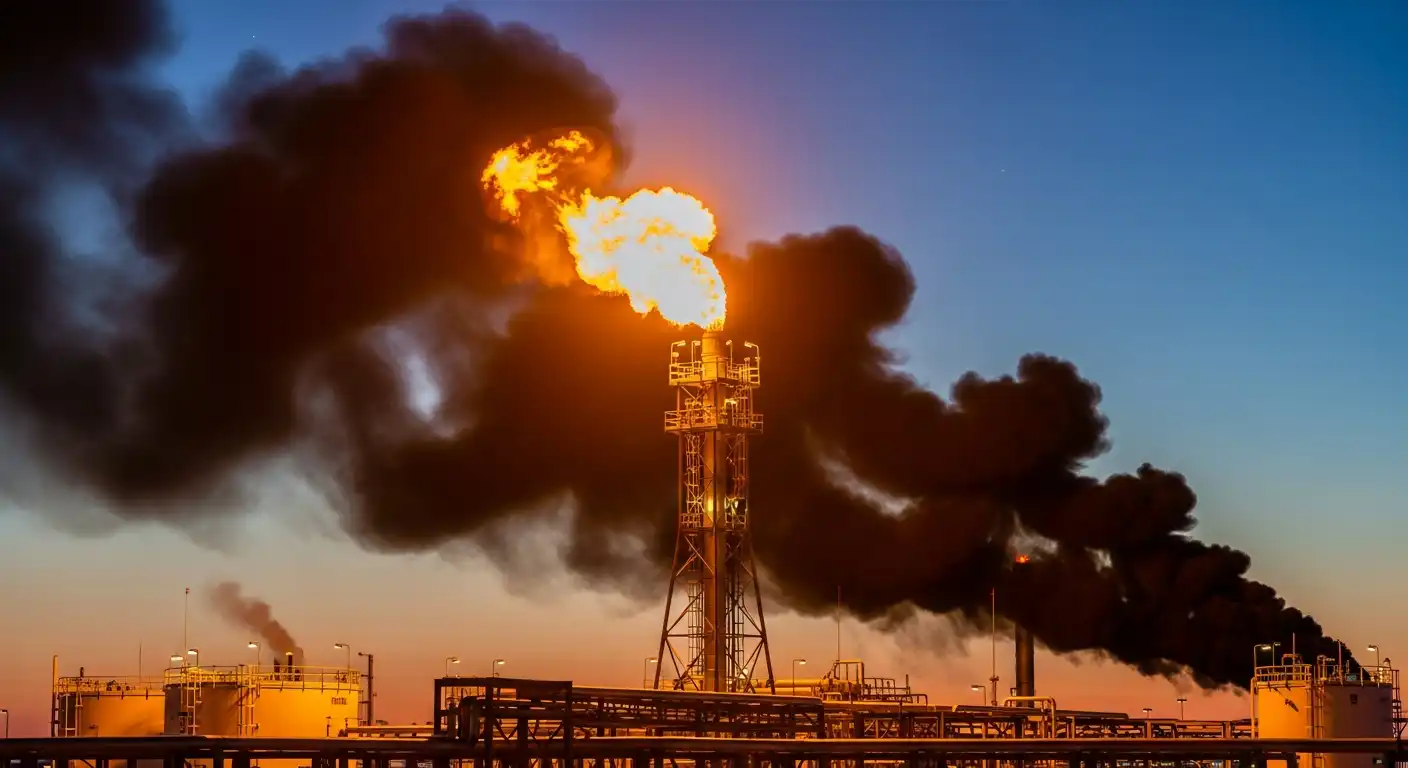
The United States energy complex is experiencing a rapid, weather-driven turnaround. In August 2026, front-month Nymex natural gas futures broke out of their multi-week trading doldrums, surging past the key $2.800 per million British thermal units (MMBtu) threshold. The commodity touched a near one-month high of $2.837 per MMBtu, representing a solid 2.20% single-day gain, driven by forecasts of prolonged, extreme heat across the southern and western regions of the country and a leaner-than-expected weekly inventory build.
This sudden price explosion represents a significant technological and market milestone. By opening at $2.786 and successfully breaking through a critical resistance zone between $2.78 and $2.80—which had capped every single rally attempt earlier in the month—the market has officially shifted its primary trend to upward for the first time in weeks. This technical breakout caught short sellers completely off guard, forcing them to rapidly cover their positions and clearing the path for natural gas to target the next key resistance levels in the $2.86 to $2.92 range, with some optimistic trading models pointing toward a potential $4.00 target by early autumn.
However, the primary catalyst behind this rapid market turnaround remains the extreme physical heat on the ground. As businesses and residential households across Texas, the Southwest, and the Gulf Coast run their air conditioning systems at maximum capacity to survive the blistering late-summer heatwave, the demand for gas-fired power generation has surged to near-record levels. This sudden surge in power consumption has successfully begun to drain the country’s massive underground gas reserves, forcing investors to re-evaluate the supply-demand balance.
The Weather Catalyst: One-Hundred-Degree Texas Heat Waves
The primary driver of the natural gas rally is a massive, highly intense late-summer heatwave that has settled over some of the most populated and energy-intensive regions of the United States.
Surging Temperatures in the Southern and Western United States
The temperature data published by meteorological tracking organizations illustrates the extreme nature of the current weather pattern. AccuWeather projects that average high temperatures in Houston, Texas, will reach a blistering 100°F, representing a significant 5°F increase over the typical seasonal norm for this time of year.
This extreme heat is not a temporary, localized weather event. Forecasters at the Commodity Weather Group confirmed that above-normal temperatures are expected to persist across the western and southern United States through at least September 1.
By fanning an intense, multi-week heatwave across these high-consumption regions, the weather has created an ideal environment for natural gas demand, forcing utilities to burn record volumes of gas to keep their power grids stable.
The Squeeze on ERCOT and Declining Wind Generation
The physical impact of this extreme heat is most visible in the state of Texas, which operates its own independent electrical grid managed by the Electric Reliability Council of Texas, or ERCOT.
During peak heat events, when millions of residents are running their home air conditioning units simultaneously, the state’s total electricity demand rises to near-record heights.
To make the situation even more critical, these extreme heatwaves often coincide with periods of low wind, causing a sharp drop in regional wind-power generation.
When wind turbines fail to deliver their expected output during peak hours, ERCOT must lean heavily on its gas-fired power plants to maintain grid stability and prevent blackouts.
This high-frequency utility demand has forced local power providers to purchase massive volumes of natural gas, converting the physical heat on the ground into a powerful, non-discretionary source of commodity demand.
Deciphering the EIA Storage Report: A Leaner-Than-Expected Sixteen Billion Cubic Feet Build
While the weather forecasts provided the upward momentum, the natural gas rally received its most important validation from the latest weekly inventory data published by the federal government.
Falling Well Below the Five-Year Seasonal Average
On Thursday, the U.S. Energy Information Administration published its Weekly Natural Gas Storage Report, revealing that utility companies injected a mere 16 Bcf of natural gas into underground storage facilities.
This 16 Bcf build fell significantly below the historical benchmarks:
- The injection was nearly 45% lower than the five-year seasonal average injection of 29 Bcf for this specific week.
- The build also trailed the 19 Bcf injection recorded during the corresponding week in the previous year.
- This leaner-than-expected build provided the first hard, empirical proof that the summer heat is successfully absorbing the country’s massive gas supply.
Proof That Summer Heat is Absorbing the Supply Glut
Prior to the release of the EIA report, many bearish market participants argued that the country’s massive storage surplus would prevent any sustainable price recovery.
Following a mild winter and record-breaking spring production, United States natural gas inventories had built up to a level that was 6.7% above the five-year seasonal average.
The 16 Bcf report has successfully challenged this bearish narrative.
It proved to the market that the extreme late-summer heat is finally pulling enough gas into the power sector to slow the pace of storage injections, helping to digest the national surplus far faster than analysts realized.
While total inventories remain elevated, the leaner build has forced short sellers to cover their positions, giving the market the technical support it needs to sustain its upward momentum.
The Supply-Side Counterweight: Record Production and Pipeline Upgrades
Despite the impressive, weather-driven rally, serious natural gas analysts warn that the commodity faces a powerful, highly resilient supply-side counterweight that will continue to cap the market’s long-term upside.
Dry Gas Output Soaring Near 112 Billion Cubic Feet per Day
The primary bearish factor keeping a tight lid on natural gas prices is record-breaking domestic production. According to data tracked by BloombergNEF, Lower-48 dry natural gas production is currently averaging between 111.5 and 112.4 Bcf per day, representing a 2.5% increase year-on-year.
This massive production volume is being driven by high crude oil prices, which have encouraged producers in the Permian Basin of West Texas and New Mexico to accelerate their drilling operations.
Because natural gas in the Permian is produced primarily as a byproduct of crude oil extraction, oil companies will continue to pump out this associated gas regardless of how low natural gas prices fall, keeping the market constantly supplied with cheap fuel.
Energy Transfer’s Hugh Brinson Pipeline Expansion
The supply-side pressure on the market is set to increase further as major infrastructure operators bring new pipeline capacity online. Energy Transfer recently confirmed that its new Hugh Brinson pipeline is fully on track to achieve its maximum transportation capacity of 1.5 Bcf/day by September 1.
This pipeline upgrade will allow producers in the Permian Basin to ship massive volumes of associated gas directly to the U.S. benchmark Henry Hub in Erath, Louisiana, significantly easing the localized supply bottlenecks that have depressed West Texas gas prices all summer.
While this infrastructure upgrade is highly beneficial for Permian producers, it also means that the national benchmark will face a steady, new influx of low-cost supply, representing a significant headwind that will likely limit the strength of any autumn price rallies.
Geopolitical Pressures: The Strait of Hormuz and Global LNG Demand
While domestic supply and weather dictate the daily price swings of the U.S. market, the long-term floor for natural gas is being supported by a highly volatile, energy-driven geopolitical landscape.
Strait of Hormuz Shipping Restrictions and the European Gas Squeeze
The global energy markets are currently dealing with a severe, long-term shipping crisis in the Middle East. Following the outbreak of regional military conflicts earlier in the year, the vital Strait of Hormuz has remained highly restricted, limiting the transit of liquefied natural gas tankers from major regional producers like Qatar.
This shipping bottleneck has had a devastating impact on European and Asian gas markets, which rely heavily on imported LNG to heat their homes and power their industries.
With Middle Eastern shipments restricted, European gas storage levels have fallen below their seasonal averages, forcing international buyers to compete aggressively for alternative sources of supply.
Underpinning US LNG Exports at Near-Record Levels
This international supply squeeze has kept U.S. LNG export terminals operating at maximum capacity. According to BloombergNEF, estimated net flows to the country’s nine major LNG export facilities are currently averaging 17.2 to 17.8 Bcf/day, representing a 2.7% increase week-over-week.
This steady, high-volume export demand is a critical support mechanism for the domestic market.
Every molecule of natural gas that is liquefied and shipped to Europe or Asia is a molecule that is not available to be injected into domestic underground storage, helping to balance the U.S. supply-demand equation.
As long as global geopolitical tensions remain high, the demand for American LNG will continue to underpin the market, ensuring that the technology and industrial sectors have access to a secure, global energy standard, especially across large-scale logistics networks requiring over $1 billion in capital investments, and where even a 1.5% improvement in processing latency or a 1.5% reduction in production costs can save manufacturers millions of dollars annually.
Balancing Heat Demand with Record Supply
The rapid surge of U.S. natural gas futures past the $2.800 per MMBtu threshold is a landmark milestone for the energy sector, proving that the physical laws of supply and demand are still highly responsive to extreme weather events. By demonstrating a 2.20% single-day price increase and breaking through critical resistance levels, the commodity has proven that late-summer heatwaves can successfully digest even the most massive inventory surpluses.
While record-breaking domestic production of up to 112.4 Bcf per day and upcoming pipeline expansions like the Hugh Brinson project will continue to act as a powerful check on long-term price gains, the ongoing surge in LNG export demand and the leaner-than-expected weekly EIA storage builds have established a highly resilient floor for the market.
As the country prepares for the critical September contract settlement date on August 27 and continues to monitor the high-voltage power demands of its expanding data center networks, the successful coordination of these domestic and global energy flows will ensure that natural gas remains the undisputed, highly efficient, and highly reliable fuel of the modern industrial economy for decades to come.