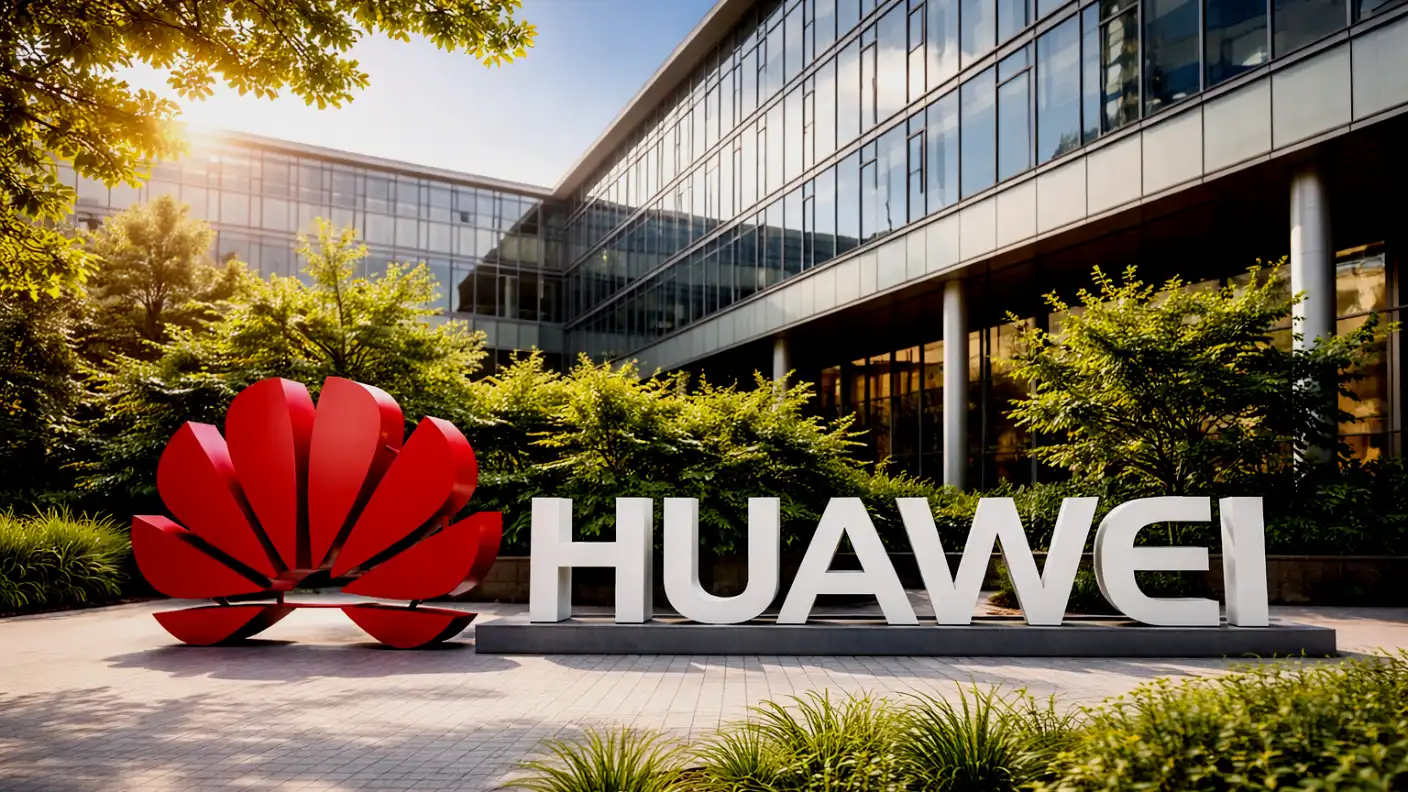
Chinese telecommunications giant Huawei Technologies has signed a multi-year global patent cross-licensing agreement with American personal computer manufacturer HP Inc. The deal covers standard-essential patents across multiple generations of wireless local area network technologies, including Wi-Fi 6 and the next-generation Wi-Fi 7 standard. The intellectual property accord resolves past legal disputes between the two corporate giants and ensures that HP can build modern wireless connectivity into its global consumer and enterprise hardware lineup without facing patent infringement litigation.
Under the terms of the agreement, HP receives global licenses to essential Wi-Fi patents owned by Huawei, while Huawei obtains reciprocal patent rights under HP’s extensive intellectual property portfolio. Although both parties kept specific financial terms and royalty transfers confidential, the cross-licensing structure gives both hardware makers reciprocal access to use protected technologies across personal computers, laptops, enterprise printers, and peripheral devices worldwide.
The timing of the cross-border licensing deal carries significant geopolitical weight. The agreement arrives as government officials in Washington and Beijing prepare for an upcoming high-stakes diplomatic summit between United States President Donald Trump and Chinese President Xi Jinping. While American export controls and trade restrictions continue to isolate Huawei’s hardware sales across Western markets, the deal with HP demonstrates that Huawei remains an indispensable owner of standard-essential technologies that Western hardware manufacturers must license to build compliant consumer electronics.
A Landmark Cross-Border Intellectual Property Accord
The cross-licensing contract between Huawei and HP highlights the pragmatic realities of modern standard-setting in the technology sector. Global telecommunications standards like Wi-Fi are developed openly through technical contributions from hundreds of international technology corporations participating in standard-setting organizations like the Institute of Electrical and Electronics Engineers.
Because standard-essential patents cover core technological mechanisms required to manufacture standard-compliant products, companies cannot simply engineer around them. Hardware manufacturers that build laptops, wireless routers, and smart office equipment must secure intellectual property licenses from patent holders to ensure full interoperability.
By signing a multi-year cross-license, Huawei and HP established a stable legal framework that protects both enterprises. The agreement allows HP to deploy advanced wireless chips across its commercial device portfolio while providing Huawei with reciprocal legal protections and royalty validation for its multi-billion-dollar research and development investments.
Unpacking the Wi-Fi 6 and Wi-Fi 7 Patent Coverage
The scope of the licensing agreement centers on two pivotal generations of wireless technology: Wi-Fi 6, known technically as IEEE 802.11ax, and the emerging Wi-Fi 7 standard, known as IEEE 802.11be. Both standards deliver significant performance leaps in data throughput, spectral efficiency, network capacity, and latency reduction.
Huawei holds one of the world’s largest declared standard-essential patent portfolios for Wi-Fi technologies, having contributed foundational engineering breakthroughs to the IEEE standard-setting committees:
- Orthogonal Frequency-Division Multiple Access techniques that allow multiple client devices with varying bandwidth needs to connect to a single router channel simultaneously.
- Advanced Multi-User Multiple-Input Multiple-Output antenna scheduling algorithms that quadruple spatial data stream efficiency in crowded office environments.
- Multi-Link Operation capabilities in Wi-Fi 7 that allow devices to transmit and receive data across multiple frequency bands (2.4 GHz, 5 GHz, and 6 GHz) at the exact same time.
- 4096-QAM modulation schemes that pack 20% more data into each transmission symbol, enabling peak data transfer rates exceeding 30 gigabits per second.
These core innovations are critical for supporting high-bandwidth enterprise applications, including 8K high-definition video streaming, augmented reality workstations, cloud computing synchronization, and lag-free corporate teleconferencing.
Resolving Global Infringement Disputes and Litigation Filings
The new cross-licensing pact brings a peaceful end to a series of contentious legal battles between Huawei and HP. In recent years, Huawei has initiated patent infringement lawsuits against HP and several of its European subsidiaries in specialized patent courts across Germany.
The litigation centered on European patent EP3611989, which covers advanced methods and apparatus for transmitting wireless local area network information. Huawei alleged that HP incorporated protected Wi-Fi 6 technologies into commercial laptops, desktop workstations, and network adapters without obtaining appropriate bilateral licenses or participating in authorized patent pools.
In the United States, related patent infringement lawsuits brought against HP by other technology licensors led federal judges to order formal mediation. Rather than risking court-ordered sales injunctions or expensive damages trials, HP and Huawei engaged in direct bilateral negotiations.
The finalized agreement dismisses all pending litigation, replacing courtroom hostility with a stable, multi-year commercial licensing framework.
Huawei’s Global Patent Monetization Strategy and R&D Investments
Over the past five years, Huawei has transformed its intellectual property division into an active revenue-generating engine. Confronted with severe United States trade sanctions that restricted its access to American semiconductors and blocked its telecommunications infrastructure equipment from Western cellular networks, the company pivoted to monetize its massive patent portfolio.
Huawei has established bilateral patent licensing and cross-licensing agreements with dozens of top-tier international technology leaders, including Amazon, Samsung Electronics, Apple, vivo, Oppo, and Xiaomi.
These licensing deals prove that even when foreign trade barriers block physical product exports, patent ownership allows technology creators to capture continuous licensing revenues from global device sales.
Establishing the $0.50 per Unit Transparent Royalty Standard
A major pillar of Huawei’s intellectual property strategy is establishing transparent, publicly published royalty rates. Historically, standard-essential patent licensing negotiations occurred behind closed doors, leading to protracted disputes regarding what constituted fair, reasonable, and non-discriminatory pricing.
Huawei disrupted this opaque model by publishing fixed royalty schedules for consumer devices:
- Setting a transparent royalty rate of $0.50 per unit for consumer-grade devices implementing Wi-Fi 6 standards.
- Maintaining that exact same $0.50 per unit royalty rate for devices compliant with the new Wi-Fi 7 standard.
- Establishing capped royalty rates between $1.50 and $2.50 per unit for 4G and 5G mobile handsets.
- Offering lower, proportional percentage fees for low-cost Internet of Things smart meters and connected home sensors.
By capping the Wi-Fi 7 royalty rate at $0.50 per consumer device, Huawei provides predictable cost visibility for device manufacturers. Hardware makers can budget component expenses accurately, eliminating the threat of unexpected litigation from patent assertion entities demanding exorbitant fees.
Over 1.6 Billion Consumer Electronic Devices Utilizing Huawei Inventions
The global reach of Huawei’s wireless intellectual property is enormous. Official corporate disclosures reveal that more than 1.6 billion consumer electronic devices worldwide, excluding mobile smartphones, operated using Huawei’s Wi-Fi-related inventions by the end of 2025.
This figure marks a rapid expansion from the 1.2 billion devices covered by Huawei patent licenses at the end of 2024. The licensed product ecosystem spans a vast array of consumer and industrial electronics:
- Personal laptops, desktop computers, and convertible tablets manufactured by global original equipment makers.
- Enterprise multi-function office printers, wireless document scanners, and network copiers.
- Smart televisions, streaming media set-top boxes, and high-fidelity wireless audio soundbars.
- Smart home appliances, including connected refrigerators, robotic vacuum cleaners, and automated climate control systems.
Capturing royalties across 1.6 billion connected devices generates hundreds of millions of dollars in recurring, high-margin licensing cash flows, providing steady income that helps offset geopolitical trade disruptions.
Reinvesting Over 20% of Annual Revenue into Frontier Research
Huawei’s commanding patent position is the direct result of an aggressive, sustained research and development strategy. While many global technology corporations allocate between 8% and 12% of annual revenues to research, Huawei routinely reinvests more than 20% to 23% of its total annual revenues into research and development.
Over the past decade, Huawei’s cumulative research and development expenditures have exceeded $140 billion. The company employs over 110,000 research engineers across dedicated research centers in Shenzhen, Shanghai, Beijing, and European research hubs, representing more than 55% of its total global workforce.
This massive capital deployment generates thousands of new patent filings every year:
- Holding over 140,000 active patents globally, making Huawei one of the largest corporate patent owners in the world.
- Ranking as the number-one applicant for international patent filings with the World Intellectual Property Organization for multiple consecutive years.
- Driving foundational research in advanced optical networking, artificial intelligence compute architectures, solid-state battery chemistry, and 6G cellular communications.
By maintaining high research spending, Huawei ensures that it remains at the technological forefront of global standards, making its intellectual property indispensable for next-generation hardware manufacturing.
HP’s Technical Standards Compliance and Device Portfolio Integration
For HP Inc., securing the cross-licensing deal with Huawei is a critical operational priority that protects its primary hardware businesses. As one of the world’s leading suppliers of personal computers and printing solutions, HP sells tens of millions of connected devices to corporate enterprises, government agencies, educational institutions, and retail consumers every year.
Modern enterprise customers expect every commercial laptop and desktop workstation to feature reliable, high-speed Wi-Fi 6E and Wi-Fi 7 connectivity.
Failing to secure proper patent licenses creates severe business risks, including potential customs border seizures, distributor lawsuits, and unexpected court injunctions that could disrupt international product shipments.
Safeguarding Personal Computers, Laptops, and Enterprise Printers
The cross-licensing accord provides comprehensive legal protection for HP’s extensive product portfolio. The agreement covers HP’s flagship commercial laptops, such as the EliteBook and ProBook lineups, alongside its high-performance OMEN gaming PCs, Spectre consumer ultrabooks, and enterprise LaserJet printing hubs.
Integrating Wi-Fi 7 capabilities into modern personal computers delivers significant commercial advantages:
- Eliminating network congestion in dense corporate office spaces where hundreds of employees connect to shared wireless access points simultaneously.
- Accelerating local file transfers between client PCs and on-premises network-attached storage arrays.
- Enabling ultra-low-latency wireless connections for cloud-based artificial intelligence processing and virtual desktop infrastructure.
- Supporting high-efficiency power-saving sleep states that extend laptop battery life during mobile work shifts.
By resolving patent licensing terms directly with major patent holders, HP ensures that its global supply chain operates smoothly, allowing the company to ship millions of personal computers to worldwide distributors without legal interference.
Clarifying Standard-Essential Licensing Versus Strategic Partnerships
Following the announcement of the agreement, HP moved quickly to clarify the narrow, legal nature of the contract. In an official public statement, an HP spokesperson emphasized that the cross-license is a standard-essential patent agreement covering widely used Wi-Fi technology, rather than the beginning of a broader commercial or strategic partnership with Huawei.
HP clarified the specific boundaries of the deal:
- The agreement is strictly a routine intellectual property licensing contract common among consumer electronics manufacturers.
- The deal does not involve joint product development, shared component sourcing, or collaborative engineering projects.
- HP will not sell, distribute, or co-brand Huawei hardware or software products across any global retail channel.
- The arrangement complies fully with all applicable United States export control regulations, Department of Commerce Entity List rules, and national security directives.
This explicit clarification reflects the sensitive political environment surrounding commercial transactions between American technology companies and sanctioned Chinese enterprises. HP demonstrated that companies can resolve necessary intellectual property licensing requirements without violating federal trade restrictions.
Geopolitical Landscapes and the Upcoming Trump-Xi Summit
The intellectual property accord between Huawei and HP unfolds against an intense geopolitical backdrop. The technology sector remains the primary arena of competition between the United States and China, with both superpowers implementing tariffs, export bans, and domestic industrial subsidies to achieve technological supremacy.
The upcoming summit between President Donald Trump and President Xi Jinping in Washington will address long-standing economic disputes, including semiconductor export controls, artificial intelligence governance, and cross-border trade balances.
In this high-stakes diplomatic environment, private-sector patent licensing agreements demonstrate that the economies of the two superpowers remain deeply interconnected despite aggressive political decoupling rhetoric.
Navigating Tech Decoupling, Entity Lists, and Standard-Setting Bodies
Over the past seven years, the United States government has placed hundreds of Chinese technology enterprises, including Huawei, on the Department of Commerce’s Entity List. These administrative restrictions barred American companies from selling advanced semiconductor chips, specialized manufacturing equipment, and proprietary software tools to listed entities without special export licenses.
However, United States export regulations explicitly permit American companies to participate in international standard-setting organizations alongside Entity List firms.
Federal regulators recognized that if American corporations were prohibited from collaborating in standards bodies like the IEEE or 3GPP, Chinese enterprises would write global standards independently, leaving Western manufacturers at a severe technical disadvantage.
The Huawei-HP agreement operates entirely within this legal framework. Because standard-essential patents are published openly through international standards bodies, licensing those patents does not involve unauthorized transfers of classified technical data, allowing American hardware makers to remain fully compliant with federal law.
Cross-Border Intellectual Property as a Diplomatic Bridge
The successful resolution of the Huawei-HP dispute illustrates how legal frameworks can function as stabilizing bridges during periods of geopolitical tension. When multinational corporations utilize established international legal mechanisms to negotiate fair licensing terms, they reduce the risk of destructive trade confrontations.
Patent cross-licensing provides significant mutual benefits:
- Preventing expensive, multi-year international litigation that drains corporate capital and clogs civil court dockets.
- Ensuring that inventors receive fair compensation for research investments, regardless of corporate national origin.
- Guaranteeing that global consumers continue to enjoy standardized, interoperable technology products across international borders.
- Establishing a professional precedent for commercial dispute resolution ahead of high-level bilateral political negotiations.
As political leaders prepare to negotiate contentious trade policies in Washington, the ability of American and Chinese technology giants to finalize complex, multi-year patent accords provides a practical model for commercial coexistence in a divided world.
Strategic Implications for the Global Standard-Essential Patent Ecosystem
The cross-licensing agreement between Huawei and HP carries broad implications for the wider standard-essential patent licensing market. The wireless technology industry is navigating a transition toward multi-technology patent pools and transparent bilateral frameworks designed to reduce transaction friction.
As billions of new Internet of Things devices, autonomous vehicles, and industrial sensors connect to wireless networks, establishing efficient licensing pathways is essential to prevent patent hold-ups and anti-competitive litigation.
The collaborative approach demonstrated by Huawei and HP offers valuable lessons for how technology licensors and implementers will structure future wireless agreements.
Sisvel Patent Pools and Fair, Reasonable, and Non-Discriminatory Licensing
Beyond bilateral cross-licensing deals, the technology industry relies heavily on collective patent pools to streamline licensing for manufacturers. A prominent example is the Sisvel Wi-Fi 6 and Wi-Fi Multimode patent pool, which consolidates thousands of standard-essential patents owned by dozens of global technology innovators, including Huawei, Philips, and Wilus.
Patent pools provide device makers with a one-stop licensing solution:
- Allowing hardware manufacturers to obtain licenses to thousands of essential patents through a single administrative contract.
- Reducing legal negotiation expenses and eliminating the need to execute separate bilateral agreements with dozens of individual patent owners.
- Enforcing fair, reasonable, and non-discriminatory royalty caps that prevent predatory licensing practices.
- Distributing royalty revenues transparently to contributing patent owners based on verified patent essentiality evaluations.
HP’s participation in patent pools alongside its bilateral agreement with Huawei demonstrates how major device makers utilize hybrid licensing strategies, combining pool memberships with direct corporate accords to achieve complete patent clearance.
The Long-Term Trajectory for Next-Generation Wireless Connectivity
The global rollout of Wi-Fi 7 marks only the beginning of a broader revolution in wireless connectivity. Engineering teams at Huawei, HP, and across the international technology sector are already conducting foundational research into next-generation Wi-Fi 8 (IEEE 802.11bn) and 6G telecommunications architectures.
Future wireless standards will introduce transformative capabilities:
- Ultra-high reliability coordination that allows multiple distributed access points to synchronize radio transmissions seamlessly.
- Integrated artificial intelligence algorithms that optimize beamforming and channel allocation in real time based on environmental interference.
- Sub-millisecond latency profiles designed specifically for industrial robotics control and holographic communications.
- Advanced energy-harvesting protocols that allow low-power sensors to operate indefinitely without battery replacements.
As these next-generation wireless standards mature, companies that invest heavily in fundamental research will continue to hold the intellectual property keys to the global digital economy.
The global patent cross-licensing agreement between Huawei Technologies and HP Inc. represents a defining milestone in the intersection of international technology, law, and geopolitics. By securing reciprocal rights to essential Wi-Fi 6 and Wi-Fi 7 patents, HP ensures the uninterrupted manufacturing of its personal computer and printer portfolios, while Huawei reinforces its status as an indispensable leader in global wireless standards. As the world approaches an era of hyper-connected devices and political leaders prepare for crucial diplomatic summits, this multi-year accord demonstrates that transparent, reasonable intellectual property licensing remains the indispensable foundation of global technological innovation.