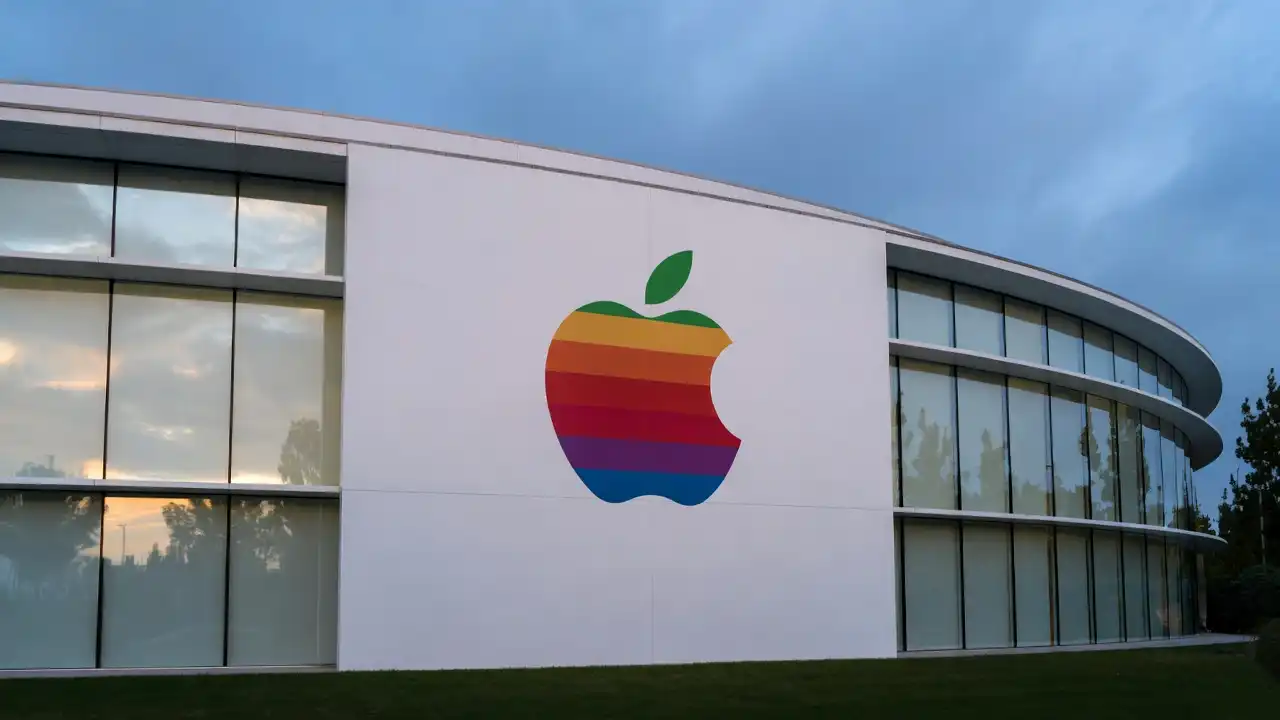
Technology giant Apple is facing a massive £2 billion (approximately $2.7 billion) class-action lawsuit in London, with thousands of commercial app developers accusing the iPhone maker of abusing its dominant market position through its controversial App Tracking Transparency framework. The collective legal action, filed at the United Kingdom’s Competition Appeal Tribunal, alleges that Apple weaponized consumer privacy rules to impose anti-competitive restrictions on third-party developers while giving its own advertising network an unfair commercial advantage.
The lawsuit marks the latest legal escalation surrounding Apple’s App Tracking Transparency feature, commonly known as ATT, which launched across iOS devices in 2021. While Apple marketed the prompt as a pro-consumer privacy shield that gives iPhone users the freedom to block cross-app data tracking, commercial developers and digital advertising platforms argue that the company enforced a double standard. Under the framework, third-party apps were forced to display an aggressive, multi-step opt-in prompt that caused tracking consent rates to plunge below 20%, while Apple’s own first-party advertising services operated under default consent settings, allowing the tech titan’s ad division to expand rapidly.
The legal action is spearheaded by Ann Pope, a former senior director of antitrust enforcement at Britain’s Competition and Markets Authority. Pope and her legal team argue that Apple acted as an abusive digital gatekeeper, siphoning billions of dollars in advertising revenues away from independent British software developers, mobile game studios, and digital publishers. As European antitrust regulators in Germany, France, and Italy intensify enforcement against big-tech self-preferencing, the £2 billion London lawsuit represents an unprecedented challenge to how platform gatekeepers balance user privacy protections against fair market competition.
A Massive £2 Billion Antitrust Challenge at the Competition Appeal Tribunal
The lawsuit filed at London’s Competition Appeal Tribunal represents one of the largest competition claims ever brought against a technology corporation in British legal history. Under the United Kingdom’s specialized collective proceedings regime, the lawsuit functions as an opt-out class action on behalf of thousands of UK-based software developers who published apps on the iOS App Store.
The legal complaint asserts that Apple holds a statutory 100% monopoly over the distribution of native software applications on iOS devices. Because developers cannot distribute iPhone apps through third-party app stores or direct internet downloads without violating Apple’s developer agreements, businesses have no choice but to comply with whatever rules Apple dictates.
The plaintiffs argue that Apple exploited this absolute gatekeeper power to unilaterally alter the rules of the mobile digital advertising economy.
By introducing App Tracking Transparency without applying identical, restrictive consent prompts to its own pre-installed applications, Apple allegedly engaged in unlawful self-preferencing, foreclosing competition in the digital advertising market and inflicting severe financial damage on independent businesses.
The lawsuit seeks to recover £2 billion in commercial damages to compensate British app developers for lost advertising yields, reduced user acquisition efficiency, and depressed in-app revenues.
Former CMA Official Ann Pope Leads Developer Class Action
The credibility of the lawsuit is reinforced by the institutional expertise of its designated class representative, Ann Pope. Having spent years leading high-profile cartel investigations and merger reviews as a senior director at Britain’s primary antitrust regulator, the Competition and Markets Authority, Pope brings deep regulatory knowledge to the courtroom.
In an official public statement accompanying the tribunal filing, Pope framed the legal battle as an essential stand for independent commerce:
- Apple’s unilateral tracking rules resulted in very significant and measurable financial harm to thousands of commercial businesses that depend on the iOS ecosystem for their livelihoods.
- The lawsuit is designed to protect the statutory property and commercial rights of British software creators, ensuring that platform gatekeepers cannot enforce biased rules that favor their own corporate divisions.
- Independent developers were forced to absorb severe revenue losses while Apple’s internal advertising business expanded at an extraordinary pace.
- The legal action seeks full financial restitution for the losses suffered by British app developers while forcing Apple to establish fair, non-discriminatory operating terms for all ecosystem participants.
Pope’s involvement signals that the litigation will draw heavily on formal antitrust findings and economic market studies compiled by European competition authorities over the past five years.
Allegations of Self-Preferencing and Unequal Privacy Standards
The core legal argument presented by the plaintiffs centers on the technical asymmetry between how Apple treated third-party software and how it treated its own first-party services. When an iPhone user opens a third-party app like Spotify, Instagram, or a mobile gaming title for the first time, iOS triggers an intrusive pop-up notification asking whether the user wants to allow the app to track their activity across other companies’ apps and websites.
The lawsuit details how this design created an unfair competitive playing field:
- Third-Party Deterrence: The negative phrasing and ominous framing of the ATT prompt encouraged up to 80% of users to select the “Ask App not to Track” option, instantly severing the data feedback loops required for precision advertising.
- First-Party Exemption: Apple’s own advertising network, Apple Search Ads, was not subject to the exact same third-party tracking definitions, allowing Apple to utilize rich first-party device data, account registrations, and purchase histories without displaying the identical ATT pop-up.
- Dual Consent Burdens: While third-party developers were required to secure separate consent prompts across every individual app, Apple collected overarching data across its pre-installed software ecosystem under general terms of service.
- Unequal Ad Attribution: Third-party advertisers were forced to migrate to Apple’s privacy-restricted SKAdNetwork attribution tool, which delayed conversion reporting by up to 72 hours and obscured campaign analytics, while Apple Search Ads provided instant, deterministic attribution data.
The legal complaint asserts that this design asymmetry was not an accidental technical oversight, but a deliberate corporate strategy designed to cripple rival advertising networks while funneling commercial advertising budgets directly into Apple’s proprietary ad platform.
The Economics of App Tracking Transparency: Privacy Shield or Commercial Weapon
When Apple introduced App Tracking Transparency in iOS 14.5, corporate marketing campaigns positioned the feature as a defining moral stand for consumer privacy. Chief Executive Officer Tim Cook frequently argued that privacy is a fundamental human right, criticizing digital advertising platforms for building shadow profiles and tracking users without transparent consent.
However, financial economists and competition authorities point out that Apple’s privacy crusade produced profound economic consequences that restructured the global digital advertising industry.
Before ATT, mobile app developers utilized the Identifier for Advertisers (IDFA)—a unique, randomized device number assigned to every iPhone—to measure advertising return on investment, optimize ad targeting, and monetize free-to-play apps.
When ATT disabled the IDFA by default for the vast majority of iOS users, the multi-billion-dollar mobile advertising ecosystem was thrown into chaos.
While consumer privacy protections improved, the policy destroyed the primary revenue model that funded thousands of independent, ad-supported mobile software developers worldwide.
How ATT Disrupted Mobile Advertising and Third-Party Tracking
The rollout of App Tracking Transparency delivered an immediate shock to the global digital economy. Within months of implementation, advertising measurement accuracy collapsed across mobile platforms, making digital advertising campaigns significantly more expensive and far less effective.
The economic disruption rippled across the mobile software industry:
- Independent mobile gaming studios and software developers experienced revenue drops between 20% and 40% as in-app advertising rates plummeted.
- Small e-commerce merchants and direct-to-consumer retailers saw customer acquisition costs surge by more than 50% due to degraded ad targeting precision.
- Major digital advertising networks, led by Meta Platforms, suffered billions of dollars in lost advertising revenues in the initial year of ATT enforcement alone.
- Smaller developers that relied on free, ad-supported business models were forced to either introduce aggressive paid subscription paywalls or shut down operations entirely.
The lawsuit argues that by unilaterally cutting off the data flows that powered independent monetization, Apple used privacy as a commercial weapon to force developers into using Apple’s in-app purchasing system, where the tech giant collects a mandatory 30% commission fee.
The Expansion of Apple Search Ads in a Privacy-Restricted Ecosystem
While third-party ad networks struggled to navigate the data blackout created by ATT, Apple’s proprietary advertising business experienced explosive growth. Operating primarily within the iOS App Store search results, Apple Search Ads allows developers to bid on sponsored keywords to promote their apps to consumers searching for new downloads.
Financial disclosures and advertising industry estimates highlight the rapid growth of Apple’s ad division:
- Annual revenues generated by Apple Search Ads expanded from roughly $1.0 billion prior to ATT to more than $5.0 billion to $8.0 billion in subsequent years.
- Apple’s share of the global mobile app installation advertising market tripled within eighteen months of ATT’s deployment.
- Because Apple possessed first-party visibility into what search terms users typed inside the App Store, Apple Search Ads offered superior conversion data that blindfolded competitors could not match.
- Developers who lost the ability to target users effectively on third-party platforms were forced to allocate an expanding percentage of their marketing budgets directly to Apple to acquire new customers.
The plaintiffs assert that this correlation demonstrates direct anti-competitive foreclosure: Apple degraded the functionality of rival ad platforms while capturing the displaced advertising capital for its own commercial gain.
Quantifying the Multi-Billion-Dollar Losses for App Developers and Digital Publishers
The financial damage claimed in the £2 billion lawsuit reflects the cumulative lost earnings suffered by British software creators and digital content publishers over a five-year period. In modern digital publishing, news organizations, mobile gaming companies, and utility app builders rely on programmatic advertising to fund investigative journalism and software engineering.
The economic harm claimed by the developer class spans several distinct categories:
- Depressed In-App Ad Yields: The collapse in effective cost-per-thousand-impressions (eCPM) rates across iOS apps reduced the advertising revenues earned by publishers for every ad displayed.
- Inflated User Acquisition Expenses: App developers were forced to spend significantly more capital on marketing to acquire paying subscribers, reducing net operating profit margins.
- Lost In-App Purchase Revenues: Reduced user acquisition efficiency slowed the overall growth of mobile app user bases, depressing downstream in-app digital purchases.
- Forced Business Model Restructuring: Companies spent millions of pounds re-engineering software architectures, integrating complex attribution tools, and navigating opaque compliance guidelines.
The lawsuit seeks to distribute recovered damages across thousands of registered British app developers based on their verified historical iOS advertising and download volumes.
European Regulatory Dominoes: From Germany to the United Kingdom
The London class action does not exist in isolation; it represents the latest chapter in an expanding wave of European regulatory actions targeting Apple’s tracking rules. Competition authorities across the European Union have spent years investigating whether Apple’s privacy frameworks violate antitrust laws.
Antitrust enforcers in Germany, France, and Italy have established important legal findings, concluding that while consumer data privacy is a legitimate corporate objective, dominant gatekeeper platforms cannot design privacy rules that systematically favor their own commercial services over third-party competitors.
These European regulatory precedents provide the London claimants with a wealth of verified investigative evidence to support their claims before the Competition Appeal Tribunal.
Germany’s Federal Cartel Office Mandates Structural Privacy Adjustments
The most comprehensive regulatory breakthrough occurred in Germany, where the Federal Cartel Office, known as the Bundeskartellamt, conducted an extensive antitrust investigation under Section 19a of the German Competition Act. The German competition authority formally designated Apple as a company of paramount significance for competition across markets, granting regulators sweeping powers to prohibit anti-competitive practices.
The German investigation concluded with major regulatory concessions:
- The Bundeskartellamt determined that Apple’s App Tracking Transparency rules constituted an abuse of market dominance by applying self-preferential standards that disadvantaged third-party advertisers.
- Following formal regulatory findings, Apple agreed to structural commitments in Germany, modifying its developer guidelines to ensure that third-party developers can utilize user data for targeted advertising on non-discriminatory terms.
- Apple agreed to provide clear, neutral user choices and eliminate unnecessary administrative hurdles that prevented developers from collecting legitimate user consent.
- The German settlement established a binding regulatory precedent within the European Union, proving that competition authorities can compel Apple to alter core iOS privacy designs.
The London claimants argue that if Apple’s original ATT framework was anti-competitive under German antitrust law, it is equally unlawful under British competition statutes, justifying substantial damages for affected UK businesses.
Enforcing the UK Digital Markets, Competition and Consumers Act
The filing of the £2 billion lawsuit coincides with a major legislative overhaul in British digital competition policy. The United Kingdom Parliament enacted the landmark Digital Markets, Competition and Consumers Act, creating a dedicated statutory Digital Markets Unit within the Competition and Markets Authority.
The new statutory regime introduces powerful tools to rein in dominant tech platforms:
- Granting the Digital Markets Unit the legal authority to designate tech giants like Apple with Strategic Market Status in specific digital activities, including mobile operating systems and app distribution.
- Enforcing mandatory, bespoke Codes of Conduct that explicitly prohibit designated firms from engaging in self-preferencing, unfair contract terms, or anti-competitive data leveraging.
- Empowering the regulator to impose massive civil fines reaching up to 10% of a company’s total annual global turnover for statutory non-compliance.
- Lowering procedural barriers for collective class actions, allowing affected businesses to recover financial damages for anti-competitive conduct through the Competition Appeal Tribunal.
The combination of aggressive private litigation and expanding regulatory authority creates unprecedented pressure on Apple to overhaul its UK operating terms.
Legal Battles Mounting Against Cupertino Across European Tribunals
The £2 billion app tracking lawsuit is part of a broader, compounding legal assault threatening Apple’s high-margin services business across the United Kingdom and Europe. London’s Competition Appeal Tribunal has become the premier global battleground where consumer advocacy groups, academic researchers, and corporate competitors are testing Britain’s fledgling collective proceedings regime.
Apple is currently defending multiple multi-billion-pound class-action lawsuits that strike at the foundational pillars of its iOS ecosystem: the App Store 30% commission fee, iCloud storage integration, and developer distribution rules.
These overlapping legal battles expose Apple to tens of billions of dollars in potential civil damages while threatening to dismantle the closed, vertically integrated business model that made Cupertino the most profitable enterprise in corporate history.
The Ongoing £1.5 Billion App Store Commission Litigation
The most mature legal challenge facing Apple in London is the landmark class action led by British academic Dr. Rachael Kent. Filed on behalf of roughly 20 million British iPhone and iPad users, the lawsuit alleges that Apple abused its dominant market position by charging an unfair and excessive 30% commission on all paid app downloads and in-app digital purchases.
The App Store commission case has reached critical procedural milestones:
- In October 2025, the Competition Appeal Tribunal issued a historic liability ruling against Apple, finding that the company breached UK competition law by excluding rival app stores and charging excessive commission fees.
- The tribunal confirmed that millions of British consumers who purchased apps or digital subscriptions since October 2015 are entitled to financial compensation.
- The litigation is valued at up to 1.5 billion pounds (approximately $2.01 billion), with formal damages calculation hearings underway to determine final compensation disbursements.
- Apple is appealing the liability finding, arguing that the 30% fee reflects the immense value of its secure operating system, global payment processing infrastructure, and intellectual property development tools.
The Kent ruling established a historic legal precedent proving that the Competition Appeal Tribunal is fully willing to find Apple guilty of competition law violations and award multi-billion-pound damages to affected claimants.
The £3 Billion Consumer iCloud Monopoly Lawsuit
A third major antitrust front challenging Apple in London is a massive £3 billion class action filed by the Consumers’ Association, widely known across Britain as Which?. The lawsuit alleges that Apple engaged in anti-competitive tying by locking iPhone users into its proprietary iCloud storage service.
The consumer litigation focuses on specific ecosystem restrictions:
- Alleging that Apple deliberately designed the iOS operating system to give iCloud seamless, preferential integration while making it difficult for users to back up device data to competing cloud providers like Google Drive, Dropbox, or Microsoft OneDrive.
- Claiming that Apple exploited this integration to charge inflated monthly subscription fees for expanded iCloud storage tiers once users exceeded the free 5-gigabyte baseline limit.
- Representing an estimated 40 million British Apple users who purchased iCloud storage subscriptions over a multi-year period.
- The Competition Appeal Tribunal certified the collective proceedings and scheduled the formal liability trial to proceed in October 2028, rejecting Apple’s procedural attempts to dismiss the case.
These concurrent multi-billion-pound lawsuits demonstrate that British courts are systematically reviewing every layer of Apple’s software monetization strategy, creating substantial legal liabilities for the corporate parent.
Strategic Implications for the Global Mobile Advertising Economy
The £2 billion London lawsuit over App Tracking Transparency carries profound strategic implications for the future of the global digital advertising market and mobile software engineering. As courts and competition authorities dismantle unilateral platform rules, the digital media ecosystem is entering a new era characterized by decentralized attribution, independent auditing, and transparent data standards.
Platform gatekeepers like Apple and Google can no longer design operating system privacy features in corporate isolation without evaluating their downstream impacts on fair market competition.
The resolution of the London litigation will establish the global legal standard governing how mobile operating systems must balance consumer privacy protections with non-discriminatory market access.
Shifting Legal Boundaries for Platform Gatekeepers in Digital Ecosystems
The central legal lesson emerging from the ATT litigation is that privacy protection does not provide an absolute shield against antitrust liability. While protecting consumer personal data is a universally recognized public policy goal, tech monopolies cannot use privacy as a pretext to eliminate market competition or expand their own proprietary advertising services.
The emerging legal framework establishes clear operational boundaries for platform operators:
- Non-Discriminatory Privacy Rules: Operating systems must apply identical consent prompts, data access rules, and measurement tools to first-party corporate services and third-party commercial developers alike.
- Objective Technical Justifications: Platform gatekeepers must provide transparent, empirical evidence proving that specific security or privacy restrictions are necessary and proportionate to protect users.
- Collaborative Standard Setting: Privacy and attribution standards must be developed through open, multi-stakeholder industry working groups rather than through unilateral corporate mandates.
- Structural Separation of Data: Tech conglomerates operating both an operating system and a commercial advertising network must maintain strict internal firewalls to prevent cross-leveraging proprietary platform data.
Enforcing these principles ensures that consumer privacy improves without allowing dominant platform owners to monopolize digital commerce.
The Long-Term Horizon for Privacy-Preserving Ad Attribution
The ultimate outcome of the regulatory and legal pressure facing Apple will be the acceleration of privacy-preserving advertising technologies that deliver accurate campaign measurement without relying on invasive cross-app user tracking.
The digital advertising industry is investing billions of dollars to commercialize next-generation attribution technologies:
- Differential Privacy and Cryptographic Aggregation: Developing attribution frameworks that add mathematical noise to user data, allowing advertisers to measure total campaign performance while making it impossible to identify individual users.
- On-Device Machine Learning: Processing user advertising preferences locally on smartphones, ensuring that private personal data never leaves the physical device.
- Open Private Attribution Frameworks: Commercializing open-source alternatives to SKAdNetwork that provide real-time, deterministic conversion reporting across all major operating systems.
- Contextual Advertising Optimization: Utilizing advanced natural language processing and computer vision to deliver hyper-relevant commercial advertisements based on the specific content being viewed rather than historical user tracking.
By transitioning toward transparent, privacy-preserving attribution models, the digital advertising economy can build a sustainable, competitive foundation that respects consumer privacy while supporting thousands of independent software developers worldwide.
Apple’s £2 billion ($2.7 billion) lawsuit at London’s Competition Appeal Tribunal marks a defining moment in the global battle over digital platform power. By challenging the App Tracking Transparency framework as an anti-competitive weapon that damaged independent developers while expanding Apple’s proprietary advertising empire, former regulator Ann Pope and British software creators have exposed the fundamental contradictions of Big Tech’s privacy narrative. As European competition authorities in Germany and the UK enforce strict non-discrimination mandates and concurrent lawsuits challenge App Store commissions and iCloud monopolies, the era of unchecked platform gatekeeping has ended. The future of the digital economy requires transparent, non-discriminatory rules where consumer privacy and fair competition advance hand in hand, ensuring that independent software innovators can thrive across open, competitive digital marketplaces.