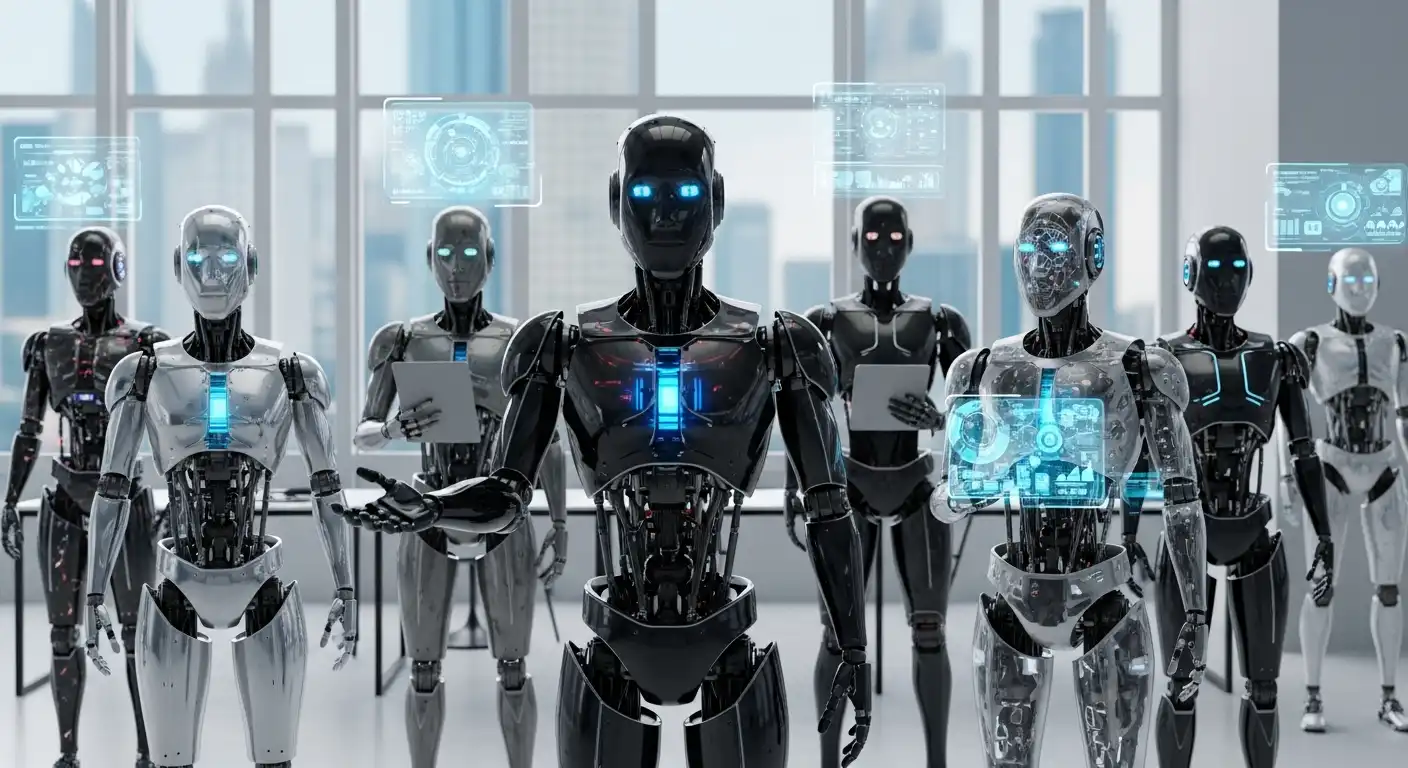
A new wave of international investors, corporate executives, and technology entrepreneurs is paying thousands of dollars for direct access to Chinese manufacturing plants, traveling across industrial megacities to secure a front-row seat to what many believe is the next global technological revolution. From bipedal humanoid robots operating alongside human technicians on assembly lines to automated electric vehicle mega-factories assembling complete passenger cars in less than 76 seconds, foreign visitors are arriving in record numbers to witness the scale, speed, and physical reality of modern Chinese manufacturing.
The growing influx reflects mounting anxiety across Western boardrooms and government ministries over what economists have termed China Shock 2.0. Unlike the original China shock of the early 2000s, which centered on low-cost manual labor and cheap consumer goods, the modern industrial surge is powered by advanced robotics, generative artificial intelligence foundation models, high-energy battery chemistry, and automated digital factories. Private equity managers, venture capitalists from Silicon Valley, and European automotive executives are touring industrial corridors spanning Beijing, Shenzhen, Shanghai, Hangzhou, and Hefei to conduct essential due diligence and study how Chinese enterprises achieve unprecedented manufacturing velocity.
The demand has spawned a booming cross-border cottage industry of specialized technology tour agencies, executive study delegations, and private industrial excursions. Official economic data reveals that China’s industrial tourism market generated over $17.8 billion in revenue last year, with state planners projecting the sector will surpass 300 billion yuan (roughly $44.6 billion) by 2029. As foreign corporate leaders confront sluggish domestic productivity growth and the harsh reality that complete supply chain decoupling from China remains an operational impossibility, Western tech pilgrims are embracing an attitude of humility and learning, seeking actionable lessons from the world’s premier hardware laboratory.
The Rise of Industrial Tech Tourism Across China’s Manufacturing Corridor
The emergence of high-priced technology tours represents a dramatic shift in how the international business community views China’s industrial ecosystem. Just a decade ago, foreign executives traveled to Chinese manufacturing hubs primarily to negotiate low-cost contract manufacturing agreements or inspect basic component quality. Today, global leaders are visiting China as students seeking to study advanced automation, rapid hardware prototyping, and state-coordinated technology scaling.
The transformation is visible in the caliber of attendees booking private factory tours. While many corporate delegations keep their visits confidential to avoid political complications in their home jurisdictions, prominent participants include senior partners from premier American venture capital and asset management firms like Thrive Capital, Capital Group, and Dimension, alongside global technology commentators and foreign sovereign wealth managers.
Private tour agencies report that corporate inquiries have expanded at an exponential rate. Boutique travel and business consultancy agencies are organizing dozens of specialized corporate delegations every month, charging premium registration fees to secure factory-floor access that standard tourists cannot obtain.
The participants recognize that regardless of whether their companies invest directly in Chinese assets, they will inevitably encounter Chinese corporate champions as fierce competitors, essential component suppliers, or strategic joint-venture partners across international markets.
Unpacking the $15,000 Executive Factory Delegations
The premium business delegations operating across China cater directly to high-net-worth investors, multinational corporate strategists, and tech founders who demand high-level executive access. Specialized research firms, such as Shanghai-based data intelligence agency Baiguan and boutique consultancy GloPen, organize curated, multi-city study programs that command up to $15,000 per participant for a five-day itinerary.
These intensive executive tours offer unique operational access:
- Private, closed-door walk-throughs of high-security automated cleanrooms, battery cell gigafactories, and robotic assembly lines.
- Direct networking dinners and technical briefings with senior chief technology officers, factory automation directors, and venture-backed startup founders.
- On-site demonstrations of cutting-edge hardware prototypes, including multi-articulated robotic hands, high-density power inverters, and generative computer vision platforms.
- Curated debriefing sessions analyzing localized government subsidy frameworks, supply chain logistics, and intellectual property monetization strategies.
Roughly half of the participating executives originate from Southeast Asia and Europe, representing industrial manufacturers, commercial logistics operators, and venture funds eager to understand how Chinese factory automation can be adapted to their domestic home markets.
A Booming $17.8 Billion Industrial Tourism Sector Heading for 300 Billion Yuan
The boom in executive technology tours operates alongside an aggressive national campaign by the Chinese central government to promote industrial tourism as a driver of economic growth and national technological pride. The Ministry of Industry and Information Technology has designated more than 140 official demonstration sites across the country, transforming operational factories into public showcases of modern engineering excellence.
The economic expansion of the industrial tourism sector is backed by significant data:
- Total national revenues generated by industrial tourism surpassed $17.8 billion last year, supported by millions of domestic and international visitors.
- Long-term economic projections from state planning agencies estimate the sector will expand at a double-digit compound annual rate, topping 300 billion yuan ($44.6 billion) by 2029.
- Tour agencies like GloPen report that corporate inquiries surged by 50% year-over-year, with the agency now running more than 100 single-day corporate factory tours every single month.
- Standard industrial factory tours open to the general public cost around $60 per ticket, attracting students, domestic engineers, and foreign tourists eager to see automated machinery in action.
By opening factory doors to the public, Chinese manufacturing giants are building strong corporate brand loyalty, attracting young domestic engineering talent, and establishing global reputations for technological sophistication.
Fear of Falling Behind: Why European and American Executives Are Studying China
The primary psychological driver compelling Western corporate leaders to visit Chinese factories is an acute fear of falling behind. Across Western Europe and North America, corporate executives are wrestling with stagnating labor productivity, high commercial energy expenses, extended permitting timelines, and severe shortages of specialized manufacturing engineers.
In contrast, Chinese enterprises are executing product development cycles at breathtaking speeds, moving from initial concept design to mass factory production in 18 to 24 months, compared to the four to six years required by traditional Western automakers and equipment builders.
Consultants who lead corporate study delegations describe a palpable sense of unease among visiting European executives, who recognize that European industrial champions are at serious risk of being displaced in global markets.
Visiting executives arrive seeking answers to two fundamental questions: how do Chinese corporations achieve such extreme research-and-development velocity, and what strategic lessons can Western private enterprise learn from China’s state-backed approach to technology investment.
Squeezing Corporate Insecurities Over Sluggish Western Productivity
The contrast between European industrial inertia and Chinese factory velocity has created a sense of urgency among corporate boards. In Germany, France, and Italy, heavy manufacturing industries face structural headwinds from high electricity tariffs, aging workforce demographics, and sluggish capital investment in robotics.
European delegations visiting Chinese industrial hubs are experiencing a profound technological wake-up call:
- European automotive executives visiting smart factories in Shanghai and Hefei observed automated die-casting presses and robotic welding cells operating with cycle times 40% faster than comparable German assembly plants.
- Industrial machinery builders discovered that Chinese suppliers can iterate, manufacture, and ship customized industrial tooling in days rather than the months required by European suppliers.
- Visiting executives expressed astonishment at the high level of digital integration, where entire factory operations are monitored and optimized in real time through digital twin software.
- The realization that Chinese competitors are competing on engineering quality, software integration, and raw speed rather than cheap labor alone has shattered legacy Western assumptions.
This realization is compelling European corporate leadership to approach China with a mindset of genuine humility, recognizing that maintaining global competitiveness requires studying Chinese operational models.
Scaling Beyond Software into the Physical Reality of Hardware Innovation
A major insight gained by foreign visitors is the recognition that true technological leadership requires mastering physical manufacturing, not just digital software code. For the past decade, Silicon Valley venture capital has focused heavily on asset-light consumer internet applications, enterprise software-as-a-service platforms, and social media networks, while neglecting heavy industrial manufacturing and mechanical engineering.
China, by contrast, remained firmly committed to physical hardware manufacturing:
- While Western software companies designed brilliant digital algorithms, Chinese engineers built the high-precision robotic actuators, power electronics, and battery chemistry needed to bring those algorithms into the physical world.
- Bertrand Chen, chief executive officer of the Global Shipping Business Network, emphasized that one cannot grasp the true scale, speed, and physicality of Chinese innovation without standing directly on the factory floor.
- Physical innovation requires deep, localized supply chain ecosystems where machine shops, component fabricators, and testing laboratories sit within a 30-minute drive of final assembly plants.
- Western tech founders are realizing that software intelligence means very little without the physical manufacturing muscle required to mass-produce hardware at scale.
This physical reality is forcing Western technologists to re-evaluate their innovation models, recognizing that future economic dominance belongs to companies that can unite advanced software with heavy industrial execution.
Learning from China’s Coordinated State-Backed Industrial Planning
A central topic of study for visiting corporate delegations is China’s top-level industrial policy coordination. While Western economies traditionally rely on decentralized free-market signals and fragmented municipal permitting, China executes synchronized multi-decade industrial master plans.
European and American executives are analyzing how state planning accelerates technology adoption:
- Government agencies coordinate with public electric utilities, telecommunications operators, and commercial banks to construct massive industrial infrastructure before factories break ground.
- National ministries establish unified technical standards for electric vehicle charging plugs, smart-city communications, and autonomous driving architectures, eliminating market fragmentation.
- Municipal governments establish dedicated industrial testing zones that allow robotics startups and autonomous vehicle operators to test prototypes on public roads under light-touch regulatory sandboxes.
- State-backed guidance funds provide patient, low-cost capital to deep-tech hardware startups, absorbing early development risks before commercial revenues materialize.
Visiting executives are studying how public policy can be used constructively to de-risk high-capital infrastructure investments and accelerate commercial technology deployment in their domestic home markets.
The Innovation Circuit: Touring Automated Mega-Plants from Beijing to Hangzhou
The standard itinerary for international technology delegations follows an established circuit through China’s premier industrial and technological capitals. Each metropolitan hub represents a specialized center of excellence within the national manufacturing matrix.
The tour circuit spans five primary industrial powerhouses:
- Beijing: The political and research capital, housing premier artificial intelligence research institutes, state laboratories, and advanced consumer automotive gigafactories.
- Shenzhen: The world’s undisputed hardware capital, dominating electronics prototyping, precision actuator fabrication, and commercial drone manufacturing.
- Shanghai: The international financial and semiconductor center, leading in advanced wafer fabrication cleanrooms, chemical synthesis, and international automotive joint ventures.
- Hangzhou: The digital commerce and robotics hub, serving as the corporate home of internet champions like Alibaba and bipedal humanoid pioneers like Unitree Robotics.
- Hefei: The emerging clean-energy capital, hosting integrated manufacturing clusters for electric vehicles, solar photovoltaic modules, and advanced display panels.
Visiting these five cities allows foreign corporate leaders to observe every link of China’s high-tech manufacturing supply chain in operation.
Xiaomi’s Beijing EV Factory Welcomes 250,000 Tech Pilgrims
A mandatory pilgrimage site on the executive tour circuit is consumer electronics giant Xiaomi’s flagship smart electric vehicle mega-factory, located in the Yizhuang economic development zone in southern Beijing. The highly automated facility has become a global showcase of modern smart manufacturing.
The Xiaomi manufacturing campus exhibits extraordinary operational metrics:
- The automated plant has welcomed more than 250,000 official visitors since commercial deliveries of its SU7 electric sedan began in March 2024.
- The factory utilizes massive, proprietary 9,100-ton hyper-die-casting machines, known as Xiaomi HyperCasting, which stamp complete rear vehicle floor structures in a single step, replacing 72 separate welded parts with a single cast component.
- The assembly line operates with an automation rate approaching 100% across welding, painting, and stamping shops, utilizing over 700 industrial robots to assemble a finished vehicle every 76 seconds at peak capacity.
- Public demand for factory tours is so intense that lottery-awarded entry slots are scalped on domestic social media platforms for up to 2,000 yuan ($300) per ticket.
World leaders, foreign ambassadors, and multinational corporate boards have toured the facility, marveling at how a consumer smartphone manufacturer successfully built a world-class automotive assembly plant from scratch in less than three years.
Unitree’s Humanoid Robotics Showcases in Hangzhou Captivating Global Leaders
In the eastern technology hub of Hangzhou, robotics pioneer Unitree Robotics has become another premier destination for high-profile international delegations. The company captured international headlines when its bipedal humanoid robots and quadruped mechanical dogs performed complex gymnastic backflips, martial arts demonstrations, and synchronized dancing routines.
The company’s technological showcases have attracted top global political and business leaders:
- German Chancellor Friedrich Merz famously toured Unitree’s research and development headquarters, observing live demonstrations of high-speed bipedal running and real-time obstacle avoidance.
- Unitree demonstrated its electric joint actuators that deliver peak torques exceeding 360 to 400 Newton-meters, providing robotic limbs with explosive kinetic power.
- Visiting engineers observed how reinforcement learning models trained inside physics simulation engines allow physical robots to recover balance automatically when pushed or kicked by human researchers.
- Corporate visitors examined the company’s commercial assembly lines, which are mass-producing research-grade humanoid robots at retail prices between $16,000 and $35,000 per unit.
The demonstrations proved to foreign visitors that Chinese robotics developers are closing the mechanical agility gap with Western pioneers while maintaining an insurmountable cost and manufacturing scale advantage.
Battery and Chip Giants in Hefei and Shanghai Driving Clean Mobility
The final legs of the innovation circuit take foreign delegations through the advanced clean-energy and semiconductor ecosystems of Hefei and Shanghai. In Hefei, visitors tour sprawling industrial supplier parks where electric vehicle assemblers, lithium battery manufacturers, and optical sensor builders operate within contiguous industrial parks.
These integrated regional hubs highlight extreme supply chain efficiency:
- Tier-one component suppliers deliver battery packs, electric motors, and aluminum chassis parts directly to assembly lines via automated underground conveyor tunnels within minutes of receiving digital orders.
- Battery gigafactories operate automated cleanrooms that manufacture advanced cell-to-pack battery modules with zero human handling.
- Semiconductor fabrication facilities in Shanghai demonstrate domestic 200-millimeter and 300-millimeter wafer manufacturing, producing automotive-grade power MOSFETs and microcontrollers.
- Research centers in Hefei showcase advanced materials engineering, including pilot production lines for solid-state battery electrolytes and sodium-ion cells.
Observing this extreme geographic concentration allows foreign executives to understand why Chinese manufacturers can scale production volumes while keeping logistics costs to a minimum.
The Shenzhen Phenomenon: The World’s Hardware Capital Reinvents Itself
No city embodies the physical reality of Chinese technological innovation more powerfully than Shenzhen. Located in the southern province of Guangdong directly adjacent to Hong Kong, Shenzhen has completed an extraordinary transformation from a low-cost contract manufacturing town into the undisputed hardware prototyping capital of the world.
As the city prepares to host the Asia-Pacific Economic Cooperation forum, Shenzhen has positioned itself as an international showcase of smart-city infrastructure, autonomous mobility, and entrepreneurial dynamism.
Foreign visitor arrivals in Shenzhen jumped by 70% last year and continued to accelerate with a 30% surge in the first quarter, logging more than 5.0 million foreign border entries through August.
Urban transit systems feature multilingual English announcements, international tech influencers regularly broadcast from electronics markets in Huaqiangbei, and municipal authorities have created specialized innovation zones designed specifically to attract foreign technology founders.
Over 5 Million Foreign Entrants and Hacker Houses for Global Founders
The massive influx of foreign visitors has reshaped Shenzhen’s international community. Local robotics manufacturers, venture funds, and real estate operators have established Silicon Valley-style “hacker houses” where foreign artificial intelligence and robotics hardware entrepreneurs live, collaborate, and build prototypes under one roof.
The grassroots startup ecosystem in Shenzhen operates with intense vitality:
- Dedicated WeChat developer groups with over 400 international founders and engineers actively share real-time supplier recommendations for custom lithium battery packs, specialized micro-motors, and flexible OLED displays.
- International startup teams live in shared co-working apartments in Nanshan District, working alongside local supply chain fixers who negotiate component pricing directly with local factory owners.
- Foreign founders can walk into the Huaqiangbei electronics market in the morning with a circuit schematic and walk out in the afternoon with surface-mounted printed circuit boards and custom CNC-machined metal enclosures.
- Technology accelerators provide international founders with direct access to local injection-molding factories capable of scaling prototype runs to thousands of units within days.
Joshua Woodard, an American manufacturing consultant based in Shenzhen, noted that founders from Silicon Valley, London, and Singapore are dropping in cold, using local networks to turn complex hardware ideas into physical products at speeds that are impossible anywhere else in the world.
The 10-Day Visa-Free Rapid Prototyping Lifeline for Silicon Valley Startups
A major catalyst accelerating foreign startup travel to Shenzhen is China’s expanded visa-free transit and entry policies. The Chinese government introduced unilateral 15-day and 30-day visa-free entry policies for citizens of dozens of European and Asian nations, alongside streamlined 144-hour and 240-hour visa-free transit regimes for international travelers.
These relaxed entry rules have created a rapid prototyping corridor between Silicon Valley and Shenzhen:
- Hardware startup founders can book a flight to Shenzhen on 24 hours’ notice without enduring weeks of consular visa paperwork.
- Engineers spend ten intensive days visiting specialized component vendors, reviewing tooling molds on factory floors, and testing prototype tolerances with local machinists.
- Teams execute multiple design iterations in real time, making immediate adjustments to CAD files based on direct factory feedback.
- Founders return to North America or Europe with completed, functional hardware prototypes ready for venture capital fundraising pitches.
Jan Smejkal, a European technology entrepreneur who has lived in Shenzhen for 11 years, observed that scarcely a day passes without an inquiry from a foreign founder seeking introductions to local precision manufacturing plants.
Strategic Implications for Global Technology Supply Chains and Decoupling Realities
The pilgrimage of Western technology executives and investors to Chinese factories carries profound strategic implications for international trade policy and corporate supply chain management. For the past five years, political leaders in Washington and Brussels have championed the concept of economic decoupling, urging corporations to reshore manufacturing or friendshore operations to allied nations to reduce dependency on China.
However, the real-world experiences of foreign executives standing on Chinese factory floors prove that complete supply chain decoupling in advanced hardware is an economic and physical illusion.
While basic assembly lines for clothing, toys, and simple electronics can migrate to secondary hubs in Southeast Asia, the deep, integrated supply chain ecosystem required to manufacture advanced robotics, battery chemistry, and electric vehicles remains firmly anchored in China.
Why Complete Western Supply Chain Decoupling Remains an Illusion
The physical reality confronting Western hardware developers is that the modern high-technology supply chain is deeply interconnected. American and European robotics startups, clean-energy developers, and consumer hardware brands rely heavily on specialized Chinese components to build their products.
Joshua Woodard highlighted the inescapable reality of global hardware supply chains:
- American robotics corporations continue to source precision brushless motors, planetary gearboxes, harmonic drives, and lithium battery cells directly from specialized Chinese suppliers.
- Western clean-energy developers rely on Chinese chemical refiners for over 75% of global refined lithium, cobalt, and spherical graphite required to manufacture battery packs.
- While Western nations can construct domestic assembly facilities, those plants remain fundamentally dependent on specialized machine tools, casting dies, and electronic sub-assemblies imported from China.
- Attempting to duplicate China’s entire industrial ecosystem inside North America or Europe would require trillions of dollars in capital expenditures and decades of sustained civil construction.
Industry analysts emphasize that instead of pursuing impossible decoupling, Western corporations must adopt pragmatic coexistence strategies, securing access to essential Chinese hardware components while building strategic domestic redundancies in critical national security technologies.
The Long-Term Horizon for Cross-Border Technological Competition
The growing flow of technology pilgrims to China marks a permanent shift into a multi-polar global technology landscape. The historical era in which Western corporations generated all foundational technological innovations while Asian nations functioned merely as low-cost manual assembly hubs has permanently ended.
Key structural trends that will define the next decade of cross-border technological competition include:
- Reciprocal Innovation Exchange: Western companies will increasingly license advanced battery chemistry, digital chassis architectures, and automated manufacturing software from Chinese pioneers.
- Localized Global Manufacturing: Chinese clean-energy and robotics champions will construct localized assembly mega-plants inside Europe, Latin America, and Southeast Asia to bypass international trade tariffs and comply with local content rules.
- Dual-Track Hardware Engineering: Global hardware startups will maintain software design teams in Western technology hubs while running physical hardware prototyping and supply chain management teams in Shenzhen and Hangzhou.
- Intensifying Talent Mobility: Thousands of international machine learning researchers, mechanical engineers, and hardware founders will continue traveling between Silicon Valley and Chinese industrial hubs, sharing non-classified technical insights.
By recognizing that technological excellence is a global, collaborative endeavor, the international business community can build resilient, innovative supply chains that drive technological progress for the entire world.
The influx of global technology investors, corporate executives, and startup founders visiting Chinese manufacturing plants marks a historic turning point in international business. By paying thousands of dollars to tour automated electric vehicle assembly lines in Beijing, witness bipedal humanoid robots in Hangzhou, and build rapid hardware prototypes in Shenzhen, Western leaders are confronting the undeniable reality of China Shock 2.0. As the industrial tourism sector surges toward 300 billion yuan, foreign corporate pilgrims are discovering that true technological leadership requires mastering the physical reality of mass manufacturing. While political leaders in Western capitals debate economic decoupling, the engineers and founders on the ground recognize that the future of global technology is being forged on the factory floors of China. In an era defined by rapid automation and clean electrification, studying and understanding Chinese manufacturing velocity is no longer an optional commercial choice; it is an existential requirement for global corporate survival.