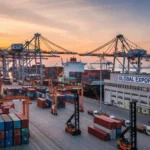
Japan is expanding its national energy security strategy by deploying billions of yen into overseas renewable fuel refineries and agricultural biomass supply chains. Faced with severe land constraints at home and an over-reliance on imported fossil fuels, Tokyo is using state-backed financial institutions to finance large-scale biofuel and Sustainable Aviation Fuel facilities across South and Southeast Asia.
The strategic initiative, coordinated by the Ministry of Economy, Trade and Industry alongside public lenders like the Japan Bank for International Cooperation and the Japan Organization for Metals and Energy Security, aims to secure steady, long-term offtake rights for low-carbon fuels. By backing projects that convert non-food biomass, agricultural waste, and used cooking oil into high-grade transport fuels, Japan is tackling two critical challenges at once: insulating its island economy from volatile Middle Eastern oil shocks and meeting aggressive international decarbonization mandates across aviation, maritime shipping, and road transport.
The Strategic Impetus Behind Japan’s Overseas Biofuel Push
Japan’s geographic reality has long shaped its energy policy. With limited domestic fossil reserves and mountainous terrain that restricts large-scale agricultural cultivation, the nation imports more than 80% of its total primary energy resources from foreign suppliers.
Overcoming Domestic Biomass and Feedstock Scarcity
Decarbonizing heavy transportation requires massive quantities of liquid renewable fuels. While battery-electric technology works well for passenger cars and light delivery vans, long-haul commercial aviation, transoceanic cargo shipping, and heavy industrial machinery require energy-dense liquid hydrocarbons that can drop directly into existing engine architectures without requiring multi-trillion-dollar retrofits.
However, Japan produces only a small fraction of the organic feedstock required to manufacture advanced biofuels at commercial scale. Domestic collection of used cooking oil yields roughly 400,000 to 500,000 metric tons annually, an amount far below what domestic refiners and international airlines require. Furthermore, Japanese farmland is reserved almost exclusively for food crops to maintain national food security, ruling out large-scale agricultural ethanol production. By investing directly in foreign refining hubs where agricultural residues and fast-growing woody biomass are abundant, Japanese trading houses and refiners secure priority access to vital clean fuel supplies before international competition drives prices higher.
Meeting Strict Mandates for Sustainable Aviation Fuel
The aviation sector represents the most urgent driver of Japan’s clean fuel procurement strategy. Under global climate frameworks established by the International Civil Aviation Organization, international airlines must progressively slash life-cycle carbon emissions to avoid heavy financial penalties.
The Japanese government has established mandatory Sustainable Aviation Fuel blending targets for domestic and international flights departing from major airports such as Tokyo Haneda, Narita, and Kansai International. Starting with a 1% blending requirement at designated airports, the national mandate scales upward to 5% by the mid-2030s, aiming for 10% of all jet fuel consumption to consist of sustainable fuels by 2030.
Aviation authorities project that Japanese airports will require between 2.5 billion and 5.6 billion liters of sustainable fuel annually to service international flight schedules. Because Sustainable Aviation Fuel currently trades at two to three times the price of conventional petroleum jet fuel, funding dedicated production facilities abroad allows Japanese airlines and fuel wholesalers to lock in long-term supply contracts at predictable, discounted wholesale prices.
Flagship Cross-Border Investments Across South and Southeast Asia
Rather than simply purchasing spot-market fuel cargoes from foreign commodity brokers, Japanese public and private entities are taking equity stakes and providing direct project financing for upstream refining infrastructure.
The 408 Million Dollar Bamboo Biofuel Complex in India
A prime example of this cross-border strategy is Japan’s massive public-private financing package for an advanced biomass refinery in northeastern India. Japanese lenders, led by the Japan Bank for International Cooperation alongside commercial institutions like Sumitomo Mitsui Banking Corporation, committed up to 60 billion yen, or roughly $408 million, in project financing to support a state-of-the-art bioethanol refinery in Assam’s Golaghat district.
The project, developed by Assam Bio Ethanol Private Limited in collaboration with India’s state-run Power Finance Corporation, converts fast-growing bamboo into bioethanol for motor fuel blending. The advanced bio-refinery processes abundant local bamboo species that grow rapidly without displacing food crops.
Beyond generating millions of liters of clean ethanol to replace imported gasoline, the zero-waste facility extracts valuable chemical co-products, including 19,000 tons of furfural annually for synthetic resin manufacturing and acetic acid for industrial adhesives. The remaining residual lignin biomass fuels an on-site thermal power plant, generating renewable electricity for the local grid. In exchange for providing long-term debt financing, Japanese industrial partners secure valuable technical operating data, chemical offtake streams, and strategic access to one of the world’s most innovative biomass processing platforms.
Sourcing Agricultural Residues and Used Cooking Oil Across ASEAN
Southeast Asia has become the primary regional partner for Japan’s renewable fuel supply chains. Under the Asia Zero Emission Community framework, Japanese corporations are deploying capital across Indonesia, Malaysia, Thailand, and Vietnam to establish dedicated collection and processing networks for organic waste.
In Indonesia and Malaysia, Japanese energy developers and trading giants like Mitsui, Mitsubishi, and Marubeni are building aggregation networks to collect palm oil mill effluent, empty fruit bunches, and discarded agricultural residues. These waste products are processed in regional biorefineries into hydrotreated vegetable oil and bio-intermediates.
Similarly, Japanese firms are signing multi-year collection contracts with restaurant chains and food processing factories across Vietnam and Thailand to gather hundreds of thousands of tons of used cooking oil every month. By building regional preprocessing plants that filter and refine raw waste fats before shipping them to Japanese refineries, operators eliminate transport contamination risks and create a dependable trans-Pacific clean fuel pipeline.
Financing Architecture and Public-Private Mechanisms
Executing complex, cross-border infrastructure deals in emerging markets requires sophisticated financial engineering to shield commercial companies from foreign exchange volatility, regulatory shifts, and political risk.
JBIC and JOGMEC De-Risking Upstream Infrastructure
State-backed development finance institutions play an indispensable role in Japan’s overseas energy investments. The Japan Bank for International Cooperation provides low-interest, long-tenor foreign currency loans that commercial banks cannot offer independently. JBIC frequently acts as the lead arranger for international lending syndicates, encouraging commercial financial institutions to participate by guaranteeing credit recovery.
Simultaneously, the Japan Organization for Metals and Energy Security provides direct equity capital, liability guarantees, and technical evaluation services for overseas energy exploration and clean fuel ventures. Historically focused on upstream crude oil and natural gas fields, JOGMEC has expanded its legal mandate to support renewable fuels, hydrogen, and carbon capture installations. If an overseas biofuel venture encounters unexpected technical delays or geopolitical friction, JOGMEC’s financial backing absorbs initial losses, preventing private Japanese project developers from suffering catastrophic financial distress.
Mobilizing GX Economic Transition Bonds and Trading Houses
To support private-sector capital expenditure, the Japanese government launched a massive 20 trillion yen, or roughly $133 billion, green transition program funded by GX Economic Transition Bonds. These sovereign transition bonds provide direct capital subsidies, tax incentives, and low-interest loan facilities to domestic companies investing in low-carbon infrastructure.
Japanese trading conglomerates—universally known as sogo shosha—act as the operational vanguard for these public funds. Firms like Itochu, Sumitomo, and Sojitz combine their global logistics networks, shipping fleets, and commodity trading desks to structure comprehensive supply contracts. A single trading house can finance an overseas plantation waste processing facility, arrange maritime transport on specialized chemical tankers, and deliver finished bio-feedstocks directly to domestic refineries operated by ENEOS, Idemitsu Kosan, and Cosmo Oil. This integrated trading model maximizes operational efficiency and ensures that public transition funds generate immediate industrial returns.
The Technological Shift to Non-Food Advanced Feedstocks
A major focus of Japan’s overseas biofuel financing is the transition from first-generation crop fuels to second-generation, non-food advanced biochemical feedstocks.
Transitioning Beyond First-Generation Food Crop Fuels
Early biofuel programs in North and South America relied heavily on first-generation feedstocks, converting food crops like corn and sugarcane into ethanol, or soybean and palm oil into biodiesel. While effective at reducing baseline petroleum usage, first-generation fuels attracted intense global criticism for driving up food prices, incentivizing tropical deforestation, and consuming massive amounts of freshwater and chemical fertilizers.
Japan’s updated energy guidelines strictly prioritize second-generation and waste-based feedstocks that do not compete with human food consumption or harm local biodiversity. Japanese financing criteria require overseas projects to hold recognized international sustainability certifications, such as the International Sustainability and Carbon Certification. Qualifying projects must prove that their feedstocks originate from verified waste streams, agricultural residues, forestry thinnings, or hardy non-food plants grown on marginal land unsuitable for food agriculture.
Second-Generation Biochemical Synthesis and Zero-Waste Refining
Deploying capital into advanced second-generation processing requires cutting-edge biochemical and thermochemical conversion technologies. Japanese engineering firms like JGC Holdings and Chiyoda Corporation are partnering with international biotechnology innovators to build advanced Alcohol-to-Jet and Hydroprocessed Esters and Fatty Acids processing units.
These advanced conversion pathways utilize specialized enzyme cocktails and high-pressure catalytic reactors to break down tough lignocellulosic plant fibers into fermentable sugars, which are then synthesized into high-octane bio-gasoline, renewable diesel, and aviation kerosene. Furthermore, modern biorefineries utilize gasification and Fischer-Tropsch synthesis to turn solid agricultural waste into pure synthesis gas, which is converted into synthetic drop-in fuels. This zero-waste engineering approach ensures that every ton of harvested biomass generates maximum energetic and commercial value, lifting refining profit margins by 15% to 25% compared to legacy processing methods.
Geopolitical Energy Security and Long-Term Decarbonization
The drive to fund foreign biofuel facilities is as much about national geopolitical resilience as it is about environmental sustainability.
Insulating Island Logistics from Maritime Supply Disruptions
Japan’s heavy dependence on imported crude oil makes its economy exceptionally vulnerable to maritime shipping disruptions. More than 90% of Japan’s crude oil imports originate in the Middle East, requiring tanker vessels to navigate precarious geopolitical chokepoints, including the Strait of Hormuz and the Malacca Strait.
Recent regional conflicts and maritime security threats have highlighted the fragility of these long-distance energy routes. A closure or prolonged disruption of primary Middle Eastern shipping lanes would deplete Japan’s national commercial oil stockpiles in months, crippling domestic transportation networks, power generation, and chemical manufacturing.
Building a diversified network of biofuel production hubs across friendly Indo-Pacific nations establishes a resilient, decentralized energy buffer. Because South and Southeast Asian production facilities sit closer to Japanese ports, cargo transit times drop from 25 days to less than 8 days, significantly lowering maritime freight risks and ensuring that critical emergency services, domestic airlines, and logistics fleets retain fuel access during international energy crises.
The Asia Zero Emission Community as a Regional Clean Fuel Grid
Japan’s overseas biofuel financing forms the foundation of its broader regional diplomatic initiative: the Asia Zero Emission Community. Rather than imposing rigid, Western-style decarbonization mandates that demand the immediate abandonment of all thermal energy assets, Japan advocates for a pragmatic, multi-pathway transition tailored to the economic realities of developing Asian economies.
Through this regional framework, Tokyo shares advanced Japanese chemical engineering, automated refining technologies, and public financing with partner nations across Asia. In return, partner countries modernize their rural agricultural sectors, create high-skilled local manufacturing jobs, and export surplus clean fuels to Japanese industrial consumers. This collaborative approach builds a unified regional clean energy grid that strengthens economic ties across Asia, counteracts foreign geopolitical influence, and positions Japan as an indispensable clean technology leader throughout the Indo-Pacific.
Building the Future of Asian Clean Energy Security
Japan’s aggressive move to finance overseas biofuel projects marks a decisive evolution in modern energy diplomacy. By recognizing the physical limits of its domestic landmass and leveraging its financial and technological strengths, Tokyo is building an innovative model for national resource resilience.
From bamboo-to-ethanol refineries in India to advanced used-cooking-oil processing networks across Southeast Asia, Japanese public and private capital is transforming agricultural waste into the clean fuels that will power tomorrow’s international transportation networks. By coupling sovereign transition bonds and public risk guarantees with the global logistics mastery of its trading houses, Japan secures the low-carbon fuels required to achieve its net-zero emissions targets while safeguarding its economy against international supply shocks.
As the global energy transition accelerates, the nations that lead the 21st century will not simply be those that invent clean technologies, but those that successfully build, finance, and secure the physical supply chains required to produce them at scale. Japan’s overseas biofuel strategy provides a practical, sustainable blueprint for how resource-constrained nations can turn international partnerships into enduring domestic energy security.