

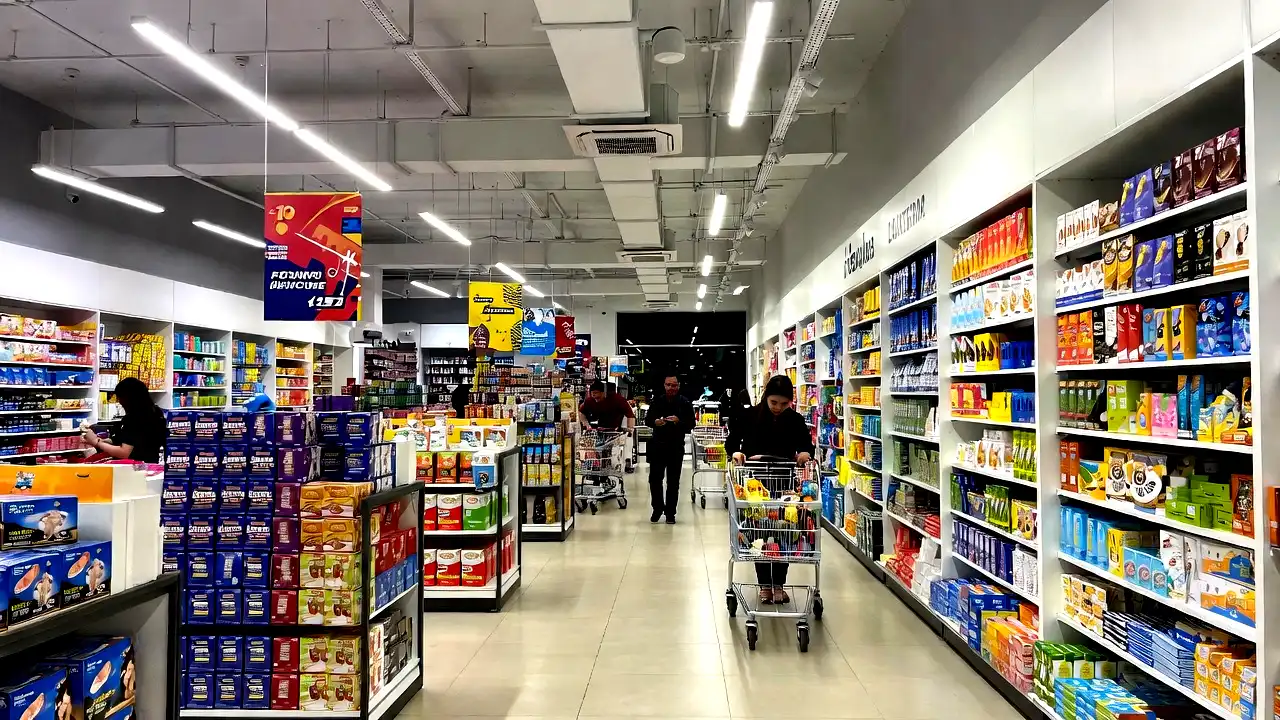
Australian household finances are undergoing a profound structural realignment. Elevated mortgage interest rates, persistent grocery inflation, and rising utility bills have forced millions of families to re-evaluate their everyday spending. Rather than cutting spending entirely, consumers across Sydney, Melbourne, Brisbane, and Perth are transforming into aggressive value hunters, scrutinizing every dollar spent on supermarket groceries, flat-pack furniture, and consumer electronics.
This disciplined consumer behavior is redrawing the competitive landscape for national retail chains. Traditional retail models that relied on predictable brand loyalty and steady discretionary foot traffic are feeling significant pressure. Meanwhile, low-cost department stores, private-label supermarket ranges, and discount warehouse clubs are capturing market share. As commercial earnings reports reveal diverging fortunes across retail sectors, corporate executives and equity analysts recognize that the Australian consumer is not simply pausing purchases but fundamentally resetting expectations around price, quality, and value.
The Macroeconomic Squeeze on Australian Household Budgets
The shift toward value-driven shopping stems directly from the compounding financial pressures bearing down on Australian households. Over the past several years, cumulative increases in the Reserve Bank of Australia’s cash rate have substantially increased monthly home loan repayments for millions of property owners.
Mortgage Repayments and High Energy Bills Drain Disposable Cash
For a typical household holding an average variable-rate mortgage of 600,000 Australian dollars, higher borrowing benchmarks have added more than 1,400 Australian dollars in monthly interest expenses compared to historical lows. Simultaneously, national retail gasoline prices frequently climb above 2 Australian dollars per liter, while residential electricity tariffs and municipal rates have expanded by double-digit percentages.
This surge in non-discretionary expenses leaves families with significantly less disposable income at the end of each pay cycle. Renter households face similar headwinds, with metropolitan residential rents climbing between 8% and 12% annually across major capital cities. With essential fixed costs consuming over 65% of total take-home pay for median-income families, shoppers are treating any remaining discretionary funds with extreme caution. Every purchase that is not an immediate life necessity must offer clear, demonstrable economic value.
The Changing Psychology of the Modern Discretionary Consumer
The financial crunch has altered consumer psychology across all income brackets. Middle- and high-income earners who previously purchased premium grocery labels and high-end consumer tech without hesitation are now actively hunting for promotional discounts, cashback vouchers, and private-label alternatives.
Consumer sentiment tracking indicators have remained in pessimistic territory for an extended period, reflecting widespread household caution. Rather than making impulsive shopping mall purchases on weekends, consumers are researching product specifications online, comparing prices across multiple competing retail platforms, and waiting weeks for seasonal clearance sales before swiping their cards. This calculated purchasing cycle has lengthened retail sales funnels, forcing retailers to spend more marketing capital to convert browsing shoppers into paying customers.
Grocery Aisles Transform Under Private-Label and Discount Surge
The supermarket sector represents the primary battleground where the fight for household value plays out daily. Food and grocery bills represent the single largest recurring cash outflow for Australian families after housing costs.
Supermarket Giants Face Down-Trading and Brand Substitution
Major supermarket conglomerates, led by Woolworths and Coles, are managing a major consumer trend known as down-trading. Shoppers are systematically replacing high-priced multinational packaged brands with lower-cost supermarket private-label alternatives.
Sales of private-label pantry staples, dairy items, frozen vegetables, and household cleaning chemicals have grown by more than 10% annually. Supermarket house brands, which typically sit on store shelves at price points 20% to 40% below proprietary branded equivalents, now account for more than a third of total supermarket basket volume. German discount giant Aldi and international warehouse club Costco have capitalized on this momentum, expanding their suburban store footprints and drawing record foot traffic from suburban families looking to buy bulk groceries at wholesale margins. Proprietary food manufacturers that attempt to pass higher ingredient packaging costs down to consumers without offering promotional discounts face immediate volume declines as shoppers switch to cheaper substitutes.
Digital Loyalty Platforms and Algorithmic Price Matching
To retain customer loyalty in an environment characterized by brand switching, grocery operators are pouring hundreds of millions of dollars into digital application ecosystems and customized rewards schemes.
Retail loyalty applications—such as Everyday Rewards and Flybuys—have seen active user bases expand by more than 30% over recent reporting periods. Supermarket chains are utilizing machine learning algorithms to analyze individual customer purchasing histories, delivering hyper-personalized digital discount coupons directly to smartphones. If a customer frequently buys baby formula, pet supplies, or fresh produce, the digital platform pushes automated member-only discounts to incentivize the shopper to complete their entire weekly grocery trip within a single retail banner. These digital platforms provide supermarkets with valuable consumer behavioral data while giving shoppers the tangible dollar savings they demand.
Big-Ticket Furniture and Home Goods Feel the Discretionary Chill
While spending on essential food products remains relatively stable due to biological necessity, big-ticket home goods and furniture retailers face severe sales contractions.
Slumping Same-Store Sales Across Traditional Showrooms
Purchasing a new leather lounge suite, a solid timber dining table, or a designer bedroom set represents a major capital outlay that consumers can easily postpone. Consequently, traditional furniture and bedding showrooms are experiencing sharp revenue slowdowns.
Prominent furniture and electronics retailers have reported same-store sales declines ranging from 3% to 6% across their Australian store networks. Furniture retail chains like Harvey Norman and Nick Scali are navigating a sluggish property market, where low housing turnover translates directly into fewer households renovating living spaces or furnishing newly purchased properties. Showrooms that historically maintained high gross profit margins on luxury imported furniture are being forced to offer aggressive floor-wide clearance discounts, interest-free financing terms extending up to 60 months, and free delivery packages to convince hesitant buyers to close transactions.
The Rise of Flat-Pack Alternatives and Secondhand Marketplaces
As traditional high-end furniture showrooms struggle with declining foot traffic, low-cost and modular home furnishings providers are thriving. Swedish flat-pack giant IKEA and digital-first home goods platforms like Temple & Webster have expanded their market share by offering functional, contemporary furniture designs at accessible price points.
Consumers are increasingly willing to assemble their own flat-pack bed frames, study desks, and modular storage units to save hundreds of dollars in manufacturing and assembly labor. Simultaneously, circular economy platforms and online secondhand marketplaces have experienced an explosion in user activity. Millions of Australians are buying gently used hardwood furniture, kitchen appliances, and children’s nursery items from neighboring households at 50% to 80% discounts compared to showroom retail prices, bypassing traditional retail storefronts entirely.
Electronics and Appliance Retailers Navigate Uneven Demand
The consumer electronics and home appliance category displays a distinct divide between must-have personal productivity gadgets and non-essential lifestyle entertainment upgrades.
Promotional Event Fatigue and Delayed Replacement Cycles
Consumer technology retailers are dealing with lengthening device replacement cycles. A few years ago, consumers upgraded their smartphones, tablets, and 4K smart televisions every two to three years. Today, improved hardware durability and incremental year-over-year software enhancements encourage consumers to keep their electronic gadgets for four, five, or six years.
Electronics retail heavyweights like JB Hi-Fi and The Good Guys have seen baseline showroom sales normalize after record sales periods during previous years. Retailers report that consumer spending is concentrating around major, highly advertised promotional events such as Black Friday, Cyber Monday, Boxing Day, and End of Financial Year sales. Outside these deep-discount promotional windows, retail stores experience quiet mid-week foot traffic, as consumers refuse to buy large appliances or premium laptops at full manufacturer-suggested retail prices.
Discount Megastores and Pure-Play E-Commerce Outperform Rivals
While specialized premium electronics boutiques face margin compression, diversified discount department stores are capturing the value-oriented consumer segment.
Wesfarmers, the parent conglomerate of discount department store giant Kmart and home improvement powerhouse Bunnings, reported total group sales exceeding 24.2 billion Australian dollars and net profits topping 1.6 billion Australian dollars. Kmart’s proprietary Anko house brand—which offers entry-level kitchen air fryers, microwave ovens, espresso machines, and audio headphones at prices under 50 Australian dollars—has become a retail juggernaut.
By sourcing merchandise directly from low-cost overseas manufacturers and utilizing automated supply chain distribution hubs, discount department stores provide functional consumer electronics at price points that specialty technology chains cannot match. Consumers who might have previously purchased a 300-dollar branded kitchen appliance are choosing the 40-dollar discount store equivalent, prioritizing immediate cash savings over premium brand cachet.
Strategic Playbooks for Retail Survival in a Value-First Market
To navigate an operating environment where consumers demand maximum value, retail management teams are overhauling their operational blueprints, cost structures, and digital channels.
Optimizing Brick-and-Mortar Footprints and Supply Chain Logistics
Retailers are systematically auditing their physical property portfolios to protect operating profit margins. Chains are closing underperforming, high-rent specialty stores in premium metropolitan shopping malls and consolidating retail footprints into high-traffic suburban homemaker centers and strip malls where lease costs per square meter are up to 40% lower.
Behind the scenes, major retail operators are investing heavily in automated supply chain infrastructure. Automated robotic fulfillment centers deployed by supermarket giants and department store operators utilize machine learning to manage warehouse inventory, reduce stock damage, and lower per-item handling expenses. By squeezing logistics overhead out of the supply chain, retailers can fund competitive price cuts on store shelves without eroding baseline corporate profit margins.
Omnichannel Personalization and Digital Wallet Integration
The checkout counter is also transforming rapidly to accommodate modern payment habits. Digital wallets and mobile payment platforms have become the preferred payment method for Australian shoppers, with more than 27% of general consumers and over 42% of mature shoppers using mobile phone digital wallets to complete retail transactions.
To capture value-conscious shoppers, retailers are integrating flexible payment options into their digital checkout flows. Buy Now, Pay Later platforms, interest-free installment accounts, and digital cashback plugins allow budget-conscious consumers to spread the cost of necessary electronics and appliances over multiple pay cycles without incurring compounding credit card interest charges. Furthermore, modern omnichannel retail systems allow shoppers to check real-time store stock on their smartphones, reserve discounted items online, and pick up their purchases at local lockers within two hours, combining digital convenience with physical store speed.
Long-Term Outlook for Australia’s Retail Economy
The structural transformation of Australia’s retail landscape will continue to shape commercial business models and consumer habits for years to come.
Monetary Policy Horizons and Consumer Confidence Rebound
The timing of a broad-based recovery in Australian discretionary retail spending depends heavily on the future trajectory of domestic monetary policy. As underlying headline inflation measures gradually moderate toward the Reserve Bank of Australia’s target band of 2% to 3%, financial markets anticipate potential interest rate relief.
A series of central bank interest rate cuts would immediately lower monthly mortgage interest obligations for millions of homeowners, injecting hundreds of millions of dollars in discretionary cash flow back into the national economy. However, economic analysts warn that a rebound in consumer confidence will be gradual rather than immediate. Households that depleted their cash savings buffers during the peak of the inflation squeeze will likely prioritize rebuilding rainy-day emergency funds and paying down existing consumer debt before resuming free-spending discretionary habits.
The Permanent Structural Shift Toward Value Economics
Even when macroeconomic conditions ease and real wage growth accelerates, many of the shopping behaviors forged during the cost-of-living crisis will remain permanent.
Consumers who discovered that private-label supermarket foods, flat-pack modular furniture, and discount department store electronics offer high reliability at half the price will not automatically return to high-cost legacy brands. The stigma historically associated with buying budget house brands has disappeared, replaced by consumer pride in securing smart, high-value bargains. Retailers that build long-term business models around product quality, pricing transparency, and digital customer convenience will lead the next generation of Australian commerce, while brands that rely on legacy brand premiums without delivering tangible value risk becoming obsolete.
Adapting to the New Reality of Australian Retail
The Australian retail landscape has reached a decisive turning point. The intersection of elevated mortgage costs, utility inflation, and cautious consumer sentiment has created an economy of value hunters who demand maximum quality for every hard-earned dollar.
From the grocery aisles of Woolworths and Coles to the showroom floors of Harvey Norman and the digital catalogs of Kmart, the commercial winners are those adapting quickly to this value-first reality. By scaling private-label product lines, investing in automated logistics, modernizing digital loyalty ecosystems, and maintaining strict price discipline, forward-looking retail operators are protecting their commercial margins while helping Australian families navigate a challenging economic period.
As the retail sector prepares for the next phase of the economic cycle, one lesson remains clear: in modern Australian commerce, value is no longer just a promotional marketing slogan—it is the foundational prerequisite for commercial survival.






