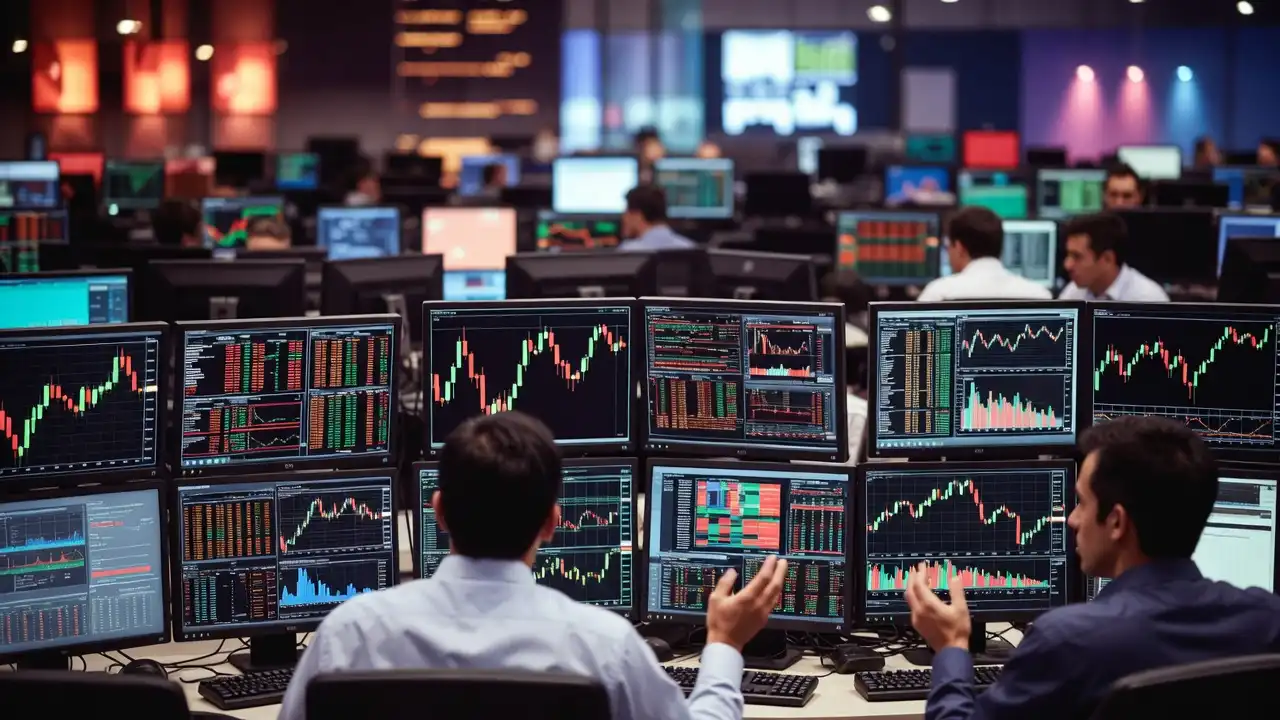
South Korea’s financial markets have taken a historic step to integrate with round-the-clock global capital flows. The Korea Exchange has launched an extended evening trading session, allowing investors to trade domestic equities in real time until 8:00 PM local time. The move breaks with the traditional trading hours of major East Asian bourses, extending the trading day by four and a half hours beyond the regular 3:30 PM market close.
The expansion of trading hours represents the latest phase in Seoul’s multi-year campaign to overhaul its capital markets, dismantle barriers for foreign asset managers, and eliminate the persistent valuation gap known as the Korea Discount. By providing continuous real-time execution across roughly 2,400 companies listed on the benchmark Kospi and tech-heavy Kosdaq, exchange officials aim to overlap directly with European trading sessions and give international funds the flexibility to react instantly to breaking macroeconomic news.
However, as the market expands into evening hours, financial regulators and institutional investors face a critical test: can extended sessions attract genuine institutional liquidity, or will off-peak trading remain an arena dominated by retail day traders and wide bid-ask spreads?
The Mechanics of the Extended 8 PM Trading Framework
The decision by the Korea Exchange to extend trading hours fundamentally reshapes how domestic equities clear and settle outside standard business hours.
Transitioning from Batch Auctions to Real-Time Matching
Historically, South Korea operated a restrictive after-hours trading mechanism between 4:00 PM and 6:00 PM. Under that legacy framework, trades did not execute in real time. Instead, the exchange matched buy and sell orders in discrete 10-minute intervals using a single-price batch auction system, resulting in low trading volume and unpredictable execution pricing.
The updated framework abolishes the batch auction model entirely. After a brief 30-minute closing-price window following the regular session, the exchange shifts directly into a continuous matching engine running from 4:00 PM to 8:00 PM. Orders match instantaneously whenever bid and ask prices cross, replicating the live trading experience of the standard daytime session.
This continuous structure allows institutional portfolio managers and retail market participants to adjust their equity allocations dynamically as corporate earnings reports, economic data releases, and geopolitical developments break in the late afternoon and early evening hours.
Expanding the Tradable Universe Beyond 2400 Securities
A crucial distinction of the official exchange initiative is the sheer breadth of its tradable asset universe. While previous private pilot programs were limited to a select group of large-cap blue chips, the Korea Exchange after-market opens evening trading to virtually every listed equity.
More than 2,400 common stocks and depository receipts across the Kospi and Kosdaq markets are eligible for evening trading, excluding only distressed assets subject to administrative liquidation or formal investment warning tags.
This comprehensive coverage ensures that global investors can trade not only mega-cap semiconductor champions like Samsung Electronics and SK Hynix but also mid-cap industrial suppliers, automotive component makers, and emerging biotechnology innovators. However, to preserve market stability during the initial rollout, exchange-traded funds and exchange-traded notes are temporarily excluded from the evening session, with regulators planning to evaluate their inclusion after assessing baseline trading liquidity.
Volatility Safeguards and Limit Order Restrictions
Trading outside regular daylight hours introduces structural risks, as thinner order books can amplify sudden price swings. To protect market integrity, financial authorities have built strict volatility control mechanisms into the evening trading engine.
The exchange enforces the same 30% daily price band limits that govern regular daytime trading, anchoring price movements to the previous session’s official closing price. Furthermore, the system rejects all unpriced market orders. Traders may submit only limit orders and specialized stop-limit variants, preventing aggressive algorithms or retail participants from clearing out thin order books and triggering flash crashes.
The exchange has also integrated automated static and dynamic Volatility Interruption mechanisms. If an incoming order threatens to move a stock’s price beyond predefined percentage thresholds within a short trading window, the system automatically pauses continuous trading for two minutes, shifting into a temporary cooling auction to restore orderly pricing.
Overlapping with European Sessions and Global Time Zones
The strategic motivation behind longer trading hours extends far beyond domestic market convenience. It is engineered to bridge the time zone gap between Seoul and Western financial centers.
Bridging the Time Gap with London and Frankfurt
For decades, international institutional investors managing global equity portfolios faced significant operational friction when trading South Korean assets. Because the regular Korean trading session closed at 3:30 PM Seoul time, European asset managers in London, Frankfurt, and Paris arrived at their trading desks only to find the Korean market already shuttered for the day.
Extending the closing bell to 8:00 PM Seoul time provides roughly four hours of direct overlap with morning trading across Europe. Portfolio managers at European pension funds and sovereign wealth institutions can now execute direct equity trades in Seoul during their standard working hours.
If major economic statistics are published in Europe or if unexpected corporate announcements occur during the European morning, fund managers no longer need to wait overnight to adjust their Korean equity exposures. This time zone integration lowers overnight holding risk and allows international investors to manage multi-asset Asian portfolios with greater precision.
Aligning with New York and Nasdaq Round-the-Clock Trends
The move by the Korea Exchange mirrors a broader international migration toward 24-hour financial markets. Major American exchange operators, including Nasdaq and the New York Stock Exchange, have steadily expanded overnight trading facilities to accommodate global retail demand and cross-border capital flows.
South Korean retail investors—frequently referred to domestically as ant investors—have become some of the most active overseas participants in American equity markets, trading billions of dollars in technology shares and leveraged exchange-traded products during the United States night session.
By expanding domestic trading hours, South Korean authorities are responding to shifting investor expectations. The long-term objective outlined by financial regulators is the phased transition toward a 24-hour trading framework, ensuring that South Korean equities remain competitive against international assets in an era of continuous digital finance.
The Competitive Push from Alternative Trading Systems
The modernization of the Korea Exchange was accelerated by the arrival of domestic competition, ending a half-century monopoly over stock execution.
Nextrade Breaks the Half-Century Exchange Monopoly
In early 2025, South Korea authorized the commercial launch of Nextrade, the nation’s first alternative trading system. Established under capital market reform legislation, Nextrade introduced a competitive 12-hour trading window running from 8:00 AM to 8:00 PM, capturing immediate attention by operating both pre-market and after-market sessions.
Nextrade proved that substantial latent demand existed for non-regular trading hours. Within months of operation, the alternative platform captured nearly 30% of daily trading volume in the roughly 600 stocks it supported.
The success of Nextrade placed direct competitive pressure on the Korea Exchange. To defend its market share, prevent liquidity fragmentation, and offer a broader trading universe, the main exchange moved aggressively to establish its own real-time evening matching engine, creating a dual-venue market structure that benefits investors through improved technology and faster order routing.
Fee Competition and Smart Order Routing
The rivalry between the two trading venues has sparked fee competition that lowers transaction costs for market participants. Nextrade entered the market offering trading commission rates that were 20% to 40% lower than legacy exchange fees.
In response, domestic brokerage houses and international prime brokers upgraded their algorithmic execution platforms. Securities firms have deployed Best Execution and Smart Order Routing technology that scans both the Korea Exchange and Nextrade in microseconds, automatically routing customer orders to whichever venue offers the tighter bid-ask spread and lower execution fees. This competitive market structure aligns South Korea with established multi-venue trading frameworks in the United States and Europe, improving overall capital market efficiency.
Liquidity Hurdles, Retail Dominance, and Currency Hedging
While longer trading hours offer clear structural benefits, the initiative faces significant operational challenges that will dictate its long-term success.
Retail Investors Driving Over 80 Percent of Evening Volumes
The primary structural risk confronting evening equity trading is the composition of market participants. Historical trading data from alternative platforms show that individual retail investors accounted for more than 80% of total volume during non-regular trading hours.
Institutional asset managers and large hedge funds typically avoid trading during thin evening sessions unless driven by breaking news events. When institutional market makers are absent, order books become shallow, leading to wider bid-ask spreads and higher execution slippage for large block trades.
If evening sessions remain dominated by speculative retail traders chasing short-term momentum, institutional funds may view the market as noisy and unpredictable. To build sustainable liquidity, the exchange must introduce competitive market-maker incentives, encouraging global investment banks to post continuous two-sided liquidity quotes throughout the extended session.
Navigating Thin Off-Peak Won Liquidity and Hedging Costs
A secondary hurdle for foreign institutional investors is foreign exchange hedging. Large international asset managers rarely trade foreign equities without managing underlying currency risk.
South Korea took a major step toward financial liberalization by extending onshore foreign exchange trading hours until 2:00 AM Seoul time and registering dozens of offshore institutions to trade the won directly. However, during off-peak evening hours, liquidity in the onshore interbank foreign exchange market can become thin.
If foreign exchange dealers widen their currency spreads during the evening, the cost of converting foreign capital into Korean won or hedging currency exposure rises. Higher foreign exchange transaction costs can offset the benefits of extended equity trading, discouraging foreign institutions from committing large capital blocks to evening stock orders until off-peak currency liquidity deepens.
The Broader Campaign to Erase the Korea Discount
The extension of trading hours is not an isolated policy tweak; it is a critical component of a comprehensive national strategy to upgrade South Korea’s financial standing on the global stage.
Corporate Value-Up Initiatives and Foreign Investor Deregulation
For years, South Korean equities traded at significant valuation discounts compared to global peers. Factors contributing to this Korea Discount included low dividend payout ratios, complex cross-shareholding structures within family-run conglomerates, and restrictive market access rules for foreign capital.
To address these historical issues, the government introduced the Corporate Value-Up Program, encouraging listed corporations to boost shareholder returns, cancel treasury shares, and improve board governance.
Simultaneously, policymakers dismantled decades-old administrative barriers. Financial authorities abolished the 30-year-old Foreign Investor Registration System, which previously required foreign institutions to obtain a specialized registration certificate before trading domestic equities. Today, foreign investors can open trading accounts using standard legal entity identifiers and trade through omnibus accounts managed by international central securities depositories, simplifying trade settlement.
Pushing for MSCI Developed Market and WGBI Inclusions
The ultimate goal of South Korea’s financial modernization agenda is to secure top-tier index classifications from international benchmark providers.
Seoul achieved a major milestone by securing inclusion in FTSE Russell’s World Government Bond Index, a development that is projected to attract between $50 billion and $65 billion in long-term foreign capital inflows into sovereign debt markets. Building upon this success, South Korea is actively campaigning for an upgrade from Emerging Market to Developed Market status in MSCI’s global equity indices.
MSCI had long cited restricted foreign exchange access, rigid trading hours, and the absence of an offshore currency market as primary reasons for maintaining South Korea’s emerging market label. By opening foreign exchange trading to 2:00 AM, introducing competition through alternative trading venues, and extending equity trading to 8:00 PM, South Korea is systematically resolving every technical grievance raised by global index providers. Securing an MSCI Developed Market upgrade could trigger an estimated $40 billion to $55 billion in passive equity inflows, permanently lifting valuation multiples across the domestic corporate sector.
A Crucial Test for Korean Capital Markets
The launch of extended stock trading until 8:00 PM marks a defining moment in the evolution of South Korea’s financial architecture. What was once a localized, tightly contained domestic market is transforming into an open, modern financial center designed to capture global capital around the clock.
By aligning its trading hours with European market sessions, fostering competition between trading venues, and implementing sensible volatility guardrails, the Korea Exchange has built the infrastructure required for modern international finance. The long-term success of the initiative will depend on whether policymakers and market operators can solve the remaining liquidity puzzle—deepening off-peak foreign exchange markets, attracting dedicated institutional market makers, and maintaining tight bid-ask spreads.
As global investors test the new evening trading waters, South Korea’s decisive capital market reforms prove that the nation is committed to global financial integration. By modernizing its trading infrastructure and dismantling historical market barriers, South Korea is laying the foundation to erase the Korea Discount and establish its stock market as an indispensable, top-tier destination for international capital for decades to come.