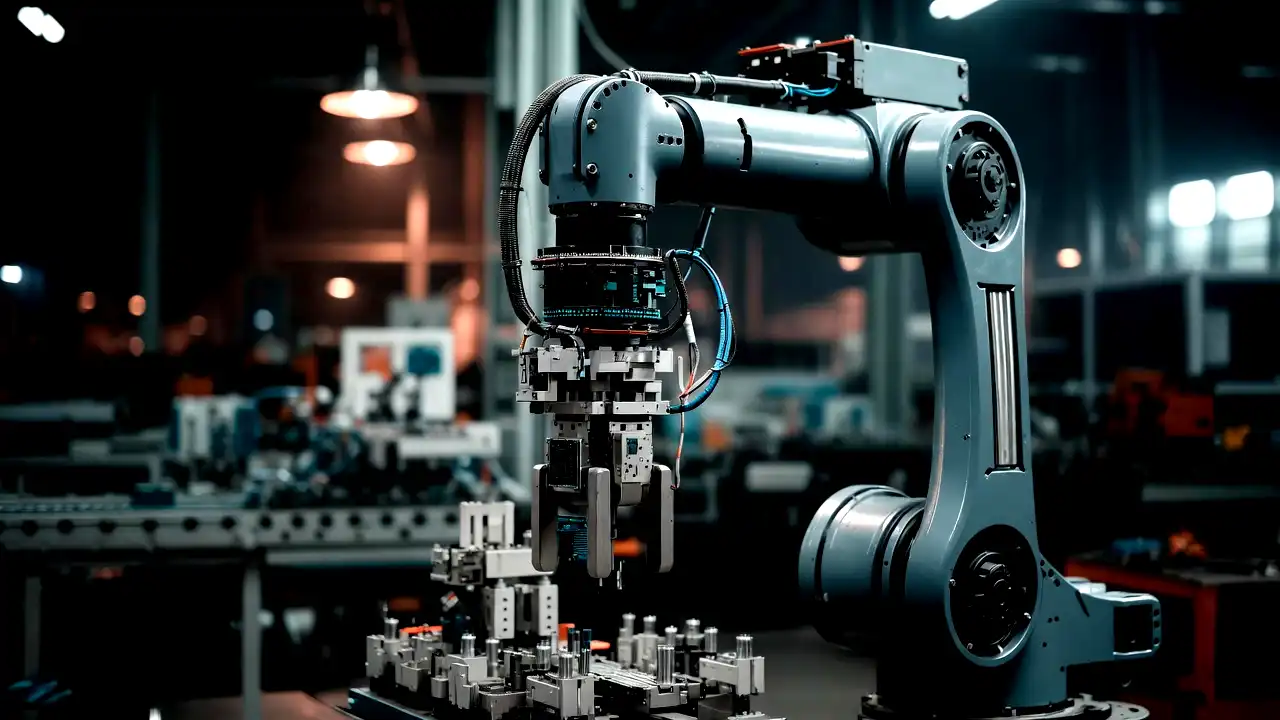
Japan is executing a major national technology strategy to capture leadership in the next frontier of computing: physical artificial intelligence. The Japanese government, led by the Ministry of Economy, Trade and Industry alongside national research institutes, is partnering with the country’s premier industrial machinery and robotics manufacturers to collect standardized operational data from factory floors nationwide.
Rather than competing directly against American cloud hyperscalers and Chinese internet giants in the capital-intensive race for purely digital large language models, Tokyo is playing to its historic industrial strengths. By assigning standardized digital identification codes to factory machines, robotic arms, and heavy construction equipment across thousands of industrial facilities, Japan aims to build the world’s largest multi-manufacturer physical data repository.
The initiative seeks to train foundation models that understand spatial physics, mechanical torque, material friction, and real-world dynamics. The strategy sets an ambitious commercial benchmark: capturing over 30% of the global physical artificial intelligence market and building a domestic artificial intelligence robotics sector valued at 20 trillion yen, or approximately $127 billion, by 2040.
The Strategic Pivot from Digital LLMs to Physical Intelligence
The motivation behind Japan’s national initiative is a calculated realization that the most valuable economic applications of artificial intelligence will operate in the material world rather than inside virtual chat windows.
Why Software Language Models Fall Short in the Material World
While generative conversational models excel at parsing text, synthesizing documents, and writing software code, they possess zero understanding of the physical laws that govern physical objects. A digital language model can write a detailed paragraph explaining how a robotic gripper should handle a fragile glass tube, but it cannot calculate the microsecond adjustments in grip pressure, thermal expansion, surface friction, and structural vibrations required to manipulate that object on a high-speed factory assembly line.
Physical artificial intelligence bridges this gap. It combines high-resolution visual sensors, tactile force feedback, multi-axis actuators, and spatial reasoning models.
Training these embodied systems requires real-world physical telemetry: millions of hours of operational data recording how industrial motors react to mechanical stress, how cutting tools wear down against hardened steel alloys, and how multi-jointed robot arms maintain balance while lifting heavy payloads.
Because theoretical simulations cannot perfectly replicate the messy physics of the real world, the companies and nations that hold massive archives of verified factory floor data will control the foundational intelligence powering future autonomous machines.
Capitalizing on Japan’s Global Lead in Precision Robotics
Japan occupies an unmatched position in the global industrial hardware ecosystem. Japanese engineering titans—including Fanuc, Yaskawa Electric, Nabtesco, Mitsubishi Heavy Industries, and Komatsu—manufacture over 45% of the world’s industrial robots and supply more than 60% of the precision reduction gears and high-torque servo motors that power automated machinery worldwide.
For decades, Japanese factories accumulated petabytes of high-quality operational data across automotive stamping plants, semiconductor cleanrooms, and precision machine shops. However, this valuable industrial data remained trapped inside proprietary corporate silos, stored on isolated local servers that prevented cross-industry machine learning research.
By unifying this fragmented industrial data under a structured national framework, Japan can transform its legacy hardware supremacy into algorithmic dominance, training world-class foundation models for physical automation that foreign software startups cannot easily replicate.
The National Data Architecture for Industrial Machine Learning
Executing a coordinated, nationwide industrial data-gathering program requires solving complex technical hurdles surrounding standardization, interoperability, and intellectual property protection.
Standardizing Factory Equipment IDs for Cross-Manufacturer Data Pools
The central technical mechanism of the government’s plan is the deployment of a universal digital identification system for industrial hardware. Under the initiative, machinery builders and factory operators will assign unique, standardized digital IDs to industrial robots, computer-numerical-control milling machines, automated guided vehicles, and hydraulic presses.
These standardized IDs allow data logging systems to capture operational telemetry in uniform, machine-readable formats. Sensors record multi-axis rotational velocities, electrical current draws, motor temperatures, hydraulic pressure curves, and acoustic vibration frequencies hundreds of times per second.
By standardizing data protocols across competing machinery brands, machine learning engineers can train multi-modal robotics models on unified datasets, allowing an artificial intelligence model trained on data from one manufacturer’s robotic arm to operate equipment built by another supplier without requiring months of custom reprogramming.
Protecting Proprietary Manufacturing Secrets Through Secure Data Commons
A major obstacle preventing factory operators from sharing data has been the fear of exposing proprietary manufacturing techniques, chemical formulations, and production volumes to commercial competitors.
To overcome this corporate hesitation, the Ministry of Economy, Trade and Industry is constructing a secure, privacy-preserving national industrial data commons. The platform utilizes advanced privacy-enhancing technologies, including federated machine learning, cryptographic data enclave partitioning, and synthetic data generation.
Under this architecture, raw production telemetry remains stored securely on the factory owner’s local servers. Machine learning models travel to the local data repository, train on the localized telemetry, and return only anonymized algorithmic gradient updates to the central foundation model.
This federated approach ensures that sensitive corporate trade secrets—such as the exact cycle times of a proprietary automotive welding line—never leave the factory perimeter, giving small- and mid-sized machine shops the legal and commercial confidence to participate in the national training pool.
Demographic Necessity: Solving the Severe Labor Deficit
While the physical artificial intelligence initiative carries massive commercial value, it is driven primarily by an acute demographic imperative that threatens Japan’s domestic economic stability.
Deploying Autonomous Robotic Systems to Offset a Shrinking Workforce
Japan faces the most severe demographic contraction in the developed world. With roughly 30% of the national population aged 65 or older and birth rates remaining at historical lows, the domestic working-age population is shrinking by hundreds of thousands of workers every year.
Crucial blue-collar industries face immediate labor shortages. Traditional manufacturing plants, commercial construction sites, agricultural farms, long-haul trucking fleets, and elderly healthcare facilities are struggling to recruit young workers.
Economic forecasts project that by 2040, Japan will face a structural deficit of more than 11 million workers across essential industrial and service sectors.
Traditional automation, which requires expensive fixed tooling and rigid programming for single repetitive tasks, cannot solve this shortage. Japanese industry requires agile, physical artificial intelligence systems capable of operating in unstructured, dynamic environments—such as autonomous robots that can navigate crowded construction sites, unload disorganized freight containers, assemble complex wire harnesses, and assist elderly patients with physical mobility.
Targeting a 127 Billion Dollar AI Robotics Market by 2040
To ensure that technological development translates into sustained domestic economic prosperity, the Japanese government established clear long-term industrial targets. State economic plans project that the domestic market for physical artificial intelligence, autonomous robotics, and intelligent automation systems will expand to 20 trillion yen, or approximately $127 billion, by 2040.
Furthermore, Japan aims to capture more than 30% of the entire global physical artificial intelligence market, exporting turnkey autonomous robotics systems, intelligent factory software, and specialized edge-computing controllers to North America, Europe, and Asia.
By commercializing physical artificial intelligence, Japan aims to turn its domestic demographic challenge into a primary export engine, selling labor-saving robotic solutions to other industrial nations that will face similar aging population crises over the coming decades.
Public-Private Alliances and Deeptech Computing Infrastructure
Building foundation models for the physical world requires significant public-private capital investment, high-performance computing clusters, and specialized hardware-software co-design.
NEDO and the AI Robot Association Powering Foundation Models
The organizational engine driving the physical AI initiative is the AI Robot Association, established as a strategic collaboration between leading corporate manufacturers, academic institutions, and state development agencies.
Funding and project coordination are managed through the New Energy and Industrial Technology Development Organization, which operates under the Ministry of Economy, Trade and Industry. NEDO is deploying substantial portions of Japan’s multi-trillion-yen national artificial intelligence and semiconductor budget into specialized research grants for physical foundation model development.
Research teams are building specialized Video-Action Models and Vision-Language-Action architectures. These advanced neural networks process live video feeds from robot-mounted cameras, interpret verbal human commands, and translate abstract instructions directly into smooth, coordinated physical motor actions.
By funding open foundation models through public-private consortia, the government ensures that small machine shops and startup software developers can access cutting-edge robotics intelligence without paying expensive licensing fees to foreign cloud monopolies.
Collaborating with Nvidia and Silicon Pioneers on Real-World Digital Twins
Training physical artificial intelligence requires massive computational simulation to allow robots to practice physical tasks millions of times before deploying on real factory floors. To build this simulation infrastructure, Japanese industrial leaders have formed deep technical partnerships with global computing titan Nvidia.
Japanese manufacturers are deploying Nvidia’s Omniverse platform and specialized robotics computing modules to build physics-accurate digital twins of entire factories, warehouses, and construction sites. In these virtual environments, digital robots simulate fluid dynamics, mechanical friction, and material deformations according to the exact laws of physics.
Once an algorithm masters a complex assembly task in the digital twin, engineers transfer the trained neural network directly onto physical robots equipped with low-power edge processors.
Furthermore, Japanese chipmakers and research institutes—including the state-backed Rapidus foundry in Hokkaido—are designing custom edge-AI silicon optimized specifically for low-latency robotics control, ensuring that domestic robots can process complex sensory data locally in milliseconds without relying on continuous cloud connectivity.
Global Implications of Japan’s Physical AI Industrial Strategy
Japan’s coordinated national push carries profound geopolitical and economic consequences, establishing an alternative development model for the international artificial intelligence industry.
Competing Against US Cloud Hyperscalers and Chinese Automation Giants
The global artificial intelligence landscape has been dominated by a bipolar contest between the United States and China. American tech hyperscalers—including Microsoft, Alphabet, Meta, and Amazon—lead in foundational language models, public cloud infrastructure, and consumer software ecosystems. Simultaneously, Chinese technology giants and state-owned enterprises lead in consumer electronics mass-production, commercial drone fleets, and massive domestic dataset harvesting.
Japan is establishing a distinct third pole in global technology: the industrial and physical intelligence layer. By focusing resources on precision manufacturing, factory robotics, and high-reliability machinery, Japan avoids direct, unwinnable capital wars with American software hyperscalers while establishing an indispensable niche in the global supply chain.
While American companies control the digital software interfaces and Chinese firms manufacture high-volume low-cost electronics, Japan aims to control the intelligent, high-precision robotic machinery that builds the physical infrastructure of the modern world.
Reshaping Factory Floors from Automotive Assembly to Microelectronics
The deployment of physical artificial intelligence will fundamentally restructure how global manufacturing operates over the coming decade:
- Zero-Setup Manufacturing Lines: Autonomous robots that can switch between assembling completely different vehicle models or electronic gadgets instantly by observing a few video demonstrations, eliminating weeks of manual factory retooling.
- Predictive Mechanical Self-Healing: Industrial machinery that detects microscopic bearing wear and thermal anomalies days before physical breakdowns occur, automatically ordering replacement parts and adjusting operating speeds to prevent factory downtime.
- Collaborative Human-Robot Workcells: Safe, sensor-rich humanoid and multi-axis robots that work directly alongside human technicians, assisting with heavy lifting, precision micro-soldering, and complex quality inspections without requiring protective safety cages.
- Autonomous Remote Construction: Heavy excavators, bulldozers, and cranes operating autonomously in hazardous terrain, utilizing physical artificial intelligence to grade land, pour concrete foundations, and erect structural steel frames around the clock.
The Next Era of Industrial Intelligence
Japan’s decision to tap its vast industrial machinery base to collect physical artificial intelligence data marks a defining turning point in the evolution of modern technology. The nation is moving past the early era of pure software experimentation, recognizing that the true economic and societal power of artificial intelligence lies in its ability to transform the material world.
By mobilizing industrial titans like Fanuc, Yaskawa, and Komatsu, standardizing digital equipment identifiers across factory floors, and building secure national data-sharing platforms, Japan is constructing a formidable economic and technological moat.
Supported by billions of dollars in state backing through NEDO, strategic partnerships with global silicon leaders, and an urgent demographic mandate to solve domestic labor shortages, the nation is laying the foundation for a multi-trillion-yen industrial renaissance.
As the global computing revolution moves from processing digital words to directing physical action, Japan’s mastery of the factory floor will prove decisive. By fusing decades of precision hardware craftsmanship with cutting-edge artificial intelligence, Japan is not merely adapting to the future of automation—it is engineering the intelligent machines that will build the modern world for generations to come.