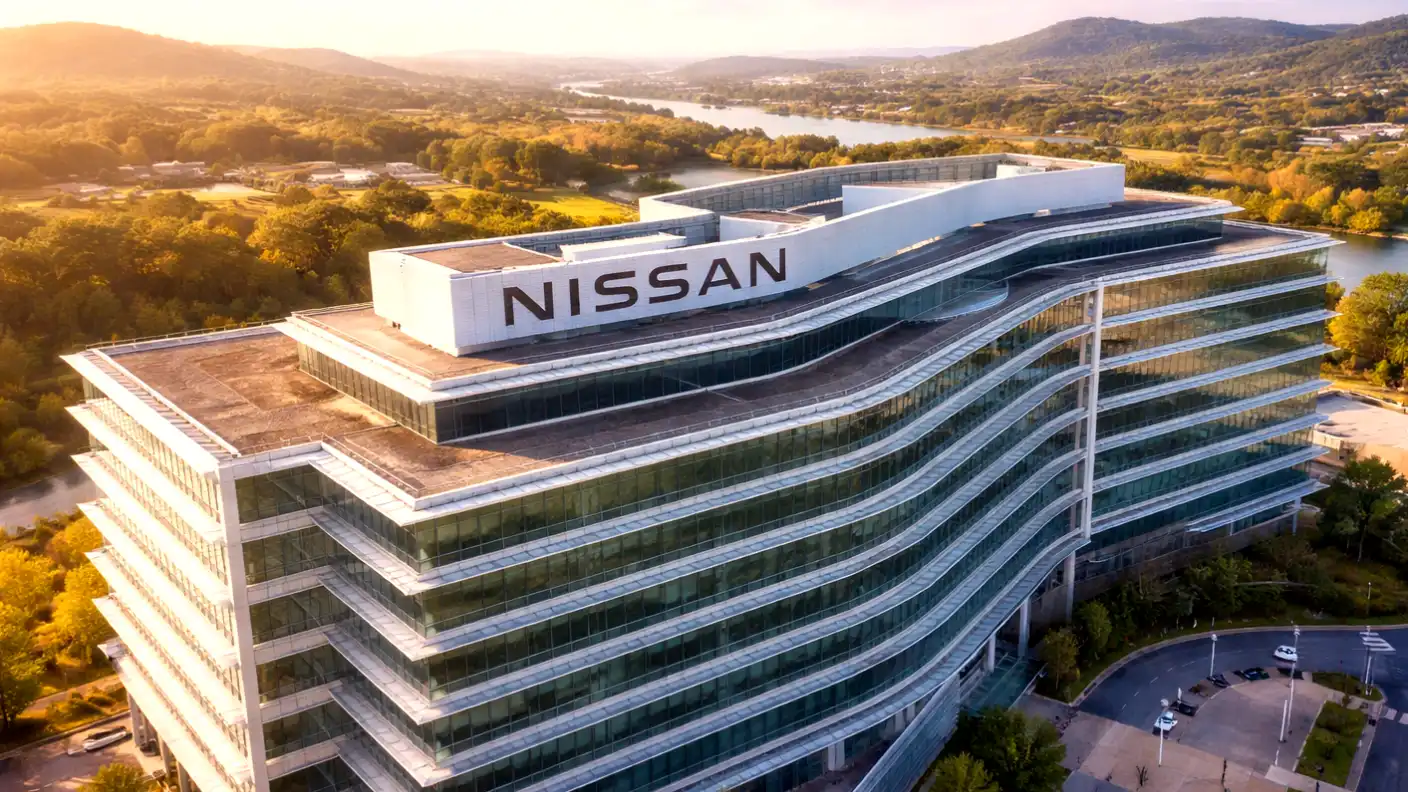
In the complex and hyper-competitive global automotive landscape, few companies possess a history as turbulent, culturally significant, and technologically pioneering as Nissan Motor Co., Ltd. Headquartered in the historic port city of Yokohama, Japan, Nissan has transitioned from a pre-war industrial conglomerate into a global automotive powerhouse. Along the way, the company has repeatedly redefined passenger transport, engineered some of the world’s most iconic sports cars, pioneered the mass-market electric vehicle era, and navigated intense corporate crises that shook the foundations of the international business community.
But Nissan’s narrative is not merely a record of engineering milestones. It is an intricate study of corporate survival, strategic alliances, geopolitical realities, and the constant balancing act between volume-driven expansion and technological innovation. From its near-bankruptcy in the late 1990s and the highly controversial Carlos Ghosn era to the equalizing of its long-standing alliance with Renault, the failed merger negotiations with Honda, and the launch of the rigorous “Re:Nissan” recovery plan under CEO Ivan Espinosa in 2025-2026, the company has constantly had to reinvent itself.
This is the definitive, comprehensive story of Nissan Motor Co., Ltd. It traces the automaker’s origins in the early days of Japanese industrialization, navigates its post-war global export boom, analyzes the strategic maneuvers of the Renault-Nissan-Mitsubishi Alliance, and deconstructs its current technological push into solid-state battery manufacturing, advanced hybrid propulsion, and end-to-end artificial intelligence-driven autonomous driving.
| Founded | 26 December 1933 (under Nissan Group) |
| Founders | Masujiro Hashimoto DAT line: Kenjiro Den Rokuro Aoyama Meitaro Takeuchi Yoshisuke Aikawa William R. Gorham |
| Headquarters | Nishi-ku, Yokohama, Kanagawa Prefecture, Japan |
| Type | Public [Traded as – TYO: 7201] |
| Industry | Automotive |
| Products | Automobiles, luxury vehicles, commercial vehicles, outboard motors, forklift trucks |
| Subsidiaries | Nissan Commercial Vehicles Dongfeng Motor Co., Ltd. |
| Website | www.nissan-global.com |
The Historical Roots of Nissan (1911–1933)
To fully comprehend the corporate DNA of Nissan, one must return to the early twentieth century, an era when Japan was rapidly transitioning from an agrarian society into an industrialized global power. The foundations of the company were laid by a brilliant young engineer named Masujiro Hashimoto, who returned to Japan after studying advanced steam and automotive engineering in the United States. In 1911, Hashimoto established the Kaishinsha Motorcar Works in the Azabu-Hiroo district of Tokyo, representing one of the first domestic attempts to design and manufacture passenger cars in Japan.
In 1914, Hashimoto’s workshop completed its first three-wheeled passenger car. He named the vehicle the “DAT” car, an acronym created from the family names of his three primary financial backers: Kenjiro Den, Rokuro Aoyama, and Meitaro Takeuchi. The word dat also translated to “lightning-fast” or “running like a startled rabbit” in Japanese, which Hashimoto utilized to emphasize the speed and agility of his mechanical creation. The Kaishinsha enterprise faced immense difficulties, as the Japanese domestic market lacked paved roads, fuel distribution networks, and consumer demand for expensive motorized transport.
In the mid-1920s, Hashimoto’s firm merged with Jitsuyo Jidosha Co., Ltd., an Osaka-based manufacturer of three-wheeled vehicles designed by American engineer William R. Gorham. This consolidated entity was named DAT Jidosha Seizo Co., Ltd. In 1931, the company launched a new, smaller passenger car equipped with a 495cc engine. They initially named the vehicle the “Datson” (literally, the “Son of DAT”), but the name was quickly changed to “Datsun” because the word son meant “loss” or “bankruptcy” in Japanese, whereas sun invoked the rising sun of the Japanese national identity.
The modern corporate structure of Nissan began to take shape in 1933 under the influence of Yoshisuke Aikawa, a highly ambitious industrialist who led a massive holding company called the Nihon Sangyo (Japan Industries) zaibatsu. On the Tokyo Stock Exchange, Nihon Sangyo was abbreviated as “Nissan”. Aikawa recognized that the future of industrial manufacturing lay in heavy industry, mining, and motorized transport. In December 1933, Aikawa established Jidosha-Seizo Co., Ltd. in Yokohama, merging DAT Jidosha Seizo’s automobile division with the metal-casting assets of Tobata Imono, another firm in the Nissan zaibatsu.
The foundation of what would become Japan’s second-largest automotive conglomerate was built on the efforts of several pioneering engineers and financiers.
These early industrial contributors worked across different companies to lay the groundwork for standardized automotive production in pre-war Japan.
- Masujiro Hashimoto, who brought American manufacturing expertise to Tokyo and designed the original DAT passenger car.
- Kenjiro Den, Rokuro Aoyama, and Meitaro Takeuchi, the three critical financial partners whose names formed the legendary DAT acronym.
- Yoshisuke Aikawa, the prominent zaibatsu leader who reorganized the company’s financial structure and created the “Nissan” trade name.
- William R. Gorham, an American engineer whose machinery and factory layout designs enabled the company to scale up its casting and assembly operations.
In June 1934, Aikawa officially changed the name of Jidosha-Seizo Co., Ltd. to Nissan Motor Co., Ltd., centering the company’s long-term business goals around the mass production of passenger cars and commercial trucks under the Datsun and Nissan brand names.
Post-War Reconstruction and the Datsun Era (1945–1980)
The aftermath of World War II left Japan’s industrial infrastructure in ruins, and Nissan’s Yokohama assembly plants were heavily damaged and partially occupied by Allied forces. In the late 1940s, the company faced severe material shortages, labor disputes, and strict regulatory limits on the production of passenger vehicles. Nissan’s management realized that to rebuild the company, they needed to acquire modern Western engineering techniques, particularly in the areas of precision engine casting, transmission design, and mass assembly.
To bridge this technological gap, Nissan signed a landmark licensing agreement with the Austin Motor Company of the United Kingdom in 1952. Under the terms of the contract, Nissan imported CKD (Complete Knock-Down) kits of Austin A40 Somerset and Austin A50 Cambridge passenger cars, assembling them in Japan while systematically localizing the production of every component over a seven-year period. This strategic partnership was highly successful. By building Austin cars, Nissan’s engineers mastered the production of overhead-valve (OHV) engines, precision sheet-metal stamping, and modern assembly line quality control.
The knowledge gained from the Austin partnership culminated in the launch of the Datsun Bluebird in 1959. Designed entirely in-house, the Bluebird was a rugged, reliable compact sedan featuring a modern overhead-valve engine and a highly durable body-on-frame construction. The Bluebird became a massive domestic success, popular with Japanese taxi drivers and families alike, and established Nissan as a dominant force in the domestic market alongside Toyota.
Under the visionary guidance of Yutaka Katayama, whom the company sent to the United States in the late 1950s to study the North American car market, Nissan began a highly successful export campaign. Katayama, affectionately known to automotive enthusiasts as “Mr. K,” realized that to succeed in the U.S., Nissan needed to offer vehicles that combined high reliability and outstanding fuel economy with performance and style. He convinced Nissan’s headquarters to build the Datsun 510 in 1968, a compact car featuring a robust overhead-cam engine and independent rear suspension, which earned the nickname “the poor man’s BMW” due to its exceptional handling and affordable price.
Katayama’s crowning achievement came in late 1969 with the launch of the Datsun 240Z, known in Japan as the Fairlady Z. Designed under the leadership of Yoshihiko Matsuo, the 240Z was a sleek sports coupe powered by a 2.4-liter inline-six engine. The car was a revelation, offering European-like styling and performance at a fraction of the cost of contemporary European sports cars. The 240Z shattered the stereotype that Japanese cars were merely cheap, uninspired copycats, establishing Datsun as a highly desirable performance brand globally.
When the global energy crises of 1973 and 1979 struck, sending gasoline prices soaring and prompting governments to implement strict fuel economy standards, Nissan was perfectly positioned to capitalize. Consumers in North America and Europe turned away from large, V8-powered domestic passenger cars, flocking to Datsun’s highly efficient compacts like the Datsun Sunny (known in the U.S. as the B210). This drove Nissan’s global export volume to unprecedented heights, making Datsun a household name across the Western world.
Nissan managed its rapid international expansion by introducing highly reliable and fuel-efficient vehicles under the Datsun brand name.
These specific models resonated with global consumers who demanded performance and economy during the geopolitical crises of the twentieth century.
- The Datsun Bluebird, a compact sedan that established a reputation for mechanical durability in both Japan and export markets.
- The Datsun 510, featuring a robust overhead-cam engine and independent rear suspension, dominated its class in both sales and motorsport.
- The Datsun 240Z (Fairlady Z), a sleek sports coupe that challenged European rivals with its inline-six engine and exceptional value.
- The Datsun Sunny, an ultra-frugal compact car that became a massive success in the United States following the 1973 oil crisis.
By 1980, Nissan had become one of the largest automobile exporters in the world, its vehicles celebrated globally for their build quality, fuel efficiency, and outstanding reliability.
Global Expansion and Financial Crisis (1980s–1990s)
The 1980s began with a massive and highly controversial strategic decision: the phased elimination of the beloved “Datsun” brand name in favor of a unified global “Nissan” identity. The transition was incredibly expensive, costing the company hundreds of millions of dollars in marketing campaigns and sign changes, and initially confusing many international consumers who had built a strong emotional connection to the Datsun name. However, Nissan’s corporate leadership in Japan was determined to build a singular, cohesive global brand that associated all of its automotive products directly with the parent company.
To bypass rising trade tensions and voluntary export restraints imposed by the United States and European governments, Nissan embarked on an ambitious program of localized manufacturing. In 1983, the company opened its first major North American assembly plant in Smyrna, Tennessee, which began producing Datsun pickup trucks and eventually scaled up to manufacture popular passenger cars like the Sentra. In 1986, Nissan opened a massive factory in Sunderland, England, which would go on to become the largest and most productive automotive assembly plant in the United Kingdom.
In 1989, to compete directly with Toyota’s newly launched Lexus brand and Honda’s Acura, Nissan unveiled its own luxury vehicle division: Infiniti. Launched with the sleek, high-tech Q45 sedan, Infiniti was designed to offer premium Japanese craftsmanship, advanced performance technologies, and a highly personalized dealership experience. While Infiniti struggled in its early years due to quirky, abstract advertising campaigns, it eventually established a strong foothold in the luxury SUV and sport sedan segments.
Despite these global expansions, the 1990s proved to be a highly challenging and near-fatal decade for Nissan. The bursting of the Japanese asset price bubble in 1991 plunged Japan into a prolonged economic stagnation, severely reducing domestic automotive demand. Simultaneously, Nissan’s global operations were plagued by systemic operational inefficiencies. The company’s vehicle development process had become overly bureaucratic, leading to long development cycles and conservative, uninspired designs that struggled to compete with the highly polished offerings of Toyota and Honda.
Furthermore, Nissan’s financial structure was crippled by an excessively complex and inefficient network of suppliers, known as the keiretsu system. Nissan held cross-shareholdings in hundreds of smaller parts manufacturers, which insulated these suppliers from market competition and kept Nissan’s parts procurement costs artificially high. By 1999, Nissan was carrying a crushing debt load of over ¥2 trillion (approximately $20 billion). The company was hemorrhaging cash, losing market share in every major region, and facing imminent bankruptcy.
A combination of domestic economic stagnation and internal corporate inefficiencies brought the automaker to the edge of financial collapse.
The organization’s management had failed to adapt to changing global consumer preferences, resulting in underutilized factories and high debt loads.
- An excessive debt burden of approximately ¥2 trillion (roughly $20 billion), which crippled the company’s ability to fund research and development.
- The inefficient and costly keiretsu system, which prevented competitive pricing in parts procurement and locked the automaker into expensive, long-term supplier contracts.
- Overcapacity in manufacturing, with domestic factories operating far below their optimal utilization rates.
- A conservative design philosophy that led to bland, uninspired vehicle designs that struggled to compete with major domestic rivals.
Facing total insolvency, Nissan’s board of directors began looking desperately for an international partner with the financial resources and operational expertise to save the company.
Carlos Ghosn and the Renault-Nissan Alliance (1999–2018)
On March 27, 1999, Nissan signed a historic agreement with the French automaker Renault, forming the Renault-Nissan Alliance. Renault invested approximately $5.4 billion to acquire a 36.8% controlling stake in Nissan, while Nissan later acquired a 15% non-voting stake in Renault. To lead the recovery effort, Renault dispatched its highly respected Chief Operating Officer, Carlos Ghosn, to Yokohama to take the helm as Nissan’s COO (becoming CEO in 2001).
Ghosn, a highly energetic and decisive Lebanese-Brazilian-French executive, was met with intense skepticism by the traditional Japanese business establishment. He immediately set out to shatter the rigid, consensus-driven corporate culture that had paralyzed Nissan for years. In October 1999, Ghosn unveiled the “Nissan Revival Plan” (NRP), a highly aggressive restructuring blueprint designed to return the company to profitability in just three years.
Ghosn became widely known for his ruthless efficiency in eliminating operational waste. He did the unthinkable in Japan: he closed five underperforming domestic assembly plants, eliminated approximately 21,000 jobs (representing 14% of the global workforce), and dismantled Nissan’s historic cross-shareholding relationships with its keiretsu suppliers. He forced the remaining suppliers to compete on a global stage, immediately slashing Nissan’s parts procurement costs by 20%.
Critically, Ghosn did not just focus on cost-cutting; he reinvested the savings directly into new products and design. He appointed the legendary designer Shiro Nakamura to lead a complete overhaul of Nissan’s vehicle styling, resulting in a series of highly successful, emotionally resonant new models. These included the rugged Nissan Murano crossover, the muscular Nissan Titan full-size pickup, and the highly anticipated Nissan 350Z sports car, which revitalized the brand’s performance image.
The results of the Nissan Revival Plan were significant. Nissan returned to profitability in just one year, paying off its massive debt ahead of schedule and achieving some of the highest operating profit margins in the global automotive industry. Ghosn became an international business celebrity, celebrated in Japan and even featured in a popular manga series. In 2016, the Alliance expanded further when Nissan acquired a 34% controlling stake in Mitsubishi Motors, bringing the specialized off-road and plug-in hybrid manufacturer into the corporate family.
However, the Carlos Ghosn era ended in shocking, dramatic fashion. In November 2018, Ghosn was arrested at Haneda Airport in Tokyo on charges of under-reporting his executive compensation, misusing corporate funds for personal real estate, and shifting personal investment losses onto Nissan’s balance sheet. Ghosn denied all charges, claiming he was the victim of an internal corporate coup orchestrated by conservative Nissan executives who feared Renault was planning a full merger that would destroy Nissan’s independence. In December 2019, while out on bail in Tokyo, Ghosn executed a dramatic escape, smuggling himself out of Japan inside a custom musical equipment case on a private jet to Lebanon.
Carlos Ghosn implemented a series of aggressive restructuring policies designed to immediately stabilize the company’s cash flow.
This recovery plan targeted systemic operational waste and dismantled decades of entrenched corporate practices in Japan.
- The closure of five underperforming Japanese manufacturing plants reduced excess assembly capacity.
- A significant reduction in the global workforce, resulting in the elimination of approximately 21,000 jobs.
- The systematic dismantling of the traditional keiretsu supplier network, cutting procurement costs by opening up competition.
- The divestment of non-core assets, including Nissan’s aerospace division and real estate holdings, to pay down outstanding debt.
The fallout from the Ghosn scandal plunged Nissan into a prolonged period of corporate instability, severely damaging its relationship with Renault and eroding consumer confidence in the brand.
Electrification Leadership and the LEAF Revolution
While Nissan was navigating the complex corporate restructuring of the early 2000s, the company was also quietly planning a massive technological gamble on the future of zero-emission mobility. Under the direction of Carlos Ghosn, who believed that electric vehicles would eventually become the dominant form of passenger transport, Nissan’s engineering division bypassed traditional gasoline-hybrid technology to focus on pure, battery-electric vehicles (BEVs).
In December 2010, the company launched the first-generation Nissan LEAF (Leading Environmentally friendly Affordable Family car). It was a watershed moment in automotive history: the LEAF was the first mass-market, purpose-built, mass-produced all-electric passenger vehicle in the world. Powered by a laminated lithium-ion battery pack developed in-house via a joint venture with NEC (AESC), the first-generation LEAF offered a quiet, zero-emission driving experience with an EPA-estimated range of approximately 73 miles.
The LEAF was a pioneer, but it also faced the immense challenges of being a first-mover in an unproven market. The early charging infrastructure was virtually non-existent, and early LEAF owners suffered from range anxiety. Furthermore, because Nissan opted for a passive, air-cooled thermal management system for the battery pack to keep manufacturing costs down, some early LEAF batteries in hot climates experienced accelerated degradation and loss of capacity, a major learning experience that Nissan’s engineers spent years resolving.
Despite these early hurdles, Nissan’s commitment to the LEAF program did not waver. The company continuously upgraded the battery chemistry and capacity, launching the second-generation LEAF in 2017 with a sleek design, advanced ProPILOT driver-assistance technologies, and an extended driving range. The innovative e-Pedal system, which allowed the driver to launch, accelerate, decelerate, and stop the vehicle using only the accelerator pedal through regenerative braking, became a signature feature of the car.
In the modern era, the Nissan LEAF underwent its most significant transformation yet. The third-generation LEAF evolved from a traditional hatchback into a sleek, aerodynamic crossover built on the advanced CMF-EV platform. The current LEAF is offered with multiple battery options, including a 52kWh version offering up to 280 miles of WLTP range, and a premium 75kWh version delivering up to 387 miles of range. This modern crossover incorporates a highly efficient 3-in-1 electric powertrain and features a North American Charging Standard (NACS) port, allowing seamless compatibility with Tesla’s Supercharger network across North America.
Nissan pioneered the modern electric vehicle era by committing to zero-emission technology long before many of its domestic and global competitors.
The development of the LEAF across multiple generations reflects the rapid maturation of automotive battery technology and public charging infrastructure.
- The launch of the first-generation LEAF in 2010 established the baseline for mass-market, affordable battery-electric vehicles.
- The introduction of the second-generation model in 2017, featuring an aerodynamic design, increased range, and the innovative e-Pedal system.
- The transition of the third-generation LEAF into a stylish crossover based on the advanced CMF-EV architecture.
- The global integration of North American Charging Standard (NACS) ports, allowing modern LEAF owners access to expansive charging networks.
With close to 700,000 LEAF units sold worldwide, Nissan remains an indispensable pioneer of the modern electric vehicle movement.
The Modern Era of Restructuring: From Uchida to Ivan Espinosa (2019–2026)
The arrest of Carlos Ghosn was followed by several years of corporate turmoil and falling profitability. To right the ship, Nissan’s board appointed Makoto Uchida as CEO in December 2019. Uchida faced the monumental task of stabilizing the company’s finances, restoring damaged relationships with regional dealers (especially in the United States), and restructuring the deeply strained Alliance with Renault.
In late 2023, Uchida achieved a major strategic victory by finalizing a complete re-balancing of the Renault-Nissan-Mitsubishi Alliance. The new agreement placed Renault and Nissan on an equal footing: Renault reduced its voting rights in Nissan to 15%, matching the 15% stake that Nissan held in Renault. This historic agreement resolved decades of corporate tension over French control, allowing Nissan to operate with greater autonomy while still collaborating on shared platforms and technologies.
However, by 2024, the rapid rise of highly competitive, low-cost Chinese electric vehicle manufacturers created a severe threat to the traditional Japanese automotive industry. In response, Nissan and Honda signed a historic Memorandum of Understanding (MoU) to discuss the possibility of a full merger, which was envisioned to create a massive Japanese automotive conglomerate capable of fighting the Chinese EV invasion. But the merger talks collapsed in early 2025 after a series of difficult negotiations. Honda proposed that Nissan become its subsidiary and insisted that Makoto Uchida step down as a core prerequisite, a move that Nissan’s board flatly rejected to preserve the company’s long-term independence.
Following the collapse of the Honda merger talks and amidst falling global margins, Nissan’s board implemented a dramatic overhaul of its leadership team. On April 1, 2025, Ivan Espinosa, a highly respected 47-year-old Mexican executive who had been with Nissan since 2003, was appointed President and Chief Executive Officer. Espinosa, who began his career as a product specialist in Mexico before advancing through key planning roles in Thailand and Europe, immediately launched a comprehensive corporate survival plan: the “Re:Nissan” recovery strategy.
In a series of candid interviews, Espinosa did not mince words regarding what went wrong under previous management, admitting that Nissan’s historic, aggressive pursuit of raw sales volume and its heavy reliance on low-margin rental-car sales in the United States had severely cheapened the brand’s image and eroded its profitability. Under the Re:Nissan plan, Espinosa pivoted the company to value over volume, prioritizing retail quality, customer retention, and strict cost control.
The Re:Nissan recovery plan has instituted a series of dramatic contractions to stabilize the company’s balance sheet. To combat severe financial pressures, the automaker is slashing global production capacity from 3.5 million to 2.5 million units. This restructuring includes the closing of seven manufacturing plants and two design studios globally, along with the elimination of approximately 20,000 jobs. Espinosa is also significantly reducing the company’s platform count from 13 to just 7, and trimming its global product lineup from 56 models to 45, reallocating investment capital to high-volume, highly profitable nameplates.
To stabilize the automaker’s financial position, the new leadership team enacted a series of painful but necessary operational contractions.
This survival strategy aims to focus the company’s resources on high-margin retail sales and accelerate product development cycles.
- Reducing global manufacturing capacity from 3.5 million units down to a leaner target of 2.5 million units.
- Consolidating the vehicle architecture footprint by reducing active manufacturing platforms from 13 to 7.
- Streamlining the global model portfolio from 56 nameplates to 45, eliminating low-volume, underperforming models.
- Decreasing vehicle development times, targeting a reduction from 52 months to 37 months for next-generation core models.
Under Espinosa’s focused leadership, Nissan has returned to the core job of any great automaker: designing and building outstanding products.
Propulsion Innovation: e-POWER Drivetrains and the All-Solid-State Battery Revolution
As Nissan navigates the structural changes of the Re:Nissan recovery plan, its research and development organization has continued to deliver industry-leading innovations. To bridge the gap between traditional internal combustion engines (ICE) and pure battery-electric vehicles, the company has heavily expanded the deployment of its proprietary e-POWER hybrid technology.
Unlike conventional parallel hybrids, where both the gasoline engine and the electric motor drive the wheels, e-POWER is a series hybrid system. In an e-POWER vehicle, a small, highly efficient gasoline engine acts purely as an on-board generator, producing electricity to charge a compact lithium-ion battery. The wheels are driven exclusively by a high-output electric motor, providing the instant torque, linear acceleration, and near-silent operation of a pure electric vehicle, without ever needing to plug into a charging station.
But the true holy grail of Nissan’s future product strategy is the development of All-Solid-State Batteries (ASSBs). Solid-state batteries replace the volatile, flammable liquid electrolytes found in traditional lithium-ion batteries with a solid electrolyte. This technological leap has the potential to offer approximately double the energy density of current batteries, halve charging times, and provide superior thermal safety, making EVs far more competitive and versatile.
In January 2025, Nissan reached a major milestone by officially opening its first in-construction all-solid-state EV battery pilot production line at its Yokohama Plant in Kanagawa Prefecture. To make mass production economically viable, Nissan has partnered with Sacramento-based LiCAP Technologies, utilizing their patented “Activated Dry Electrode” fabrication process. Conventional battery manufacturing requires the mixing of active materials with volatile solvents to create a wet slurry, which is then coated onto foils and dried in massive, energy-intensive drying ovens.
LiCAP’s dry-electrode process completely eliminates solvent-based slurries, compacting a dry powder mixture directly onto current collectors. This eliminates the need for expensive drying ovens, reduces manufacturing energy consumption, cuts floor space requirements, and significantly lowers pack-level costs, allowing Nissan to target solid-state pack costs of around $75/kWh by fiscal year 2028-2029.
To further reduce vehicle weight and manufacturing complexity, Nissan is also adopting advanced “gigacasting” manufacturing techniques at its Tochigi plant. The company is deploying 6,000-tonne aluminum casting machines to manufacture the entire rear-body structure of next-generation electric vehicles as a single piece. This replaces dozens of individual stamped sheet-metal parts, eliminating hundreds of weld points, improving structural rigidity, and significantly reducing assembly line costs.
The automotive industry is on the cusp of an energy-storage revolution, with solid-state cells representing the ultimate goal for electric mobility.
Nissan’s proprietary cell research has demonstrated several critical advantages over traditional wet lithium-ion battery architectures.
- Energy density is approximately double that of conventional lithium-ion batteries, allowing for doubled driving range in the same physical space.
- Significantly reduced charging times due to superior charge and discharge performance without the risk of dendrite formation.
- Enhanced operating safety, as the solid-state electrolyte replaces highly flammable liquid organic solvents.
- Lower pack-level manufacturing costs, targeting $75/kWh by fiscal year 2028 through dry-electrode production methods.
These technological advancements align with Nissan’s goal of launching its first commercial electric vehicles powered by in-house solid-state batteries by fiscal year 2028-2029.
Autonomous Driving and the End-to-End AI Mobility Strategy (2026–2030)
As Nissan looks to the future under CEO Ivan Espinosa, the company is shifting its strategic focus from raw volume to advanced “mobility intelligence”. Under the long-term vision of Nissan Ambition 2030, the company is integrating cutting-edge artificial intelligence to revolutionize the user experience and develop fully autonomous driving capabilities.
In early 2026, Nissan announced a landmark research and development partnership with Wayve, a London-based pioneer in artificial intelligence for autonomous driving. Traditional autonomous systems rely on complex, rule-based software that struggles to adapt to unpredictable real-world scenarios. Wayve’s end-to-end AI technology, by contrast, behaves more like a human driver, utilizing advanced machine learning models that can “see” and “think” to navigate complex urban traffic.
Through the Wayve partnership, Nissan is developing “Nissan AI Drive” technology, which the company aims to bring to market by 2027. This system will be first deployed on the all-new Nissan Elgrand, a premium van scheduled for launch in summer 2026, which will adopt next-generation ProPILOT with end-to-end autonomous driving capabilities by the end of fiscal 2027. This AI-driven mobility aims to provide a safe, intuitive, and accessible driving experience, particularly for elderly individuals or those unable to drive.
Alongside “AI Drive,” Nissan is developing “Nissan AI Partner” technology, an intuitive in-car digital companion that connects naturally with the driver, supporting daily activities, predicting navigation destinations, and managing vehicle charging schedules automatically. These advanced software systems are designed to be continuously updated over the air, representing Nissan’s transition into a Software-Defined Vehicle (SDV) platform starting in fiscal year 2026.
Nissan’s proprietary autonomous driving suite has evolved from simple lane-keeping assistance into a highly intelligent, map-linked navigation aid.
These active safety technologies are designed to reduce driver fatigue and prevent accidents in both highway and complex urban environments.
- ProPILOT Assist with Navi Link, which automatically integrates high-definition map data to adjust vehicle speed ahead of curves, exits, and speed zones.
- Intelligent Lane Intervention and Lane Keep Assist, providing precise, automatic steering corrections to keep the vehicle centered in its lane.
- Intelligent Around View Monitor, utilizing a 360-degree, multi-camera system to provide an aerial view of the vehicle’s surroundings.
- The upcoming AI-driven autonomous system, developed with Wayve, is designed to handle complex urban driving scenarios without human intervention.
By integrating artificial intelligence directly into the core vehicle software, Nissan is positioning itself to lead the next phase of autonomous mobility.
Global Manufacturing Footprint and Environmental Stewardship
To support its global product strategy and environmental goals, Nissan operates a highly optimized network of global manufacturing facilities. Each facility is strategically positioned to serve key regional markets while implementing advanced manufacturing technologies to reduce the company’s carbon footprint.
The Tochigi Plant in Japan is the flagship of Nissan’s “Intelligent Factory” initiative. Tochigi has been heavily modernized with advanced robotic systems that handle high-precision casting, automated cockpit module installation, and real-time paint inspection. It is the primary production hub for premium Infiniti luxury models and the legendary Nissan Z sports car. The Oppama Plant, also in Japan, was the historical pioneer of the original LEAF and remains a critical center for electric vehicle and battery integration.
Outside of Japan, the Smyrna Plant in Tennessee, USA, remains the backbone of Nissan’s North American truck, SUV, and electric powertrain assembly. The Sunderland Plant in the United Kingdom continues to be the dominant European assembly site, manufacturing popular crossovers like the Qashqai and Juke. Both facilities are undergoing extensive transformations to support the parallel assembly of next-generation electric vehicles and e-POWER hybrid drivetrains.
In line with its corporate citizenship responsibilities, Nissan has committed to achieving carbon neutrality across its product life cycle and entire corporate operations by 2050. To reach this goal, the company is actively reducing carbon emissions in its supply chain, increasing the use of recycled materials in vehicle production, and implementing on-site renewable energy projects—such as solar arrays and wind turbines—at its major assembly facilities, particularly the Sunderland plant in the UK.
Nissan operates a highly optimized network of assembly and component factories located in key regional automotive hubs.
These advanced facilities have been heavily modernized to support the parallel production of electric, hybrid, and internal combustion vehicles.
- The Yokohama Plant in Japan, which serves as the primary engineering hub for engine production and the all-solid-state battery pilot line.
- The Tochigi Plant in Japan, a highly automated “Intelligent Factory” responsible for assembling premium Infiniti models and the Nissan Z sports car.
- The Sunderland Plant in the United Kingdom, Nissan’s largest European manufacturing base and the production site for the Qashqai and Juke crossovers.
- The Smyrna Plant in Tennessee, USA, which manufactures the Pathfinder, Rogue, and electric powertrains for the North American market.
Through continuous investment in sustainable manufacturing processes, Nissan is proving that corporate responsibility can go hand-in-hand with technological innovation.
Conclusion: The Rebirth of an Automotive Legend
The corporate journey of Nissan Motor Co., Ltd. is an extraordinary study of engineering resilience, global adaptation, and industrial survival. From its humble origins in Hashimoto’s Tokyo workshop and the creation of the early DAT cars to the global triumphs of the Datsun Bluebird and the Fairlady 240Z, the company has proven time and again its ability to engineer vehicles that capture the imagination of the global driving public.
Nissan has weathered some of the most severe crises in corporate history. It was saved from the brink of bankruptcy in the late 1990s through the dramatic, cost-cutting measures of the Carlos Ghosn era, survived the internal turmoil that followed Ghosn’s arrest, successfully re-balanced its alliance with Renault, and navigated the difficult fallout of failed merger negotiations with Honda.
Under the steady and pragmatic leadership of CEO Ivan Espinosa, the company is executing the strict “Re:Nissan” recovery strategy. By turning away from the volume-obsessed expansion of the past and focusing heavily on product quality, profitability, and customer satisfaction, Espinosa is steering Nissan back to its core identity as an engineering leader.
The automaker’s future is undeniably electric and intelligent. With its Yokohama all-solid-state battery pilot line demonstrating dry-electrode manufacturing breakthroughs, and its partnership with Wayve accelerating the arrival of end-to-end AI autonomous driving, Nissan is preparing for the next century of passenger transport. As the automotive world undergoes its most significant transition in a hundred years, Nissan’s deep engineering heritage, global manufacturing footprint, and commitment to technological innovation ensure that the giant from Yokohama will continue to shape the future of global mobility.