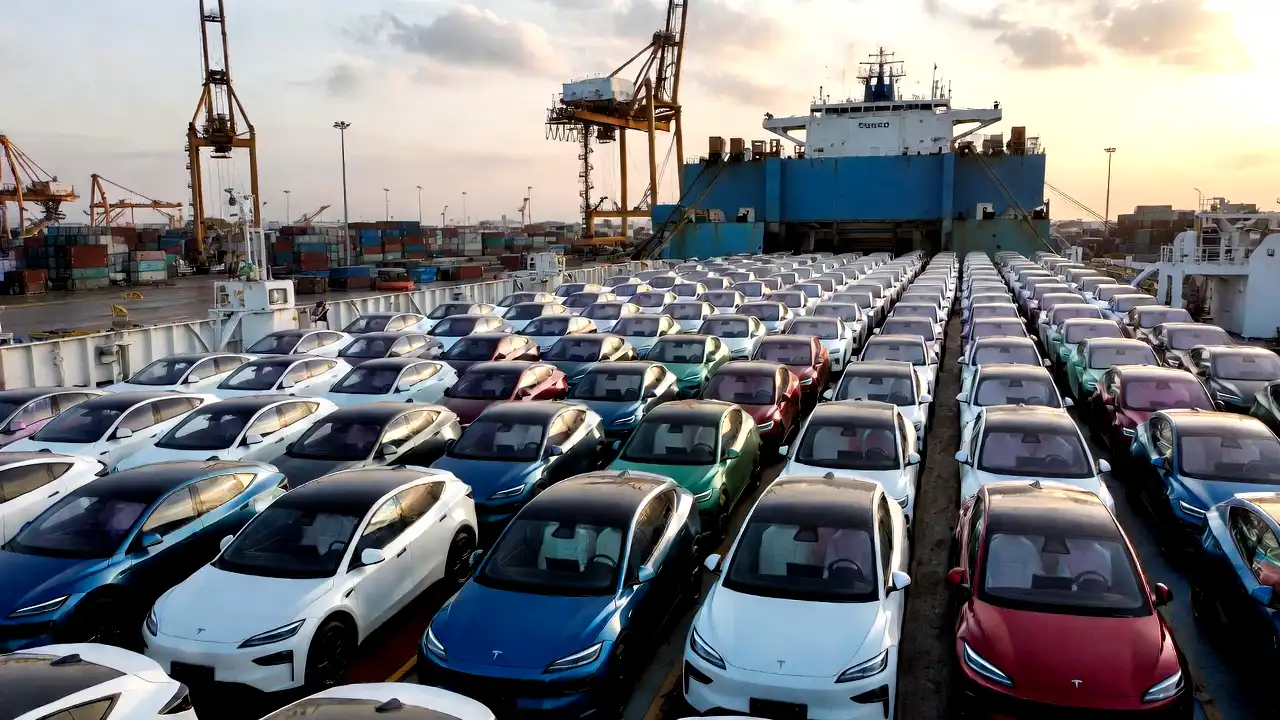
A historic shift occurred in the European automotive landscape in May 2026. For the first time, Chinese passenger car brands captured a larger share of the European monthly new-car market than their long-established Japanese counterparts. This milestone represents a seismic change in global manufacturing power, proving that China’s automotive industry has transitioned from a domestic powerhouse into a dominant international player.
According to consolidated sales data released by the European Automobile Manufacturers’ Association (ACEA) for the month of May 2026, five major Chinese automakers sold a combined 138,410 vehicles across 31 European countries. This represents a massive 65% surge compared to the same month last year.
By contrast, six major Japanese automakers saw their combined European sales decline by 3% over the same period, totaling 130,424 units. This 6% margin of victory in monthly sales signals that European consumers are rapidly embracing Chinese technology, even in a market traditionally dominated by local and Japanese brands.
This rise has occurred despite severe political and regulatory headwinds, including steep tariffs imposed by the European Union. Supported by highly integrated supply chains, competitive pricing, and rapid advancements in battery technology, Chinese automakers are proving that their expansion into Europe is unstoppable. This deep-dive analysis explores the five key things to know about the rise of China-made vehicles in Europe, the strategies driving this market shift, and the long-term implications for the global auto industry.
Overtaking Japanese Rivals: A Seismic Milestone
For decades, Japanese automakers like Toyota, Nissan, and Honda held a gold-standard reputation for reliability, fuel efficiency, and value in the European market. They served as the primary alternative to domestic European brands. However, the rapid transition to electric mobility has disrupted this long-standing hierarchy.
The May 2026 sales figures from the ACEA highlight this shift. The combined performance of five Chinese manufacturers—BYD, SAIC Motor, Zhejiang Geely Holding Group, Chery Automobile, and Leapmotor—reached 138,410 units. Meanwhile, the six Japanese giants—Toyota, Nissan, Suzuki, Mazda, Honda, and Mitsubishi—slipped behind with 130,424 units.
An accounting update also influenced these statistics. Starting with its April data, the ACEA began including the sales performance of the Swedish brand Volvo under its parent company, Geely. This reporting change made Geely’s true European market footprint much more visible, showing how deeply Chinese capital has integrated into the European automotive establishment.
The Shift in Consumer Preferences
The primary reason Japanese automakers are losing ground in Europe is their slow transition to fully electric vehicles. While Japanese brands remain highly respected for their hybrid drivetrains, European consumers are increasingly looking for battery-electric vehicles (BEVs) and plug-in hybrids.
Industry researchers note that when European buyers consider purchasing an electric vehicle, they rarely look at Japanese brands. Japanese companies simply do not have competitive, widely available electric lineups in Europe. This gap has allowed Chinese manufacturers, who have spent more than a decade perfecting electric drivetrains, to capture the market share that Japanese brands left behind.
Global Implications of the Overtake
This European milestone is not an isolated event. It is part of a broader global pattern where Chinese brands are displacing Japanese market leaders. Just a month prior to the European breakthrough, Chinese passenger vehicles surpassed Japanese brands in monthly sales in South Korea’s imported car market for the first time.
That shift, driven almost entirely by BYD’s aggressive exports, saw Chinese-made vehicle sales exceed the combined total of Lexus, Toyota, and Honda imports in South Korea. This global trend suggests that the competitive balance of the automotive world is being permanently rewritten in favor of Chinese manufacturers.
Maintaining Price Advantages Despite Punitive Tariffs
The rise of Chinese cars in Europe is even more remarkable when considering the regulatory barriers erected by the European Union. Viewing Chinese government subsidies as a factor that distorts fair market competition, the EU finalized additional anti-subsidy duties on Chinese-made electric vehicles.
These duties, which went into effect in late 2024, impose an additional tariff of up to 35.3% on top of the existing 10% import duty. This brings the total tariff rate to a massive 45.3% for certain manufacturers.
One might expect a 45% import tax to completely erase the price competitiveness of Chinese vehicles. However, that has not happened. Chinese automakers continue to maintain a substantial price advantage over European and Japanese competitors.
Breaking Down the Retail Price Gap
To understand how this is possible, one only has to look at current retail prices in Germany, Europe’s largest automotive market. The BYD Dolphin, a compact electric vehicle, is sold in Germany starting at 26,990 euros, which is roughly $29,150. Even with the maximum tariffs factored in, this price is about 3% cheaper than the Renault 5 E-Tech, a similar-class electric vehicle manufactured in France by Renault.
The secret behind this pricing resilience lies in the deep vertical integration of Chinese automotive companies. Unlike European manufacturers, who buy batteries and electric motors from external suppliers, Chinese firms like BYD produce almost all of their vehicle components in-house.
Because batteries account for roughly 40% of the total cost of an electric vehicle, owning the battery manufacturing process allows Chinese firms to keep production costs incredibly low. This cost cushion enables them to absorb the EU’s heavy tariffs while still offering vehicles at highly competitive retail prices.
The Strategic Pivot to Plug-in Hybrids
As European trade policies hardened, Chinese carmakers demonstrated immense strategic flexibility. The EU’s additional anti-subsidy tariffs of up to 35.3% apply specifically to battery-electric vehicles manufactured in China. They do not apply to plug-in hybrid electric vehicles (PHEVs) or traditional internal combustion vehicles.
Recognizing this regulatory distinction, Chinese brands, led by BYD, rapidly pivoted their product mix. They began flood-shipping plug-in hybrids to European ports, capitalizing on a growing segment of buyers who want electric capabilities but still desire the range security of a gasoline engine.
Ramping up PHEV Shipments
This strategic pivot yielded spectacular results. BYD’s exports of plug-in hybrid vehicles to Europe experienced exponential growth. Driven by these hybrid models, the company’s total sales in 31 European countries in May 2026 rose 2.4-fold compared to the same month last year.
By diversifying their drivetrains, Chinese companies bypassed the worst of the tariff regime, keeping their sales momentum strong while European policymakers struggled to adjust their trade definitions. This agility highlights a major advantage for Chinese firms: they are not just EV makers; they are highly flexible manufacturing giants capable of adjusting their product lines in weeks rather than years.
The Subsidy Paradox: How Europe’s Policies Assisted Chinese Growth
The rapid expansion of Chinese brands has also been assisted by shifting domestic policies within European nations. Following a brief period where several European governments cut back on electric vehicle purchase incentives, countries like Germany, Sweden, and Italy reinstated or expanded their EV subsidy programs.
These governments realized that without direct financial support, consumers were hesitating to buy electric cars, which threatened national carbon-reduction targets. While these subsidies were intended to boost the European auto industry, they ended up acting as a major catalyst for Chinese manufacturers.
Because European consumers wanted to maximize the value of these government rebates, they naturally searched for the most affordable electric vehicles on the market. With their lower retail prices, Chinese-made cars became the most attractive option for budget-conscious buyers looking to transition to electric mobility.
The Disadvantage for Japanese Hybrids
While Chinese brands capitalized on these renewed subsidy programs, Japanese automakers found themselves entirely locked out. The strength of Japanese brands in Europe has always been in traditional, self-charging hybrids (HEVs) like the Toyota Prius or RAV4.
However, because these traditional hybrids do not plug into an electrical outlet, they do not qualify for the battery-electric vehicle subsidies offered by European governments. Unable to benefit from government incentives, and lacking competitive plug-in or all-electric models to offer consumers, Japanese brands watched their sales slip as buyers opted for subsidized Chinese alternatives.
Localizing Manufacturing to Circumvent Future Trade Barriers
Chinese automakers understand that relying solely on exports is a risky long-term strategy. To completely secure their future in Europe and eliminate the risk of future tariff hikes, these companies are shifting from an export-focused business model to a highly localized manufacturing presence.
By building assembly plants directly within European borders, Chinese firms can completely bypass the EU’s 45.3% import tariffs. They can also create local jobs, appease European politicians, and integrate themselves directly into the continental supply chain.
Building Plants Across the Continent
This localization push is already underway at a massive scale. BYD has announced the construction of a large assembly plant in Hungary, which is expected to begin production in the near future. The company is also building a second factory in Turkey, taking advantage of Turkey’s customs union agreement with the EU to gain tariff-free access to the European market.
At the same time, other Chinese brands are utilizing partnerships with European automotive groups to establish immediate assembly footprints. Leapmotor has partnered with Stellantis, the parent company of Jeep, Fiat, and Peugeot, to begin producing its electric sport utility vehicles (SUVs) at Stellantis’ existing assembly plants in Poland and Spain.
Chery Automobile has established its European headquarters in Barcelona, Spain, taking over a former Nissan factory to manufacture its Omoda and Jaecoo brand vehicles locally. Chery is also actively exploring manufacturing options in the United Kingdom, specifically investigating the potential of the Nissan plant in Sunderland.
This transition to local production means that the “China-made” label will soon evolve. Within the next few years, many of the Chinese-branded vehicles driving on European roads will actually be manufactured in Spain, Hungary, Poland, or Turkey, using a mix of local labor and highly advanced Chinese technology.
Future Outlook and Long-Term Market Impact
The competitive balance of the global automotive industry has reached a major turning point. The rise of Chinese passenger vehicle sales in Europe, culminating in the historic defeat of Japanese brands in May 2026, proves that the old guard of car manufacturing is facing an unprecedented challenge.
Despite the implementation of defensive trade tariffs, the combination of vertical integration, flexible product strategies, and aggressive localization has allowed Chinese carmakers to establish a permanent and rapidly expanding foothold in Europe.
As the industry moves toward the second half of 2026, the traditional peak season for car sales is approaching. With Chinese firms accelerating their European factory builds and introducing highly advanced, low-cost plug-in hybrid and electric models, their market share is poised to expand even further.
European and Japanese legacy automakers can no longer rely on brand heritage or regulatory protection to safeguard their home markets. To survive this new era of competition, they must rapidly match the technology, vertical integration, and cost-efficiency that Chinese manufacturers have brought to the global stage.