

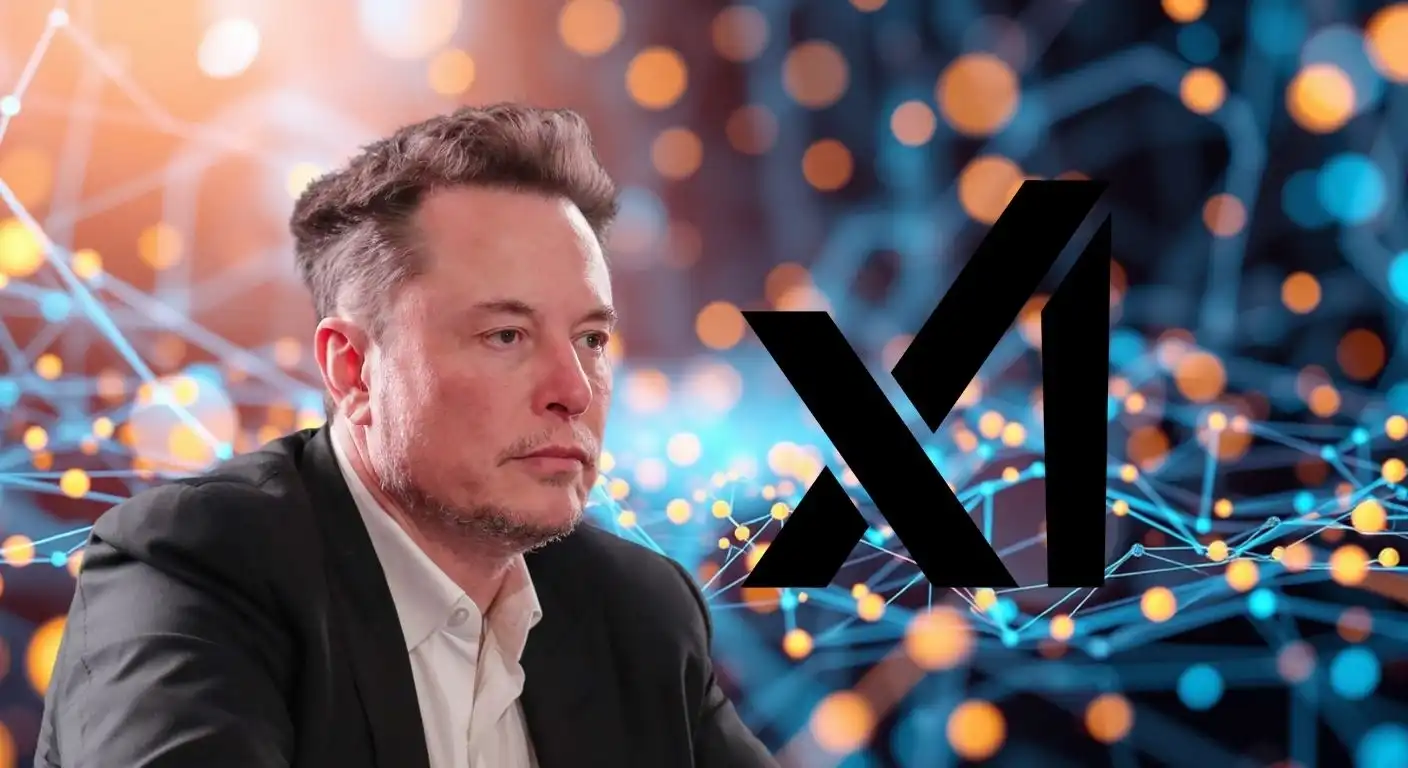
Elon Musk is presenting a bold commercial and technical pitch to global investors, top-tier software engineers, and artificial intelligence enterprise partners: xAI possesses the fastest infrastructure execution capability in human history, backed by a physical computing advantage that traditional Silicon Valley laboratories cannot match. At the center of Musk’s pitch is the xAI Colossus supercomputer facility in Memphis, Tennessee. Engineered and brought online in a staggering 122 days, Colossus has expanded from an initial array of 100,000 Nvidia H100 graphics processing units into a massive 200,000-GPU liquid-cooled supercluster, with active construction underway to scale the campus past 300,000 processors.
The sheer speed of xAI’s infrastructure deployment is disrupting traditional assumptions regarding artificial intelligence capital efficiency. While established technology hyperscalers routinely require 3 to 4 years to navigate utility grid interconnection queues, build data center shells, and commission high-density server halls, Musk’s team built, powered, and cooled a gigawatt-scale computing engine in less than 4 months. This rapid operational deployment allows xAI to pre-train its Grok foundation models on fresh hardware iterations while competing AI labs remain bottlenecked waiting for data center construction.
Global venture capital firms and sovereign wealth funds have responded to Musk’s pitch with massive financial backing. Following a landmark $6 billion Series B funding round that valued xAI at $24 billion, the artificial intelligence startup secured subsequent capital rounds that elevated its corporate valuation past $50 billion. Musk is using this capital war chest to secure vast reserves of next-generation Nvidia Blackwell GB200 chips, acquire long-haul optical fiber networks, and construct private off-grid electrical power generation facilities.
TechGolly provides an in-depth analysis of Elon Musk’s xAI pitch, evaluating the engineering physics of the Colossus supercluster, real-time data pipelines from the X platform, cross-corporate technology integrations with Tesla and SpaceX, venture capital valuation dynamics, and the broader competitive threat posed to OpenAI, Google, and Anthropic.
Unpacking the Colossus Supercluster and 122-Day Engineering Marvel
To evaluate why global investors are committing billions of dollars to xAI, technology analysts must examine the mechanical and electrical engineering feats accomplished at the Memphis Colossus facility. Constructing a high-density, liquid-cooled 100,000-GPU data center in 122 days required abandoning traditional industrial construction timelines in favor of high-frequency parallel engineering.
Under standard commercial construction practices, building a data center capable of supporting 100 megawatts of continuous electrical load involves multi-year architectural planning, municipal zoning approvals, public utility grid impact studies, and long-lead orders for high-voltage step-up transformers. Musk’s team bypassed public utility delays by deploying mobile natural gas turbine generators directly on-site, securing immediate high-voltage power while constructing dedicated electrical substations connected directly to high-capacity regional transmission lines.
Thermal management represents the primary mechanical hurdle when operating tens of thousands of graphics processors in a single building. High-density server cabinets housing Nvidia H100, H200, and Blackwell chips draw up to 100 kilowatts of electricity per individual rack, generating immense heat that traditional air conditioning units cannot dissipate.
To prevent thermal throttling and hardware failure, xAI engineered a 100% direct-to-chip liquid cooling architecture. Closed-loop cooling manifolds circulate chilled dielectric fluid directly across copper cold plates mounted on top of GPU and CPU dies. Direct liquid cooling removes heat up to 3,000 times more efficiently than air, reducing total facility power usage effectiveness (PUE) to an industry-leading 1.12 and allowing 200,000 GPUs to execute full-power mathematical calculations continuously without thermal shutdowns.
This massive raw compute density allows xAI to compress model training timelines dramatically. A frontier artificial intelligence training run that requires 6 months of compute time on a standard 20,000-GPU cloud cluster can execute in less than 3 weeks on the 200,000-GPU Colossus fabric, allowing xAI researchers to iterate neural network architectures, test novel reasoning algorithms, and release updated Grok models at three times the speed of traditional competitors.
The Real-Time Data Advantage: X Platform Integration
While raw GPU compute provides the muscle for artificial intelligence model training, high-quality data provides the essential fuel. A central pillar of Musk’s pitch to investors is xAI’s exclusive, direct access to the real-time data stream generated by the X platform, formerly known as Twitter.
With over 600 million active monthly users posting hundreds of millions of public messages, images, and video clips daily, X serves as a continuous, live digital mirror of global human conversation, breaking news, financial market shifts, and scientific debates. xAI feeds this unfiltered real-time data stream directly into the pre-training and fine-tuning pipelines of its Grok models.
This live data integration provides Grok with a profound operational advantage over competing foundation models. While traditional models like OpenAI’s GPT-4o or Google’s Gemini rely on static web scrapes that are months out of date, Grok can synthesize, analyze, and answer queries regarding breaking world news events, breaking financial earnings, or live sports results within seconds of their occurrence on the X network.
Furthermore, direct ownership of the data source provides total legal and operational protection against data scraping lawsuits. As major media publishers and content platforms file copyright infringement lawsuits against AI developers for unauthorized web scraping, xAI operates with guaranteed data sovereignty, utilizing its own first-party platform data to train frontier reasoning models without legal exposure.
Cross-Company Synergies: Tesla, SpaceX, and the Physical AI Loop
A key differentiator setting xAI apart from standalone software startups is its deep integration across Musk’s broader corporate ecosystem, spanning Tesla, SpaceX, Starlink, and Neuralink. Musk is building an integrated physical artificial intelligence loop, where digital models developed at xAI directly power autonomous electric vehicles, space exploration rockets, and bipedal humanoid robots.
Tesla represents the primary physical beneficiary of this corporate synergy. Training end-to-end neural networks for Tesla’s Full Self-Driving (FSD) software and its Optimus humanoid robot requires processing petabytes of real-world video telemetry collected from millions of customer vehicles. Tesla actively leverages xAI’s Colossus supercluster to supplement its internal Dojo supercomputers, accelerating the neural network training required for vision-only autonomous driving and complex robotic hand manipulation.
On the commercial software side, Tesla integrates Grok natively into its vehicle operating system, providing millions of electric vehicle owners with an intelligent, conversational in-cabin voice assistant capable of controlling vehicle functions, planning navigation routes, summarizing news, and executing complex natural language queries in real time.
In the aerospace sector, SpaceX and Starlink utilize Grok’s real-time reasoning capabilities to optimize autonomous satellite constellation routing, manage orbital debris collision avoidance algorithms, and analyze real-time rocket engine telemetry during launch and landing sequences.
This multi-company ecosystem creates a self-reinforcing flywheel: physical sensors on Tesla vehicles and SpaceX rockets gather real-world physics data, xAI’s Colossus supercluster processes the data to train advanced world models, and the updated intelligence is deployed back onto physical hardware operating across roads, factories, and near-Earth orbit.
The Pitch to AI Engineering Talent: Speed over Bureaucracy
Winning the global artificial intelligence race requires recruiting elite machine learning researchers, systems software engineers, and CUDA kernel optimization specialists. A central component of Musk’s pitch is targeting top technical talent frustrated by corporate red tape at legacy tech conglomerates.
Musk’s recruiting strategy focuses on two primary incentives: extreme operational velocity and direct access to massive computing resources. In job interviews with senior AI researchers, xAI offers candidates direct access to dedicated 10,000-GPU clusters for individual research projects, bypassing the internal approval committees and resource-allocation battles common at larger tech firms.
Furthermore, xAI operates with an agile, flat organizational hierarchy. Engineering teams write, test, and deploy production software code directly onto live server clusters within days, operating without multi-layered middle management or lengthy safety review freezes that delay product rollouts at competing laboratories.
To match Silicon Valley compensation packages, xAI offers lucrative equity grants tied directly to the company’s surging corporate valuation. Recruiting top researchers from OpenAI, Google DeepMind, and Meta allows xAI to build a high-density engineering culture focused entirely on mathematical optimization, low-level execution kernels, and frontier model reasoning.
Venture Capital Dynamics: $50 Billion Valuations and Capital War Chests
The financial market response to xAI’s infrastructure speed has enabled the startup to execute one of the most rapid capital accumulation campaigns in corporate history.
After securing $6 billion in its Series B funding round at a $24 billion post-money valuation, xAI initiated subsequent equity and debt offerings that pushed its market valuation past $50 billion. Major institutional investors—including Sequoia Capital, Andreessen Horowitz, Vy Capital, Valor Equity Partners, Fidelity Management, and prominent Middle Eastern sovereign wealth funds—have committed capital to ensure xAI maintains the financial capacity to compete against multi-trillion-dollar tech giants.
Financial analysts emphasize that xAI’s capital deployment strategy differs fundamentally from traditional software-as-a-service (SaaS) business models. Traditional SaaS companies allocate the majority of their capital toward sales teams, marketing campaigns, and administrative overhead. In contrast, xAI operates as a capital-intensive physical infrastructure enterprise, directing over 85% of raised capital directly into physical assets: Nvidia GPUs, high-speed optical networking hardware, real estate, and power substations.
Investing heavily in physical infrastructure builds a durable balance sheet moat. Even if short-term software API token prices experience market compression, physical assets like a 200,000-GPU supercomputing center connected to dedicated 100-megawatt power substations retain immense strategic and liquid commercial value in a world starved for computing capacity.
Navigating Environmental, Regulatory, and Power Grid Challenges
Executing rapid infrastructure expansion in Memphis, Tennessee, has required xAI to navigate significant local environmental, regulatory, and municipal community challenges.
Operating a 200,000-GPU data center requires immense physical resources, specifically electrical power and cooling water. Local environmental advocacy groups and community leaders in Memphis raised concerns regarding the high power draw placed on the local municipal grid, alongside the air quality impact of deploying mobile natural gas turbine generators to supply temporary off-grid electricity.
To resolve municipal concerns and ensure long-term community support, xAI implemented a multi-stage environmental mitigation strategy. The company partnered with the Tennessee Valley Authority and local utility providers to construct permanent, high-voltage electrical substations that feed the data center directly from the regional high-voltage grid, allowing xAI to phase out temporary gas generators.
Furthermore, xAI is investing in advanced greywater recycling systems and dry-cooling closed-loop heat exchangers, drastically reducing the facility’s reliance on municipal drinking water supplies for its cooling towers. Proactively resolving environmental bottlenecks ensures that the Memphis Colossus facility can expand toward its ultimate target of 300,000+ GPUs without facing court-ordered operational suspensions or local municipal moratoriums.
Strategic Outlook for Global Artificial Intelligence Competition
The rapid emergence of xAI as a top-tier supercomputing power alters the competitive balance of power across the global artificial intelligence landscape.
As the tech sector moves through the late 2020s, the frontier artificial intelligence market is consolidating around three primary hyper-capitalized ecosystems:
First, the Microsoft and OpenAI alliance, leveraging Azure cloud infrastructure and the multi-gigawatt Stargate supercomputer initiative.
Second, Alphabet’s vertically integrated Google DeepMind platform, powered by internal custom Trillium Tensor Processing Units and global fiber networks.
Third, Elon Musk’s xAI ecosystem, anchored by the Colossus supercluster, X’s real-time data stream, and direct physical integration across Tesla and SpaceX hardware platforms.
Musk’s strategic goal for upcoming Grok model releases—including Grok 3 and Grok 4—is achieving unambiguous victories across standardized scientific, mathematical, and coding benchmarks, specifically MMLU, GSM8K, and HumanEval. By combining 200,000 GPUs of pre-training compute with real-time reasoning algorithms and synthetic data generation, xAI aims to demonstrate that its open, high-speed engineering model can achieve artificial general intelligence ahead of legacy Silicon Valley competitors.
For the broader global economy, xAI’s aggressive expansion ensures that the artificial intelligence market will remain fiercely competitive, driving rapid reductions in API token costs, accelerating software automation velocity, and expanding the physical infrastructure building blocks of the 21st-century digital economy.
Key Takeaways for Tech Executives, Investors, and AI Researchers
The execution of Elon Musk’s xAI pitch and the rapid scaling of the Colossus supercluster deliver crucial strategic lessons for technology executives, software architects, venture capital partners, and institutional investors.
First, infrastructure deployment velocity is the primary competitive differentiator in artificial intelligence. Companies that can build, power, and cool liquid-cooled server clusters in months rather than years gain an insurmountable operational lead in model iteration and research testing.
Second, real-time proprietary data creates an irreplaceable software moat. Access to live, uninterrupted human conversation streams from platforms like X enables foundation models to deliver current-events reasoning and contextual awareness that static web scrapes cannot duplicate.
Third, physical cross-company hardware synergy multiplies software value. Integrating artificial intelligence models across autonomous electric vehicles, space satellites, and humanoid factory robotics transforms digital software into actionable physical capability, opening multi-trillion-dollar commercial markets.
Finally, capital allocation must prioritize raw physical assets. By directing capital directly into GPUs, direct-to-chip liquid cooling systems, and dedicated power infrastructure, technology enterprises build resilient physical foundations capable of powering the future of global digital intelligence.






