

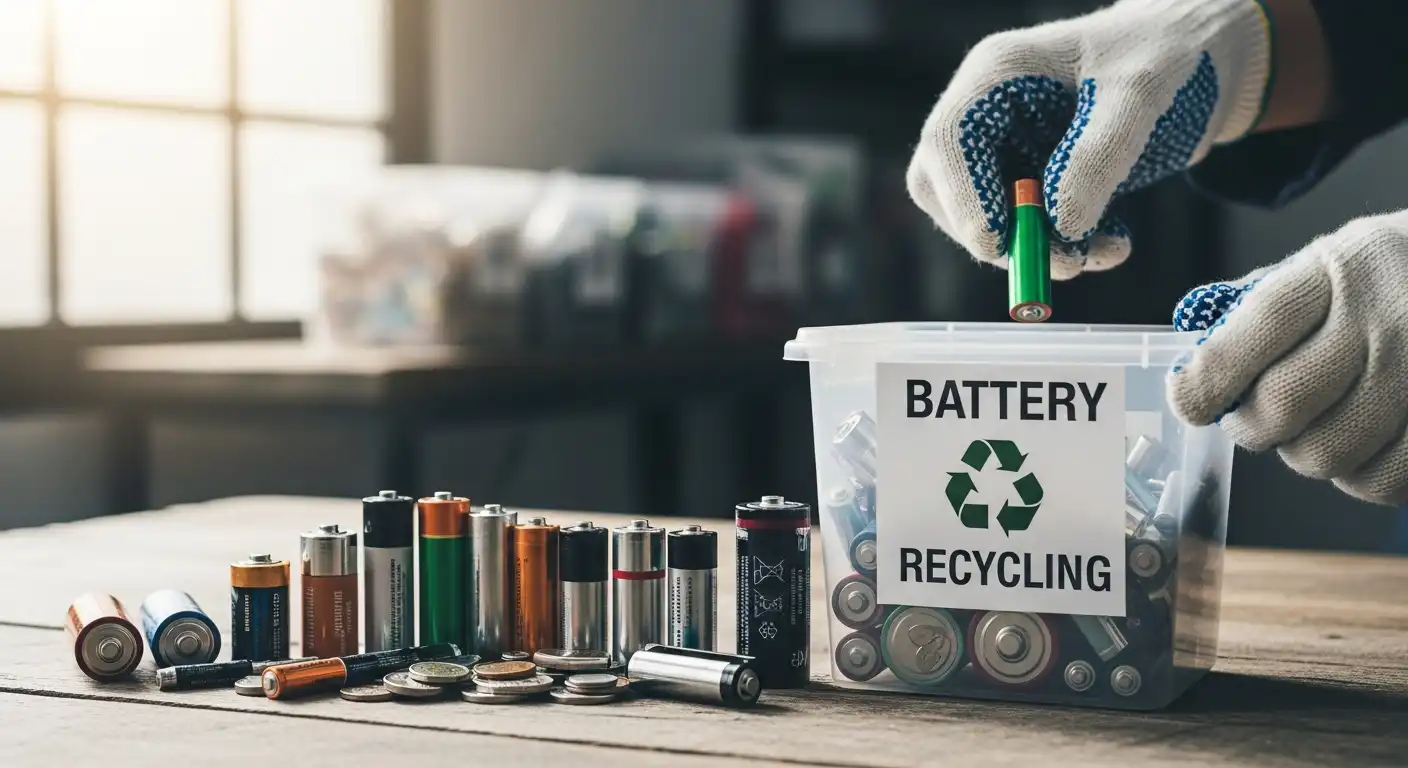
India’s ambitious campaign to build a self-sustaining circular economy for electric vehicle batteries is confronting severe operational roadblocks. While rapid consumer adoption of electric two-wheelers, three-wheelers, and passenger electric vehicles has pushed annual domestic electric vehicle sales past 1.5 million units, the country’s battery recycling infrastructure is struggling to keep pace. Formal recycling enterprises are hitting critical bottlenecks, including high hazardous material freight costs, tax distortions, expensive chemical refining infrastructure, and intense competition from an entrenched informal scrap market.
The strategic stakes surrounding battery recycling in India are immense. India possesses virtually zero domestic reserves of critical battery minerals such as lithium, cobalt, and nickel, leaving its expanding clean energy manufacturing sector 100% dependent on imported raw materials and foreign refining networks. Establishing a robust domestic recycling industry offers India a direct pathway to extract battery-grade metals from spent energy storage packs, securing raw materials internally to feed upcoming battery cell gigafactories. Market research forecasts indicate that India’s lithium-ion battery recycling sector could expand into a $3.2 billion market by 2030, processing over 150,000 tonnes of spent batteries annually.
Recognizing the strategic importance of resource recovery, the Indian government enacted strict regulations, including the Battery Waste Management Rules, which enforce mandatory Extended Producer Responsibility targets on battery manufacturers and electric vehicle makers. These statutory guidelines require companies to collect and recycle up to 90% of their spent lithium-ion batteries by 2030. However, converting government mandates into physical commercial reality requires overcoming deep structural hurdles across national supply chains and logistics networks.
TechGolly provides an in-depth operational analysis of India’s battery recycling landscape, evaluating informal scrap market dynamics, hazardous goods transport laws, tax structures, black mass refining economics, gigafactory supply chain integrations, and long-term critical mineral policy strategies.
Unpacking the Informal Sector Challenge and Collection Leakage
The primary structural obstacle facing formal, licensed battery recycling corporations in India is securing a continuous, reliable supply of spent lithium-ion battery packs. In developed Western markets, formal collection networks route end-of-life batteries directly from automotive dealerships and municipal recycling centers to certified processing plants. In India, an estimated 75% to 80% of spent batteries—particularly from electric two-wheelers and commercial auto-rickshaws—leak directly into the unorganized, informal scrap sector.
India’s informal scrap network, operated by thousands of independent scrap traders known locally as kabadis, maintains a formidable competitive advantage over formal corporate recyclers. Informal scrap collectors operate with minimal overhead expenses, avoiding regulatory compliance costs, environmental safety investments, specialized employee training, and tax collection. Consequently, informal traders offer individual consumers and commercial fleet operators immediate cash payments for spent battery packs, outbidding formal recyclers who must process transactions through formal banking channels and invoice tracking systems.
Once spent batteries enter the informal sector, material recovery practices create severe environmental and safety hazards. Unregulated scrap shops manually dismantle battery packs using basic hand tools, frequently puncturing lithium-ion cells and triggering thermal runaways, dangerous fires, and toxic gas emissions. Informal operators often process battery components through crude open-air acid baths to extract high-value metals like copper and aluminum, while discarding toxic lithium salts, heavy metals, and plastic casings directly into municipal storm drains and open soil.
These unorganized processing methods recover only a fraction of the valuable battery minerals while destroying high-purity cathode materials that could otherwise be re-refined into new battery cell inputs. For formal, capital-intensive recycling facilities that require tens of thousands of tonnes of annual battery feedstock to operate at break-even capacity, collection leakage into the informal sector creates chronic capacity underutilization, threatening business solvency.
Extended Producer Responsibility and Regulatory Compliance Gaps
To curb informal leakage and compel corporate accountability, India’s Ministry of Environment, Forest and Climate Change introduced the Battery Waste Management Rules, establishing a centralized digital Extended Producer Responsibility portal. Under the statutory system, electric vehicle manufacturers and battery importers must register their annual sales volumes and fulfill mandatory recycling quotas by purchasing digital EPR certificates generated by accredited formal recyclers.
While the Extended Producer Responsibility framework establishes a sound legal structure, enforcement gaps persist across regional prefectures. Small-scale electric vehicle assemblers and battery pack importers occasionally operate through grey-market channels, failing to register sales on the central portal or purchasing fraudulent paper certificates to meet compliance targets without physically delivering spent batteries to certified processing facilities.
Environmental regulatory bodies are deploying automated tracking systems and physical site audits to verify that digital EPR certificates correspond directly to physical battery tonnage processed through accredited mechanical shredding and chemical leaching facilities. Strengthening regulatory enforcement is essential to ensure that spent batteries are diverted away from informal scrap yards and directed into high-recovery, environmentally compliant industrial facilities.
The Logistics Bottleneck: Dangerous Goods Transport and Regional Fragmentation
Even when formal recyclers successfully secure spent battery inventory, moving heavy, volatile lithium-ion battery packs across India’s vast geography introduces severe logistics friction and high transportation expenses.
Under national transport safety regulations and international maritime guidelines, lithium-ion batteries are classified as Class 9 Dangerous Goods due to their inherent risk of thermal runaway, electrical short-circuiting, and intense chemical fires. Transporting Class 9 hazardous materials requires specialized logistics infrastructure, including temperature-controlled freight trucks, fire-suppression storage containers, specialized insulation packaging, and certified transport personnel trained in hazardous spill management.
Operating certified hazardous material logistics fleets across India’s transport corridors carries high operational expenses. Freight analysis reveals that specialized transport, hazardous material permits, and protective packaging consume between 25% and 30% of a formal recycler’s total operational budget per tonne of collected batteries. In many cases, the physical expense of shipping spent batteries from remote tier-two or tier-three cities to a central processing facility exceeds the commercial value of the raw materials contained within the battery cells.
Geographic fragmentation further complicates reverse logistics. While major automotive manufacturing plants and battery assembly facilities are concentrated in industrial clusters across states like Tamil Nadu, Maharashtra, Gujarat, and Haryana, spent batteries are distributed across hundreds of millions of individual consumers spanning urban centers and rural agricultural districts nationwide.
Building regional consolidation centers where spent batteries can be collected, safely discharged, tested for health status, and bulk-packaged before long-haul transport represents an urgent physical infrastructure requirement. Without localized consolidation hubs, high freight costs will continue to restrict the economic viability of centralized battery recycling plants.
Tax Disparities and GST Friction in Scrap Procurement
A secondary financial friction burdening formal battery recyclers in India stems from distortions within the national Goods and Services Tax (GST) structure.
When a formal, tax-compliant recycling corporation purchases spent batteries or scrap metal from commercial sellers, the transaction is subject to an 18% Goods and Services Tax. However, because informal scrap traders operate entirely outside the formal banking system and do not register for GST identification numbers, they evade the 18% tax levy completely.
This tax disparity creates an immediate 18% cost disadvantage for formal recyclers when competing against informal buyers for raw battery inventory. A formal recycler attempting to purchase spent battery modules must pay the 18% GST upfront, which ties up substantial working capital while awaiting tax credit reconciliations from government tax authorities.
Industry trade associations are actively lobbying the Ministry of Finance to rationalize the tax framework by implementing a reverse-charge mechanism or reducing the GST rate on hazardous battery scrap to 5%. Aligning tax rates across the battery lifecycle would eliminate the competitive advantage enjoyed by informal tax-evading traders, leveling the playing field for compliant industrial recyclers.
Black Mass Economics and Hydrometallurgical Refining Costs
To evaluate the long-term financial viability of India’s battery recycling industry, analysts must examine the technical workflow that converts spent battery modules into high-purity chemical inputs. The industrial recycling process unfolds across two distinct technological phases: mechanical processing and hydrometallurgical refining.
In the first phase, spent battery packs undergo automated electrical discharging, structural disassembly, and mechanical crushing inside sealed, inert gas environments to prevent fire risks. Mechanical shredding and air-classification separate outer aluminum casings, copper current collectors, and plastic separators from active electrode materials. This physical separation yields a fine, dark powder known in the trade as “black mass,” which contains concentrated amounts of lithium, nickel, cobalt, manganese, and graphite.
Producing black mass requires relatively modest capital investment, and numerous Indian recycling startups—including Attero Recycling, Lohum Cleantech, Batx Energies, Lico Materials, and Rubamin—have constructed mechanical shredding plants capable of processing thousands of tonnes of batteries annually.
However, mechanical processing into black mass captures only a fraction of the total commercial value embedded within battery scrap. The true economic and strategic value resides in the second phase: hydrometallurgical chemical refining. Hydrometallurgy involves dissolving black mass in specialized acid solutions, executing multi-stage solvent extraction, and selectively precipitating individual, ultra-high-purity metal salts such as lithium carbonate, nickel sulfate, and cobalt sulfate.
Building advanced hydrometallurgical refining facilities requires immense capital outlays, often ranging between $50 million and $100 million per plant, alongside advanced chemical engineering expertise to manage hazardous chemical waste streams and achieve 98%+ chemical purity levels. Because India currently possesses limited commercial-scale hydrometallurgical refining capacity, many domestic recyclers are forced to export their raw black mass to specialized refining facilities in Europe, South Korea, and Southeast Asia.
Exporting unrefined black mass deprives India of high-value chemical processing margins and exports the very critical minerals that national policy aims to retain domestically. Constructing domestic, high-capacity hydrometallurgical refineries represents the essential missing link required to complete India’s internal battery supply chain.
Supply Chain Synergy with Domestic Battery Gigafactories
The long-term commercial opportunity for Indian battery recyclers is deeply connected to the rapid development of domestic battery cell manufacturing. Under the government’s Production Linked Incentive (PLI) scheme for Advanced Chemistry Cell (ACC) battery manufacturing, the Indian government allocated $2.1 billion in state incentives to establish 50 gigawatt-hours of domestic cell manufacturing capacity.
Industrial conglomerates—including Reliance New Energy, Ola Electric, Exide Energy, and Tata Aatli—are constructing massive battery cell gigafactories across India. These manufacturing facilities will require tens of thousands of tonnes of high-purity cathode precursor materials annually to produce lithium-ion cells for electric vehicles and stationary grid storage projects.
Establishing direct off-take agreements between domestic battery recyclers and domestic cell gigafactories creates a highly efficient, closed-loop manufacturing ecosystem. Recycled battery-grade chemicals produced at domestic hydrometallurgical refineries can be delivered directly to adjacent gigafactory plants, eliminating international shipping expenses and reducing the carbon footprint of domestic battery cell production by up to 40%.
Furthermore, utilizing domestically recycled battery materials helps local cell manufacturers satisfy strict domestic value-addition requirements mandated under the government’s PLI incentive framework, ensuring that cell makers qualify for maximum state financial subsidies while building resilience against global supply chain shocks.
Strategic Outlook for India’s Clean Energy Mineral Security
As India’s electric mobility revolution accelerates through the second half of the decade, establishing a mature, high-capacity battery recycling ecosystem will evolve from an environmental compliance objective into a foundational pillar of national economic security.
The long-term transformation of India’s battery recycling industry requires coordinated action across three key operational fronts:
First, formalizing and integrating the informal collection sector. Rather than attempting to eliminate informal scrap networks through punitive enforcement alone, government agencies and formal recycling corporations should establish cooperative collection frameworks. Training informal scrap collectors to act as licensed, safety-compliant aggregation agents allows formal recyclers to leverage established local collection routes while guaranteeing safe, compliant downstream processing.
Second, standardizing battery pack designs and deploying digital battery passports. Requiring battery manufacturers to adopt modular, easy-to-dismantle battery casing standards and embedding QR-code digital battery passports allows recyclers to instantly identify battery chemistry, state of health, and cell origin, streamlining automated disassembly and sorting processes.
Third, constructing shared regional recycling infrastructure parks. Developing government-backed clean technology parks equipped with high-voltage electrical grid connections, centralized industrial wastewater treatment facilities, and direct rail access will lower capital expenditure barriers for private recyclers building advanced hydrometallurgical refining units.
By resolving reverse-logistics bottlenecks, modernizing tax policies, and scaling domestic refining technology, India can successfully build a closed-loop battery economy that converts dangerous electronic waste into strategic mineral wealth, securing its clean energy future for decades to come.
Key Takeaways for Clean Tech Executives, Automakers, and Investors
The evolution of India’s battery recycling industry delivers critical strategic insights for corporate decision-makers, automotive executives, logistics operators, and international clean technology investors.
First, reverse-logistics optimization is the primary determinant of recycling profitability. Companies building battery recycling enterprises must prioritize establishing low-cost collection networks and regional consolidation hubs to minimize hazardous material transport expenses.
Second, vertical integration across mechanical shredding and chemical refining is necessary to capture maximum commercial value. Recyclers that invest in advanced hydrometallurgical refining capacity to produce high-purity battery-grade chemical salts will capture superior operating margins compared to facilities that export raw black mass.
Third, automakers and battery cell manufacturers must establish strategic recycling partnerships early. Securing long-term off-take agreements with formal recyclers ensures compliance with statutory Extended Producer Responsibility targets while guaranteeing access to high-purity domestic raw materials for future cell production.
Finally, critical mineral recovery represents a high-conviction global growth sector. Organizations that successfully navigate regulatory frameworks, formalize collection supply chains, and deploy advanced clean processing technologies will capture multi-billion-dollar commercial opportunities while building the physical foundation for a sustainable, electrified global economy.






