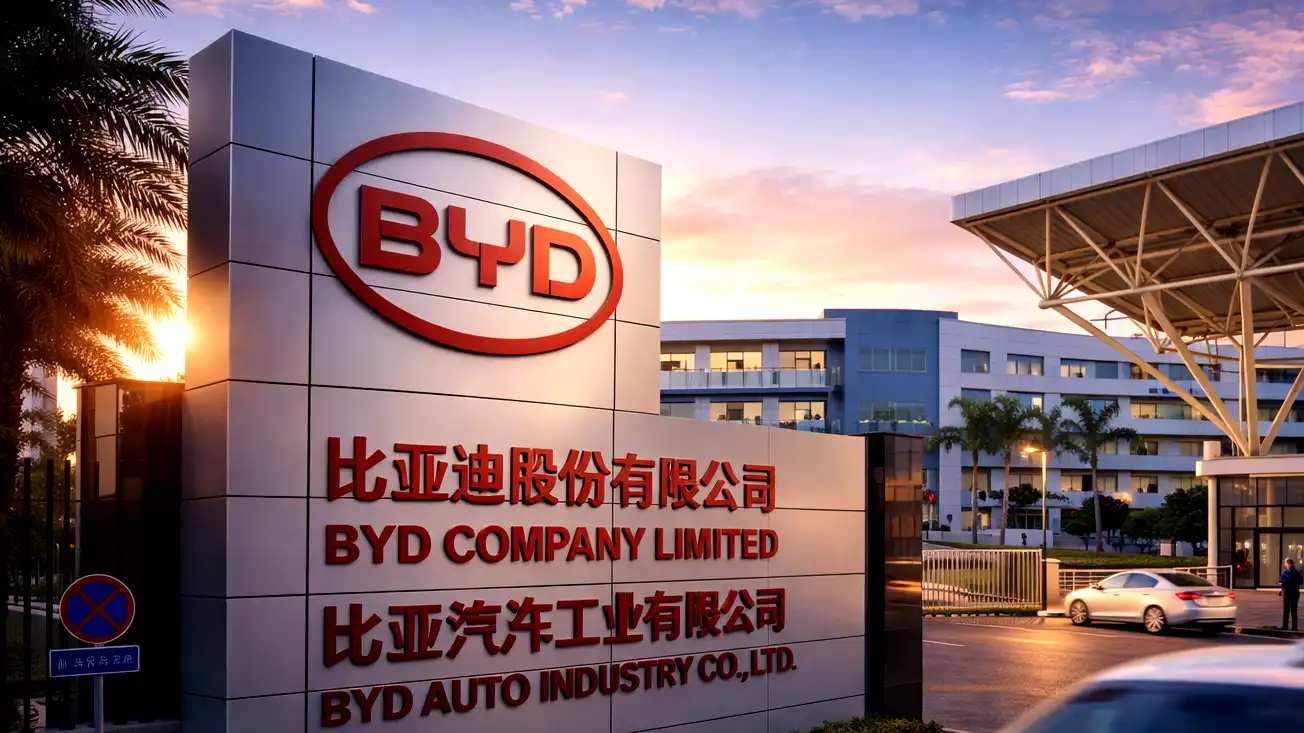
The landscape of the global automotive industry is undergoing a profound and unprecedented transformation, shifting away from a century of internal combustion engine dominance toward a clean, electrified future. At the absolute vanguard of this industrial revolution stands BYD Auto Co., Ltd., a company that has evolved from a small, underfunded battery manufacturer in Shenzhen into the world’s largest producer of electrified vehicles. By masterfully executing a strategy of complete vertical integration, continuous chemical innovation, and rapid manufacturing scale, BYD has challenged the established automotive order in a manner once thought impossible.
However, understanding the rise of BYD requires looking past traditional automotive metrics. It is a story of a material scientist’s unwavering belief in the potential of lithium iron phosphate chemistry, a relentless commitment to vertical self-reliance, and a multi-phase corporate strategy that spans energy generation, storage, and mobility. From its humble beginnings in 1995 and its highly controversial acquisition of an automaker in 2003 to its development of the revolutionary Blade Battery, the launch of the hyper-efficient DM-i hybrid systems, and its historic milestone of producing 17 million new energy vehicles in mid-2026, BYD has reshaped the parameters of global transport.
This is the definitive, comprehensive story of BYD Auto, tracing its technological milestones, global factory scaling, and strategic vision for a green, intelligent future.
| Founded | 2003 |
| Founder | Wang Chuanfu |
| Headquarters | Xi’an, Shaanxi, China Area served Worldwide |
| Type | Subsidiary [Parent – BYD Company] |
| Industry | Electric automotive |
| Products | Automobiles, Buses, Electric bicycle, Truck, Forklift, Rechargeable batteries |
| Subsidiaries | Denza Shenzhen BYD Auto Co. Ltd. Changsha BYD Auto Co. Ltd. Shaoguan BYD Auto Co. Ltd. BYD Auto Sales Co., Ltd. BYD. Mitsubishi Motors Co.Ltd (Wesing Motors) |
| Website | www.bydauto.com.cn |
The Foundations of BYD and Wang Chuanfu (1995–2003)
To trace the lineage of BYD, one must examine the mid-1990s, an era when China was beginning its historic transformation into a global manufacturing hub. The company was founded in February 1995 in Shenzhen, Guangdong Province, by a young, brilliant material scientist and researcher named Wang Chuanfu. Wang, who had previously worked as a government-sponsored metallurgy researcher, recognized that the exploding global market for portable consumer electronics—such as mobile phones, laptops, and cordless tools—would trigger an insatiable demand for rechargeable batteries.
With a modest loan from his cousin and a team of just twenty employees, Wang established BYD, an acronym for “Build Your Dreams.” In its early years, BYD was not a high-tech automation company. It lacked the capital to purchase the multi-million-dollar, fully automated battery manufacturing lines utilized by Japanese industry giants like Sony and Sanyo. Rather than letting this technological gap limit his business, Wang applied first-principles engineering to reconstruct the battery assembly process, substituting expensive automated machinery with highly organized, labor-intensive manual assembly lines.
This “reverse-engineering of the factory floor” was a masterstroke of operational efficiency. By breaking down complex manufacturing steps into simple, manual tasks performed by highly trained workers on manual conveyor systems, BYD was able to match the quality and precision of Japanese manufacturers at a fraction of the capital expenditure.
The company’s early business model was designed to aggressively capture market share in the global consumer electronics supply chain.
This highly efficient manufacturing setup allowed the young startup to rapidly secure major contracts with the world’s leading technology brands.
- Low-Cost Rechargeable Nickel-Cadmium Batteries: BYD undercut established Japanese suppliers on price while maintaining strict quality metrics, capturing a significant share of the global market.
- Lithium-Ion and Nickel-Metal Hydride Scaling: The company quickly expanded its research and production to include more advanced battery chemistries, supplying giants like Motorola, Nokia, and Ericsson.
- Vertical Integration of Component Production: BYD manufactured its own battery casings, chemical blends, and packaging materials to eliminate supplier markups and control quality.
- Rapid Prototype Iteration: The labor-intensive manufacturing model allowed BYD to reconfigure its production lines within days to meet the customized needs of clients.
By 2002, just seven years after its founding, BYD had become the world’s largest manufacturer of rechargeable nickel-cadmium batteries and one of the top suppliers of lithium-ion batteries globally. The company completed a highly successful Initial Public Offering (IPO) on the Hong Kong Stock Exchange in July 2002, providing Wang Chuanfu with a massive war chest of capital. However, rather than resting on his consumer electronics laurels, Wang was already looking toward his next, far more ambitious dream: the electrification of global transportation.
The Controversial Pivot to Automotive (2003–2008)
In January 2003, Wang Chuanfu made a strategic decision that stunned the international financial community. He announced that BYD had acquired a 77% controlling interest in the Xi’an Qinchuan Automobile Co., Ltd., a small, struggling, state-affiliated automaker based in Shaanxi Province. The announcement was met with immediate, overwhelming backlash from institutional investors and Wall Street analysts. Many viewed the purchase as a reckless, highly speculative move that would drain the company’s profitable battery margins into a capital-intensive, low-margin automotive business in which BYD had zero experience.
The company’s stock plummeted by over 20% on the Hong Kong Stock Exchange within days of the announcement. Critics publicly mocked Wang’s vision, arguing that a battery company could not possibly compete with established global automotive giants like General Motors, Toyota, and Volkswagen. But Wang was undeterred. He understood that the future of electric vehicles was fundamentally a battery challenge. By acquiring a car manufacturing license through Qinchuan, BYD secured the physical platform it needed to begin testing and integrating its battery technologies directly into passenger vehicles.
The company’s first major automotive milestone was the launch of the BYD F3 sedan in 2005. The F3 was a compact, highly affordable gasoline-powered passenger car that bore a striking physical resemblance to the ninth-generation Toyota Corolla. While critics dismissed the F3 as a derivative clone, it was a massive commercial success in China’s rapidly growing domestic market. The F3 offered middle-class Chinese consumers a highly reliable, spacious, and modern sedan at a fraction of the cost of its joint-venture competitors, generating the massive, consistent cash flows BYD needed to fund its secret electric vehicle development program.
In December 2008, BYD achieved a major technological milestone by launching the F3DM (Dual Mode), the world’s first mass-production plug-in hybrid electric vehicle (PHEV). The F3DM utilized a pioneering, first-generation dual-mode hybrid system that allowed the vehicle to operate on pure electric power for short commutes and switch to a highly efficient gasoline engine generator for longer journeys. The F3DM was years ahead of its time, demonstrating to the global automotive industry that a Chinese battery company could lead the transition to electrified transportation.
This technological focus caught the attention of legendary investor Warren Buffett. In September 2008, Berkshire Hathaway, acting on the enthusiastic recommendation of Charlie Munger, invested $230 million to acquire a 10% equity stake in BYD Company through its MidAmerican Energy subsidiary. Munger famously described Wang Chuanfu as a combination of Thomas Edison and Jack Welch, praising his deep engineering intelligence and relentless operational drive. This massive validation from Berkshire Hathaway gave BYD immediate global credibility, paving the way for its next phase of rapid expansion.
The Multi-Pillar Strategy and NEV Leadership (2008–2020)
Armed with Warren Buffett’s backing, Wang Chuanfu formulated a comprehensive, long-term corporate strategy centered around the “Three Green Dreams.” This holistic vision went far beyond passenger cars, aiming to address the entire ecosystem of sustainable energy. The first dream was solar power generation, constructing cheap, highly efficient photovoltaic systems. The second dream was energy storage, building massive utility-scale battery banks to stabilize power grids. The third dream was electric transportation, deploying electrified vehicles across every sector of public and private transit.
To realize the third dream, BYD developed its highly ambitious “7+4” Full Market EV Strategy. The strategy was designed to systematically electrify every segment of land transportation, ensuring that BYD’s technologies would become ubiquitous in daily life.
The company divided the transportation sector into seven conventional transit areas and four specialized, industrial fields.
This structured approach allowed BYD to build highly specialized drivetrains and battery packs tailored to the unique demands of each segment.
- Seven Conventional Transit Segments: Passenger cars, urban transit buses, dual-mode plug-in taxis, highway coaches, logistics delivery trucks, construction vehicles, and waste management trucks.
- Four Specialized Industrial Fields: Warehouse forklifts, airport ground support vehicles, mining equipment, and port terminal tractors.
- Global Electric Bus Dominance: BYD pioneered the pure electric bus market with its K9 transit bus and K11 articulated bus, deploying thousands of zero-emission transit fleets globally.
- The SkyRail Monorail Initiative: The company expanded into rail transit, developing elevated, fully autonomous monorail systems to solve urban congestion in high-density cities.
This multi-pillar strategy allowed BYD to build immense operational scale and technical expertise. While other automakers were hesitant to commit resources to commercial electric vehicles, BYD’s electric buses were quietly conquering global cities. By deploying fleets in London, Los Angeles, Tokyo, and Bogota, BYD established a massive, real-world data collection network, continuously testing and refining its battery management systems under the most demanding driving cycles.
In the passenger car segment, BYD launched its highly successful “Dynasty Series,” naming its flagship models after major dynasties in Chinese history, such as the Qin, Tang, Song, Yuan, and Han. To shed the company’s early reputation for uninspired vehicle designs, Wang Chuanfu made a landmark hire in 2016, recruiting the celebrated German designer Wolfgang Egger—the former design director for Audi and Alfa Romeo—as BYD’s Chief Design Director.
Egger completely revolutionized BYD’s styling language, introducing the highly distinctive “Dragon Face” design philosophy. The Dragon Face aesthetic, which featured a bold, sweeping grille, slender LED headlights resembling dragon whiskers, and a muscular, dynamic silhouette, perfectly blended traditional Chinese cultural elements with modern European premium design. This design renaissance, paired with rapidly improving battery performance, propelled BYD’s Dynasty series to the top of China’s rapidly growing New Energy Vehicle (NEV) market, a category that encompasses both battery electric vehicles (BEVs) and plug-in hybrids (PHEVs).
The Blade Battery and the e-Platform Revolution
Despite its steady market growth, BYD’s automotive business faced a critical chemical and packaging bottleneck in the late 2010s. The global EV industry was increasingly turning toward Ternary Lithium batteries (Nickel-Manganese-Cobalt, or NMC) because they offered higher energy density than traditional Lithium Iron Phosphate (LFP) chemistries, allowing for longer driving range. However, NMC chemistry was fundamentally less stable, carrying a higher risk of thermal runaway and catastrophic battery fires if punctured or damaged.
Wang Chuanfu refused to compromise on battery safety. He remained a staunch advocate for LFP chemistry, which was intrinsically safer, cheaper, and more durable than NMC, but struggled with lower energy density. In March 2020, BYD announced a massive technological breakthrough that solved this energy density challenge without sacrificing safety: the Blade Battery.
The Blade Battery was a masterclass in structural optimization. Rather than placing battery cells into small modules, and then placing those modules into a heavy battery pack (a process that wasted up to 60% of the pack’s internal volume on non-active structural materials), BYD redesigned the physical cells themselves. The cells were elongated, flat, and thin, resembling long metallic blades. These blades were arranged in a singular, dense array that was inserted directly into the battery pack, with the cells themselves functioning as structural elements to support the vehicle’s chassis.
This modular packaging design yielded an extraordinary increase in space utilization, allowing BYD to pack more active materials into the same physical footprint.
The resulting battery pack achieved a level of energy density that allowed LFP-powered vehicles to match the driving range of NMC competitors.
- The Nail Penetration Test: The Blade Battery proved its absolute thermal stability, emitting neither smoke nor fire when punctured by a steel nail, while NMC batteries exploded.
- Structural Compressive Strength: The packed blade array exhibited immense structural rigidity, resisting a crushing force of 445 kN without structural deformation or cell leakage.
- Extended Service Lifespan: The chemistry delivered an ultra-long service life, capable of completing thousands of charge-discharge cycles with minimal capacity degradation.
- Ultra-High Thermal Range: The pack demonstrated excellent cold-weather performance and high-temperature thermal management, maintaining stable output under extreme ambient conditions.
This battery breakthrough was paired with the development of the e-Platform 3.0, a state-of-the-art, 800V-capable pure electric vehicle architecture. The e-Platform 3.0 integrated several pioneering technologies, including the world’s first mass-produced 8-in-1 electric powertrain (which combined the electric motor, inverter, transmission, DC-DC converter, onboard charger, battery manager, and vehicle controller into a single, ultra-compact unit).
The platform also introduced Cell-to-Body (CTB) technology. Similar to structural battery packs, CTB integrated the Blade Battery directly into the vehicle’s underbody frame, with the battery pack cover functioning as the physical floor of the passenger cabin. This resulted in an extraordinary increase in torsional rigidity, lowered the vehicle’s center of gravity, and maximized cabin space, establishing a new world-class benchmark for electric vehicle chassis design.
Dual-Mode Hybrids: Deconstructing DM-i and DM-p
While BYD’s pure electric BEV portfolio was scaling rapidly, the company was simultaneously perfecting a parallel technological weapon that would completely decimate the market for traditional gasoline passenger cars: its Dual Mode (DM) plug-in hybrid technology. First introduced in 2008, the DM platform underwent a massive strategic split in its fourth generation, creating two distinct hybrid strategies: DM-i (efficiency-oriented) and DM-p (performance-oriented).
The DM-i (Dual Mode Intelligent) system was designed with a simple, disruptive goal: to make plug-in hybrid cars cheaper to buy, more efficient to run, and better to drive than equivalent internal combustion engine vehicles. In a DM-i hybrid, the vehicle behaves primarily like an electric car. The wheels are driven almost exclusively by a high-torque electric motor, while a highly efficient, naturally aspirated Atkinson-cycle gasoline engine acts as an on-board generator, producing electricity to feed the battery or drive the motor.
The gasoline engine only connects directly to the wheels via a single-speed clutch during high-speed highway cruising, where an internal combustion engine operates at its peak thermodynamic efficiency.
This electric-first hybrid architecture was a massive commercial success, offering consumers an incredibly smooth, quiet, and fast driving experience.
By eliminating complex, heavy multi-speed transmissions, BYD cut the manufacturing cost of its hybrids, allowing them to compete directly on price with traditional gasoline cars.
- Ultra-Low Fuel Consumption: The system delivered a fuel consumption rate as low as 3.8 liters per 100 kilometers under engine-only operation.
- Exceptional Combined Range: Early DM-i models easily surpassed 1,000 kilometers of combined range, completely eliminating the range anxiety associated with pure electric vehicles.
- The DM-i 5.0 Generation: Introduced in mid-2024, this fifth-generation hybrid system achieved an industry-leading thermal efficiency of 46.06%, delivering a combined driving range of over 2,100 kilometers.
- High-Power Charging Integration: Unlike many conventional hybrids, BYD’s DM-i systems supported fast DC charging, allowing users to rapidly top up their hybrid battery at public charging stations.
While DM-i was optimized for efficiency, the DM-p (Dual Mode Powerful) system was engineered for raw performance. Utilizing a dual-motor, all-wheel-drive configuration paired with a high-power turbocharged engine, DM-p vehicles delivered sportscar-like acceleration and advanced torque vectoring, proving that hybrid technology could be both frugal and thrilling.
These dual-mode hybrid platforms allowed BYD to capture a massive market segment of consumers who were not yet ready to transition to a pure electric BEV. By offering a product that solved the range and price bottlenecks of electrification, BYD’s hybrid sales exploded, propelling the company to absolute leadership in the global plug-in hybrid market.
The Modern Brand Portfolio: From Mass-Market to Ultra-Luxury
By the mid-2020s, BYD Auto had constructed a highly diverse, sophisticated multi-brand portfolio designed to capture consumers across every segment of the global automotive market. The company structured its brands logically, separating its high-volume mass-market offerings from its premium and ultra-luxury technology showcases.
At the base of the portfolio is the core BYD Main Brand, which is divided into two distinct, highly successful product lines: the Dynasty Series and the Ocean Series. The Dynasty Series, as discussed, utilizes classical Chinese aesthetics and names, focusing on premium, highly respectable sedans and SUVs like the Han, Tang, and Song. The Ocean Series, by contrast, targets a younger, more tech-savvy demographic, utilizing a fresh “Ocean Aesthetics” design language and marine-themed names, such as the Dolphin, Seal, Seagull, and Sealion.
Above the main brand, BYD operates three specialized premium and luxury divisions that showcase the company’s most advanced engineering and software capabilities.
This multi-tiered brand architecture allows the parent company to capture diverse customer segments and maximize its margins.
Each specialized division functions as an independent business unit, leveraging the group’s centralized battery and motor technologies.
- Denza: Originally established as a premium joint venture with Mercedes-Benz, Denza is now fully owned by BYD, offering high-tech MPVs and luxury crossovers like the D9 and the Z9GT.
- Fangchengbao: A specialized, lifestyle-oriented off-road brand focused on rugged SUVs and adventure vehicles, highlighted by the hybrid Bao 5 and Bao 8.
- Yangwang: An ultra-luxury division featuring state-of-the-art technologies that directly challenge European exotic and ultra-premium brands.
- Commercial Vehicle Division: Delivering custom electric buses, delivery vans, and heavy-duty logistics trucks to global corporate and municipal clients.
The absolute pinnacle of BYD’s technological capability is showcased through the Yangwang brand, most notably with the Yangwang U8 off-road SUV and the Yangwang U9 electric supercar. The U8 is a massive, high-tech off-road vehicle equipped with four independent electric motors (one at each wheel), a system BYD calls the e4 platform.
This four-motor system allows for an extraordinary level of vehicle control.
The Yangwang U8 can rotate 360 degrees on the spot (tank turn), drive safely with a completely blown tire at high speeds, and even float on water.
In emergency aquatic situations, the vehicle utilizes its independent wheel motors to navigate and steer back to safety, showcasing its absolute environmental resilience.
- Independent Four-Wheel Torque Vectoring: The e4 system adjusts torque to each individual wheel millisecond-by-millisecond to prevent skidding and rollover.
- Emergency Floating and Propulsion: The vehicle’s cabin is hermetically sealed, allowing it to function as an amphibious transport for short durations.
- DiSus Active Suspension System: An advanced suspension architecture that allows the vehicle to drive smoothly on three wheels, hop off the ground, and maintain flat cornering.
- Yangwang U9 Performance: A pure electric supercar that utilizes the same e4 and DiSus platforms to deliver sub-two-second 0-100 km/h acceleration.
Through these premium and luxury divisions, BYD has successfully shifted its brand image away from its early, low-cost origins, establishing itself as a global leader in high-end automotive technology.
At the Pinnacle of Global Scale: The 17 Million NEV Milestone (2025–2026)
By mid-2026, BYD has achieved a scale of manufacturing that has fundamentally reshaped the global automotive landscape. The company’s production trajectory has been a story of dizzying, exponential acceleration. It took BYD thirteen years to produce its first million new energy vehicles, a milestone reached in May 2021. Yet, just five years later, the company has scaled its output to levels never before seen in the history of clean transportation.
On July 8, 2026, BYD officially announced that its 17 millionth new energy vehicle had rolled off the production line at its massive Xi’an manufacturing base. This milestone means that the interval between production milestones has collapsed to less than three months, a testament to the company’s systematic easing of capacity bottlenecks and global market demand.
The newly launched flagship sedan of the Ocean Series, the Seal 08, was selected as the historic 17 millionth vehicle.
This premium sedan serves as a comprehensive showcase for the company’s latest, second-generation high-voltage technologies and intelligent driving features.
- The Second-Generation Blade Battery: Offering improved energy density and faster ion transport for enhanced cold-weather output and charging speed.
- The 800V High-Voltage Architecture: The pure electric version of the Seal 08 can regain up to 400 kilometers of range in just five minutes of charging.
- Standard FLASH Charging Technology: Debuting a unified charging standard across both its pure electric and plug-in hybrid model variants.
- The God’s Eye Intelligent Driving System: Incorporating roof-mounted LiDAR and advanced software to deliver urban Navigate on Autopilot (NOA) capabilities.
BYD’s financial performance has kept pace with this staggering production scaling. In 2025, the company’s annual revenue reached a record-shattering CNY 800 billion, with annual production output eclipsing 4.6 million vehicles. During the first half of 2026, the company delivered over 1.8 million vehicles, further consolidating its position as the undisputed volume leader of the global NEV market. At the company’s 2025 annual general meeting held in June 2026, Chairman and President Wang Chuanfu expressed absolute confidence in the company’s long-term trajectory, projecting that BYD will become the world’s largest automaker by scale within the next five years.
Global Expansion and Localization Strategy
As BYD’s domestic market share in China reached maturity, the company embarked on a highly aggressive strategy of global expansion. However, the international landscape of the mid-2020s has been marked by rising trade barriers, with the United States and European Union implementing heavy tariffs on Chinese-made electric vehicles. To bypass these geopolitical hurdles, BYD has systematically shifted its strategy from exporting built-up vehicles to constructing local, high-volume manufacturing bases around the world.
The foundational node of this global localized strategy is the Thailand plant, located in the WHA Industrial Estate in Rayong province. Opened in July 2024, the Rayong plant has a design capacity of 150,000 vehicles per year and recently marked its second anniversary of localized production, delivering its 130,000th vehicle to the Thai market. The plant has achieved a local parts procurement ratio of 50%, with Thai employees accounting for over 93% of the workforce.
To build an unshakeable global presence, BYD is constructing several other major international manufacturing hubs.
These local factories allow the company to establish deep relationships with local governments and supply chains.
- The Brazil Factory (Camaçari): Restructuring a former Ford plant to serve as the company’s primary manufacturing hub for South America.
- The Hungary Plant (Szeged): BYD’s first European passenger vehicle factory, designed to assemble cars locally to bypass EU import tariffs.
- The Turkey Assembly Plant: Established through a major deal with the Turkish government, providing a strategic gateway into both Europe and the Middle East.
- The Uzbekistan Joint Venture: Manufacturing localized plug-in hybrid models to serve the rapidly expanding Central Asian market.
To support this massive maritime export logistics network, BYD has also taken the highly unusual step of building its own shipping fleet. The company has commissioned and leased a fleet of massive “Ro-Ro” (roll-on/roll-off) carrier ships, such as the BYD Explorer No. 1. These massive vessels, capable of carrying thousands of vehicles per voyage, allow BYD to bypass the shipping container bottlenecks and high freight rates that plague its competitors, ensuring a stable, cost-effective delivery pipeline to global ports.
Intelligent Driving and the AI Co-Innovation Paradigm (2026)
As the automotive industry’s initial battle over “electrification” draws to a close, the competitive arena has shifted to “intelligence.” Wang Chuanfu has recognized that a modern electric vehicle is fundamentally a form of “embodied intelligence.” To lead this next technological wave, BYD is investing billions of dollars to build a complete, vertically integrated intelligent driving ecosystem, spanning advanced silicon chips, localized algorithms, and massive data pipelines.
In mid-2026, at its Intelligence Strategy Launch Event, BYD unveiled its latest breakthrough: the XUANJI A3, China’s first 4nm automotive Driving System-on-Chip (SoC). This advanced processor provides the massive computational power required to run BYD’s “God’s Eye” intelligent driving system, which integrates LiDAR, high-definition cameras, and radar sensors to deliver Level 2+ and Level 3 autonomous capabilities.
To demonstrate the reliability of its intelligent driving software and build consumer trust, BYD has taken an unprecedented legal step.
The company announced a comprehensive, unlimited accident indemnity program for users of its urban Navigate on Autopilot (NOA) and intelligent parking functions.
- Unlimited Financial Indemnity: BYD pledges to cover all damage costs for qualifying accidents that occur during compliant, active use of its urban NOA.
- No Commercial Insurance Impact: The program ensures that qualifying accidents will not affect the customer’s personal commercial auto insurance premiums in the following year.
- Data-Driven Model Refinement: With over 3.15 million intelligent-equipped vehicles on global roads, BYD’s fleet is accumulating real-world driving data at a rate of 200 million kilometers per day.
- Global Intelligent Training Centers: The company has established advanced training facilities in Europe, South America, and Southeast Asia to optimize its algorithms for regional road habits.
To drive materials science innovations for its next-generation vehicles and batteries, BYD also signed a landmark, long-term strategic partnership with the global polymer giant Covestro in July 2026. This collaboration goes beyond traditional supplier relationships, establishing joint R&D initiatives to co-develop advanced, circular polymer solutions and lightweight, high-performance materials for BYD’s expanding portfolio of industries, including automotive, energy storage, and electronics.
The Dream Built on Silicon and Iron
The story of BYD Auto is a remarkable epic of modern industrial transformation. It is a story of a company that took a powerful, disruptive idea—democratizing green mobility through battery chemistry—and, through sheer engineering determination and long-term strategic focus, bent the global automotive industry to its will. It has been a journey characterized by high-stakes gambles, from challenging the battery monopolies of Japanese electronics giants to facing down the skepticism of Wall Street during the acquisition of an automaker in 2003.
Today, BYD stands at the pinnacle of global manufacturing scale, its red-and-silver logo a familiar sight on roads, bus routes, and energy grids across more than one hundred countries and regions. By successfully executing its vertical integration strategy, the company has proven that control over the entire value chain—from the raw chemical inputs of the Blade Battery to the custom silicon of the XUANJI A3 chip and the localized assembly lines of its global factories—is the ultimate source of competitive advantage in the clean energy era.
As the steel towers of Giga Shanghai rise, the silent electric buses of London glide through city streets, and the first second-generation Blade batteries roll off the production lines in Yokohama, Wang Chuanfu’s quixotic dream has become an undeniable reality. BYD is no longer just a Chinese car brand; it is an indispensable pillar of the global sustainable energy transition. In an era defined by the urgent human quest for climate resilience and intelligent transit, the automaker from Shenzhen has built more than just a successful business. It has built the technological road upon which the global dream of green mobility will ride.