

The global technology market is experiencing one of the most capital-intensive buildouts in industrial history. Investors, analysts, and corporate leaders have spent months debating when the massive wave of artificial intelligence (AI) spending might reach its zenith. While a recent pullback in semiconductor and technology shares has fueled speculation that the market has run ahead of its fundamentals, a detailed analysis of underlying supply constraints and corporate spending trends suggests that the current investment phase is far from over.
The structural foundation of the current spending cycle remains exceptionally strong. The Philadelphia Semiconductor Index (SOX) has surged 85% since March 2026, and an extraordinary 211% since May 2025, before experiencing its recent pullback. While a temporary market correction is a normal, healthy event following such rapid growth, the broader cycle shows no signs of peaking. Hyperscale cloud providers continue to scale up their capital expenditures, indicating that the demand for high-performance computing power will likely show further upside well into 2027.
Decoding the Market’s Recent Pullback and Healthy Corrections
The broader financial markets closed the second quarter of 2026 with historic gains, powered almost entirely by AI infrastructure spending. The S&P 500 crossed the 7,600 threshold for the first time in history during June, posting a quarterly gain of roughly 11%. This performance marked the index’s strongest second quarter since 2020. However, as the quarter drew to a close, a minor wave of selling hit leading semiconductor names, raising concerns about a potential cooling period.
A short-term pullback is a normal, healthy consolidation phase following such a vertical climb over a short period. Several immediate factors influenced this market correction, including minor component supply mismatches, rising interest rate yields, and the growing realization that hyperscalers will face free cash flow pressures heading into 2027. Rather than representing a structural decline in demand, these factors are temporary operational hurdles that do not threaten the long-term integrity of the technology buildout. Investors who focus purely on short-term price movements risk missing the massive scale of the capital commitments that have already been made for the coming years.
The Hyperscaler Capex Supercycle and the 2027 Cash Flow Squeeze
The scale of capital expenditure (capex) dedicated to building out the physical foundation of AI is unprecedented. Total worldwide capital expenditure related to AI and data centers is projected to reach $5.3 trillion to $5.5 trillion through 2030. For the year 2026 alone, the big four hyperscalers—Microsoft, Alphabet, Meta, and Amazon—are projected to spend between $650 billion and $757 billion on capital expenditures. This marks a staggering 62% increase compared to the $342 billion spent in 2025. By 2027, this capital spending is expected to rise further, with forecasts ranging from $920 billion to over $1.1 trillion.
This relentless spending is putting pressure on the free cash flows of even the wealthiest technology conglomerates. For years, these companies funded their expansion primarily through organic operating cash flows. Today, however, the sheer scale of the required investments is beginning to outpace cash generation. In 2026, the big four are expected to spend roughly 94% of their operating cash flow on capital expenditures, compared to a ten-year average of just 40%. Even with these cash flow pressures, hyperscalers have little choice but to increase their budgets further into 2027 to avoid losing ground in the highly competitive compute race.
The Transition to Credit Markets and Private Financing
Because the capital requirements of the AI buildout are beginning to exceed organic cash flows, the industry is undergoing a major shift in how these projects are financed. Tech companies are increasingly turning to debt markets and private credit to fund data center construction. Debt financing tied directly to AI and data centers is projected to reach $4.1 trillion through 2030.
This trend has opened a lucrative opportunity for private infrastructure and real estate funds. Private infrastructure funds raised a record $221 billion in 2025, and their total assets are projected to reach $3 trillion by 2030. These funds have substantial liquidity and are stepping in to fill the financing gap as hyperscalers bump up against concentration limits in traditional liquid credit markets. This shift of risk from public equity markets to private credit and joint-venture structures allows the infrastructure buildout to continue at pace, even as corporate balance sheets face near-term free cash flow constraints.
The Rising Headwinds of Surge-Driven Memory Costs
One of the primary drivers of the rising capital budgets is the skyrocketing cost of specialized memory components. Modern artificial intelligence processors require massive amounts of high-speed, high-bandwidth memory (HBM) to process parameters efficiently. This specialized memory is in extremely short supply, with major manufacturers reporting that their entire HBM production capacity is fully allocated through 2026.
The structural undersupply of memory has triggered a series of price hikes across the supply chain, inflating the cost of building new server racks. For hyperscalers, these rising component costs mean that they must spend more money just to acquire the same volume of computing power. This cost pressure acts as a double-edged sword: while it squeezes the margins of the cloud providers, it drives exceptional revenue and profit growth for the semiconductor and memory makers, fueling upward earnings revisions across the tech sector.
The Greenfield Data Center Construction Bottleneck
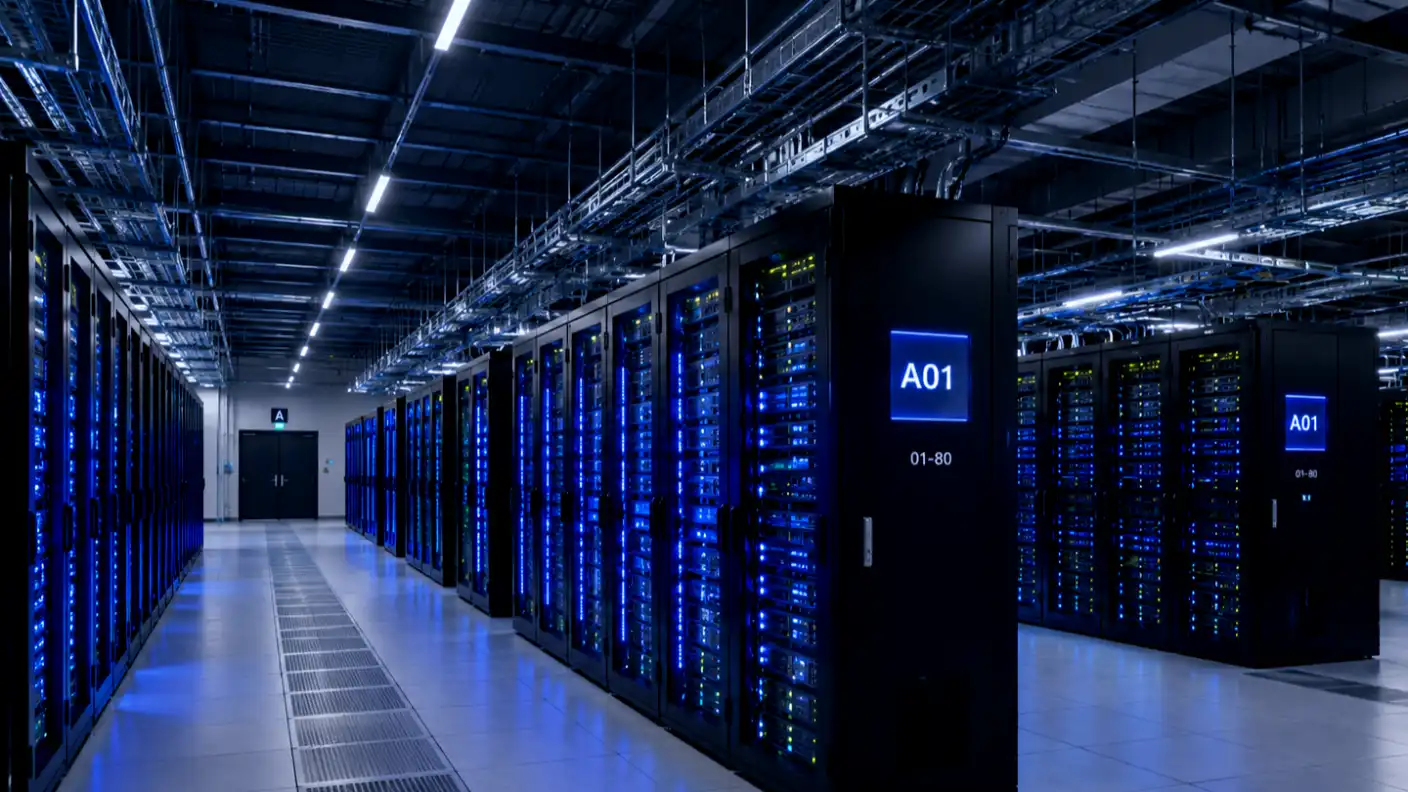
On the supply side, the physical limitations of constructing new data centers have become a major bottleneck for the industry. Building a modern, high-density AI data center is not a simple task; it requires securing prime real estate, obtaining gigawatt-scale power commitments from local utilities, and installing complex liquid cooling systems. This process takes time, with greenfield data center construction typically requiring a minimum two-year timeline from breaking ground to final deployment.
The construction boom that began in late 2025 suggests that a massive volume of capacity is currently under development. However, because of the two-year build timeline, much of this capacity will not become active until late 2027. This lag creates an acute supply shortage heading into 2027, as the demand for compute capacity from frontier AI model developers continues to outpace active server space. Global data center build tracking indicates that planned data center capacity actually exceeds previous estimates, confirming that the physical pipeline is packed, but remains constrained by the calendar.
Moving From TSMC to Smaller Component Providers
For the first phase of the AI investment cycle, the primary supply constraint was chip fabrication, with investors focusing almost entirely on foundry giants. However, the industry’s bottlenecks are shifting. While advanced foundries remain critical nodes, the primary supply constraints have moved downstream to smaller, specialized component manufacturers.
To build a functioning AI supercomputer, a company needs far more than just the primary processor. It requires high-performance power management systems, advanced liquid cooling manifolds, custom backplanes, high-speed fiber-optic transceivers, and specialized connectors. Because these smaller components are produced by niche manufacturers with limited capacity, a shortage of a single $10 connector can stall the deployment of a $1 million server rack. Several U.S. technology companies, including Amphenol and TE Connectivity, are emerging as key beneficiaries of this shifting bottleneck, as hyperscalers scramble to secure these essential electronic components to complete their data center builds.
The J-Curve of Enterprise AI Adoption and Token Consumption
The long-term viability of the AI infrastructure trade depends on a critical assumption: that enterprise demand for AI tokens will continue to scale near-vertically through the decade. However, the actual adoption of technology by businesses rarely follows a straight line. Instead, it typically follows a J-curve, characterized by an initial pilot phase, a temporary digestion pause, and a subsequent production reacceleration.
In mid-2026, the market is experiencing its first real wave of enterprise AI cost discipline. For example, a major ride-sharing firm deployed an agentic coding assistant to roughly 5,000 engineers in late 2025, only to exhaust its entire 2026 AI tooling budget in just four months due to heavy usage fees. Similarly, leading cloud developers have begun scaling back certain internal AI licenses to manage skyrocketing API charges. This temporary digestion phase, where enterprises pause to optimize their code and manage token consumption, can create a short-term slowdown in revenue growth for cloud providers. However, this is a normal part of the technology lifecycle, and historically precedes a massive surge in production-grade deployments.
Positioning for the Next Phase of the AI Cycle
The temporary market pullbacks and digestion phases should not discourage long-term investors. The fundamentals of the AI infrastructure trade remain intact, and the massive capital expenditures by the world’s largest companies are backed by concrete commitments, not speculative optimism. The ongoing price hikes for scarce components and the continuous upward revisions of corporate earnings remain the strongest catalysts for the sector.
For investors seeking exposure to this secular trend, market weakness represents a compelling buying opportunity. Rather than chasing overvalued software applications, the safest approach is to focus on the essential physical layers of the AI ecosystem—semiconductors, high-bandwidth memory, power management, and specialized cooling infrastructure. These companies will continue to generate robust revenues and profits regardless of which specific AI applications ultimately dominate the consumer market.
Conclusion
The AI infrastructure investment cycle is far from reaching its peak. While the market has experienced a healthy pullback after a period of rapid growth, the underlying demand for computing power continues to accelerate. Supported by a massive $5.5 trillion capex supercycle, hyperscalers are aggressively expanding their capacity, shifting from organic cash flows to private debt and credit markets to fund their ambitious plans.
As the industry navigates physical construction timelines and shifting component bottlenecks, the companies that supply the foundational hardware of the AI age are positioned for multi-year growth. While short-term volatility and enterprise digestion pauses are inevitable, the long-term transformation of the global economy is just beginning, proving that the physical infrastructure of the digital age remains the most valuable asset in the market today.






