The global financial landscape is experiencing a profound and rapid transformation as the artificial intelligence infrastructure buildout pushes several technology giants into the elite three-trillion-dollar market capitalization club. This shift marks a departure from the traditional eras of computing, where software platforms and consumer hardware dominated the value rankings. Today, the world’s most valuable corporations are defined not just by their consumer reach, but by their absolute control over the physical and computational foundations of the digital age.
The recent ascension of these trillion-dollar titans is fundamentally tied to the massive, multi-billion-dollar investments they have made in data centers, high-performance silicon, and specialized energy grids. As corporate demand for generative artificial intelligence continues to skyrocket, these infrastructure-heavy companies have successfully translated their massive upfront capital expenditures into undeniable, high-margin revenue streams. Investors have responded by re-rating these stocks, moving them away from standard technology growth multiples and toward a new category of “AI infrastructure utilities” that are essential to the future of global industry.
This analysis explores the economic engines powering this unprecedented wealth accumulation, the physical bottlenecks currently challenging these giants, and why the next phase of the artificial intelligence revolution will focus on the energy-dense reality of server farms rather than the speculative hype of software prototypes. As the market enters a period of intense financial scrutiny, these three-trillion-dollar members of the club are proving that in an automated world, the ones who own the physical processing power hold the keys to the global economy.
The Physical Foundation of Trillion-Dollar Valuations
The modern trillion-dollar valuation is no longer built on advertising clicks, e-commerce transactions, or consumer social media engagement alone. While those legacy businesses provide the necessary cash flow to fund R&D, the explosive growth in market capitalization is driven almost entirely by the industrialization of machine learning. The world’s largest tech companies have successfully convinced global markets that they have evolved into the primary landlords of the artificial intelligence era. They own the hardware, they manage the electrical grids, and they control the software pipelines that millions of enterprise customers now depend on for their daily operations.
This transition from “big tech” to “AI utility” has fundamentally changed the financial profile of these companies. They are now viewed as essential, foundational players in the global economy, comparable to the massive, diversified rail or oil conglomerates of the 20th century. This institutional re-rating is incredibly important because it lowers the risk profile of these stocks in the eyes of pension funds and sovereign wealth funds. Investors are no longer just betting on the success of a new smartphone model or a social media trend; they are betting on the long-term, structural necessity of the computing infrastructure that powers everything from medical research to military command and control.
Translating Massive CapEx into Market Dominance
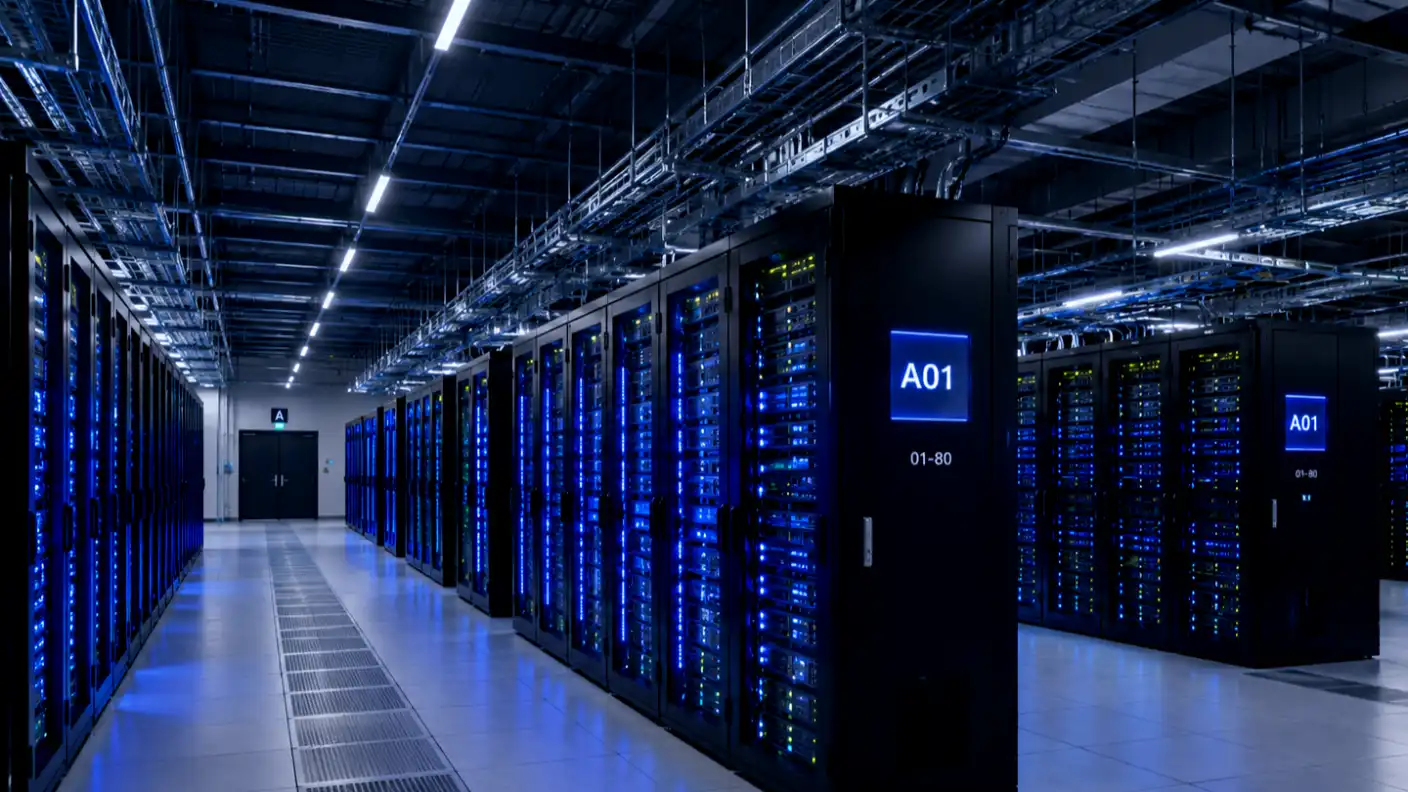
The sheer scale of capital investment is almost impossible to grasp. The primary members of the three-trillion-dollar club are collectively committing over $800 billion in infrastructure capital expenditures over the next three years. This isn’t just a budget increase; it is an industrial-scale pivot toward physical asset ownership. Companies that previously relied on lightweight, outsourced cloud operations are now constructing massive, private, gigawatt-scale data center campuses.
These investments serve as a high-barrier defensive moat. A startup can theoretically write code to replicate a large language model, but it cannot easily replicate a massive, purpose-built data center campus that has already secured multi-decade electricity supply contracts and optimized liquid cooling infrastructure. This physical barrier to entry grants the current trillion-dollar club members incredible pricing power. As demand for high-performance computing continues to grow, they can dictate the rental rates for their infrastructure, ensuring that they capture the lion’s share of the profit from every model trained and every transaction executed within their digital borders.
Breaking Down the Infrastructure Supercycle
To understand the current economic environment, we must distinguish between the “software hype” phase and the “infrastructure buildout” phase of the AI revolution. During the first phase, capital flowed into speculative startups and early-stage research labs. That phase was highly unstable, characterized by massive losses, high employee turnover, and significant valuation volatility. We have now fully entered the infrastructure buildout phase, which is characterized by stable, industrial-scale deployment.
This second phase is driven by the physical requirements of inference. Once a large language model is trained—a process that takes weeks and consumes massive amounts of energy—it must be deployed to handle millions of real-time user requests. This deployment requires a different, even more massive tier of global infrastructure. We are seeing the rise of “inference data centers,” which are optimized to deliver answers with near-zero latency. These facilities are the new factories of the 21st century, and the companies that own them are the new industrial barons of the global economy.
High-Bandwidth Memory and the Silicon Bottleneck
The most critical physical component inside these server farms is not the main processor, but the memory. High-bandwidth memory (HBM) has emerged as the most constrained and valuable link in the entire AI supply chain. Because frontier-class models must access billions of parameters in a fraction of a second, standard memory architectures cannot deliver the required speed. HBM solves this by stacking multiple memory chips vertically and connecting them with microscopic, high-density conduits.
The market dominance of the current three-trillion-dollar titans is largely determined by their ability to monopolize the global supply of these high-bandwidth memory chips. By signing long-term, multi-billion-dollar supply agreements with leading manufacturers like SK Hynix, Samsung, and Micron, these companies have effectively locked up the world’s manufacturing capacity for years to come. This creates an incredibly powerful feedback loop: because they own the memory, they can build the most reliable AI systems; because they have the most reliable systems, they secure the largest enterprise customers; and because they have the most customers, they generate the cash to buy even more memory.
The Power Wall and the Nuclear Energy Pivot
Beyond memory, the single greatest constraint on trillion-dollar growth is electrical power. You cannot run a gigawatt-scale data center cluster on standard, weather-dependent renewable energy sources. AI requires a constant, high-quality, 24/7/365 baseload power supply. This realization has led the trillion-dollar club to aggressively pursue unconventional energy solutions, including small-scale nuclear and high-efficiency natural gas power plants constructed directly adjacent to their computing facilities.
We are entering an era of “sovereign energy hubs,” where large technology companies act as their own utility providers. They are no longer waiting for regional grid operators to expand transmission lines or build new power stations. They are financing, permitting, and operating dedicated, high-output power generation assets. This energy vertical integration is the ultimate indicator of maturity. It shows that these companies have transcended the role of service providers and have become foundational pillars of the nation’s industrial energy capacity, making them far more stable and entrenched than traditional, consumer-facing software businesses ever were.
Institutional Skepticism and the Future of AI Valuation
Despite their massive market capitalization, these technology giants still face intense, healthy skepticism from institutional investors. The stock market is currently engaged in a high-stakes debate over the return on investment for this massive hardware spending spree. Investors are starting to differentiate between companies that have a clear, credible path to near-term software monetization and those that are simply building beautiful, empty infrastructure in the hope that customers will eventually appear.
This shift in sentiment is a direct response to the “SaaSpocalypse”—the broader software industry correction that occurred earlier this year when major enterprise software contracts were left unsigned as CIOs prioritized hardware spending. Investors are now scrutinizing every quarterly report to see if the “AI promise” is finally becoming “AI profit.”
Companies that demonstrate strong growth in enterprise software licensing, high-margin cloud services, and real-world industrial automation will continue to justify their premium valuations. Those that continue to burn billions of dollars on speculative hardware without delivering a corresponding increase in software revenue will face significant, and potentially brutal, valuation compressions over the next 18 months.
The Role of Regulatory Scrutiny and Antitrust Enforcement
Any company that commands a trillion-dollar valuation inevitably becomes a primary target for international antitrust and regulatory intervention. As these tech giants consolidate their control over the physical data center, the electrical grid, and the foundation models of the digital economy, regulators are growing increasingly concerned about the potential for anti-competitive behavior.
Washington, Brussels, and London are all launching independent, coordinated antitrust investigations into whether these companies use their market dominance to artificially inflate cloud pricing, lock out independent competitors, or manipulate the supply chain for their own hardware components.
The threat of breakup orders, forced data sharing, and strict operational separation creates a persistent, structural risk for these stocks. While the market has historically ignored these regulatory threats, the rising volume of litigation means that these companies must now operate under a permanent “regulatory tax,” where a significant portion of their legal and administrative budget is dedicated solely to defending their existence in federal courts.
Capital Allocation Discipline as the Ultimate Differentiator
The defining differentiator for the next three years will be capital allocation discipline. In the early stages of the AI buildout, simply spending the most money was a badge of honor. Now, it is a risk metric. Institutional investors are beginning to favor executive teams that prove they can generate world-class results while actually reducing their unit costs.
This means that the companies currently in the three-trillion-dollar club are not guaranteed their spots forever. A failure to optimize, a miscalculation in manufacturing, or an aggressive, poorly timed spending spree can lead to a rapid evaporation of value.
The market has shifted into a “show me the money” phase. The winners will be the firms that prove they can build the industrial backbone of the future while remaining highly profitable, efficient, and operationally nimble, turning their massive infrastructure investments into a reliable, generational cash machine that continues to compound wealth long after the initial AI hardware boom has subsided.
The future of global wealth is being written by the titans of the three-trillion-dollar club. By aggressively scaling their physical infrastructure, securing the global supply chain for critical memory and silicon components, and actively managing their capital to ensure high-margin profitability, they have established a level of market dominance that is truly unprecedented.
As we approach the final years of the decade, the dominance of these giants will define the trajectory of the entire digital economy, securing their role as the indispensable, primary engine of global innovation, industrial output, and wealth generation for the next twenty years.