We are plugging our entire world into the wall. Over the last decade, we have watched a massive shift in how we power our lives. We are replacing gasoline cars with electric vehicles, trading gas stoves for induction cooktops, and heating our homes with electric heat pumps. This total electrification is essential if we want to save our planet from a climate catastrophe. But this change has also exposed a terrifying truth: our current electricity grids cannot handle the load. We are trying to run a high-tech, electrified society on a fragile, one-way system built for the mid-twentieth century. To survive this transition, we must rebuild our power networks into intelligent, self-managing smart grids.
The Threat of the Invisible Straw
Think about how traditional power grids work. Massive, centralized coal or gas plants generate electricity and transmit it via high-voltage cables to our homes. It is a simple, one-way flow. But as we electrify everything, we are inserting millions of powerful new straws into this single cup of energy. When a whole neighborhood plugs their electric cars in at 6:00 PM while turning on their air conditioners and stoves, the local transformer melts under the strain. We cannot simply solve this by building bigger coal plants or stringing more copper wire. We must build a system that actively manages where, when, and how that energy flows.
Transforming the Grid Into a Two-Way Conversation
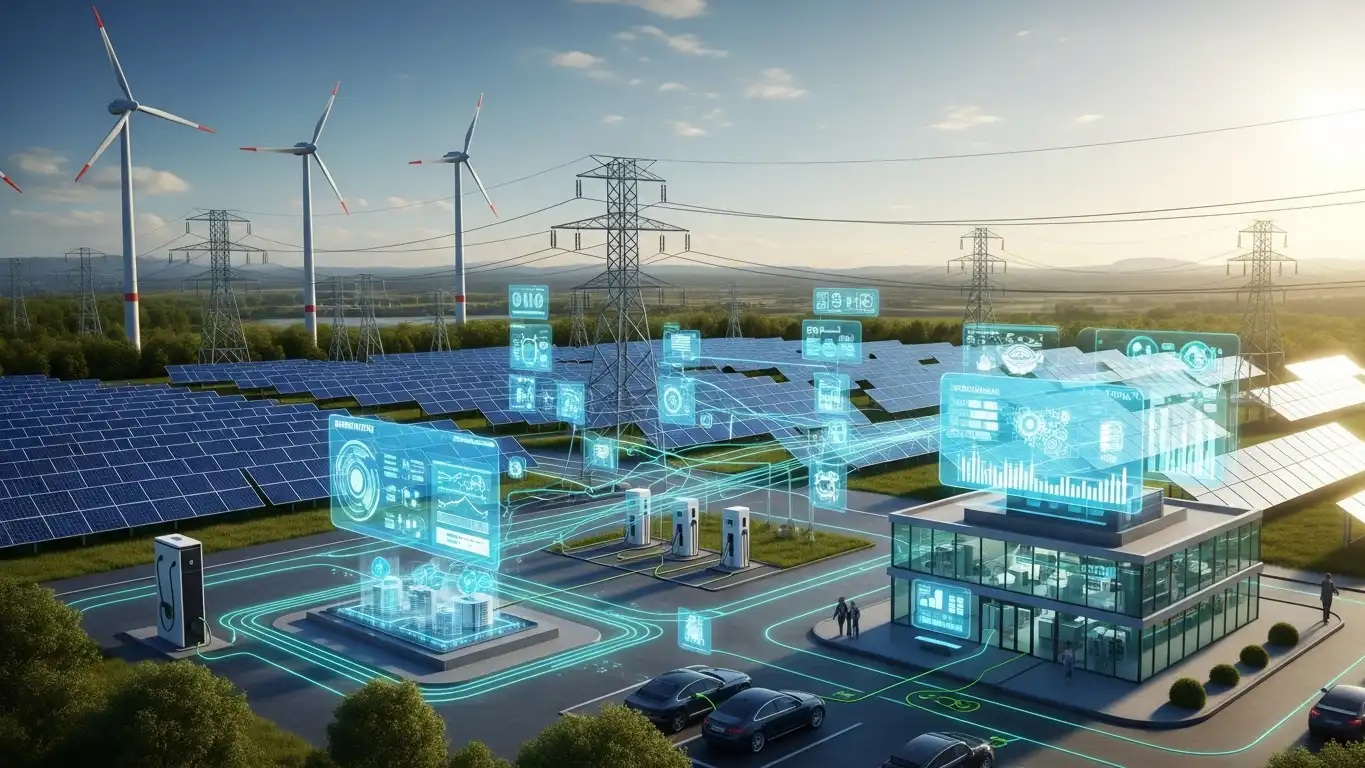
A smart grid turns a dumb power pipe into a highly active digital network. It uses millions of smart sensors, connected meters, and automated switches to create a continuous, two-way conversation between the power plants and our appliances. The grid constantly monitors the live electricity demand of every single block. If a neighborhood faces a sudden surge in usage, the grid does not just fail. It automatically communicates with smart home systems, asking them to temporarily reduce power to non-essential appliances like water heaters or car chargers for a few minutes. This dynamic balancing prevents blackouts before they ever start.
Turning Every Electric Car Into a Power Plant
One of our biggest challenges with renewable energy is storage. The wind does not always blow, and the sun does not shine at night. We need ways to store excess green energy so we can use it when the weather changes. Electric vehicles offer a brilliant, decentralized solution to this problem. Through vehicle-to-grid technology, millions of parked electric cars can act as a giant, collective battery for the public network. When you plug your car in at home, the smart grid can draw power from your car’s battery during peak evening hours when energy demand is highest. The next morning, when the sun comes up, the solar grid charges your car back up. We turn our cars into active grid protectors.
Powering the Rise of the Local Microgrid
We used to rely entirely on a single, massive national grid to keep our lights on. If a tree fell on a power line fifty miles away, an entire town sat in the dark. Smart grids solve this vulnerability by enabling the rise of local microgrids. These are small-scale, self-sufficient energy networks built around neighborhoods, hospitals, or industrial parks. A microgrid uses its own local solar panels, wind turbines, and battery storage to generate its own power. If the main national grid suffers a massive failure, the microgrid simply disconnects itself and keeps running independently. We build a highly resilient society where a localized failure never turns into a national disaster.
Eradicating Energy Waste Through Green Software
We spent decades writing software to run as fast as possible, completely ignoring how much energy the code consumed. We created bulky, bloated programs that forced processors to run at maximum speed for no good reason. Today, sustainable software engineering is becoming a core discipline. Developers are learning to write “green code” that completes tasks with the fewest possible mathematical steps. They design apps that put servers into a deep sleep the moment their work finishes. By optimizing the logic inside our machines, we can save billions of kilowatt-hours without the end user ever noticing any difference in their screen performance.
The Scramble for Ethical Green Minerals
We cannot build a clean mobility future without digging into the earth. Electric car batteries require massive amounts of lithium, cobalt, nickel, and copper. This material requirement has triggered a global rush to secure these vital minerals. Historically, the mining of these materials carried high environmental and social costs, often polluting local water supplies and exploiting workers. We must enforce strict ethical standards on our mineral supply chains. We cannot call our vehicles “clean” if the materials inside them caused devastation in rural communities during extraction. The transition must be clean from the mine to the highway.
Protecting the Grid From Cyber Warfare
When you connect our power grids, water pumps, and supply chains to the internet, you create a new target for cybercriminals. If a hostile group hacks the digital system controlling a country’s electricity network, it can instantly freeze food production and public transport. This is a terrifying national security threat. We must build robust, offline backup systems for all smart agricultural and grid hardware. A smart grid must have a manual override switch so that engineers can still operate systems by hand if the network goes dark. We cannot trade physical resilience for digital convenience.
Conclusion
The transition to a fully electrified infrastructure is the most significant industrial challenge of our time. But we cannot succeed by simply building more power plants and hoping our old copper wires do not melt. We must build smart grids that can think, react, and heal themselves in real-time. By turning our cars into batteries, enabling local microgrids, and protecting our networks from cyberattacks, we can build a resilient energy network that runs entirely on the clean, infinite power of the sun and the wind. The future of energy is no longer about raw power; it is about absolute intelligence.