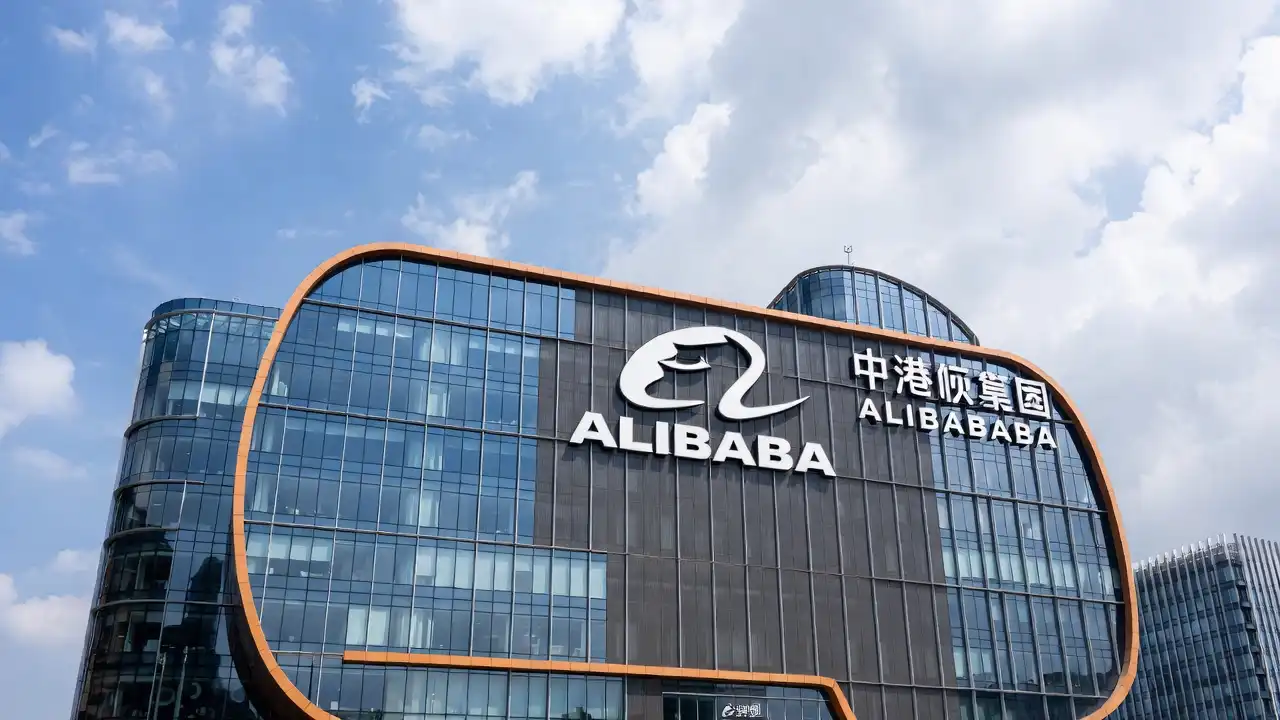
The global race to commercialize artificial intelligence is forcing open-source developers to rethink their business models. In August 2026, industry sources revealed that Chinese technology giant Alibaba Group Holding Ltd. plans to change how it licenses its highly anticipated, next-generation open-source artificial intelligence model. Instead of offering the technology completely free of charge to all users, the e-commerce and cloud computing giant plans to ask major, high-volume corporate users for a share of the revenue they generate from the model.
This strategic pivot targets the upcoming open-weights release of Qwen3.8-Max, the company’s largest and most advanced artificial intelligence model to date. Unveiled on August 3, 2026, the model has garnered immense attention for its massive scale and competitive performance benchmarks. Alibaba plans to officially publish the model’s weights to the public, allowing developers to download, run, and modify the system in their own private data centers.
However, the decision to implement a commercial revenue-sharing trigger for major users marks a significant transition for Alibaba’s open-source strategy. For years, the company distributed its models for free, hoping to drive developer adoption and funnel clients toward its paid cloud computing platforms. The new monetization approach shows that as open-source models begin to match or exceed the capabilities of expensive, closed-source Western systems, developers are establishing clear commercial boundaries to protect their multi-billion-dollar technology investments.
The Mechanics of the Qwen3.8-Max Flagship Model
To understand why Alibaba is introducing a commercial licensing fee, it is necessary to examine the sheer scale and technological sophistication of the model itself. Building and training a system of this size requires a massive concentration of computing power, data engineering, and financial resources, making it one of the most expensive technological assets in the company’s history.
Breaking the Two Trillion Parameter Barrier
Alibaba’s new model boasts an extraordinary 2.4 trillion parameters, which represent the numerical settings the model learns from data to recognize patterns, process information, and generate highly accurate responses. This parameter count places the model close to the largest open models in the world, including domestic rival Moonshot AI’s Kimi K3, which features 2.8 trillion parameters.
With 2.4 trillion parameters, the model possesses an unprecedented level of depth, allowing it to handle highly complex, multi-step cognitive tasks. The model’s capabilities extend across text, image, and video processing, supporting a massive context window of up to one million tokens at a time. This huge data capacity allows the model to digest, analyze, and map complex data repositories, such as thick engineering manuals, entire software codebases, or hundreds of pages of legal documentation, in a single processing run.
In one internal test, the model successfully operated as an autonomous software developer for 16 consecutive days. During this trial, the system built, tested, debugged, and refined an entire software application on its own, showing an ability to execute long-horizon, sequential tasks without any human intervention.
High-End Efficiency Through Mixture of Experts Architecture
Operating a model with 2.4 trillion parameters is incredibly expensive, requiring massive amounts of electrical power and specialized computer graphics cards. To make the model commercially viable and reduce response delays, the developers utilized a sparse Mixture of Experts architecture.
Unlike traditional dense models that activate their entire neural network for every single prompt, a Mixture of Experts model divides its workload among specialized, independent sub-systems. When a user submits a query, the model’s routing algorithm analyzes the task and only activates the specific “experts” needed to solve that problem.
Consequently, the model only activates approximately 95 billion parameters at a time for a single query. This structural efficiency allows the company to serve the model at a highly competitive price point, drastically reducing operational costs and latency while still delivering the reasoning power of a multi-trillion-parameter system.
Shifting from Free Bait to Revenue-Sharing: The New Commercial Model
The upcoming changes to Alibaba’s licensing terms represent a significant shift in how open-source software is commercialized. Historically, the tech industry viewed open-source software as a public utility, where developers shared code freely to foster community collaboration and innovation.
Borrowing the Twenty-Million-Dollar Revenue Trigger
According to individuals familiar with Alibaba’s strategy, the company’s new commercial licensing model will closely mirror the terms established by Moonshot AI for its Kimi K3 model. In its licensing agreement, Moonshot included a strict commercial provision targeting major enterprise users. The clause specifies that any business or developer that offers the Kimi K3 model for sale as a commercial service, and generates more than $20 million in annual sales from that service, must negotiate a formal revenue-sharing or commercial licensing agreement with the developer.
Alibaba plans to implement a highly similar threshold for its next open-source model. While the company will continue to allow startups, academic researchers, and small businesses to download and run the model locally without payment, large-scale enterprise clients who build massive, profitable commercial applications on top of the model will have to pay their fair share.
This hybrid approach ensures that the model remains accessible to the developer community, while still allowing the developer to capture a return on its massive infrastructure investments when its technology powers major commercial operations.
The Shift from Pure Philanthropy to Pragmatic Monetization
To date, Alibaba has charged developers for using its artificial intelligence models when they access them through its own DashScope or Model Studio cloud computing platforms. However, the company allowed customers to download its open-source weights and run them in their own private data centers completely free of charge, regardless of the user’s corporate size or revenue.
The upcoming changes prove that Chinese artificial intelligence firms are converging on a cohesive business model. Developing frontier-level models requires a continuous, multi-billion-dollar capital expenditure program.
By implementing revenue-sharing triggers for major users, open-source developers are establishing a sustainable financial model. This compromise allows them to maintain their open-source credentials and attract a massive global developer base, while still securing the commercial revenues necessary to fund their next generation of advanced research and development.
Driving Cloud Revenues and Navigating the AI Price Wars
The licensing pivot is also a critical component of Alibaba’s broader corporate strategy. The company is actively utilizing its artificial intelligence capabilities to drive growth across its highly profitable cloud computing division.
Converting Open-Weights Interest into Profitable Cloud Compute
For a massive company, downloading a 2.4 trillion parameter model and running it locally is not as simple as clicking a download button. To self-host a model of this scale, a business must invest millions of dollars in purchasing, configuring, and cooling high-end GPU servers. For many startups and mid-sized enterprises, this physical infrastructure cost is completely prohibitive.
Alibaba Cloud capitalizes on this infrastructure bottleneck through its Model Studio dashboard. If a developer wants to use the model but cannot afford to purchase their own specialized hardware, they can access the model via Alibaba’s cloud-hosted APIs.
In its latest quarterly earnings report, Alibaba revealed that its cloud division is experiencing a major growth wave. Alibaba Cloud’s external revenue rose by 40% year-over-year, with artificial intelligence-related products already accounting for over 30% of those total sales. By releasing the model’s weights publicly, the company creates immense brand awareness and developer interest, which it then converts into highly profitable, recurring cloud-hosting subscriptions as clients realize they need the developer’s cloud infrastructure to run the model efficiently.
Underpricing Western Closed-Source Competitors
To accelerate this cloud-hosting transition, the company has priced its cloud-based APIs at an aggressively low level, initiating a fierce margin battle in the global artificial intelligence market. The company lists the model’s API usage rates at just $2 per million input tokens and $6 per million output tokens, reasoning and image processing included.
This pricing strategy significantly undercuts Western closed-source competitors:
- OpenAI charges $5 for inputs and $30 for outputs for its GPT-5.6 Sol model.
- Anthropic charges $5 and $25 for the second-highest tier of its Claude Fable 5 models.
- By comparison, Alibaba’s API is roughly 70% cheaper than what Anthropic charges for its comparable flagship systems.
This aggressive pricing strategy turns the artificial intelligence market into a commodity space. For a startup building a new application, the choice is between a closed-source Western model that costs a fortune to run or a highly capable open-source alternative that is free to download and incredibly cheap to host. By combining this aggressive pricing with its new revenue-sharing licensing terms, Alibaba wants to establish its technology as the invisible, dominant backbone of the global digital economy.
Geopolitical Ramifications and the Global AI Divide
The rapid progress and commercial convergence of Chinese artificial intelligence firms have sparked deep concerns in Silicon Valley and Washington. The technological gap between United States and Chinese artificial intelligence labs is narrowing far faster than Western analysts initially anticipated.
Bypassing Washington Chip Sanctions via Strategic Open-Source
The success of Chinese models like Qwen3.8-Max, Moonshot AI’s Kimi K3, and DeepSeek’s V4 Flash has raised serious questions over the effectiveness of United States chip sanctions. Washington has implemented strict export controls designed to restrict Chinese access to advanced Nvidia graphics processors, hoping to slow down China’s technological ascent.
In response to these hardware restrictions, Chinese developers have focused heavily on architectural efficiency. By mastering the sparse Mixture of Experts architecture and designing systems that require less raw computing power to train and run, Chinese firms have managed to match or exceed the performance of Western models built on much larger hardware budgets.
Furthermore, by open-sourcing their weights, Chinese firms are bypassing political hurdles. If a developer in Southeast Asia, South America, or Europe faces restrictions or high costs when trying to access American closed-source APIs, they will naturally build their entire business software around free, open-weight Chinese alternatives, locking themselves into Chinese technology ecosystems for the long term.
The Emergence of a Multipolar Global AI Market
This strategic open-source push is creating a highly competitive, multipolar global market. While the United States continues to lead in abstract, frontier-level reasoning research, Chinese firms are dominating the practical, cost-effective implementation of the technology in real-world business environments.
This intense competition has occasionally led to geopolitical friction. Recently, U.S. developers have accused Chinese startup Moonshot AI of utilizing proprietary data from Anthropic’s models to train its own systems, a claim that Chinese officials have rejected as completely unfounded.
Regardless of these disputes, the rapid proliferation of high-end, low-cost open-weight models from China is forcing Western firms to reconsider their proprietary, high-margin business models. If U.S. developers do not lower their prices or open-source their own systems, they risk being completely shut out of emerging international markets by cheaper, highly accessible Chinese alternatives.
The Maturity of the Open-Source Ecosystem
The decision by Alibaba Group Holding Ltd. to charge major users for its upcoming open-source model represents a landmark moment in the maturity of the artificial intelligence industry. It is an admission that giving away trillions of parameters for free, without any commercial recourse, is no longer a sustainable strategy in a highly capital-intensive sector.
By introducing a sensible, revenue-sharing licensing model that targets only the largest corporate users, Alibaba has established a sustainable compromise. This hybrid approach protects the open-source spirit, ensuring that small developers and researchers can continue to innovate, while still securing the corporate revenues necessary to fund the physical data centers, chip procurement, and research teams behind the next technological frontier. As global competition intensifies and pricing pressures increase, this pragmatic commercial model will likely become the standard framework for the open-source community, permanently reshaping how the world accesses, finances, and builds the technologies of the digital age.