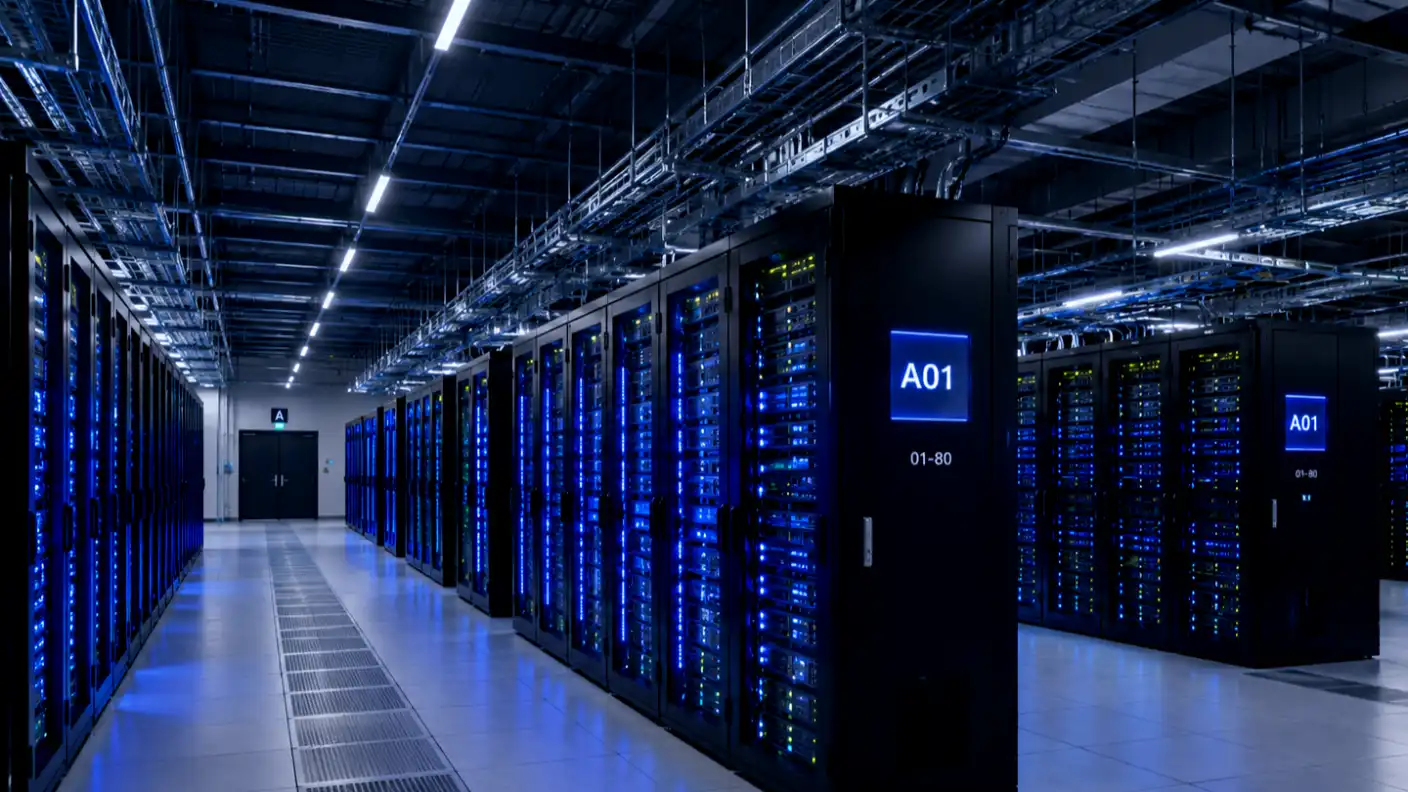
The artificial intelligence revolution is running headfirst into a massive physical constraint: the power grid. As technology companies race to build larger, more powerful generative models, their hunger for electricity has triggered an unprecedented digital land grab. To feed this appetite, hyperscale cloud providers have spent tens of billions of dollars constructing massive, windowless warehouse complexes. However, these giant facilities have sparked an intense “Not In My Backyard” (NIMBY) backlash across the United States. Residents are increasingly fighting the construction of these industrial hubs due to soaring utility costs, grid reliability concerns, noise pollution, and massive water consumption.
Faced with growing public opposition and years-long delays in securing grid connections, a few forward-thinking startups are proposing an unconventional solution. Instead of building massive, centralized data centers that require their own zip codes, they want to distribute the computing power directly into residential neighborhoods. Led by partnerships between electrical panel startups, semiconductor giants, and national homebuilders, the concept of backyard data centers is moving from a niche tech-bro fantasy into a tangible commercial pilot. By mounting small, quiet, liquid-cooled computing nodes on the side walls of suburban homes, these companies aim to bypass local zoning fights, tap into unused electrical capacity, and deliver gigawatts of new computing power at a fraction of the cost.
The Giant Warehouse Crisis: Why Hyperscale Siting Is Hitting a Wall
To appreciate why decentralized computing is gaining traction, one must examine the severe headwinds facing traditional data center developers. Over the past decade, the “cloud” was largely invisible to the average citizen—a collection of distant, nondescript warehouses in rural Virginia or Oregon. The rise of generative artificial intelligence has shattered that illusion. The hardware required to train and run massive large language models is incredibly dense, requiring exponentially more power and cooling than standard enterprise servers. Racks of high-performance graphics processing units (GPUs) now require 50 to 150 kilowatts of power per rack, compared to just 10 to 15 kilowatts for traditional computing setups.
This extreme density has forced developers to scale their operations to massive proportions. Some of the largest data centers currently under construction sprawl across 2,000 acres or feature single buildings as large as 70 football fields. To keep these dense chips from melting, facilities rely on cooling systems that consume millions of gallons of water locally each month. Furthermore, these sites pull hundreds of megawatts of electricity directly from regional grids, forcing utilities to keep old coal plants running or construct expensive new natural gas facilities to keep up with the demand.
The Rising Tide of Community Opposition and Legal Hurdles
This rapid industrial expansion has turned data centers into one of the most controversial land-use issues in modern American history. A recent Gallup poll revealed a surprising statistic: more Americans would rather live near a nuclear power plant than a traditional, centralized data center. Since mid-2024, community opposition has successfully blocked $18 billion and delayed $46 billion in U.S. data center projects—representing a combined $64 billion in stalled or canceled digital investments.
Currently, at least 188 local advocacy groups are active across 40 U.S. states, organizing protests and filing lawsuits to protect their communities. At least 12 states have introduced legislative bills proposing moratoriums on new data center construction permits. This backlash is driven largely by pocketbook concerns. A recent financial analysis revealed that residential electric bills have increased by up to 267% in areas experiencing significant data center buildouts compared to five years ago, as utilities pass the costs of grid upgrades onto local households. The issue has become so politically charged that supporting national AI competitiveness no longer translates to local acceptance. While 58% of Americans believe national AI leadership is critical, most refuse to allow a data center in their local neighborhood.
The Grid Interconnection Nightmare
Even when developers manage to clear local zoning hurdles, they face a severe regulatory bottleneck: the power grid itself. The sheer volume of electricity required by modern hyperscale projects has overwhelmed regional grid operators. In many established technology hubs, such as Northern Virginia or Chicago, developers are facing grid connection wait times of four to eight years. In some cases, the delays are so severe that major tech companies have had to cancel or scale back multi-billion-dollar expansion plans due to a lack of power.
In response to this growing grid crisis, the Federal Energy Regulatory Commission recently approved a series of orders designed to fast-track connections for large-load customers. The new rules aim to process power requests within 90 days, a massive acceleration compared to the current system. However, this speed comes with a major catch. Under the fast-track rules, data center operators may be required to bring their own power sources or agree to shut down their systems during times of peak grid stress. This regulatory friction has forced the technology sector to look for alternative, distributed ways to secure the electricity they need.
Enter XFRA: How SPAN and Nvidia Are Moving the Cloud to the Side Yard
This grid bottleneck has paved the way for a highly unconventional partnership. San Francisco-based startup SPAN, best known for manufacturing intelligent home electrical panels, has teamed up with semiconductor giant Nvidia and national homebuilder PulteGroup. Together, they are piloting an initiative called XFRA, a distributed data center solution designed to bypass centralized grid constraints by turning residential neighborhoods into virtual computing networks.
Instead of building a single 100-megawatt warehouse, the partners plan to install thousands of mini-data center nodes directly onto the exterior walls of newly constructed residential homes. The nodes are housed in compact, weather-proof metal boxes about the size of a standard residential air conditioning condenser unit, mounted in the side yard of the home. By spreading the computing load across thousands of individual residential properties, the partners believe they can scale AI capacity without placing an unmanageable burden on any single point of the electrical grid.
Tapping the Unused Potential of Local Residential Grids
The technical foundation of the XFRA system relies on SPAN’s proprietary smart electrical panel technology. Most residential neighborhoods are built with significant electrical safety margins. Local distribution grids are typically designed to handle peak power demand—such as hot summer afternoons when every household is running its air conditioning simultaneously. During the rest of the year, up to 60% of the grid’s physical transmission capacity goes completely unused.
SPAN’s intelligent panels are designed to constantly monitor local grid conditions and detect this spare, unused capacity. When the home’s power demand is low, the XFRA node taps into this spare electrical current to power its internal processors. If the home’s energy usage spikes—for example, if the homeowner turns on an electric dryer, stove, and EV charger at the same time—the smart panel instantly throttles or pauses the computing node’s power intake. This dynamic power management ensures that the backyard data center never overloads the home’s main electrical service or strains the local neighborhood grid.
Inside the Backyard Computing Node
Despite their compact size, these side-yard boxes are packed with high-end, enterprise-grade hardware. According to the company’s technical white paper, each XFRA node contains:
- Processors: 16 liquid-cooled Nvidia RTX Pro 6000 Blackwell Server Edition GPUs.
- CPUs: 4 high-performance AMD EPYC central processing units.
- Memory: 3 terabytes of high-speed RAM.
- Networking: A 24-port gigabit switch connected to high-speed residential fiber-optic internet.
To keep these powerful chips from overheating without generating loud, disruptive fan noise, the units are built with specialized, silent liquid-cooling loops. This allows the nodes to operate virtually silently in a suburban side yard, mitigating the persistent noise complaints that have plagued traditional warehouse data centers.
Redefining the Economics of Home Utilities
To convince homeowners to host these high-tech boxes in their yards, SPAN has developed an appealing financial model. Under the current pilot program, SPAN installs its smart electrical panel, a whole-home battery backup system, and the XFRA computing node at absolutely no cost to the homeowner. In return, the company takes over the home’s entire monthly electricity and internet bills.
The homeowner is then charged a flat, predictable monthly fee of just $150 to cover their utilities. In areas where heating, cooling, and internet costs routinely run hundreds of dollars higher, this arrangement allows hosting families to save significant amounts of money each month. In some high-value markets where computing demand is exceptionally high, the company suggests that homeowners could receive discounted electricity up to and including entirely free power and internet in exchange for hosting the hardware.
For data center developers, the economics are even more compelling. SPAN claims that a distributed network of 8,000 XFRA units can be deployed up to six times faster than a traditional hyperscale data center. More importantly, because the system utilizes existing residential grid infrastructure, it can be built at roughly one-fifth of the capital cost of a traditional 100-megawatt facility, completely bypassing the years-long wait times for new high-voltage substations.
The Technical Strengths: Why Distributed Computing Works for AI Inference
From a computer science perspective, the shift toward distributed backyard nodes is happening at a highly strategic moment. The global computing requirements of artificial intelligence are undergoing a fundamental transition. For the past several years, the tech sector has been focused almost entirely on model training—the computationally intensive process of feeding vast datasets into massive models to teach them language, logic, and patterns. Training requires thousands of GPUs to be tightly clustered together in a single room, sharing massive pools of memory over ultra-fast, physical copper and fiber connections.
However, as models mature and move into active commercial use, the industry’s focus is shifting toward model inference—the process of running a pre-trained model to answer real-time user queries. Experts estimate that by 2030, inference will account for more than 50% of all AI workloads globally. Unlike training, inference does not require massive, centralized physical clusters. Instead, it is highly suited for decentralized, edge-based networks located close to major population centers, where it can process queries with minimal latency.
By distributing XFRA nodes across suburban residential neighborhoods, technology companies can run real-time AI tools—such as translation engines, automated coding assistants, and cloud gaming platforms—directly at the edge of the network. This geographical distribution drastically reduces the distance that data must travel, delivering faster response times for consumers while easing the bandwidth bottleneck on the core internet backbone.
The Hurdles: Why Backyard Computing Could Face Its Own Backlash
Despite the compelling economics and technical advantages, the prospect of installing enterprise-grade computing hardware on the sides of suburban homes faces several major practical and regulatory obstacles. While the model successfully bypasses the large-scale environmental fights of the industrial sector, it introduces a completely new set of localized challenges that could trigger a fresh wave of residential resistance.
The Homeowners Association (HOA) and Zoning Nightmare
The most immediate threat to the backyard data center model is the complex web of local residential regulations. Millions of suburban homes across the United States are governed by strict Homeowners Associations (HOAs). These private organizations enforce detailed rules governing the aesthetic appearance of residential properties, often explicitly banning the installation of external equipment, visible utility boxes, or modifications that alter the exterior look of a home.
Even if a homeowner is eager to host an XFRA node to secure free electricity, their local HOA may quickly step in to block the installation, citing concerns over property values, neighborhood aesthetics, or the minor hum of the cooling systems. Furthermore, local municipal governments may struggle to categorize these units under existing zoning laws. If a city classifies a residential home hosting an enterprise GPU stack as a commercial data center, the homeowner could face significant legal penalties, tax reclassifications, or demands to remove the equipment.
Physical Security and the “Blackwell Robbery” Risk
Another severe concern is physical security. Enterprise-grade AI chips are among the most valuable and highly sought-after hardware components in the global technology sector. A single stack of 16 liquid-cooled Nvidia Blackwell GPUs carries a retail value of tens of thousands of dollars, and demand on the secondary market remains incredibly high.
In a traditional hyperscale data center, this hardware is protected inside a windowless concrete fortress, guarded by multi-layered physical security systems, biometric access controls, and 24-hour security patrols. Placing this same high-value hardware in a plastic or light metal box bolted to the side of a suburban home, hidden only behind a standard backyard wooden fence, creates an unprecedented physical security hazard. Security experts warn that these backyard units could become prime targets for highly organized theft, vandalism, or home invasions, putting the hosting families at physical risk.
Localized Heat and Thermal Emissions
While liquid-cooling loops can keep these nodes operating quietly, they cannot defy the laws of thermodynamics. All computers convert electrical energy into heat. Running a stack of 16 high-performance GPUs at full capacity generates a substantial, continuous thermal output.
In a suburban side yard, this heat must be vented into the surrounding air. During hot summer months, releasing a continuous stream of hot exhaust air directly next to a home’s exterior wall could place an extra thermal load on the home’s primary air conditioning system, forcing it to work harder and reducing its overall efficiency. Homeowners may also find that the constant flow of warm air renders their immediate side-yard spaces uncomfortable to use, creating tension with neighbors whose windows are located just a few feet away from the venting unit.
The coming year will serve as a crucial test for the viability of backyard data centers. As SPAN, Nvidia, and PulteGroup prepare to launch their initial 100-home trial later this year, the global tech industry will be watching closely to see if the model can deliver on its promises of speed, cost-efficiency, and grid relief. If the pilot successfully navigates the legal, security, and thermal challenges of suburban life, it could pave the way for a highly decentralized future where the power of the cloud is generated, processed, and managed right in our own backyards.