

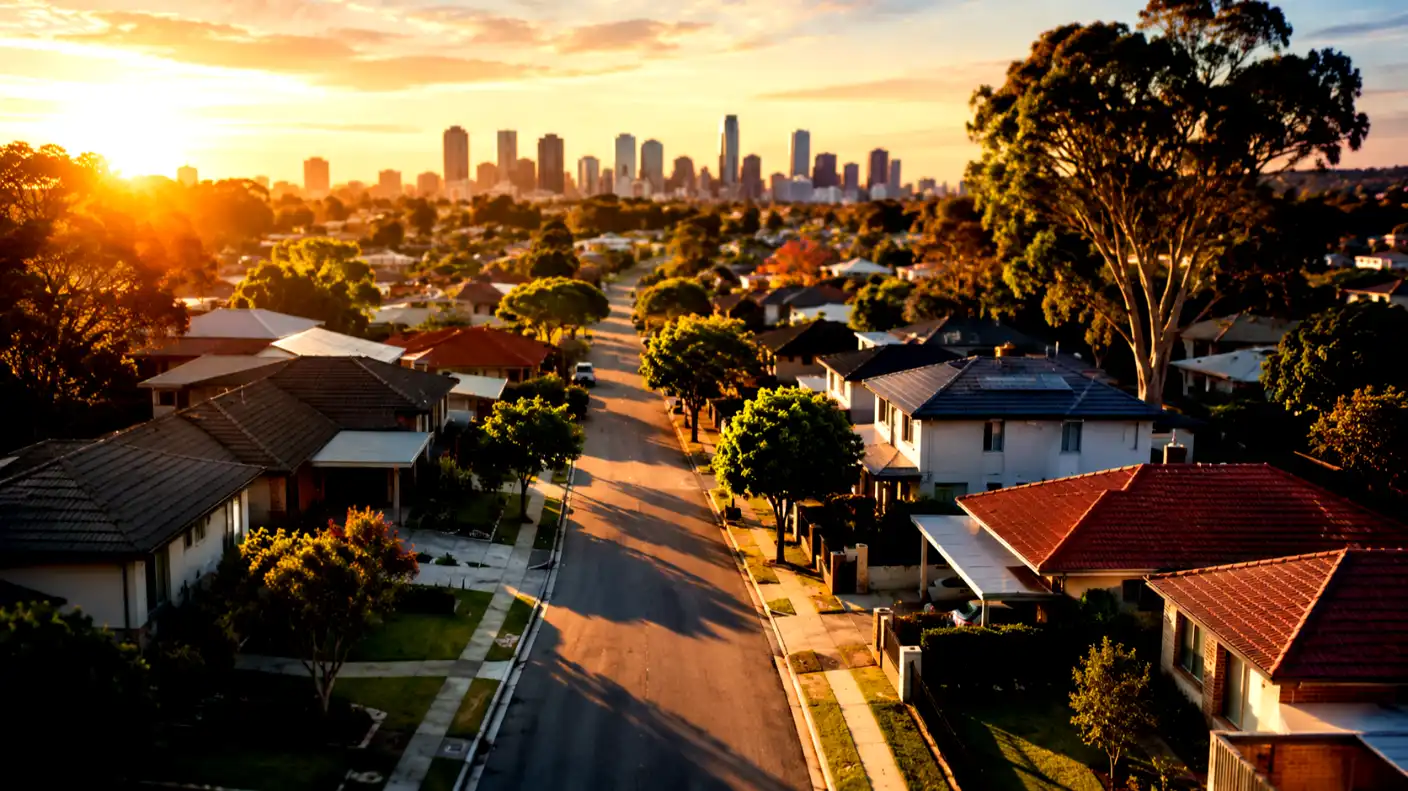
The long-running boom in the Australian property sector has hit a major roadblock. National home values fell by 0.4% in June 2026, marking the steepest month-on-month decline since December 2022. This sudden contraction signals a rapid cooling of the country’s housing market, driven by a combination of high borrowing costs, a tax crackdown on real estate investors, and a sudden surge in properties listed for sale. For years, buyers competed fiercely for limited housing stock, driving median prices to historic highs. Today, that momentum has evaporated, leaving sellers to contend with falling clearance rates and longer listing times.
The downturn has hit the major capital cities hardest. Home values across the capital cities fell by 1.3% during the June quarter, led by substantial monthly drops in Sydney and Melbourne. While mid-sized capital cities like Brisbane and Perth managed to record modest gains, their rate of growth slowed to a crawl compared to the explosive gains recorded earlier in the year. The sudden shift in market dynamics has caught many industry participants by surprise, proving that even the most resilient real estate markets are not immune to high interest rates and regulatory interventions.
The Anatomy of the June Downturn: Capital Cities Lead the Slide
The monthly decline in the national home value index was driven primarily by a sharp correction in Australia’s largest and most expensive urban markets. Sydney and Melbourne, which together account for a massive share of the country’s housing wealth, recorded their largest single-month value drops since August 2022. As buyers hit their borrowing limits and list volumes climbed, properties began to sit on the market longer, forcing vendors to adjust their price expectations.
Despite this monthly setback, overall home values across Australia remain 7.3% higher than they were a year ago. However, the annual rate of growth is slowing rapidly, and the gains of the past year are beginning to erode. The sudden drop in June has confirmed that the market has transitioned from a seller’s market to a buyer’s market, with the premium end of the capital city sector leading the downward charge.
Sydney’s Premium Segment Correction
The housing market in Sydney serves as the primary drag on the national index. Home values in the Harbour City fell 1.2% in June, continuing a steady downward trend that has wiped out a significant portion of the gains made over the past year. Since January, the median home price in Sydney has dropped by approximately $48,000, bringing property values back close to June 2025 levels.
This correction is particularly visible in the premium segment of the market, where high-end properties are experiencing the sharpest price drops. During the peak of the boom, buyers were willing to take on massive debts to secure luxury homes in Sydney’s eastern suburbs and northern beaches. Today, those same properties are seeing their values revised downward as high mortgage rates make large loans unviable for most households. The decline in Sydney’s median price to around $1.15 million has forced a major rethink among property investors, who can no longer rely on automatic capital gains to offset high holding costs.
Melbourne’s Persistent Price Stagnation
While Sydney is experiencing a fresh correction, Melbourne is locked in a prolonged period of price stagnation. Home values in the Victorian capital fell 1.0% in June, bringing the median property price to $7,000 below where it stood in June 2025. This persistent weakness makes Melbourne the only capital city in Australia where home prices are lower today than they were a year ago.
Several factors have contributed to Melbourne’s underperformance. A massive surge in new apartment and townhouse developments has created an oversupply of high-density housing, particularly in the inner city and western suburbs. At the same time, the Victorian state government’s decision to increase land tax and implement new levies on investment properties has prompted a wave of selling by landlords. This combination of rising supply and falling investor demand has left Melbourne homeowners facing a flat market, with many properties now selling for less than their purchase price after adjusting for inflation.
Mid-Sized Capitals Experience a Growth Freeze
The cooling trend has also spread to the mid-sized capital cities, which had previously been the strongest performing markets in the country. Throughout 2025 and early 2026, Brisbane, Perth, and Adelaide recorded explosive price growth, driven by a combination of interstate migration, affordable entry prices, and severe housing shortages. Today, that growth has slowed to a crawl.
In Adelaide, where home prices had risen for 15 consecutive months to post a 15.4% annual gain, the market fell flat in June. The median home price in Adelaide remained unchanged over the month, marking the end of its record-breaking winning streak. Brisbane and Perth managed to record modest monthly rises of 0.3% and 0.7% respectively, but these figures represent a material slowdown compared to the March quarter, when Brisbane values grew at an average monthly pace of 1.9%, and Perth soared by 2.5%. The sudden slowdown in these markets shows that the affordability limit has finally been reached, even in regions that previously enjoyed strong demand.
The “Perfect Storm” of Headwinds Cooling the Market
The sudden downturn in the Australian housing market is not an accident; it is the direct result of a “perfect storm” of negative economic factors hitting the market simultaneously. For several years, high immigration levels and a shortage of building materials helped support home prices despite rising interest rates. Today, those supportive factors are being overwhelmed by high borrowing costs, a tax crackdown on property investors, and low consumer confidence.
As these headwinds build, the financial pressure on prospective buyers and existing homeowners has reached unprecedented levels. The combination of high inflation and elevated interest rates has squeezed household budgets, reducing the amount of money buyers can borrow and forcing some highly leveraged owners to sell their properties to manage their debts.
Interest Rate Rises and the Serviceability Squeeze
The primary driver of the housing market slowdown is the cumulative impact of three interest rate rises implemented by the central bank. These rate hikes have significantly reduced the borrowing capacity of prospective buyers, making it difficult for average households to qualify for a mortgage on an average-priced home.
This serviceability squeeze is particularly acute in the mid-tier capital cities, where rapid price growth has outpaced local income levels:
- Brisbane: Aspiring buyers looking to secure a median-priced house in Brisbane must earn over $17,000 more in annual household income today than they did in January just to service a typical mortgage.
- Perth: Prospective buyers in Perth face a similar challenge, requiring an extra $16,500 in annual household income over the same five-month period to qualify for a standard loan.
- National Impact: Even in Sydney and Melbourne, where property values have declined, the cost of servicing a mortgage has risen, completely offsetting the benefit of lower purchase prices for first-home buyers.
This aggressive income barrier has locked a massive segment of first-home buyers out of the market, forcing them to remain in the rental market and driving down overall buyer demand at the lower end of the property spectrum.
The 2026 Federal Budget’s Tax Crackdown on Investors
In addition to high interest rates, the housing market is reacting to significant changes in housing taxation introduced in the 2026 Federal Budget. Aiming to improve housing affordability for first-home buyers and increase tax revenues, the federal government implemented a series of tax changes targeting real estate investors.
These regulatory changes include:
- Reduction in Capital Gains Tax Discounts: The budget reduced the capital gains tax discount for properties held for more than 12 months, increasing the tax liability for investors who sell their properties.
- Limits on Negative Gearing: New restrictions on negative gearing deductions have limited the amount of mortgage interest and holding costs that landlords can offset against their personal income tax.
- Surging Land Taxes: State-level land tax increases, particularly in Victoria and New South Wales, have significantly raised the ongoing holding costs for multiple-property owners.
These policy interventions have severely damaged investor sentiment. For many landlords, the combination of high interest rates, rising land taxes, and reduced tax deductions has made property investment financially unviable. This has prompted a wave of investor listings, particularly in Melbourne and Sydney, while discouraging new investors from entering the market, leading to an overall reduction in buyer demand.
Rising Stock Levels and Falling Clearance Rates: The Supply-Demand Shift
As buyer demand cools, the volume of properties listed for sale has begun to climb, tipping the balance of supply and demand in favor of buyers. During the height of the boom, low stock levels created a sense of urgency among buyers, who were forced to make quick decisions and bid aggressively to secure a property. Today, that urgency has disappeared.
The shift in market dynamics is visible across several key leading indicators:
- Falling Auction Clearance Rates: Capital city auction clearance rates have consistently fallen below the critical 50% mark, indicating that more than half of the homes taken to auction are failing to sell on the day.
- Surging Advertised Stock: The volume of advertised properties listed for sale has risen across the major capitals, giving buyers more options and reducing the pressure to make premium offers.
- Declining Sales Volumes: Total capital city home sales have fallen by 16.2% compared to the same period last year, demonstrating that buyers are taking their time and exercising caution before committing to a purchase.
This accumulation of unsold stock has given buyers significant bargaining power. Vendors who must sell are being forced to lower their price expectations, while those who refuse to compromise are withdrawing their properties from the market, leading to a steady decline in median values.
Regional Resilience: Outperforming the Capital Squeeze
While the major capital cities are experiencing a significant correction, regional housing markets have shown remarkable resilience. The combined regional home value index increased by 0.3% in June and rose by 1.1% over the quarter, significantly outperforming the capital cities.
Several factors explain why regional areas are holding up better than the major metropolises. First, regional properties remain significantly more affordable than their capital city counterparts, making them highly attractive to buyers who have been priced out of Sydney and Melbourne. Second, the continuation of hybrid work arrangements has allowed some professional workers to relocate to regional coastal and lifestyle areas, maintaining a steady flow of demand. Finally, many regional areas are experiencing severe supply constraints, with a lack of new land releases and high construction costs preventing the construction of new homes, keeping vacancy rates low and supporting property values.
Conclusion
The 0.4% decline in the national home value index in June 2026 represents a major turning point for the Australian property market. Led by significant price drops in Sydney and Melbourne, the steepest monthly decline in three and a half years shows that the momentum of the country’s record-breaking housing boom has finally faded. The combination of three consecutive interest rate rises, a federal tax crackdown on property investors, and low consumer confidence has created a perfect storm of headwinds that is cooling demand across the country.
As the market enters a deeper downturn, the balance of power has shifted firmly into the hands of buyers. Rising stock levels, falling auction clearance rates, and longer listing times are forcing vendors to adjust their price expectations, with Sydney’s median price already falling by $48,000 this year. While regional markets and high-demand pockets in Perth and Brisbane continue to show some resilience, the broader national trend points toward a sustained period of price correction. For buyers, the cooling market offers a rare opportunity to secure a home with less competition, while for homeowners and investors, the downturn serves as a stark reminder that the real estate market is subject to the cold, hard realities of monetary policy and economic limits.






