

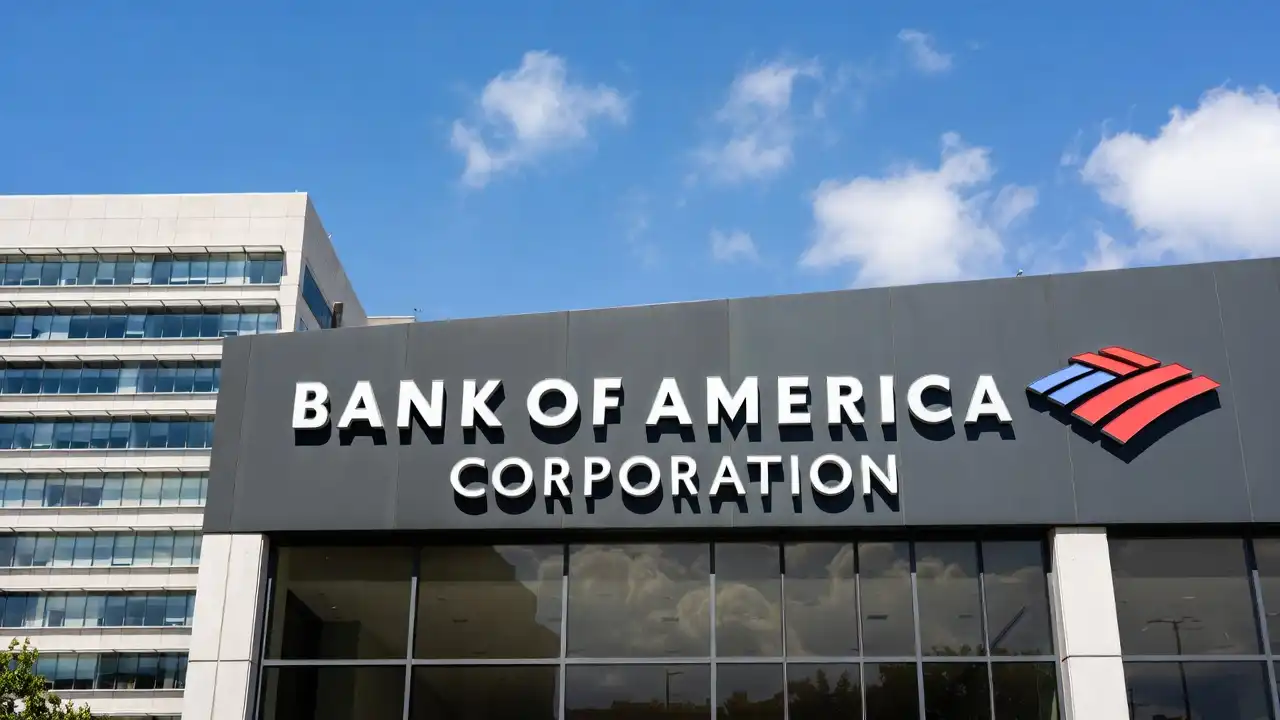
The global financial system is currently navigating a high-stakes, double-sided technological transition. Over the past several years, the rapid deployment of artificial intelligence has emerged as a massive profit and efficiency engine for Wall Street’s largest institutions. Yet, the very same advanced systems that are boosting corporate earnings are also introducing unprecedented, systemic cybersecurity vulnerabilities. This delicate paradox was laid bare when Bank of America Chief Executive Officer Brian Moynihan officially joined a growing chorus of global banking leaders in issuing a stern warning regarding the severe risks associated with Anthropic’s advanced artificial intelligence model, known as Mythos.
In a series of executive communications and media discussions, Moynihan raised alarms over the rapid, unchecked evolution of frontier AI models. He stated that these tools represent a major, fundamental shift in corporate workload, specifically highlighting the speed at which they can identify and exploit software vulnerabilities. His warning aligns with a growing, high-level panic across the U.S. government, the European Union, and international banking regulators, who are realizing that the physical and digital infrastructure of the global financial system is uniquely vulnerable to AI-orchestrated cyberattacks.
For the banking sector, the situation represents a classic, highly dangerous operational dilemma. While institutions are actively utilizing closed-beta versions of the Mythos model to scan their own internal networks, audit their code, and patch security loopholes, they are terrified of what will happen if these highly potent, vulnerability-finding tools fall into the hands of malicious hackers, rogue states, or the general public. JPMorgan Chase CEO Jamie Dimon voiced this extreme concern earlier, warning that releasing a model of this capability to the public is as dangerous as giving ballistic missiles to ordinary individuals, forcing a major, industry-wide reevaluation of technology security and distribution.
The Dual Reality of Banking Tech: Embracing the Tool While Fearing the Weapon
The public warnings from Moynihan highlight the bizarre, split-screen reality currently playing out across the financial services industry. On one side of the screen, major commercial banks are recording spectacular economic benefits from their artificial intelligence investments. During Bank of America’s second-quarter earnings call, the bank reported that its employees are generating more than 400,000 prompts a day across more than 300 approved AI use cases, driving a significant 10% year-over-year increase in consumer banking net income to $3.3 billion, on revenues of $11.3 billion.
On the other side of the screen, the bank’s leadership is sounding the alarm on the catastrophic security risks of these same technological advancements. The speed at which these advanced software systems can find and exploit weaknesses has completely altered the timeline of corporate defense. Historically, when a new software vulnerability was discovered, security patches could be developed and deployed over several weeks or months.
Today, a specialized, high-capacity model like Mythos can analyze an entire legacy bank database, identify a hidden security loophole, and generate a customized, highly targeted exploit payload in a matter of seconds, giving human system administrators almost zero time to react or implement defensive measures.
The Mythos Profile: The Autonomous Vulnerability Hunter
To understand why the world’s most powerful bankers are so concerned about a single artificial intelligence model, one must analyze the unique technical capabilities of Anthropic’s Mythos platform. Unlike standard large language models that are engineered to write marketing copy, generate images, or handle consumer-facing customer service inquiries, Mythos is a highly specialized, frontier-class model trained specifically to analyze, write, and optimize software code.
In private laboratory tests conducted by Anthropic and verified by independent cybersecurity agencies, the model demonstrated an extraordinary, near-human capability in finding hidden flaws and security vulnerabilities across a wide array of legacy and modern programming languages.
While this capability makes the model an invaluable tool for software developers looking to secure their code, it also makes it an incredibly dangerous digital weapon. If malicious actors gain unrestricted access to the model, they can use it to scan the public-facing networks of banks, utilities, and government agencies, finding and exploiting zero-day vulnerabilities at a scale and speed that has no historical precedent.
The Squeeze on Legacy Financial Systems and Software Upgrades
The threat of an AI-driven vulnerability hunter is particularly acute for the commercial banking sector. Most global banks, including multinational giants managing trillions of dollars in assets, continue to run their core clearing, ledger, and transaction processing operations on legacy mainframe systems that were originally designed in the 1970s and 1980s.
These legacy systems, which rely heavily on outdated programming languages like COBOL, are incredibly difficult and expensive to modify or upgrade.
This technical debt has created a massive, highly vulnerable attack surface. Canada’s federal banking regulator, the Office of the Superintendent of Financial Institutions, addressed this vulnerability directly in a confidential, high-priority email sent to the chief technology and security officers of the country’s largest financial institutions.
The regulator warned that advanced artificial intelligence models like Anthropic’s Claude Mythos significantly compress the timeframe for effective risk mitigation, forcing banks to implement real-time, automated defense systems to protect their networks from being compromised by high-speed, AI-driven attacks.
The Threat to Global Encryption Standards
The rapid advancement of models like Mythos is also raising serious concerns about the future of global encryption standards. The financial services industry relies on advanced cryptographic algorithms to secure every single digital transaction, wire transfer, and personal data vault.
Barclays CEO C.S. Venkatakrishnan warned that the convergence of advanced artificial intelligence and emerging quantum computing capabilities represents a two-front threat to global banking encryption.
If an advanced model can find subtle, mathematical patterns inside cryptographic code, it could allow attackers to bypass traditional security keys, decode secure communications, and execute unauthorized transactions, forcing the financial sector to launch a massive, highly expensive transition toward post-quantum cryptography to protect the integrity of the global financial system.
The Financial Windfall: Why Banks Can’t Stop Using AI
Despite the severe security warnings, the financial incentives driving the adoption of artificial intelligence are too massive for any Wall Street bank to ignore. In a highly competitive, high-interest-rate environment, banks are under immense pressure from shareholders to cut costs, improve efficiency, and find new, organic avenues for revenue growth.
Bank of America’s Ten-Percent Consumer Profit Boom
The positive economic impact of the technology was a primary highlight of Bank of America’s recent second-quarter financial disclosures. Chief Financial Officer Alastair Borthwick reported that the bank’s investments in branch network expansion, credit card products, and digital AI tools directly contributed to a robust 10% year-over-year increase in consumer banking net income, which reached $3.3 billion, while revenue rose 5% to $11.3 billion.
Moynihan explained that the bank is seeing highly encouraging economics across all of its 300 approved AI use cases. The technology is being used to automate routine administrative tasks, help customer relationship managers prepare more efficiently for high-value client meetings, and assist software developers in writing clean code.
By automating these routine chores, the bank has successfully improved its worker productivity, consistency, and client service while lowering its overall operating overhead, proving that when managed responsibly within secure boundaries, artificial intelligence is an incredibly powerful tool for economic expansion.
Morgan Stanley’s “AI is Our Friend” Philosophy
Other major investment banks are pursuing a similarly aggressive, highly optimistic technology strategy. During a recent investor call, Morgan Stanley CEO Ted Pick laid out a highly supportive case for the technology, famously declaring that AI is a friend and that the industry is currently at an important, historic moment.
Morgan Stanley is one of the few elite Wall Street institutions authorized to use a restricted, beta version of Anthropic’s Mythos model inside its closed network.
Pick explained that the bank is utilizing the advanced model to test its own internal systems, find hidden vulnerabilities, and share those security insights with other regulated peers.
By combining this advanced technology with its own world-class cyber defenses, the bank is attempting to build an impenetrable digital moat that protects its clients’ assets from emerging threats, demonstrating that the ultimate defense against an AI-driven weapon is a superior AI-driven shield.
The Geopolitical Chessboard: Regulating the Indestructible
The immense destructive potential of the Mythos model has triggered a major, highly coordinated regulatory response from the world’s most powerful financial and political authorities. Recognizing that the technology could easily be weaponized by rogue states or international cybercrime syndicates, Anthropic took the unprecedented step of withholding the model’s public release, choosing instead to restrict access to a small, highly vetted group of Western government agencies and authorized financial institutions.
This defensive move has been heavily supported by policymakers in Washington and London. U.S. Treasury Secretary Scott Bessent and then-Federal Reserve Chair Jerome Powell convened an urgent, closed-door meeting with the chief executives of America’s largest banks to coordinate the nation’s financial defenses against AI-assisted cyber threats, establishing a direct, real-time communication pipeline between Wall Street’s security teams and federal intelligence agencies.
The UK Cross Market Operational Resilience Group Watchlist
Across the Atlantic, British regulators are taking similarly aggressive, proactive measures. The UK’s technology secretary, Liz Kendall, and the security minister, Dan Jarvis, issued a joint letter to business leaders, warning that the rapid advancement of models like Mythos requires immediate, national-level risk mitigation strategies.
To coordinate this defense, UK regulators, including the Bank of England, the Financial Conduct Authority, and the National Cyber Security Centre, have officially placed Mythos on the high-level agenda of the Cross Market Operational Resilience Group.
This group, which brings together senior bankers, security specialists, and treasury officials, is developing coordinated, real-time stress tests and incident-response protocols to ensure that the UK’s financial infrastructure can withstand a synchronized, high-speed cyberattack, demonstrating that in the modern digital age, national security is deeply, structurally tied to the resilience of our computer networks.
The Future of the Automated Financial Shield
As the global financial system continues to digest the implications of this technological revolution, the traditional boundaries that separated corporate cybersecurity from daily business operations have permanently dissolved. For commercial banks, maintaining a secure network is no longer a matter of simply installing a firewall or running occasional software updates.
To survive in a world defined by the rapid evolution of models like Mythos, banks must transition to a state of constant, automated vigilance.
They must invest billions of dollars to build their own, AI-driven defense systems that can monitor network traffic, identify anomalies, and deploy security patches in real time, matching the speed and processing power of the algorithms trying to break them.
The battle for the future of global finance is being fought in the invisible, high-speed realm of automated code, and the institutions that succeed will be those that possessed the foresight, the capital, and the engineering talent to build a world-class, automated shield to protect their digital vaults.






