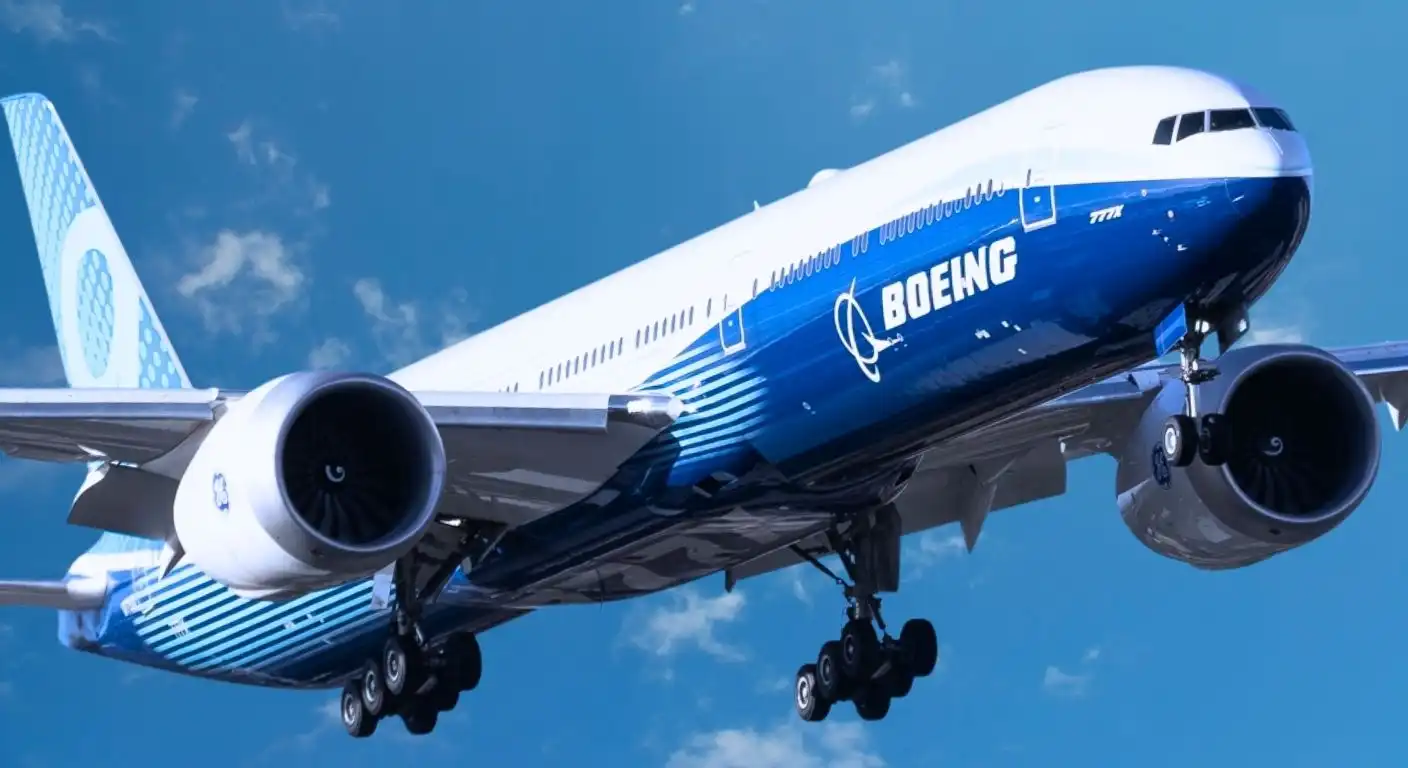
The global aerospace sector has witnessed a major geopolitical and commercial breakthrough that promises to reshape transpacific trade relations. In a major development for the aviation industry, China Southern Air Logistics Company Limited signed a definitive agreement with Boeing to purchase a new fleet of heavy-duty, long-haul cargo freighters. The transaction represents a major step forward for the U.S. planemaker, which has struggled for nearly a decade to secure high-value contracts from the world’s fastest-growing aviation market.
The landmark transaction, finalized in late June 2026, has a base list price of approximately $3.618 billion for seven initial freighter aircraft. The agreement also includes options for China Southern to purchase three additional advanced freighters, which would push the total potential value of the contract to more than $5.24 billion.
By securing this high-profile commitment, Boeing is successfully reopening its primary export pipeline to China, signaling a significant easing of the trade tensions and regulatory disputes that have grounded its commercial growth in East Asia for years.
The timing of the deal is highly strategic. It follows a series of high-level diplomatic negotiations and a successful U.S. trade delegation visit to Beijing, demonstrating that even during periods of intense technological and industrial competition, the commercial aviation sector remains a vital, mutually beneficial bridge between the world’s two largest economies. For Boeing, the cargo order provides a critical financial cushion and a much-needed boost to its long-term wide-body manufacturing program.
Inside the Landmark Three Point Six Billion Dollar Freighter Deal
The agreement between China Southern and Boeing is a highly structured, multi-phase transaction designed to satisfy the rapid growth of cross-border logistics and global e-commerce.
Breaking Down the Seven-Aircraft Order and Options
The core of the transaction involves the purchase of seven large-capacity, long-haul freighter aircraft. The initial order is divided into two distinct Boeing models, including:
- Two (2) Boeing 777F (777 Freighter) aircraft.
- Five (5) of the newly developed, highly efficient 777-8F next-generation freighter models.
The agreement also grants China Southern Cargo Airlines, a wholly owned subsidiary of China Southern Air Logistics, the formal option to purchase three additional 777-8F aircraft in the future.
The inclusion of the 777-8F is highly significant, as it represents Boeing’s most advanced, high-capacity twin-engine freighter. The model is designed to deliver unprecedented range, payload capacity, and fuel efficiency, making it the ideal workhorse for long-distance international trade routes.
The Five Point Two Billion Dollar Valuation and Corporate Structure
The list price for the initial seven freighters is set at approximately $3.618 billion, with the valuation covering both the advanced airframes and their high-performance turbofan engines. If China Southern exercises its options for the three additional 777-8F models, the total list price for the ten-plane package will reach approximately $5.24 billion, which is equivalent to roughly 35.719 billion yuan at the current exchange rate of 1 USD to 6.8166 yuan.
As is standard practice in the highly competitive aerospace industry, Boeing has granted significant commercial concessions and discounts to the Chinese carrier. This means the actual, confidential purchase price will sit comfortably below the published list prices, protecting China Southern’s capital and ensuring the transaction remains highly cost-effective.
To take effect, the transaction requires formal approvals from China Southern’s general meeting of shareholders and relevant Chinese state regulatory authorities. The deal is structured through standard corporate financing mechanisms, utilizing a combination of internal cash reserves and commercial bank loans, and does not constitute a related-party transaction or a major corporate asset restructuring.
Strategic Rejuvenation of US-China Aviation Relations
The successful completion of the freighter contract represents a massive political and commercial victory for Boeing, which has spent years locked out of Asia’s largest and most lucrative aviation market.
Ending a Decade-Long Drought for the American Planemaker
Prior to a series of framework agreements signed earlier this year, Boeing had faced a devastating, decade-long drought in major aircraft orders from China. The freeze began in the wake of escalating trade tensions between Washington and Beijing, and was severely compounded by the global grounding of the Boeing 737 MAX following two tragic crashes in 2018 and 2019.
Historically, China was Boeing’s most important international market, with Chinese airlines accounting for approximately 25% of the company’s global deliveries before the grounding.
During the years of the regulatory freeze, Boeing’s market presence in China weakened dramatically, allowing its primary European rival, Airbus, to capture a massive competitive advantage. Airbus capitalized on the standoff by expanding its local assembly lines in Tianjin and securing multi-billion-dollar passenger jet contracts from China’s major state-owned carriers, making the current freighter deal an essential tool for Boeing to reclaim its market share.
The Role of Kelly Ortberg and President Trump’s Beijing Visit
The catalyst for the current breakthrough was a highly successful, high-profile diplomatic mission to Beijing led by U.S. President Donald Trump in May 2026. The state visit was accompanied by a delegation of senior American business executives, including Boeing’s newly appointed Chief Executive Officer, Kelly Ortberg.
During the bilateral discussions, Ortberg and U.S. trade representatives successfully negotiated a framework agreement under which China committed to purchasing 200 Boeing aircraft over the coming years to support its domestic air transport development.
The Ministry of Commerce in Beijing confirmed the progress, stating that trade cooperation in the aviation sector is mutually beneficial and win-win for both nations. As part of this cooperative framework, the United States has promised to guarantee a steady, uninterrupted supply of engines, spare parts, and maintenance support for Chinese operators.
The $3.62 billion freighter deal is the first major commercial transaction to emerge from this diplomatic framework, proving that Boeing has successfully reopened the Chinese market to its wide-body aircraft program.
The E-Commerce Boom Fuels the Demand for Cargo Freighters
While geopolitical negotiations provided the diplomatic pathway for the deal, the underlying economic driver of the transaction is an unprecedented, global surge in Chinese cross-border e-commerce.
Cross-Border Logistics and the Rise of Temu and Shein
The global retail landscape has been completely disrupted by the explosive rise of Chinese cross-border e-commerce platforms, most notably Temu, Shein, and Alibaba’s AliExpress. These platforms rely on a unique business model that ships individual, low-cost consumer goods directly from factories in China to households across North America, Europe, and Australia.
This high-volume, direct-to-consumer model has created an insatiable demand for international air cargo capacity. Unlike traditional retail, which relies on slow, containerized ocean shipping to move bulk goods to regional warehouses, cross-border e-commerce requires fast, overnight air transport to deliver millions of individual packages to consumers within a few days.
This shipping demand has outstripped available cargo capacity, driving up air freight rates and forcing major logistics providers like China Southern Air Logistics to rapidly expand their fleets of dedicated, long-haul cargo freighters to avoid shipping bottlenecks.
Upgrading the Fleet to Optimize Fuel Efficiency and Capacity
To capitalize on this e-commerce boom and maintain its competitive position, China Southern Air Logistics is executing a comprehensive fleet modernization program. The carrier operates one of the largest and most sophisticated cargo fleets in Asia, but many of its older freighters are nearing the end of their operational lifespans.
Older cargo aircraft burn high volumes of fuel and require intensive, expensive maintenance, making them highly vulnerable to rising energy costs and strict new international environmental regulations.
The newly ordered Boeing 777-8F offers a significant technological upgrade. The advanced twin-engine freighter features a maximum structural payload capacity of 118 tonnes and offers a 30% reduction in fuel consumption and carbon dioxide emissions compared to previous-generation freighters.
By deploying these highly efficient aircraft on its long-haul routes connecting Guangzhou and Shenzhen with major consumer centers in Europe and North America, China Southern can dramatically lower its operating costs, increase its cargo capacity, and comply with international aviation emission standards, ensuring a highly profitable and sustainable future for its logistics operations.
The Broader M&A and Aerospace Context
The $3.62 billion freighter deal is part of a broader, highly competitive spending cycle as Chinese airlines scramble to modernize their fleets and prepare for a massive expansion of domestic and regional travel.
Comparing the Freighter Deal with Airbus’s Narrowbody Dominance
While the cargo contract is a massive strategic victory for Boeing, the American planemaker still faces a challenging climb to match the overall market dominance of Airbus in the passenger sector.
Just two months prior, in April 2026, China Southern Airlines formally disclosed that it had signed a massive contract with Airbus to purchase 137 A320neo-family passenger jets. That transaction was valued at an extraordinary $21.4 billion at catalog prices, proving that Chinese carriers continue to favor European single-aisle aircraft for their high-volume domestic and regional passenger routes.
However, Boeing’s success in securing the cargo contract demonstrates its continued technological superiority in the wide-body and dedicated freighter segments. While Airbus has built a strong lead in the single-aisle passenger market with its highly popular A320neo family, Boeing’s 777F and 777-8F remain the industry gold standard for heavy, long-haul air cargo.
By focusing its sales efforts on these high-margin, wide-body cargo programs, Boeing can leverage its historical engineering strengths to capture a significant portion of the global logistics market, providing a highly reliable source of revenue as it continues to work on restoring its reputation in the passenger sector.
A Secured Path for Air Cargo Integration
The $3.62 billion freighter deal between China Southern and Boeing is a landmark event that represents a major victory for both companies and a highly promising milestone for international trade diplomacy. By securing a commitment for seven advanced, long-haul freighters with options for more, Boeing has successfully ended a painful, decade-long drought in one of its most important global markets.
While the company must continue to navigate intense competition from Airbus in the passenger sector and manage the strict regulatory approval processes of Chinese authorities, its strong engineering lead in the dedicated cargo segment has provided a reliable path forward.
Driven by the explosive, relentless growth of global e-commerce and the need for highly efficient, low-emission transport, this partnership proves that the future of international aviation remains built on a foundation of cooperation, technological innovation, and deep economic integration. As these advanced 777 freighters join China Southern’s fleet over the coming years, they will not only help the carrier meet the challenges of the digital retail era but will also continue to act as a vital, highly productive physical link connecting businesses and consumers across the globe.