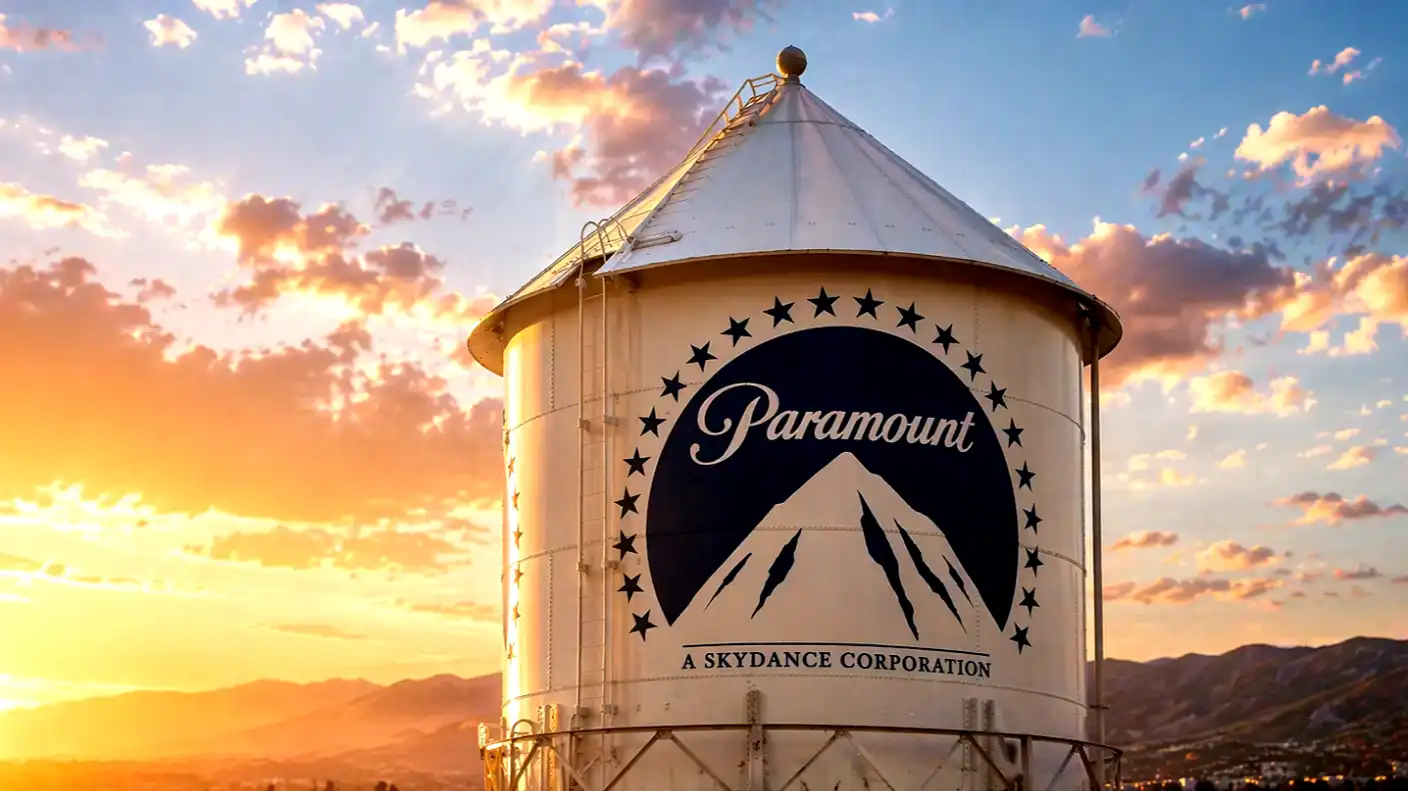
A major legal battle over the future of Hollywood has taken a volatile turn as California Attorney General Rob Bonta abruptly canceled planned settlement negotiations with Paramount Skydance. The high-level mediation session was scheduled to address a multi-state antitrust lawsuit seeking to block Paramount’s proposed $110 billion takeover of Warner Bros. Discovery. The sudden breakdown in discussions deepens the uncertainty surrounding the largest corporate consolidation in entertainment industry history.
Attorney General Bonta called off the meeting after accusing Paramount executives of leaking confidential details from a preliminary session and misrepresenting the substance of closed-door discussions. Bonta stated that the media company demonstrated a complete lack of good faith by playing games in the press. While Paramount denied that it was the source of any press leaks and expressed an eagerness to continue good-faith dialogue, the state Department of Justice closed the door on immediate compromise, leaving the landmark transaction stalled in federal court.
The collapsed mediation raises the financial and operational stakes for both media giants. A coalition of 12 state attorneys general argues that combining Paramount and Warner Bros. Discovery under one corporate roof will destroy competition in theatrical movie distribution, eliminate thousands of entertainment jobs, raise consumer subscription prices, and give a single corporate conglomerate control over more than 50 basic cable television networks. With federal court trials scheduled for March 2027 and multi-million-dollar daily ticking fees looming, the confrontation has grown into an intense clash between state antitrust regulators and Hollywood executive suites.
The Sudden Collapse of Mediation Talks in Sacramento
The canceled meeting was intended to provide a diplomatic off-ramp for an escalating legal war. Legal representatives from the California Attorney General’s office and Paramount Skydance had spent days establishing ground rules for a formal mediation summit. The gathering was slated to bring top decision-makers to the table, including Paramount Skydance Chief Executive Officer David Ellison, to explore whether structural concessions could resolve state antitrust concerns without proceeding to a full federal trial.
A foundational condition of the negotiation framework was strict confidentiality. State prosecutors insisted that neither side use the press to manipulate public perception or create artificial leverage during settlement discussions. However, over the weekend preceding the planned meeting, detailed accounts of preliminary talks and potential state settlement conditions surfaced across national media outlets.
The public disclosure of sensitive negotiating terms infuriated state prosecutors. Bonta acted swiftly to terminate the scheduled mediation, signaling that California will not entertain compromise while corporate executives attempt to conduct settlement talks through media headlines.
Allegations of Confidentiality Leaks and Bad Faith Tactics
The breakdown in communication centered on leaks that outlined specific regulatory demands that California was preparing to submit. Media reports revealed that state officials were considering demanding major structural carve-outs, including requiring the combined company to sell off several profitable basic cable channels and legally separate the Warner Bros. film studio from Paramount Pictures.
In an official public statement addressing the cancellation, Bonta stated that Paramount not only leaked the alleged substance of settlement discussions but also misrepresented those conversations, demonstrating a clear lack of good faith. Bonta emphasized that his office will only return to the negotiating table when Paramount stops playing games and engages in sincere, transparent discussions.
Paramount quickly pushed back against the state’s accusations, issuing a statement assuring the public and state officials that the company was not the source of any confidential information leaks. Company leadership maintained that it remains ready to continue constructive dialogue to resolve the lawsuit, arguing that the merger will expand content investment and create jobs. However, the breach of trust has frozen formal communications between the parties, eliminating any near-term path toward an out-of-court settlement.
The High-Stakes Summit Involving David Ellison and Rob Bonta
The aborted mediation summit carried immense personal and professional stakes for David Ellison, the tech-scion media executive leading Paramount Skydance. Ellison has positioned the $110 billion acquisition of Warner Bros. Discovery as a transformative maneuver designed to create a modern entertainment juggernaut capable of competing against trillion-dollar tech platforms like Apple, Amazon, and Netflix.
Securing a direct dialogue with Attorney General Bonta was seen as a critical milestone for Ellison’s leadership team. California’s legal opposition represents the single most formidable barrier standing between the corporate merger and its commercial closing.
Political figures across California had actively encouraged both sides to meet. Outgoing California Governor Gavin Newsom publicly expressed support for an amicable settlement if terms protected state interests, while Los Angeles Mayor Karen Bass called for a swift resolution to prevent economic harm to local studio communities.
The abrupt cancellation of the meeting represents a major tactical setback for Ellison, who had hoped to present settlement commitments directly to state leadership and prevent the dispute from dragging through years of federal court litigation.
Anatomy of the 12-State Antitrust Lawsuit
The legal challenge against the mega-merger represents one of the most coordinated state-level antitrust interventions in modern American commercial history. California leads a coalition of 12 state attorneys general, including top prosecutors from New York, Arizona, Colorado, Connecticut, Massachusetts, Minnesota, Nevada, New Jersey, New Mexico, Oregon, and Washington.
The coalition filed a sweeping federal lawsuit under Section 7 of the Clayton Act, which prohibits mergers or acquisitions that substantially lessen competition or tend to create a monopoly in any line of commerce. The states argue that allowing Paramount and Warner Bros. Discovery to merge would concentrate unprecedented power in the hands of a single board of directors.
The lawsuit asserts that the proposed transaction is not an ordinary corporate buyout, but an anti-competitive mega-merger that threatens the foundational structure of the American entertainment ecosystem.
Market Concentration Across Theatrical Distribution and 50 Cable Channels
The primary focus of the antitrust complaint is the concentration of power in theatrical film distribution and linear television broadcasting. A combined Paramount-Warner entity would unite two of Hollywood’s five historic legacy studios under single ownership, leaving the global film market with only four major legacy distribution houses.
State prosecutors estimate that the merged entity would control nearly one-third of all box-office releases in the United States. This level of market concentration gives the studio massive leverage over independent movie theater chains, allowing the company to dictate mandatory exhibition windows, minimum ticket revenue splits, and punitive screen-booking terms. Small regional theater operators warn that losing bargaining leverage against a dominant super-studio could force hundreds of independent cinemas into bankruptcy.
In the television broadcast space, the combined company would command a staggering portfolio of more than 50 basic cable networks. The merged channel lineup would unite:
- Major national news operations, placing CNN and CBS News under the same corporate management.
- Prominent entertainment networks, including Comedy Central, MTV, Nickelodeon, and Cartoon Network.
- High-value lifestyle programming, encompassing HGTV, Food Network, TLC, and Discovery Channel.
- Premium cable and streaming platforms, integrating HBO, Max, and Paramount+.
Cable and satellite television distributors warn that this consolidated portfolio would give the company irresistible bundling power. If a pay-TV distributor resists rate hikes on secondary channels, the conglomerate could threaten to black out high-demand channels like CBS, CNN, or live sports programming, forcing distributors to accept expensive carriage fees that get passed directly to consumers through higher monthly bills.
The Threat to Entertainment Labor and 4,500 Los Angeles Jobs
Beyond consumer price impacts, the state lawsuit places heavy emphasis on the merger’s potential devastation of entertainment labor markets. The Southern California economy remains heavily dependent on television and film production, which generates hundreds of thousands of high-wage middle-class jobs across the Los Angeles metropolitan basin.
Independent economic impact analyses project that Paramount’s planned $6 billion in corporate cost synergies would lead to the elimination of roughly 4,500 entertainment and administrative jobs across Los Angeles County alone. To achieve its cost-cutting targets, the merged company would inevitably eliminate duplicate film development departments, consolidate physical production lots, downsize animation studios, and slash marketing teams.
Labor organizations, including the Writers Guild of America, have formally supported the state’s legal challenge. Union representatives argue that reducing the number of major legacy studios from five down to four diminishes bidding competition for original scripts, suppresses wages for below-the-line crew members, and drastically limits the number of television pilots greenlit each year. In a creative industry still recovering from extended labor strikes and production contractions, eliminating a major competing studio could inflict permanent structural damage on the local working-class workforce.
Clashing with Federal Department of Justice Approvals
The aggressive multi-state lawsuit presents a dramatic constitutional and regulatory clash with federal authorities. Earlier in the year, the United States Department of Justice completed its federal antitrust review and granted formal regulatory clearance for the Paramount-Warner Bros. Discovery transaction without requiring major divestitures.
Federal clearance typically paves the way for corporate acquisitions to close smoothly. However, under the dual enforcement framework of American antitrust law, individual state attorneys general possess independent statutory authority to enforce federal and state antitrust statutes within their jurisdictions.
State prosecutors maintain that federal approval does not shield anti-competitive mergers from state enforcement. Bonta and his fellow attorneys general argue that the Department of Justice applied an overly narrow analytical framework that failed to account for localized job losses and regional economic harm in key entertainment production hubs.
By continuing their lawsuit despite federal sign-off, the states are testing the legal limits of state sovereignty in challenging national corporate transactions.
Corporate Pressures, Relocation Threats, and Financial Penalties
The collapse of settlement negotiations introduces severe financial strain for Paramount Skydance and Warner Bros. Discovery. The corporate merger agreement contains rigid operational timelines and escalating penalty clauses designed to discourage prolonged regulatory delays.
As the lawsuit moves closer to an expensive trial, the leadership teams of both companies face mounting pressure from Wall Street credit rating agencies, institutional shareholders, and private equity backers. The extended legal uncertainty has weighed on stock prices and complicated long-term production planning across both studio lots.
To force a resolution, corporate executives have deployed high-pressure public rhetoric, threatening to inflict severe economic consequences on California if state officials refuse to settle.
The $7 Million Daily Ticking Fee and Capital Deadlines
A critical financial mechanism driving Paramount’s urgency is the ticking fee agreed upon by David Ellison and Warner Bros. Discovery Chief Executive Officer David Zaslav. The initial corporate merger contract established a target closing date of September 30.
Under the terms of the agreement, if the transaction fails to close by the September 30 deadline due to ongoing regulatory litigation, Paramount must pay Warner Bros. Discovery shareholders a daily ticking fee of approximately $7 million. This penalty compounds into a staggering financial liability:
- Roughly $49 million in cash penalties accrued every single week.
- Approximately $210 million in mandatory payouts for every month of litigation delay.
- An estimated $650 million cash drain per quarter until the merger closes or terminates.
These compounding fees place an immense financial burden on Paramount Skydance’s balance sheet. With federal district court Judge Araceli Martinez-Olguin setting the formal antitrust trial for March 2, 2027, Paramount could accumulate well over $1 billion in penalty payments to Warner Bros. Discovery shareholders before a federal judge even begins hearing opening trial arguments.
David Ellison’s Threat to Relocate Studio Operations Out of California
Confronted with the state’s unyielding legal challenge, David Ellison escalated tensions by publicly threatening to relocate Paramount’s historic corporate and studio operations out of California entirely. Ellison warned that if Attorney General Bonta refused to negotiate a settlement, Paramount would begin relocating operations to business-friendly states like Tennessee, Texas, or Georgia starting in October.
The relocation threat sent shockwaves through the California political establishment. Moving one of the world’s most recognizable entertainment brands out of its historic Hollywood home would deal a major psychological and economic blow to California’s status as the global entertainment capital.
States like Texas and Georgia have spent years building aggressive film tax credit packages and modern studio infrastructure to lure production away from Southern California.
However, state prosecutors dismissed the relocation warnings as an aggressive corporate bluff. Legal analysts pointed out that physically moving soundstages, historic film archives, thousands of specialized production workers, and deep vendor networks across state lines would cost hundreds of millions of dollars and take years to execute.
Rather than softening the state’s stance, the public threats hardened the resolve of prosecutors, who viewed the rhetoric as an attempt to bypass standard antitrust legal scrutiny.
Structural Divestiture Demands Versus Super-Studio Ambitions
The fundamental obstacle preventing a settlement is the massive ideological gap between state regulatory remedies and corporate operational goals. Antitrust regulators enforce structural remedies to ensure that merged companies cannot monopolize markets.
In contrast, corporate acquirers design mergers specifically to achieve maximum scale, operational consolidation, and pricing power.
For Attorney General Bonta, protecting market competition requires forcing Paramount to sell off valuable assets. For David Ellison, accepting deep structural divestitures would undermine the core strategic rationale for spending $110 billion in the first place.
Demands to Separate Warner Bros. Pictures from Paramount Studios
The most contentious condition explored during preliminary discussions was California’s demand to preserve the structural independence of Warner Bros. Pictures and Paramount Pictures. State prosecutors argued that the two legendary film studios must maintain separate creative greenlight authorities, independent theatrical distribution teams, and competing marketing budgets.
In addition, state officials called for the divestiture of significant linear cable assets. Regulators proposed that the merged entity spin off or sell several of its 50 basic cable networks to third-party operators to eliminate anti-competitive carriage leverage over pay-TV distributors.
For Paramount Skydance, these conditions represent non-negotiable dealbreakers. The entire financial model of the acquisition relies on eliminating redundant corporate overhead, pooling global streaming rights under a unified technological platform, and creating a combined intellectual property library that spans DC Comics, Star Trek, Harry Potter, Mission: Impossible, Game of Thrones, and Top Gun.
Stripping away core cable cash flows and keeping movie studios separate would destroy the estimated $6 billion in cost synergies, making the transaction financially unviable for lenders and equity partners.
The March 2027 Trial Horizon and Long-Term Media Consolidation
With mediation officially dead, the legal clash is heading toward a high-stakes courtroom showdown on March 2, 2027. The extensive pre-trial schedule will involve massive discovery processes, depositions of top Hollywood studio heads, and complex economic modeling from specialized antitrust scholars.
The outcome of this trial will establish crucial legal precedents for the future of global media consolidation:
- Clarifying whether state attorneys general can effectively block national mergers that have secured federal Department of Justice approval.
- Defining the modern antitrust boundaries of labor monopsony, specifically examining whether corporate mergers that reduce creative jobs violate federal competition law.
- Establishing legal thresholds for theatrical box-office concentration in an era dominated by digital streaming platforms.
- Setting the ground rules for future entertainment mega-mergers involving tech conglomerates and legacy media studios.
If the 12-state coalition wins a permanent injunction in March 2027, the ruling will effectively kill the $110 billion merger, forcing Paramount and Warner Bros. Discovery to pursue separate, uncertain futures as independent mid-sized operators.
If Paramount defeats the state lawsuit, the company will finalize the largest studio consolidation in Hollywood history, creating an unprecedented entertainment powerhouse that will dominate film, television, news, and streaming for decades to come.
California’s decision to halt settlement talks on the $110 billion Paramount and Warner Bros. Discovery merger highlights the intense conflict surrounding modern corporate consolidation. By walking away from mediation over bad-faith leaks, Attorney General Rob Bonta has made it clear that California will not back down in the face of corporate threats or $7 million daily penalty deadlines. As the case moves toward a definitive March 2027 federal trial, the battle over 50 cable channels, thousands of studio jobs, and the future of theatrical distribution will decide whether Hollywood’s future belongs to consolidated mega-studios or a competitive creative marketplace.