Key Points:
- Canada is set to finalize a landmark agreement to supply Germany with liquefied natural gas (LNG) from British Columbia’s West Coast.
- The gas will flow from the planned Ksi Lisims LNG project, a C$10 billion ($7.3 billion) floating facility backed by the Nisga’a Nation.
- Germany’s state-owned energy company SEFE, the nationalized former unit of Russia’s Gazprom, will act as the primary buyer.
- The deal offers Europe a vital, secure alternative to Russian and Middle Eastern energy exports that have been disrupted by geopolitical conflicts.
Canada is set to finalize a landmark agreement to supply Germany with liquefied natural gas (LNG) from a planned export facility on the Pacific coast of British Columbia. According to a Bloomberg report published on Tuesday, May 26, 2026, the two countries will announce the major trade pact on Wednesday. The agreement marks a critical geopolitical shift in transatlantic commerce as European nations work rapidly to establish secure, alternative energy lifelines and completely replace their reliance on gas supplies from Russia and the Middle East.
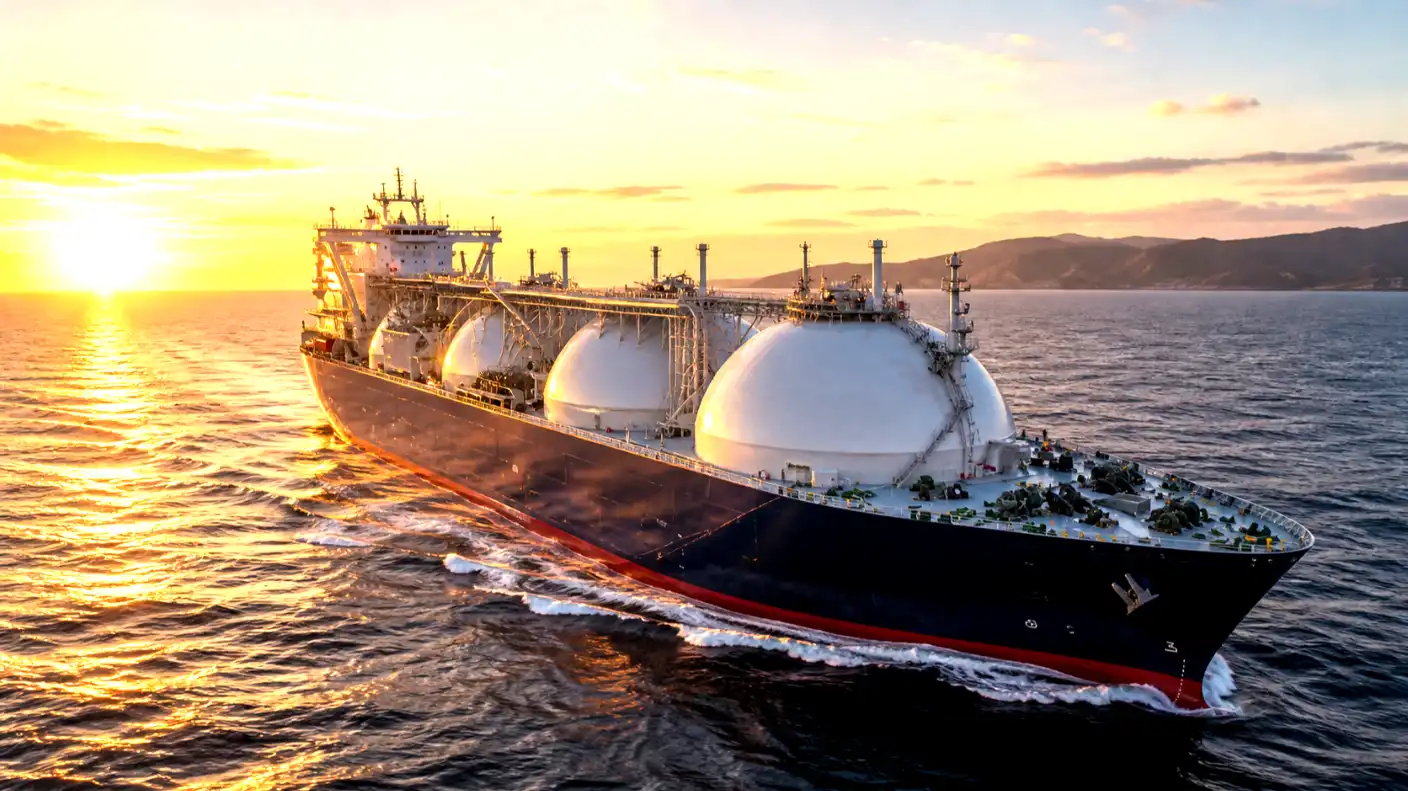
The long-term supply agreement will channel natural gas from the planned Ksi Lisims LNG project. This proposed C$10 billion (7.3 billion) floating export facility, located in northern British Columbia, has already received formal environmental and regulatory approval from Canadian authorities. A powerful consortium, including Blackstone Inc.-funded Western LNG, Rockies LNG Partners, and the Nisga’a Nation—an Indigenous group that owns the development land—backs the massive project. The partners designed the facility with a planned capacity of 12 million metric tons of LNG annually, making it nearly as large as the first phase of the Shell-backed LNG Canada terminal, which began operations last year.
The primary buyer under the new agreement is Germany’s state-owned energy company, SEFE (Securing Energy for Europe). SEFE represents the former German subsidiary of Russia’s Gazprom PJSC, which the German government nationalized following the invasion of Ukraine to protect its national grid. Tim Hodgson, Canada’s minister of energy and natural resources, expects to officially unveil the final details of the supply contract on Wednesday, cementing a vital partnership under the broader Canada-Germany Energy Partnership.
This historic agreement highlights Europe’s desperate search for reliable energy partners amid intense global volatility. The ongoing war in the Middle East has closed the critical Strait of Hormuz, through which roughly 20% of the world’s daily petroleum and LNG flows. With global shipping lanes blocked and regional energy prices soaring, European nations are aggressively seeking stable democracies to secure their baseline power generation needs. This massive shift has driven the global LNG market past $150 billion annually, prompting major exporters to fast-track their infrastructure pipelines.
While many analysts expected Germany to source its LNG from the neighboring United States, European policymakers are deliberately seeking to diversify their supply beyond American borders. Minister Hodgson noted that European countries do not want to become overly reliant on a single supplier, particularly amid growing trade tensions with the second administration of U.S. President Donald Trump. By sourcing gas from Canada, Germany secures a diverse portfolio of allies, protecting its industrial sector from sudden tariff adjustments or political policy shifts in Washington.
However, exporting LNG from Canada’s West Coast to Europe presents a significant, highly complex logistical challenge. Because Canada has no active LNG export terminals on its East Coast due to persistent political opposition—such as Quebec’s ban on pipeline construction through its territory—the gas must travel a much longer route. Tankers carrying fuel from British Columbia must sail south through the Pacific Ocean, transit the Panama Canal, and then cross the Atlantic to reach German ports. Despite these added transit miles, European buyers are willing to pay the premium to guarantee long-term supply security.
Furthermore, the agreement marks a major victory for Indigenous economic reconciliation in Canada. The Nisga’a Nation, which has held self-governing treaty rights since 2000, has played a leading role in developing the Ksi Lisims facility. Indigenous leaders emphasize that the project will generate thousands of high-paying jobs for regional communities and provide billions of dollars in long-term revenues. This model demonstrates that massive, capital-intensive infrastructure projects can proceed successfully when developers partner directly with First Nations as equal equity owners.
The project still faces several key hurdles before construction can officially begin. The consortium has not yet reached a Final Investment Decision (FID) for the Ksi Lisims facility, and securing the necessary multi-billion-dollar private capital remains a delicate task. However, signing a binding, long-term supply agreement with a sovereign buyer such as Germany will likely bolster investor confidence, enabling the developers to secure the required financing. Economists project that the full expansion of Canada’s West Coast LNG infrastructure could boost the national economy by up to 1.5% over the coming decade.
As Minister Hodgson and German officials prepare to announce their joint deal, the agreement signals a major turning point for the global energy transition. While both nations remain committed to ambitious, long-term carbon-reduction targets and green-hydrogen projects, they acknowledge that natural gas will serve as a vital transition fuel for a much longer period than originally expected. By establishing this secure transatlantic energy corridor, Canada and Germany are proving that even amid extreme geopolitical conflict, stable democracies can collaborate successfully to protect their national security and economic sovereignty.