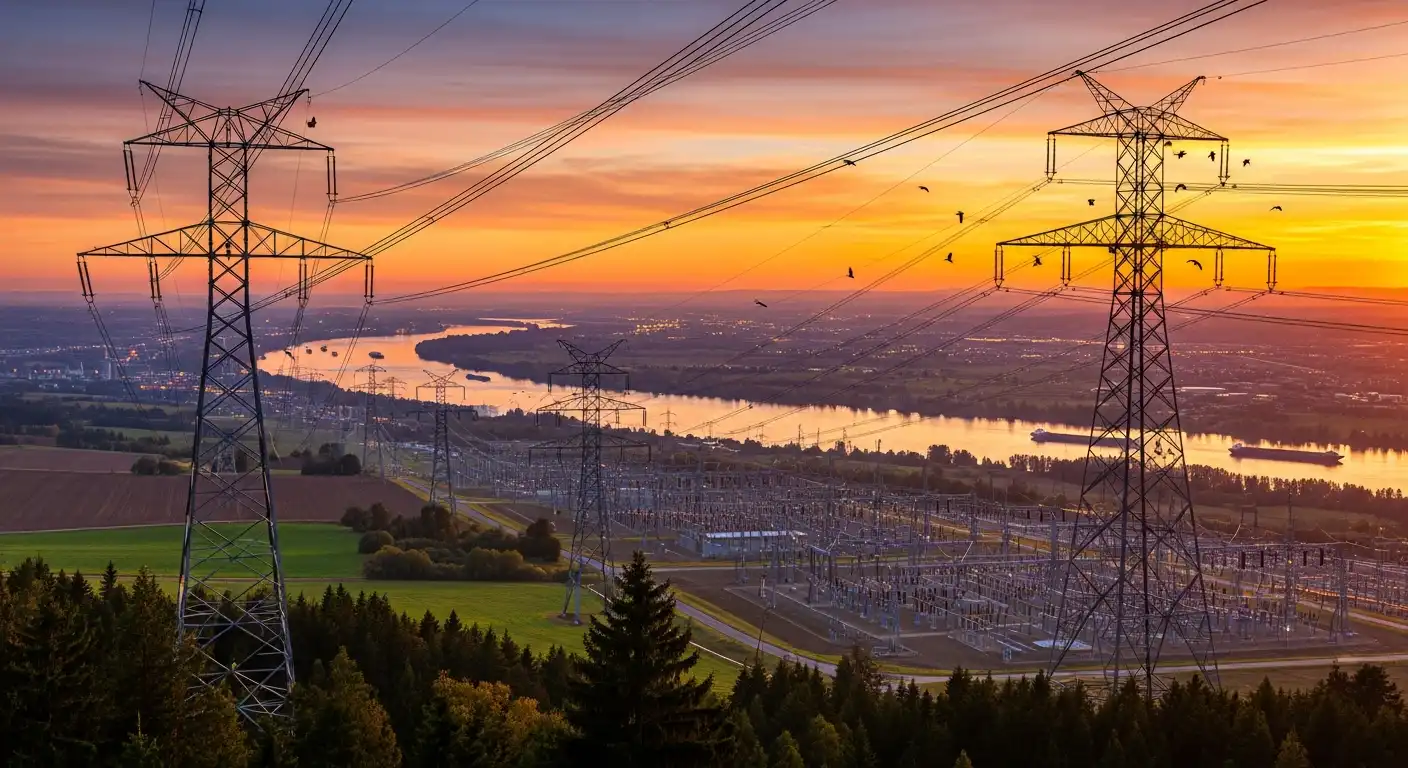
A sudden cross-border power failure that swept across Kazakhstan, Kyrgyzstan, Tajikistan, and Uzbekistan has placed a harsh spotlight on Central Asia’s energy vulnerabilities. Millions of citizens lost electricity within minutes as transit lines tripped, subways halted in major metropolitan centers, and water pumping stations went dark. While emergency response teams restored bulk power within several hours, the disruption revealed deep structural flaws in the region’s interconnected power architecture.
The widespread outage arrived at a delicate moment for regional governments. Countries across Central Asia are marketing themselves as prime destinations for international digital infrastructure, artificial intelligence clusters, and sovereign cloud data centers. Governments in Astana, Tashkent, and Bishkek have signed preliminary investment accords valued at more than $12 billion to construct high-density computing campuses. These projects rely on the promise of abundant, low-cost electricity sourced from massive hydropower reservoirs, natural gas plants, and vast renewable energy parks.
However, the latest blackout proved that raw generation capacity means very little without modern transmission lines and automated grid balancing. High-density data centers require five-nines reliability, representing 99.999% uninterrupted uptime. If interconnected transmission channels remain vulnerable to cascading frequency collapses, global tech conglomerates and institutional infrastructure funds may rethink their expansion plans across the Eurasian digital corridor.
A Cascading Grid Failure Across Four Central Asian Nations
Central Asia operates on a shared legacy network known as the Unified Energy System of Central Asia. Originally designed decades ago, the regional grid allows member nations to balance seasonal energy disparities. Mountainous upstream countries like Kyrgyzstan and Tajikistan generate surplus hydropower during spring and summer snowmelts, exporting clean electricity to downstream neighbors like Kazakhstan and Uzbekistan. In return, downstream nations supply fossil fuels and thermal power during freezing winter months.
While this interconnected model offers theoretical efficiency, it creates severe vulnerability to cascading network failures. When a major generation unit trips or a high-voltage transmission corridor overloads in one country, the resulting power surge ripples across national borders in milliseconds. If automated safety systems fail to isolate the disturbance immediately, entire regional zones disconnect to protect expensive transformers from catastrophic physical damage.
The recent incident highlighted how rapidly local mechanical faults can escalate into an international power emergency. Power grid operators faced sudden swings in cross-border frequency, forcing emergency relays to sever international interconnectors and leave major cities operating in total isolation.
Unpacking the 500 kV Transmission Line Trip and Toktogul Hydro Shutdown
The disruption originated when two major turbine generator units suddenly tripped offline at Kyrgyzstan’s Toktogul Hydropower Plant, the primary source of hydroelectric generation in the country. The sudden loss of hundreds of megawatts of baseload generation caused an instantaneous frequency drop across the southern section of the regional grid.
To compensate for the generation deficit, electricity surged uncontrollably along the North-East-South 500-kilovolt transmission corridor operated by the Kazakhstan Electricity Grid Operating Company. The massive surge overloaded the high-voltage lines, triggering automatic emergency control mechanisms designed to prevent line melting.
The emergency systems responded by severing the transmission link between Kazakhstan’s northern power grid and its southern industrial regions. This split isolated the Unified Energy System of Central Asia, creating severe generation imbalances across Uzbekistan and Tajikistan. Within minutes, multiple transmission loops collapsed, cutting off power to industrial hubs across eight distinct administrative territories in southern Kazakhstan alone.
Urban Disruptions from Almaty and Bishkek to Dushanbe and Surkhandarya
The human and commercial impact of the blackout spread rapidly across major urban centers. In Almaty, Kazakhstan’s largest city and financial capital, the municipal underground metro system ground to a sudden halt, stranding thousands of commuters underground. Traffic signals across major intersections went dark, creating massive traffic gridlock, while cellular towers and mobile data networks experienced widespread service degradation as backup batteries drained.
In Bishkek, the capital of Kyrgyzstan, power vanished across multiple commercial and residential districts. Pumping stations lost electricity, leaving thousands of apartment blocks without running water during afternoon peak demand. City hospitals had to rely on emergency diesel generators to keep intensive care units operational.
Similar disruptions struck Tajikistan, where municipal power networks in the capital city of Dushanbe and the northern industrial hub of Khujand experienced widespread outages. In neighboring Uzbekistan, the southern Surkhandarya region suffered extensive power cuts, disrupting agricultural irrigation pumps and local manufacturing workshops. The simultaneous failure across four sovereign nations underscored how deeply intertwined regional municipal systems remain.
The Digital Hub Ambition Clashing with Aging Energy Infrastructure
Over the past three years, Central Asian states have launched aggressive campaigns to diversify their economies away from traditional hydrocarbon extraction and raw commodity exports. Positioned geographically along the historic Silk Road between Europe and East Asia, the region seeks to capture a growing share of global data traffic.
Governments have introduced generous tax incentives, streamlined land acquisition procedures, and discounted electricity tariffs to attract enterprise data center developers. Low baseline power costs—often ranging between 3 and 5 cents per kilowatt-hour—present an attractive commercial proposition for energy-hungry computing workloads.
However, operating modern artificial intelligence training clusters requires absolute grid stability. Unlike standard manufacturing plants that can absorb brief voltage dips, modern graphic processing units and optical network switches suffer hardware damage and data corruption if power fluctuates by even a fraction of a percent.
High-Density AI Computing Meets Soviet-Era Transmission Networks
Artificial intelligence data centers place unique, intense demands on electrical infrastructure. A single modern computing campus can consume between 100 megawatts and 500 megawatts of continuous power, equivalent to the electricity demand of a medium-sized industrial city. Furthermore, computing workloads fluctuate rapidly, creating steep load ramps that stress local substations.
Much of Central Asia’s physical transmission hardware dates back to the 1970s and 1980s. High-voltage transformers, switchgear, and overhead aluminum transmission conductors have exceeded their intended operational lifespans by 15 to 25 years. Technical transmission losses across the regional network frequently exceed 14%, compared to an average of roughly 5% in advanced industrial economies.
When high-density computing loads connect to aging transmission backbones, the risk of localized thermal overloads increases dramatically. Without billions of dollars in substation upgrades and conductor replacements, regional transmission grids cannot safely deliver the enormous power volumes that hyperscale computing facilities require.
The Race to Attract Hyperscale Cloud and Sovereign Tech Investment
The competition to secure foreign technology capital has created a regional race among Central Asian neighbors. Kazakhstan has positioned its northern regions as a haven for enterprise cloud storage, leveraging its proximity to major industrial energy generation sites. Meanwhile, Uzbekistan has promoted digital technology parks in Tashkent and Samarkand, targeting regional banking platforms and e-commerce infrastructure.
Kyrgyzstan and Tajikistan have attempted to monetize their high mountain reservoirs by marketing clean, green hydroelectric certificates to foreign data operators looking to fulfill environmental sustainability mandates. International technology groups have shown preliminary interest, drawn by the prospect of powering computing hardware with zero-carbon water energy.
Yet, multinational cloud operators operate under strict service level agreements that impose heavy financial penalties for unplanned network downtime. A single unannounced regional blackout can cost an enterprise data facility tens of millions of dollars in lost operational productivity and hardware maintenance. Until Central Asian states demonstrate that their power networks can prevent cascading multi-nation blackouts, institutional tech capital will remain cautious about deploying large-scale infrastructure.
The Role of Battery Energy Storage and Modern Balancing Systems
While the recent blackout caused widespread disruption, power engineers noted that the grid recovered significantly faster than during previous historic collapses. The entire regional system returned to normal operation within a few hours, compared to multi-day blackouts experienced in earlier decades.
The primary reason for this faster restoration was the recent deployment of commercial-scale battery energy storage systems and automated anti-accident automation units. Recognizing their structural grid vulnerabilities, regional utilities have begun integrating utility-scale batteries to act as shock absorbers during sudden frequency deviations.
Energy storage technology represents the missing bridge between variable power generation and rigid commercial demand. By investing heavily in fast-responding battery arrays, grid operators can prevent minor turbine shutdowns from spiraling into cross-border network emergencies.
Rapid Frequency Regulation Mitigating Wider Grid Disintegration
When the Toktogul hydropower units failed, battery storage systems installed at strategic high-voltage substations responded within 200 milliseconds. These automated installations immediately discharged stored electrical energy into the high-voltage lines, helping stabilize regional frequency before additional thermal power stations tripped offline.
Modern grid-scale battery systems provide critical ancillary services that mechanical power plants cannot deliver quickly enough:
- Sub-second frequency regulation that instantly balances sudden generation deficits.
- Black-start support that allows downed transmission loops to restart without drawing power from external grids.
- Reactive power compensation that stabilizes transmission voltage across long-distance corridors.
- Peak shaving capabilities that absorb excess solar and wind generation during midday hours.
Energy analysts estimate that without the initial buffering provided by these newly installed storage systems, the blackout would have caused widespread physical damage to major transformer substations across Kazakhstan and Uzbekistan, extending the recovery timeline from hours to days.
Overcoming Seasonal Hydropower Volatility and Climate Pressures
Climate change is compounding the operational challenges facing Central Asia’s energy network. Rising average temperatures are accelerating glacier melt in the Tian Shan and Pamir mountain ranges, altering seasonal river runoff patterns that feed the region’s largest hydroelectric reservoirs.
During hot summer months, increased agricultural irrigation demand downstream conflicts directly with the water storage requirements of upstream hydroelectric dams. When reservoir water levels drop below critical operating thresholds, turbine efficiency declines, reducing available system inertia and increasing the risk of unexpected plant shutdowns.
To mitigate this seasonal vulnerability, Central Asian nations must accelerate the deployment of complementary renewable assets. Developing vast utility-scale solar arrays in the sunny deserts of southern Kazakhstan and Uzbekistan can provide abundant summer power, allowing upstream operators to conserve reservoir water for winter peak heating and industrial balancing.
Geopolitical and Regional Cooperation Challenges in Cross-Border Power
Resolving Central Asia’s electrical vulnerabilities requires deep political trust and coordinated cross-border governance. The national borders established after the dissolution of the Soviet Union divided an integrated regional power system among sovereign states with competing national priorities.
Whenever a regional blackout occurs, a familiar diplomatic blame game follows. National energy ministries frequently issue conflicting statements, pointing fingers at neighboring grid operators rather than addressing systemic coordination weaknesses.
Achieving true grid reliability will require member nations to move past short-term political disputes and establish unified operational protocols, shared data platforms, and transparent cross-border energy trading markets.
Mutual Blame and Cross-Border Coordination Deficits
In the immediate aftermath of the latest outage, national authorities issued contradictory explanations regarding the root cause of the incident. Energy officials in Tashkent attributed the blackout to an accident in the energy system of an unnamed neighboring country. Meanwhile, operators in Astana denied that difficulties originated within Kazakhstan’s national grid, pointing instead to equipment shutdowns in Kyrgyzstan.
In Bishkek, government leaders launched a special investigative commission to examine why 26 high-voltage emergency outages had occurred across the country over an 18-month period. Kyrgyz officials pointed to technical negligence, maintenance deficits, and accidental damage to overhead transmission lines caused by external construction contractors.
These public disagreements highlight the lack of a centralized, real-time dispatch authority with binding regulatory powers. While the Unified Energy System Coordination Commission exists on paper, national grid dispatchers often make unilateral decisions during emergencies, such as disconnecting international tie-lines to protect domestic consumers at the expense of regional network stability.
Financing Modern Grid Upgrades and Unified Energy Architecture
Modernizing Central Asia’s power infrastructure will require staggering capital investments. International financial institutions, including the World Bank, the Asian Development Bank, and the European Bank for Reconstruction and Development, estimate that the region must invest over $20 billion in grid modernization before 2035.
Key investment priorities include the following essential infrastructure projects:
- Constructing high-capacity 500 kV and 750 kV digital transmission rings to eliminate single-point bottleneck lines.
- Upgrading aging municipal substations with modern gas-insulated switchgear and automated protection relays.
- Installing advanced supervisory control and data acquisition software across all national dispatch centers to enable automated cross-border power balancing.
- Deploying over 3 gigawatts of utility-scale battery energy storage systems adjacent to major industrial hubs and renewable power plants.
- Harmonizing regulatory frameworks to enable dynamic, real-time wholesale electricity trading among all Central Asian nations.
Securing this volume of financing requires regional governments to implement structural market reforms. Utilities must transition away from subsidized, below-cost retail tariffs toward cost-reflective pricing models that generate the revenue needed to service infrastructure development loans.
The recent four-nation blackout serves as an urgent wake-up call for Central Asia. The region’s ambition to become a global digital hub, hosting billions of dollars in artificial intelligence infrastructure and sovereign data centers, cannot succeed on top of an unstable electrical foundation. While recent investments in battery energy storage prevented a catastrophic multi-day collapse, the underlying transmission bottlenecks and cross-border coordination deficits remain unresolved. If Kazakhstan, Kyrgyzstan, Tajikistan, and Uzbekistan want to power the digital economy of the future, they must unite to modernize their shared power grid today.