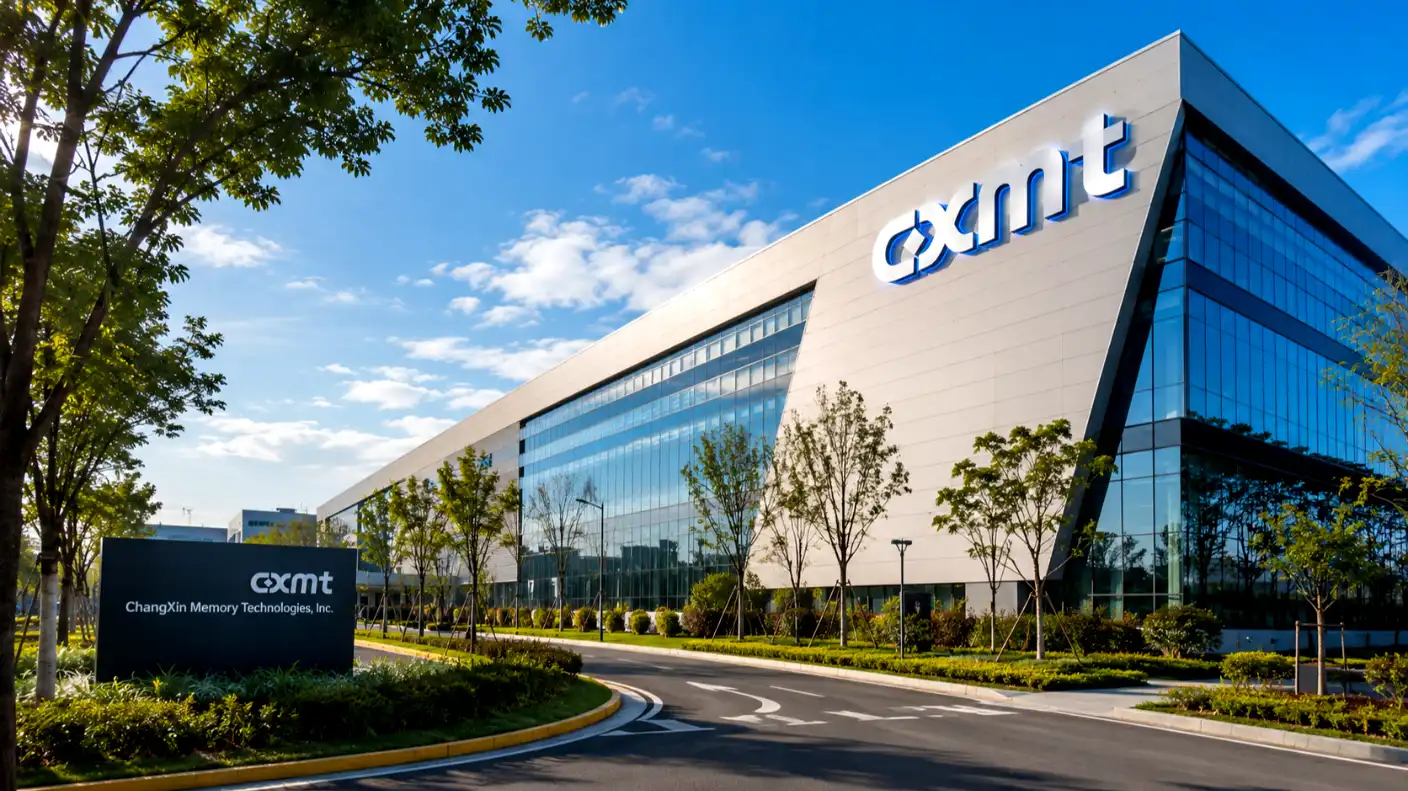
The semiconductor industry is witnessing a profound and permanent shift in global power. ChangXin Memory Technologies, or CXMT, has successfully finalized its initial public offering on the Shanghai STAR Market, raising a staggering 57.9 billion yuan, or approximately $8.55 billion. This massive influx of capital cements the Hefei-based manufacturer’s position as the primary engine of China’s ambition to achieve total semiconductor self-reliance. While Western markets have recently faced a cooling in technology investment, the sheer scale of this public debut proves that Beijing’s industrial policy remains highly resilient, focused on securing the foundational hardware required to build a sovereign digital economy.
This listing is the largest semiconductor IPO in Chinese history, surpassing the previous record set by SMIC back in 2020. The valuation of $85.5 billion—attainable if underwriters exercise their 15% overallotment option—places the firm in the same rarified air as global memory powerhouses. However, the path forward for the company is fraught with extreme complexity. While it now holds the cash to build out its third and fourth generation of fabrication facilities, it must simultaneously navigate the most restrictive export controls ever leveled against a single nation. The success of this massive IPO ensures that the global chip war will continue to escalate, as the foundry giant now possesses the financial resources to aggressively scale its production of high-performance memory chips, regardless of international pressure.
The Strategic Path Toward Memory Sovereignty
ChangXin Memory Technologies represents the absolute spearhead of China’s “Big Fund” strategy. By concentrating billions of dollars in state-backed capital into a single, dominant memory champion, Beijing has successfully created an entity capable of competing with global incumbents like Samsung Electronics, SK Hynix, and Micron Technology. The capital raised in this IPO is not meant for research or exploration; it is meant for rapid, industrial-scale deployment of fabrication capacity. The company intends to spend $6.5 billion of the proceeds over the next 24 months to construct two additional fabrication plants, each capable of producing 100,000 silicon wafers per month by 2028.
This massive manufacturing expansion is aimed directly at closing the performance gap with international competitors. The current industry standard for high-performance computing requires advanced 1-alpha and 1-beta DRAM nodes, which are incredibly difficult to manufacture at high yields. By scaling its production facilities, CXMT is accelerating its learning curve, forcing its engineering teams to overcome the physical challenges of printing microscopic circuits on silicon. With the support of state-affiliated research institutes and the integration of domestic equipment suppliers, the firm is building a self-sustaining technology stack that operates independently of Western lithography and etching tools.
Leveraging the Global Artificial Intelligence Memory Supercycle
The timing of this IPO could not have been more strategic. The global artificial intelligence buildout has created a severe, chronic shortage of High-Bandwidth Memory (HBM). As tech giants like Amazon, Google, and Microsoft compete to train the world’s most powerful language models, they require specialized memory stacks that can transfer massive amounts of data in mere nanoseconds. This demand has triggered a supercycle in the memory industry, where pricing power has shifted entirely to the manufacturers who hold the available fabrication capacity.
CXMT is moving aggressively to pivot its product mix toward these high-margin, high-bandwidth memory chips. The company’s new factories are designed with the flexibility to manufacture both standard DRAM for mobile devices and sophisticated HBM stacks for AI servers. By capturing even a small slice of the AI memory market, the company can generate billions of dollars in annual revenue, providing the high-margin cash flows needed to pay back its state-backed investors and fund its internal research operations. The company expects that by 2029, AI-related memory will account for over 30% of its total corporate revenue, transforming the firm from a domestic commodity producer into a key supplier for the global artificial intelligence infrastructure market.
Overcoming the Lithography Bottleneck Through Domestic Innovation
The most critical operational hurdle facing the firm is the absence of advanced extreme ultraviolet lithography tools, which are essential for printing sub-10-nanometer circuit patterns. Since the Netherlands-based manufacturer ASML is blocked from exporting its most powerful systems to Chinese foundries, CXMT has had to engineer a different path. The company’s engineers have developed a multi-patterning lithography strategy, where they use older, less capable Deep Ultraviolet tools to print the same circuit patterns by exposing the silicon wafer multiple times in rapid succession.
This technique is incredibly complex, requires high-precision alignment robotics, and significantly increases the manufacturing time for each wafer. However, it works. The firm has successfully produced competitive memory chips using these legacy tools, proving that when backed by sufficient R&D funding, manufacturers can bypass the need for the absolute latest Western lithography systems. The new capital raised from the IPO will be used to further refine these multi-patterning workflows, improving production yields from the current 65% toward the industry-standard 90%, effectively allowing the firm to match the performance of Western-made silicon without ever needing to import prohibited technology.
The Financial Realities of an Eighty-Five Billion Dollar IPO
The valuation of $85.5 billion is a bold bet on the firm’s future relevance in a fragmented world. Investors who bought into the IPO are betting that the firm will successfully achieve a 15% share of the global DRAM market by 2030, a goal that would put it in direct competition with the established Korean giants. To achieve this, the company must maintain a consistent, double-digit growth rate in its bit shipments, all while navigating a complex, highly volatile global price environment for memory products.
The company’s financial health has improved significantly. During the first half of the year, it reported total revenue of 115 billion yuan, or roughly $16.1 billion, representing a near-doubling of its operational output compared to the previous fiscal year. This revenue acceleration is not just about producing more chips; it is about selling them at higher prices. As global memory supply tightened due to the AI server boom, the company gained significant pricing power, allowing it to improve its gross margins to over 42%. This high-margin performance gives the company the financial muscle to execute its massive capital expenditure projects without requiring future, dilutive share issuances.
Navigating Potential Trade Barriers and Export Curbs
While the financial metrics look impressive, institutional investors are carefully pricing in the risk of further United States export controls. Washington has consistently signaled its willingness to implement “entity list” restrictions on Chinese semiconductor firms, which would effectively cut off the company’s access to American software, design services, and high-tech manufacturing equipment. Such a ban would be a catastrophic event for the firm, halting the construction of its new fabrication plants and potentially rendering its long-term roadmap obsolete.
To mitigate this risk, the company has actively sought to decouple its operations from U.S. dependencies. It has launched a multi-year program to replace all Western-made process control software, automated assembly robotics, and cleanroom monitoring systems with domestic Chinese alternatives. By building an entirely independent, sovereign technology stack, the company argues it has immunized itself against the threat of future, external trade shocks, offering public market investors a degree of security that many other Chinese technology companies cannot provide.
The Role of State-Backed Investment and Corporate Governance
The company’s governance structure is unique, reflecting the deep integration between the Chinese state and its strategic technology champions. The “Big Fund,” a massive government-backed vehicle for semiconductor development, holds a significant equity stake. This state backing serves as the ultimate, ironclad financial guarantee. In the memory industry, where multi-billion-dollar price wars can wipe out smaller competitors in a single quarter, having the state as a long-term shareholder ensures that the firm will never face a liquidity crisis, regardless of market volatility.
However, international investors should be aware of the governance trade-offs. The company’s decision-making process is heavily aligned with the nation’s five-year industrial development plans. This means that capital expenditure decisions—such as building a $4 billion plant in a specific provincial hub—are driven by geopolitical and developmental priorities rather than just immediate return on equity. While this model guarantees long-term survival, it may limit the company’s ability to pay massive dividends or execute share buybacks, as the primary objective of the company is to maximize physical manufacturing capacity rather than near-term shareholder yield.
Impact on Global Memory Supply Chains and Competitors
The rapid scale-up of CXMT has fundamentally altered the competitive landscape of the memory industry. For years, the global market for DRAM and HBM was a comfortable, predictable oligopoly where price discipline was strictly maintained by the dominant incumbents. The entry of a massive, state-backed Chinese competitor with 100,000-wafer-per-month capacity creates an entirely new dynamic.
The firm’s entry into the market is already forcing the established leaders—Samsung, SK Hynix, and Micron—to rethink their capital expenditure and pricing strategies. When a competitor like CXMT enters the market with the intent to capture 15% market share, it forces the entire industry to compete on cost and efficiency. This competitive pressure will likely lead to a period of lower, more aggressive memory pricing over the next three years, benefiting the cloud hyperscalers and AI developers who will spend less on their server infrastructure, while forcing the traditional memory manufacturers to slash their internal costs to remain profitable.
The Long-Term Challenge for SK Hynix and Micron
Micron Technology and SK Hynix, in particular, remain the most exposed to the competitive rise of domestic Chinese memory. These firms built their business models on supplying high-volume, standard-grade memory to the Chinese market. Now, they are seeing that market being systematically captured by a domestic, state-supported rival.
As the firm improves its manufacturing yields and begins to offer 1-alpha and 1-beta products at a discount, Western memory makers will face a permanent, structural loss of revenue in the world’s largest consumer electronics market.
This loss forces Western memory makers to pivot their resources toward the most advanced, high-margin HBM products, as they can no longer win on volume in the low-to-mid-range segments where CXMT is rapidly building its dominance.
Opportunities for Domestic Chinese Equipment Suppliers
The firm’s rapid expansion is driving a secondary boom for the broader Chinese semiconductor ecosystem. By committing to an “all-domestic” procurement strategy, the company is effectively acting as the anchor customer for an entire generation of newly formed Chinese equipment suppliers.
It is currently working with over 150 domestic materials and equipment vendors, providing them with the high-volume, commercial-scale production data required to refine their own lithography tools, chemical mechanical polishing machines, and advanced wafer inspection hardware.
This domestic “silicon supply chain” acts as a massive, industrial-scale incubator. By using the firm’s fabrication plants as a laboratory, Chinese equipment suppliers are gaining the real-world operational experience needed to close the gap with global leaders like Tokyo Electron and Applied Materials, ensuring that the entire semiconductor ecosystem becomes less dependent on Western technology with each passing year.
Strategic Future: The Integration of Memory and Computing
Looking beyond 2026, the company’s roadmap involves more than just printing standard memory chips. The next phase of its technical evolution involves integrating memory directly with logic, creating what the industry calls “Computing-in-Memory” or “Processing-in-Memory” architectures. As artificial intelligence models demand higher data movement efficiency, the physical separation between the processor and the memory has become a major, multi-gigahertz performance bottleneck.
By developing chips that can perform basic logic operations inside the memory itself, the company aims to slash the latency and power consumption of AI inference tasks by an order of magnitude. This research initiative is being conducted in close partnership with China’s leading artificial intelligence laboratories and high-performance computing centers.
If the firm can successfully bring these integrated memory-logic architectures to market by 2029, it will secure a leadership position in the next phase of the artificial intelligence revolution, moving beyond the simple role of a memory chip supplier to become a critical, innovative architect of the global computing stack.
Sustaining the $85 Billion Valuation Through AI Integration
The success of the firm’s stock price after the IPO will be determined by its ability to execute this ambitious roadmap. Investors are paying a premium because they believe that the company has finally exited the “Catch-up phase” and has entered the “Innovation phase.” To maintain its $85.5 billion valuation, the firm must prove that it can reach 15% market share without compromising its operating margins.
The company’s board has made it clear that they intend to use the capital raised from the IPO to aggressively pursue international partnerships. While Western foundries currently remain off-limits due to trade tensions, the company is actively pursuing research and supply-chain alliances with manufacturing leaders in other high-growth markets, including Vietnam, Malaysia, and the Gulf nations.
These partnerships will diversify the company’s revenue base, reduce its reliance on the Chinese domestic market, and provide a secure, international path for the export of its high-performance memory products, ensuring its long-term financial success and technological relevance.
The historic public listing of ChangXin Memory Technologies is a defining milestone for the global semiconductor industry. It represents the formal arrival of a new, state-backed power in the memory market, one that possesses the massive capital, domestic supply chain, and aggressive manufacturing roadmap required to challenge the entrenched global oligopoly.
While the volatility of the global tech market and the intensifying geopolitical trade wars create a challenging, high-risk environment, the company’s structural trajectory remains clear.
By scaling its fabrication output, investing in the next generation of high-bandwidth memory architectures, and building a fully independent domestic technology stack, the company is establishing itself as a permanent, indispensable pillar of the global digital economy, ensuring that the hardware powering the next generation of human intelligence remains secure, resilient, and capable of sustained, multi-billion-dollar growth for the coming decade.