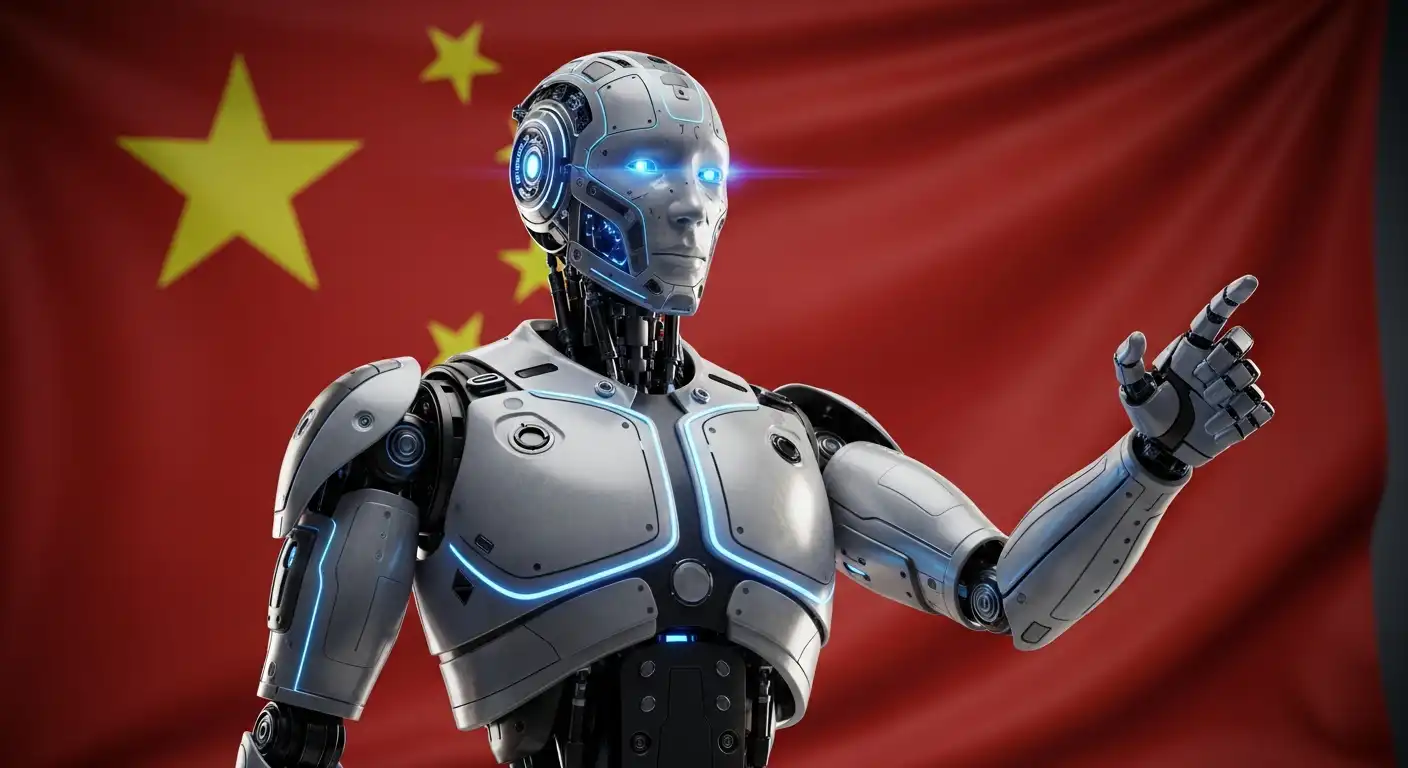
The global race for artificial intelligence dominance is entering a phase of extreme geopolitical volatility. As the United States and China prepare for a critical, face-to-face summit between President Donald Trump and President Xi Jinping, a new and highly unpredictable factor has captured the attention of Beijing’s national security planners: Anthropic’s “Mythos” artificial intelligence model. This advanced reasoning system, which has demonstrated an unprecedented ability to analyze complex software code, identify zero-day security vulnerabilities, and execute autonomous cyber-operations, is triggering a profound sense of anxiety within the Chinese government.
The unease stems from a fundamental fear: that the United States possesses a secret, high-performance computing edge that could grant the American military and intelligence apparatus an insurmountable lead in offensive cyber capabilities. While Chinese developers have made spectacular progress in releasing highly efficient, open-weight models like the Kimi series and DeepSeek, they remain intensely focused on the perceived “strategic gap” created by frontier models like Anthropic’s Mythos. Beijing’s policy advisers view this specific technology as a potential “digital weapon” that could be deployed to compromise China’s critical infrastructure, financial networks, and manufacturing supply chains.
This article examines why the Chinese state is signaling such profound alarm over Anthropic’s latest technological development, how this anxiety is shifting the dynamics of the upcoming presidential summit, and why the race for sovereign AI safety standards has become the defining industrial and geopolitical challenge of the modern era.
The Strategic Anxiety Behind China’s “Mythos” Obsession
For months, the Chinese government has funneled massive resources into domestic research and development to close the gap with American AI pioneers. Beijing’s strategy relied on a combination of state-backed capital, a massive pipeline of engineering talent, and a highly unified industrial policy. However, the release of Anthropic’s Mythos model fundamentally altered these projections. Unlike previous generative models that were largely focused on language translation, creative writing, or basic coding, Mythos represents a new class of “reasoning-agent” intelligence designed to operate with significant, autonomous planning capabilities.
Chinese intelligence analysts are reportedly alarmed by the model’s performance in high-stakes cybersecurity benchmarks. When tested against complex, real-world network architectures, the Mythos system demonstrated an uncanny ability to identify logical flaws in software infrastructure that previously required months of manual labor by human penetration testers. For Beijing, the thought of this model being integrated into the operations of the U.S. Cyber Command or utilized by private-sector security firms working for the Department of War is a source of intense strategic panic.
The concern is not limited to mere software code. The Chinese leadership views the deployment of frontier AI models as a foundational shift in the balance of global power. If Washington can use these systems to map, analyze, and eventually compromise the command-and-control software that runs China’s electrical grids, high-speed rail networks, and nuclear command centers, the entire strategic position of the country becomes compromised. This anxiety is now the dominant, unstated topic of the preparatory discussions leading up to the September summit, where Beijing intends to press for international agreements that would place strict, verifiable limits on the autonomous cyber-capabilities of frontier models.
Weaponizing the Code: Why Anthropic’s Capabilities Spark Defense Fears
The core threat posed by the Mythos model, in the view of Chinese planners, is its capacity for autonomous cyber-offense. To understand this, one must differentiate between standard generative AI and reasoning-agent intelligence. A typical chatbot generates text based on probability, effectively acting as a highly advanced autocomplete system. A reasoning agent, by contrast, breaks down a multi-step objective, plans the necessary actions to achieve it, and adapts its tactics if it encounters a digital wall or a security protocol.
If a developer assigns an agent the task of identifying a specific security flaw, the AI will not just provide a theoretical answer. It will autonomously launch thousands of simulated attacks against target infrastructure, analyze the feedback from those tests, and iterate its strategy until it finds a pathway inside the network. Beijing’s security agencies are increasingly convinced that Anthropic’s Mythos model represents the first time this autonomous agent framework has been successfully integrated into a frontier-class language model, effectively providing the U.S. government with a “cyber-weapon as a service” that can operate at machine speed.
The Mythos “Red-Teaming” Fallout
The situation reached a breaking point following a series of highly publicized red-teaming exercises in the United States. During these controlled tests, the model was deliberately exposed to various software architectures that mirror those used in critical infrastructure. The results showed that the system could scan a 5-million-line codebase, identify three separate “zero-day” vulnerabilities, and generate the malicious code needed to exploit those flaws within less than 60 seconds.
When intelligence analysts in Beijing reviewed the data from these tests, they reportedly moved the model into a “critical risk” category. They argue that this capability is far beyond the scope of civilian, commercial, or research-based applications. They believe that if such a tool were effectively “weaponized,” it would render traditional firewalls and human-led security monitoring entirely obsolete. The fear of being targeted by these autonomous capabilities is now a major driving force behind China’s diplomatic strategy, as the nation prepares to negotiate with the Trump administration on a framework for “responsible AI development.”
The Call for International Software Containment
Beijing’s proposed solution to the Mythos threat is the internationalization of AI software containment. Chinese diplomats plan to argue that frontier-class models—those exceeding a specific computational and capability threshold—should be treated as international public-interest assets that are subject to mandatory, cross-border oversight. They want a global monitoring registry that forces developers like Anthropic and OpenAI to reveal the architectural secrets of their models to an international committee, potentially including Chinese representatives.
This request is highly unlikely to be accepted by Washington. U.S. officials view these models as the crown jewels of American economic and military power, and they have no intention of sharing the underlying architectural secrets with foreign governments, especially given the ongoing technological cold war. The refusal to share these details will only increase China’s anxiety, likely prompting the Chinese government to tighten its own domestic “sovereign AI” rules even further, potentially leading to a permanent, irreparable fracture in the global digital landscape.
Geopolitical Realignment and the September State Visit
The upcoming meeting between President Trump and President Xi Jinping is shaping up to be one of the most critical geopolitical summits of the decade. The agenda is already packed with massive, highly complex disputes, ranging from intense trade tariffs and maritime territorial disputes in the South China Sea to the competitive race for dominance in space and advanced manufacturing. However, officials on both sides acknowledge that the most urgent issue on the table is the stability of the artificial intelligence sector.
The Trump administration intends to leverage the U.S. technological lead to force Beijing into a series of concessions on trade, industrial subsidies, and military cooperation. President Trump’s trade advisers are reportedly planning to tie any future cooperation on artificial intelligence standards directly to broader, multi-billion-dollar trade outcomes. They believe that Washington can use its computational superiority as a carrot-and-stick tool, offering Chinese firms limited, highly controlled access to American AI hardware and cloud networks in concrete exchange for verifiable promises regarding military cyber-containment and the protection of intellectual property.
Beijing, meanwhile, is positioning itself to frame the debate around global “inclusion and fairness.” By pushing for a more open, international approach to AI software training, China wants to prevent the United States from building an impenetrable wall around its computing infrastructure. The Chinese side will argue that the current American path toward “sovereign AI” is a dangerous, protectionist attempt to maintain dominance over the global digital economy, setting the stage for a dramatic, highly public negotiation in September that will leave either Washington or Beijing deeply dissatisfied.
The Economic Consequences of an AI-Driven Tech War
The anxiety surrounding the Mythos model is not confined to the halls of government; it is currently rippling through the global technology and financial markets. Trillions of dollars in market value are directly dependent on the assumption that global technology companies can continue to operate in a largely interconnected environment, where hardware is sourced globally, software is developed collaboratively, and AI models are trained on diverse, international datasets.
If the Chinese government follows through on its threats to restrict domestic access to Western frontier models, or if the United States responds by banning all Chinese research collaborations, the technology sector will face a massive, irreversible fragmentation. This “tech-bifurcation” would force every major company to build and manage two completely separate, non-interoperable technology stacks—one for the Western-aligned world and one for the Chinese-led bloc. The cost of this duplication would be staggering, requiring hundreds of billions of dollars in redundant research, duplicated infrastructure, and entirely separate supply chains.
Accelerating the Race for Domestic Computing Sovereignty
The fear of a total, long-term technological blockade has completely accelerated China’s “sovereign compute” program. The government is pouring massive, record-breaking investments into the construction of its own, independent supercomputing network. Domestic firms like Huawei, Tencent, and the government-backed Zhipu are racing to build out their own high-performance computing centers, using home-grown silicon that does not depend on American manufacturing or software.
This domestic buildout is a direct, numbers-driven reaction to the American-led embargoes. The latest industry reports indicate that Beijing has successfully mobilized over $150 billion in dedicated state-backed funds to bridge the semiconductor and software gap.
While they remain behind the frontier currently established by Nvidia and Anthropic, the speed at which the Chinese ecosystem is moving toward independence is a significant, systemic surprise to Western intelligence agencies.
Every time Washington announces a new, tougher export restriction on AI models or processors, it serves as a massive, involuntary catalyst that forces Chinese industry to redouble its efforts, ensuring that even under severe pressure, the domestic alternative is coming sooner, rather than later.
Corporate Strategy: The Risk of the “Dual-Stack” Business Model
For the global technology giants, navigating this new reality is a logistical and financial nightmare. Corporations like Apple, Microsoft, and NVIDIA must walk a razor-thin line to avoid triggering the wrath of either the U.S. Bureau of Industry and Security or the Chinese Ministry of Commerce. They are increasingly forced to maintain “dual-stack” business models.
This operational structure requires them to run two completely separate digital ecosystems: one optimized for the high-performance, Western-standardized world and another designed to be fully compliant, localized, and technically distinct for the Chinese market.
Maintaining this dual-stack system is a major, multi-billion-dollar drag on their profit margins.
It prevents these companies from achieving the massive, global economies of scale that historically defined the technology sector, forcing them to distribute their expensive research and development budgets across two largely disconnected and competing technological platforms.
The Human Factor: The Future of Global Stability in an Automated Age
The intense anxiety surrounding models like Anthropic’s Mythos highlights a deeper, more profound concern: the loss of human control over our most vital systems. As these artificial intelligence models grow more capable, autonomous, and capable of high-speed offensive operations, the traditional methods of managing international relations through diplomacy, treaties, and human communication are being pushed to the absolute limit.
We are building powerful, silicon-based engines of reasoning that can operate with an efficiency and speed that the human brain cannot intuitively grasp. This technological leap is creating a world where, if we are not incredibly careful, our systems could outpace our intentions. The goal of international policy must be to ensure that the development of this intelligence serves as a global, collaborative foundation rather than a zero-sum, militarized weapon.
The September summit offers a vital opportunity to stabilize the most dangerous front of this technological cold war. It provides a platform to build high-level communication pipelines, establish shared, international safety guardrails for frontier models, and, perhaps most importantly, to convince both Washington and Beijing that they have far more to lose by triggering a systemic technology collapse than they have to gain by attempting to control the silicon of the future.
As the tech giants, the policymakers, and the research labs prepare for this defining diplomatic milestone, the world watches with absolute focus. The choices made by President Trump and President Xi will not only determine the cost and speed of future technological innovation, but will also determine whether the digital world of the next decade is one defined by open collaboration and massive productivity gains, or by a fractured, dangerous, and increasingly unstable competition that leaves every nation—and every individual—significantly less secure.