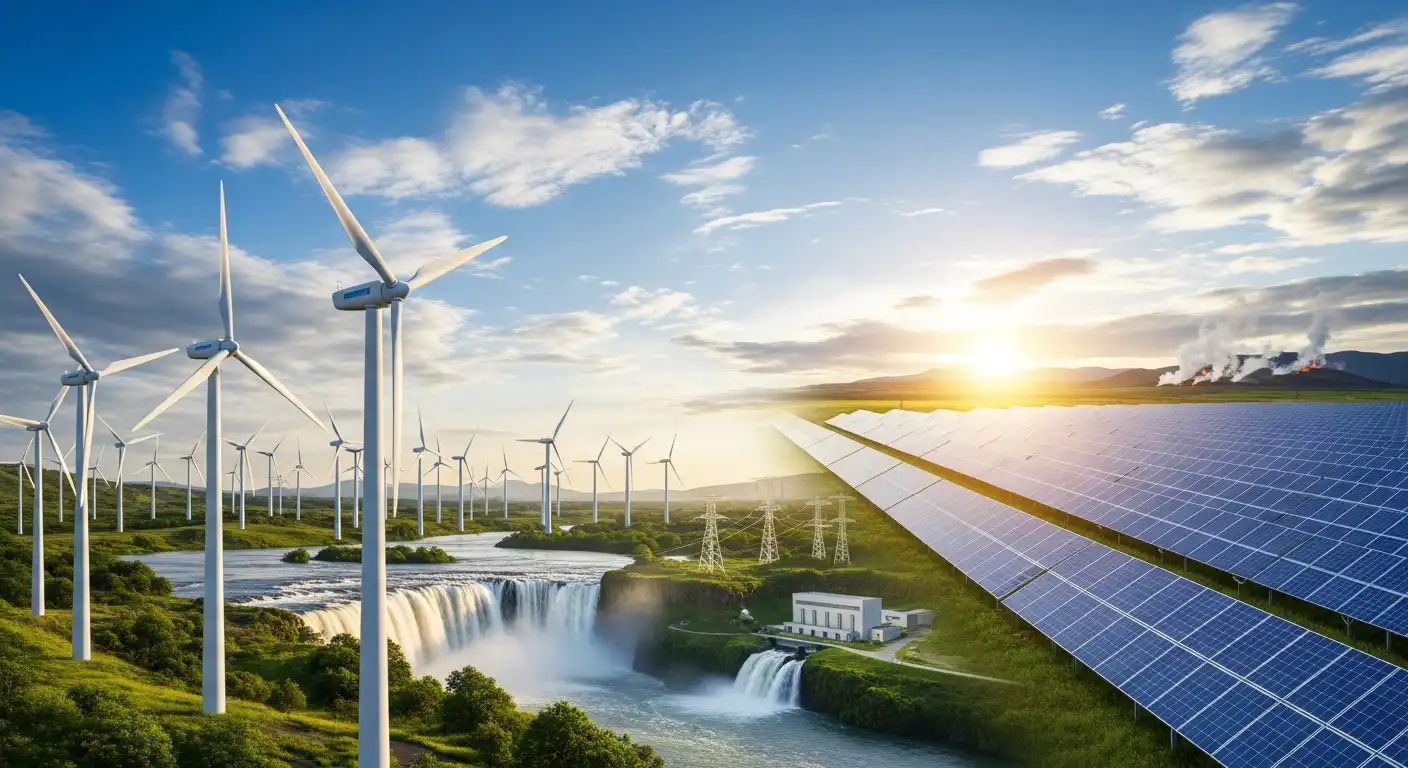
The global clean energy landscape is experiencing a massive, highly lopsided transformation, and one country is currently writing almost the entire script. According to a comprehensive research report published by the global watchdog group Global Energy Monitor, China’s construction pipeline for utility-scale wind and solar power plants continues to outrun the rest of the world combined. This historic buildout is progressing at an unprecedented velocity, completely consolidating the country’s status as the undisputed hyperpower of the clean energy transition.
However, this spectacular success has triggered a major, highly complex structural paradox. While China’s clean energy capacity is expanding at a rate that has eclipsed the total electrical grids of multiple Western nations combined, the country is facing a rapidly rising risk of energy waste. The physical transmission networks and local electricity markets are struggling to keep pace with the sheer volume of power being generated, forcing grid operators to implement massive “curtailment” measures—unilaterally shutting down wind and solar farms to prevent overloading the national grid.
Despite this mounting threat of waste, Beijing shows no intention of slowing down its construction schedule. The country’s planners are betting heavily that the economic and environmental benefits of localizing the entire green energy value chain will far outweigh the short-term costs of underutilized capacity. This aggressive, build-first strategy has transformed the Chinese economy, turning cleantech investments into the primary engine of its national GDP growth, while setting up a high-stakes challenge for the global energy transition.
Inside the Numbers: China’s Unrivaled Clean Energy Pipeline
The statistical scale of China’s renewable energy construction pipeline is almost impossible to comprehend. According to the mid-year report published by GEM, the country currently has an extraordinary 251 gigawatts of wind capacity and 262 gigawatts of utility-scale solar capacity actively under construction. Together, these two figures represent more than double the total clean energy capacity being built across the rest of the entire planet combined.
The expansion of the wind sector is particularly dramatic. China’s active wind pipeline grew by a massive 37 percent compared to the previous year, whereas the wind pipeline across the rest of the world actually contracted by 1 percent over the same period. Once fully operational, this 251-gigawatt wind pipeline alone will generate enough annual electricity to match Germany’s entire national power output across all sources, illustrating the gargantuan scale of the Chinese energy machine.
While the country installed only 60 gigawatts of new solar panels during the first five months of the year—representing a slight, temporary year-on-year dip due to localized grid-connection delays—market forecasters expect a massive reacceleration in the second half of the year. Projections from BloombergNEF indicate that China will install a total of 255 gigawatts of solar capacity by the end of the year, cementing its role as the dominant market for global photovoltaic deployment.
Reaching the Historic Power Capacity Milestone
The cumulative impact of this relentless construction has already redrawn the historical boundaries of the global energy sector. In late 2025, China’s total installed power generation capacity reached an extraordinary 3,890 gigawatts.
The most significant milestone from this period was the structural composition of the power mix.
For the first time in Chinese history, the combined capacity of wind and solar power surpassed the country’s traditional thermal coal capacity.
With solar capacity rising to 1,200 gigawatts and wind up to 640 gigawatts, the renewable mix outranked coal capacity—which stood at just over 1,500 gigawatts—permanently shattering the assumption that China’s industrial growth must always remain anchored in fossil fuels.
The Total Prospective Capacity Pipeline
The sheer scale of the upcoming pipeline suggests that this capacity lead will only continue to widen. The Global Energy Monitor report defined “prospective capacity” as the total volume of projects that have been formally announced, entered pre-construction planning, or are currently under active construction.
Under this comprehensive definition, China currently holds an extraordinary 664 gigawatts of prospective utility-scale solar and 698 gigawatts of prospective wind capacity.
This multi-gigawatt pipeline represents a staggering share of the global total, ensuring that the country is on track to meet its ambitious national target for wind and solar to exceed 50% of its total installed power capacity years ahead of its original 2030 schedule, completely outpacing the climate transition roadmaps of North America and Europe.
The Waste Risk: Escalating Curtailment in the Desert Energy Bases
While the capacity numbers are highly encouraging, the physical reality of the grid is introducing severe operational headwinds. The primary source of this friction is the geographic concentration of the projects.
Following a national energy base strategy, China’s planners chose to build their largest utility-scale solar and wind installations in the vast, desolate northern and northwestern desert regions, including the Gobi Desert and Xinjiang province.
These remote desert regions possess some of the highest wind speeds and most consistent solar radiation in the country, making them ideal locations for high-efficiency power generation.
However, they are situated thousands of kilometers away from the energy-hungry, high-population industrial megacities of the eastern coast, such as Shanghai, Shenzhen, and Beijing, creating a massive, highly complex logistical challenge: how to transport gigawatts of electricity across an entire continent without losing the power along the way.
The Ten to Seventeen Percent Curtailment Squeeze in Western Provinces
When the physical transmission lines cannot handle the massive volume of electricity being generated during peak sun and wind hours, grid operators must execute “curtailment” measures.
They send digital commands to wind and solar farms, ordering them to disconnect their systems or reduce their power output to prevent overloading the high-voltage transmission lines.
According to the GEM report, this curtailment rate has risen to between 10% and 17% in western, resource-rich provinces like Qinghai, Xinjiang, and Gansu.
This means that up to nearly a fifth of the clean electricity that could have been generated by these advanced installations is being permanently wasted, eroding the profit margins of green utility developers and raising the overall cost of the transition.
The Northwestern Wind Curtailment Corridor
A similar, highly concerning trend is visible in the wind sector. Wind curtailment rates across the northern and northwestern transmission corridors are currently running between 4% and 9%, representing millions of megawatt-hours of lost green energy.
Operating an advanced wind farm requires significant capital investment, and developers rely on selling every single kilowatt-hour they produce to cover their high equipment-depreciation costs.
When grid operators force them to shut down their turbines during peak wind events, it directly reduces their corporate revenues, making it increasingly difficult for developers to fund future projects and threatening to slow down the overall pace of private investment in the clean energy sector.
The “Two Legs” Strategy: Solving the Grid Bottleneck
To resolve these massive, highly expensive grid bottlenecks and stop the rise of clean energy waste, the Chinese government is pursuing a highly sophisticated, two-pronged approach. Internally, policymakers refer to this as the “two legs” strategy, designed to balance the physical location of energy generation with the actual location of industrial consumption.
The first leg of the strategy involves building massive, long-distance transmission infrastructure, while the second leg focuses on relocating energy-intensive industries directly to the western resource-rich provinces.
By executing these two initiatives in tandem, Beijing hopes to create a highly efficient, balanced national energy grid that can absorb its massive renewable capacity without triggering high curtailment rates.
Leg One: Building Ultra-High-Voltage (UHV) Transmission Lines
The physical cornerstone of the first leg is the construction of a massive network of ultra-high-voltage direct current (UHVDC) transmission lines. Traditional alternating current (AC) power lines suffer from high electrical resistance, causing a significant portion of the electricity to dissipate as heat when transported over long distances.
UHVDC lines solve this physical limitation, utilizing advanced converter stations and massive steel towers to transmit electricity at over 800,000 volts, allowing the country to transport gigawatts of clean power from the western deserts to the eastern cities over distances exceeding 2,000 kilometers with minimal power loss.
Building these advanced transmission lines is an incredibly capital-intensive process, contributing to the country’s record-breaking power grid investments, which are projected to reach $574 billion over the 2026–2030 period.
Leg Two: Relocating Energy-Intensive Industries to the West
While building transmission lines is essential, the second leg of the strategy is perhaps the most economically transformative. The government is actively encouraging energy-intensive industries—such as high-density artificial intelligence data centers, advanced aluminum smelters, and chemical manufacturing plants—to physically relocate their facilities to the western provinces.
By moving the consumers directly to the source of the power, the government can eliminate the need to transport electricity across the country.
An advanced data center or a heavy smelting plant built in Qinghai or Gansu can purchase cheap, abundant wind and solar power directly from the adjacent energy bases, utilizing the local supply to run high-volume operations at a fraction of the cost of running them in Shanghai or Beijing, while helping the western provinces develop their own high-tech, highly profitable industrial clusters.
The Coal Test in the New Five-Year Plan
Despite the extraordinary success of the renewable energy buildout and the implementation of the “two legs” strategy, independent energy analysts warn that the ultimate success of China’s green transition remains heavily complicated by its ongoing reliance on coal.
Aiqun Yu, a senior East Asia strategist for the Global Energy Monitor, cautioned that the current grid-expansion plans risk further entrenching coal use unless paired with strict regulatory rules that actively prioritize renewables.
The data reveals a stark, highly concerning reality: the country’s existing long-distance UHVDC transmission lines currently transmit about twice as much coal-fired electricity as renewable energy.
Because coal-fired power plants provide a highly stable, controllable baseline of electricity, grid operators rely heavily on them to stabilize the high-voltage lines, using coal to balance the volatile, weather-dependent swings of wind and solar power.
If the government does not implement strict policy reforms to force grid operators to prioritize renewable transmission over coal, the massive expansion of the national grid could actually extend the lifespan of legacy coal plants, complicating the country’s carbon-reduction targets and highlighting the critical need for massive investments in utility-scale battery storage systems to provide the clean, stable baseline of the future.
The massive, highly ambitious clean energy transition currently taking place in China is a historic milestone for global climate action. By building more utility-scale wind and solar capacity than the rest of the world combined, the country has proved that it has the industrial capacity, the financial resources, and the political will to construct the physical energy foundations of the 21st century.
While the rising threat of energy waste and the ongoing reliance on coal present serious engineering and policy challenges, the country’s proactive “two legs” strategy and its record-breaking grid investments prove that it is fully committed to solving these bottlenecks.
As the first wave of advanced UHVDC transmission lines comes online and energy-intensive industries complete their migration to the western deserts, China’s clean energy network will remain the indispensable, primary driver of its national economy, ensuring steady, non-inflationary growth and setting a powerful, highly encouraging example for the rest of the global energy transition.