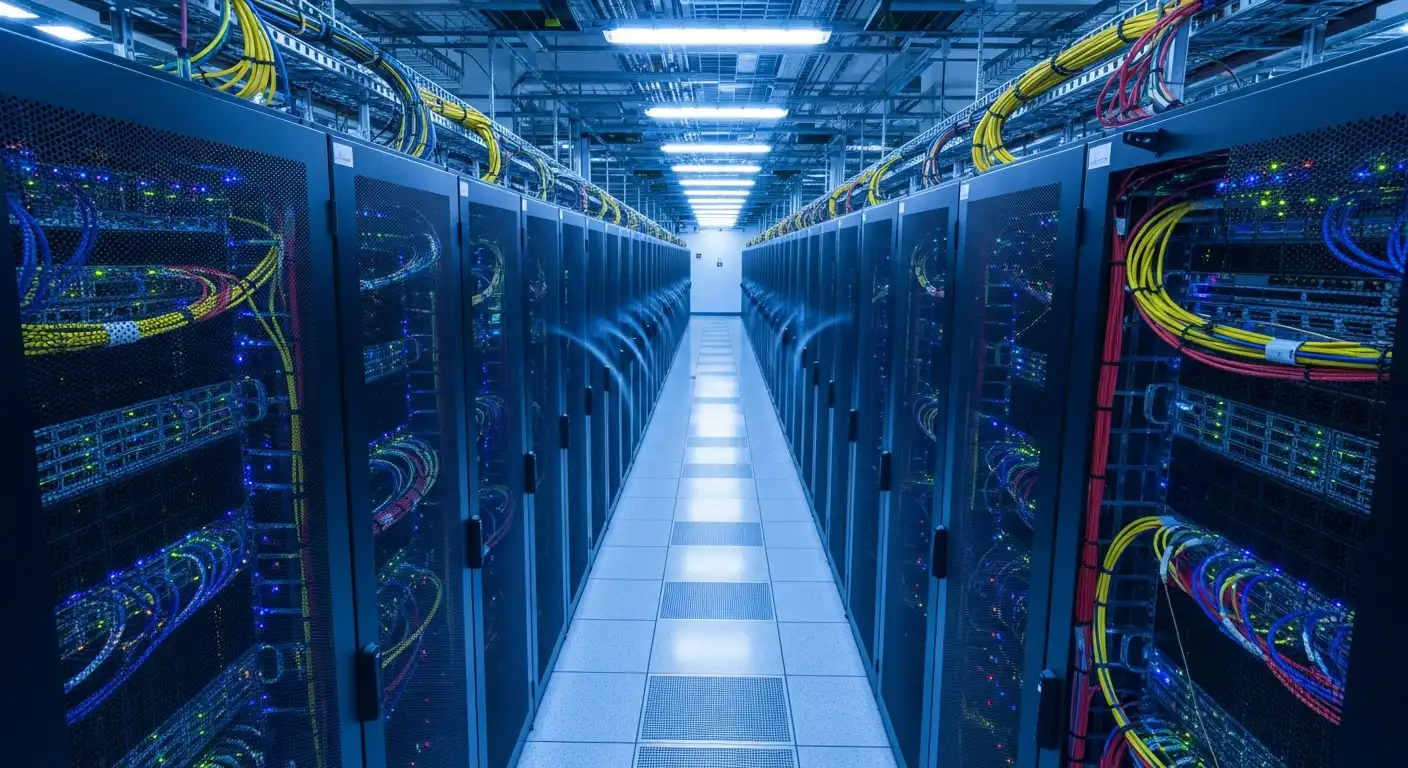
The global race for artificial intelligence supremacy is no longer fought solely in software laboratories and semiconductor design firms. Instead, the battle has shifted to the physical world, specifically targeting the electrical grids that must power the next generation of high-performance computing. On June 22, 2026, global attention turned to Beijing’s dual struggle: maintaining its position at the forefront of the AI boom while aggressively pursuing its national decarbonization and climate goals.
Ensuring a reliable and sustainable electricity supply for AI data centers has rapidly ascended to the top of China’s strategic agenda. In its recent annual Government Work Report, Beijing underscored the critical intersection of energy infrastructure and computing capacity, detailing plans to scale and commercialize advanced software systems. To align this explosive computing expansion with national climate targets, a coalition of the country’s top regulatory bodies issued a sweeping joint action plan.
The policy directive seeks to build a development pattern of mutual empowerment and deep integration between AI and energy. However, despite the state’s ambitious regulatory framework, energy economists and infrastructure analysts warn that the push to run China’s fast-expanding AI data centers on renewable power faces massive hurdles. From geographic mismatches to transmission grid bottlenecks and grid stability concerns, the practical realities of the energy system are testing the limits of China’s green technology transition.
The Core Mandate: Beijing’s Green Computing Action Plan
The regulatory push is guided by a comprehensive action plan jointly released by four major state bodies: the National Development and Reform Commission, the National Energy Administration, the Ministry of Industry and Information Technology, and the National Data Administration. The policy document outlines 29 distinct measures designed to force data center operators to increase their share of renewable electricity.
The central pillar of the plan involves making green energy consumption a key performance metric for the approval of new data center projects. Rather than allowing facility operators to rely on carbon-intensive coal power from the national grid, regulators are encouraging them to buy renewable energy directly through specialized green power trading markets and “green certificate” systems.
The action plan also demands a structural shift in backup power systems, calling for operators to replace traditional diesel generators with cleaner alternatives like hydrogen fuel cells and industrial battery storage. At the same time, the document promotes the adoption of home-grown Chinese AI chips and software that have been specifically optimized for the energy sector. By matching domestic silicon with energy-saving algorithms, Beijing hopes to reduce the overall power demand of its rapidly expanding computing clusters.
The 29-Measure Initiative: Aligning Tech and Carbon Goals
The 29 measures outlined in the joint action plan represent a coordinated attempt to manage the immense environmental footprint of the tech industry. Under the new framework, the government will restrict the construction of new data centers in regions that cannot guarantee access to a steady supply of green energy. This rule aims to force developers to build near massive wind and solar installations, preventing the tech boom from causing a resurgence in coal-fired power generation.
The policy also introduces a standardized carbon accounting framework for the computing industry. Data center operators must regularly report their total electricity consumption, their share of green power use, and the carbon emissions associated with their computing workloads. By introducing these strict reporting requirements, Beijing wants to ensure that major technology firms remain accountable for their climate commitments, making sustainability a core competitive metric in the domestic AI market.
High-Performance Computing and the 44% Power Surge
The urgency behind Beijing’s action plan is driven by the sheer scale of the electricity demand currently hitting the grid. During the first quarter of the year, AI-fueled power consumption in China rose by a staggering 44% year-on-year, driven by the rapid deployment of large language models and automated computing agents.
According to projections from the China Academy of Information and Communications Technology, the country’s data centers could consume more than 400 billion kilowatt-hours (kWh) of electricity annually by 2030. This massive volume of power would exceed the total annual electricity consumption of several European countries combined. Because electricity currently accounts for 50% to 70% of a data center’s total operating expenses, improving energy efficiency is a financial necessity for operators as well as an environmental priority for the state.
The Geographical Disconnect: The Reality of “East Data, West Computing”
To solve the energy squeeze, China has spent years executing a massive national infrastructure program known as “East Data, West Computing” (Dong Shu Xi Suan). The objective of this mega-project is to relocate energy-intensive data storage and model training facilities away from the economically vibrant, densely populated coastal cities like Shanghai and Shenzhen. Instead, the government is directing developers to build their clusters in the northern and western provinces, including Inner Mongolia, Guizhou, Gansu, and Xinjiang.
These western regions possess some of the most abundant and affordable wind, solar, and hydroelectric resources in the world. By building data centers directly in these energy-rich provinces, developers can theoretically run their high-performance computers on clean, cheap electrons, bypassing the need to transmit power over thousands of miles.
But this geographical strategy has run into a major hurdle: the capacity of China’s transmission grid. The ultra-high voltage direct current (UHVDC) lines that connect the western power generation hubs to the eastern economic centers are highly congested. Because grid systems cannot easily transmit the excess wind and solar energy generated in the west to the national grid without severe losses, the region suffers from some of the highest renewable energy curtailment rates in the world, leaving clean energy wasted.
Moving Compute Westward: Tapping the Wind and Solar Hubs
The shift toward the western provinces represents a major change in the physical architecture of the Chinese internet. Gigawatt-scale data center clusters are rising in the dry plains of Inner Mongolia and the mountainous valleys of Guizhou, taking advantage of cold climates that naturally reduce the energy required to cool the computer servers.
These facilities are designed to handle the heavy, non-latency-sensitive workloads of the AI cycle, such as training large language models or processing massive scientific datasets. By processing this information close to the wind turbines and solar farms, the technology sector can tap into the cheapest power available, helping to keep operating costs manageable as the scale of the models grows.
Grid Congestion and the Severe Curtailment Bottleneck
However, the “East Data, West Computing” model is struggling to cope with the reality of grid congestion. While the western provinces can easily generate billions of kilowatt-hours of clean electricity, they often lack the localized transmission infrastructure to deliver that power reliably to the data centers.
This mismatch has resulted in severe curtailment, where wind turbines and solar arrays are actively turned off because the grid cannot absorb their output. To resolve this bottleneck, China must invest hundreds of billions of dollars to build dedicated, high-capacity transmission lines specifically for computing hubs. Until these grid upgrades are complete, data centers in the west will continue to face localized power shortages, forcing them to remain connected to the main, coal-reliant grid to ensure operational continuity.
The Intermittency Trap: Grid Stability vs. Real-Time AI Workloads
The fundamental challenge of running high-performance AI data centers on renewable energy lies in the nature of wind and solar power. Solar panels do not generate electricity at night, and wind turbines sit idle during calm weather. This intermittent supply directly clashes with the operational requirements of modern data centers, which require a continuous, uninterrupted, multi-megawatt flow of electricity 24 hours a day.
If the power supply to an AI training cluster drops even momentarily, it can disrupt a complex calculation, destroying weeks of computing progress and costing millions of dollars in lost time. Because of this extreme sensitivity to power quality, data center operators are highly conservative, demanding a level of reliability that weather-dependent renewable energy struggles to provide on its own.
In China’s power grid, which strictly prioritizes reliability and grid security above all else, this intermittency has created a major policy hurdle. Gao Hongchao, an assistant chief scientist at the National Key Project on Virtual Power Plants, noted that because of the grid’s focus on stability, operators cannot fully rely on AI-assisted automated dispatch. Instead of letting algorithms dynamically balance the grid in real time, human operators must still rely on traditional, highly reliable coal-fired power plants to act as a physical baseload, ensuring the lights stay on even when the wind stops blowing.
The Intermittency Clash: Wind and Solar’s Reliability Problem
The clash between renewable intermittency and data center uptime is forcing a rethink of how green power is delivered. To achieve true carbon neutrality, tech companies cannot simply purchase green certificates to offset their fossil fuel use; they must find a way to match their real-time electricity consumption with real-time renewable generation.
This requirement has sparked an intense interest in industrial-scale energy storage solutions. Data center developers are experimenting with deploying massive lithium-ion battery arrays, flow batteries, and hydrogen storage systems alongside their server farms. These storage systems can absorb excess solar power during the day and release it at night, helping to smooth out the intermittency curve. However, the high capital cost of these battery systems adds a significant premium to the cost of green power, making it difficult for many startups to justify the investment.
The Geopolitical Dimension: The Token Export Dilemma
As China pushes to expand its AI capabilities, the energy-tech war is also developing an important international geopolitical dimension. Global energy experts point to a rising challenge known as the “token export” problem, which could eventually trigger trade friction between Beijing and its western trading partners.
David Fishman, an energy sector specialist, explained that as Chinese artificial intelligence companies attract global users to their platforms, the electricity consumed to process those queries remains physically located inside China. When an overseas user accesses a Chinese AI model via an Application Programming Interface (API) to generate text, images, or code, the data centers in China must run intensive calculations, consuming local electricity and emitting local carbon.
Fishman warned that this dynamic creates a carbon accounting mismatch. Just as the European Union has implemented a Carbon Border Adjustment Mechanism (CBAM) to tax the embedded carbon in physical Chinese-manufactured exports like steel and cement, foreign regulators could eventually seek to tax digital services. If Western nations begin to track the carbon footprint of imported AI tokens, Chinese tech firms will face intense pressure to prove that their data centers are running entirely on green power, turning clean energy into a vital metric for international market access.
Exporting Tokens, Incurring Emissions: The Carbon Mismatch
The token export problem highlights how the virtual digital economy remains tethered to physical energy infrastructure. When a developer in Europe or North America uses a cheap API hosted in China, they are effectively exporting their carbon emissions to the Chinese grid.
As global awareness of the environmental cost of AI grows, this carbon transfer is likely to face intense scrutiny. If China cannot successfully transition its computing infrastructure to renewable power, its AI exports could become vulnerable to “green tariffs” and environmental trade barriers. By enforcing strict green energy mandates on data centers today, Beijing is not just working to meet its domestic climate goals; it is also protecting the future global competitiveness of its technology sector in a carbon-conscious world.
The Future of the Green AI Race
The transition to sustainable computing represents one of the most difficult challenges of the modern industrial era. While Beijing’s comprehensive action plan and its “East Data, West Computing” infrastructure program show a clear commitment to aligning technology with climate goals, the physical limits of the power grid remain a formidable bottleneck.
For China to achieve its green AI ambitions, the government must look beyond simply building more solar panels and wind turbines. It must invest heavily in upgrading its ultra-high voltage transmission lines, deploying advanced energy storage systems, and developing highly efficient domestic chips. Until these structural hurdles are resolved, the clash between the energy-guzzling demands of the AI boom and the physical limitations of the power grid will continue to test the boundaries of China’s economic and environmental strategy.