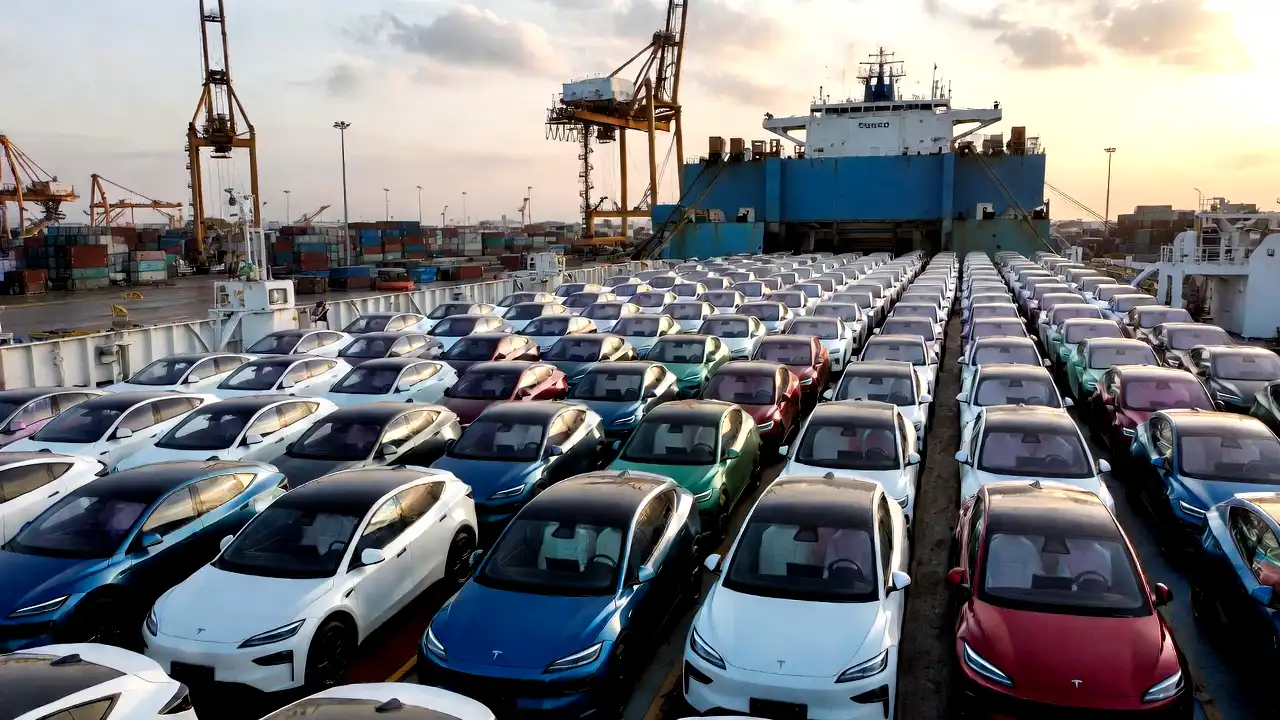
A commercial surge of Chinese electric vehicles is transforming Argentina’s automotive market, creating a striking economic paradox in South America. Despite libertarian President Javier Milei’s staunchly pro-American foreign policy, personal alignment with right-wing political movements, and early campaign rhetoric criticizing Beijing, Chinese automakers are expanding their presence across Argentine cities faster than in almost any other Latin American nation. Electric hatchbacks, compact crossovers, and commercial delivery vans from Chinese brands like BYD, Chery, MG, Geely, and Great Wall Motor are filling Buenos Aires dealerships, establishing a dominant market position in the country’s emerging clean mobility sector.
The primary driver behind this sudden influx of Chinese electric vehicles is President Milei’s own aggressive economic deregulation agenda. To restore market efficiency and defeat chronic inflation, Milei’s administration dismantled the restrictive SIRA import licensing system, reduced bureaucratic trade controls, and eliminated complex currency import restrictions that previously trapped foreign capital. By opening Argentina’s borders to free-market trade, the administration inadvertently cleared a frictionless path for low-cost Chinese automotive manufacturers eager to export vehicles to non-sanctioned international markets.
The resulting price disruption has fundamentally altered retail consumer calculations across South America’s third-largest economy. While traditional internal combustion engine vehicles imported from Europe or North America carry inflated retail prices ranging from $35,000 to $50,000 due to compounding taxes and distribution costs, compact Chinese electric vehicles sell locally between $10,000 and $20,000. In an economy recovering from severe currency devaluation, the chance to purchase a brand-new, feature-packed electric car at half the price of a traditional gasoline vehicle is proving irresistible to Argentine consumers, fleet operators, and ride-hailing drivers.
TechGolly provides an in-depth analysis of China’s electric vehicle expansion in Argentina, evaluating trade deregulation policies, sub-$20,000 vehicle economics, Lithium Triangle mining ties, Western tariff redirections, and the broader geopolitical realities of South American trade.
Unpacking the Economic Reality versus Political Rhetoric Paradox
The rapid rise of Chinese electric vehicles in Argentina illustrates a classic confrontation between political ideology and private market economics. During his 2023 presidential campaign, Javier Milei used sharp rhetoric regarding foreign relations, pledging to align Argentina strictly with the United States and Israel while threatening to freeze bilateral government-to-government deals with communist-led nations.
However, once in office, the pragmatic realities of managing a complex $600 billion economy forced a shift toward economic realism. China is Argentina’s second-largest overall trading partner behind neighboring Brazil, purchasing the vast majority of Argentina’s agricultural exports, including soybeans, corn, and beef. Furthermore, the Central Bank of Argentina relies heavily on a multi-billion-dollar currency swap line with the People’s Bank of China, which provides essential foreign exchange reserves to stabilize the Argentine peso and service international debt obligations.
Realizing that severing commercial ties with Beijing would induce severe domestic economic damage, Milei’s economic team focused instead on executing a libertarian free-market policy: removing government intervention from private commercial transactions. The administration eliminated state-managed import quotas, reduced customs processing bureaucracies, and allowed private auto dealerships to import vehicles from any global origin using their own capital.
This free-market policy environment created ideal operating conditions for Chinese automakers. Unburdened by state import quotas or administrative delays, private Argentine automotive distribution networks rapidly established commercial contracts with Chinese vehicle exporters. The result is a vibrant consumer market where private Argentine citizens use their own money to purchase low-cost Chinese electric cars, proving that free-market trade policies naturally channel capital toward the most cost-competitive global suppliers regardless of executive political rhetoric.
The Price Disruption: Sub-20,000 Dollar Electric Mobility in Buenos Aires
The primary commercial engine driving Chinese electric vehicle adoption across Argentina is an unbeatable purchase price proposition. For decades, high import tariffs, complex luxury taxes, and severe currency inflation made purchasing a new automobile an expensive endeavor for middle-class Argentine families.
Chinese electric vehicle manufacturers have completely dismantled these traditional pricing barriers. Models like the BYD Dolphin Mini (known globally as the Seagull), the Chery EQ1, the MG4 electric hatchback, and the Dongfeng Nano Box enter Argentine showrooms at retail prices starting between $11,000 and $16,000 USD. Even higher-end Chinese electric crossovers, equipped with digital touchscreen interiors and advanced driver-assistance systems, sell for less than $25,000—a price point where legacy Western automakers offer only basic entry-level internal combustion sedans.
Furthermore, domestic Argentine micro-EV manufacturers are leveraging Chinese supply chains to build low-cost urban vehicles locally. Companies like Coradir produce small two-seater electric cars using imported Chinese battery packs, electric motors, and control electronics. Selling for under $10,000, these ultra-compact vehicles have become wildly popular for daily urban commuting and commercial delivery fleets across Buenos Aires, Cordoba, and Rosario.
Fuel operating economics provide a secondary financial incentive for Argentine car buyers. While retail gasoline prices have risen toward international parity following the removal of state fuel subsidies, domestic electricity tariffs remain relatively affordable. A commuter driving an electric vehicle in Buenos Aires spends roughly 80% less on monthly charging costs compared to fueling an equivalent gasoline-powered vehicle, allowing drivers to recover their initial vehicle purchase cost within three years of daily driving.
The Lithium Triangle Synergy: Mining Investments and Battery Supply Chains
Beyond retail car sales, the deepening automotive connection between China and Argentina is anchored by a massive, multi-billion-dollar industrial relationship centered on critical battery minerals.
Argentina sits atop one of the largest lithium deposits on Earth, forming a core part of the South American “Lithium Triangle” alongside neighboring Chile and Bolivia. The high-altitude salt flats across northern Argentine provinces—specifically Jujuy, Salta, and Catamarca—contain over 20% of the world’s known salt-brine lithium resources, an essential raw material required to manufacture lithium-ion batteries for electric vehicles.
While Western mining conglomerates hesitated to invest in Argentina during prior periods of economic instability, Chinese battery and mining giants deployed capital aggressively. Major Chinese enterprises—including Ganfeng Lithium, Zijin Mining, Tianqi Lithium, and global battery leader CATL—have invested over $3.5 billion in constructing massive brine extraction plants, solar evaporation ponds, and lithium carbonate processing facilities across northern Argentina.
This critical mineral investment creates a powerful bilateral economic loop:
- First, Chinese mining companies extract raw lithium from Argentine salt flats, processing the brine into high-purity lithium carbonate.
- Second, the processed lithium is shipped to battery cell gigafactories in China, where companies like CATL convert it into low-cost Lithium Iron Phosphate (LFP) battery cells.
- Third, Chinese vehicle manufacturers assemble the battery cells into affordable electric vehicles, which are then shipped back to Argentine ports to be sold in local showrooms.
This closed-loop trade partnership makes it virtually impossible for Argentina to restrict Chinese automotive imports without endangering the multi-billion-dollar mining investments that drive economic growth and employment across its northern provinces.
Bypassing Western Tariffs: Why Chinese Automakers Target Latin America
The explosive growth of Chinese electric vehicle exports across Argentina and South America is a direct result of rising trade protectionism in Western economies.
To protect domestic manufacturing industries, the United States government enacted 100% import tariffs on Chinese-made electric vehicles under Section 301 trade regulations, effectively blocking Chinese carmakers from entering the North American market. Simultaneously, the European Commission implemented countervailing anti-subsidy duties ranging from 17% to 38% on Chinese electric vehicle imports, attempting to shield legacy European carmakers from low-cost competition.
Faced with steep tariff walls across North America and Europe, Chinese automakers executed a rapid global export pivot. Manufacturers redirected their multi-million-unit export capacity toward high-growth, non-sanctioned markets across Latin America, Southeast Asia, the Middle East, and Africa.
Latin America has become a primary target for Chinese automotive expansion. Chinese carmakers recognize that South American nations lack large domestic automobile brands that require protectionist tariff defense. Countries like Argentina, Chile, Uruguay, and Colombia offer open market environments where consumer purchase decisions are governed by price accessibility rather than national industrial protectionism.
By establishing dominant market positions across Latin America today, Chinese automakers are locking in brand loyalty among hundreds of millions of consumers. As Latin American economies recover and expand over the coming decade, Chinese brands will occupy the same dominant market position that Japanese and South Korean automakers captured in prior generations.
Local Manufacturing and Regional Trade Dynamics in South America
To secure its long-term market presence across South America, China’s automotive industry is moving beyond simple finished-vehicle shipping toward establishing a regional manufacturing and assembly footprint.
In neighboring Brazil, BYD executed a historic industrial investment by acquiring a former Ford manufacturing complex in Bahia, spending over $600 million to construct three specialized factories. The industrial complex will produce pure electric cars, plug-in hybrid SUVs, and electric bus chassis, while processing domestic Brazilian lithium and iron ore into battery cathode materials.
Under the rules of the Mercosur economic trade bloc—which unites Brazil, Argentina, Uruguay, Paraguay, and Bolivia in a duty-free regional trade agreement—vehicles manufactured in Brazil can be exported to Argentina with zero import tariffs. BYD’s Brazilian manufacturing hub will allow the company to supply the entire South American continent with locally assembled electric vehicles, completely bypassing international shipping costs and foreign exchange fees.
Simultaneously, in Argentina, local industrial conglomerates are partnering with Chinese automakers to establish knock-down kit (CKD) assembly plants. Local industrial groups are converting existing vehicle facilities in Cordoba and Rosario to assemble Chinese electric trucks, commercial delivery vans, and passenger cars using imported component kits, creating high-tech manufacturing jobs for Argentine workers.
This regional manufacturing strategy presents an existential competitive threat to legacy European and American automakers operating in South America, such as General Motors, Ford, Stellantis, and Volkswagen. Legacy carmakers that historically relied on high-margin, internal combustion engine sales in South America are losing market share to agile Chinese competitors offering low-cost, fully electrified vehicle lineups.
Charging Infrastructure Expansion and Grid Adaptation in Argentina
As the number of Chinese electric vehicles on Argentine roads multiplies, public and private enterprises are accelerating investments in charging infrastructure to support the growing electric fleet.
Historically, Argentina’s public EV charging network was limited to a few demonstration charging stations in central Buenos Aires. However, the sudden influx of Chinese electric cars has created a profitable commercial market for private charging station operators, real estate developers, and energy companies.
Major fuel station chains, including state-backed YPF and private operator Shell, are installing high-power DC fast-charging plazas along major national highways connecting Buenos Aires to Rosario, Cordoba, and Mar del Plata. Installing fast-chargers along primary intercity corridors allows electric vehicle owners to travel long distances across the country without experiencing range anxiety.
In urban residential areas, high-income suburban homeowners and commercial building managers are adopting rooftop solar charging systems. By pairing Chinese electric vehicles with rooftop solar panels and battery storage units, Argentine property owners can charge their vehicles using free solar power, completely insulating themselves from local power grid blackouts and rising municipal electricity tariffs.
Furthermore, Chinese EV manufacturers are supplying specialized charging hardware tailored to Argentina’s electrical grid. Vehicles imported from China include dual-voltage home charging cables and portable power adapters that allow drivers to plug their cars into standard household wall outlets overnight, eliminating the need for expensive electrical panel upgrades.
Strategic Outlook for Latin American Automotive Transformation
The rapid proliferation of Chinese electric vehicles across Argentina marks a permanent, irreversible shift in the global automotive economy.
Looking forward through the late 2020s, China’s automotive industry will solidify its position as the dominant supplier of clean mobility technology across the developing world. While Western nations construct high tariff walls to protect legacy domestic automakers, Latin America, Africa, and Southeast Asia are undergoing a rapid, low-cost electric vehicle transition powered by Chinese manufacturing scale.
For Argentina, the mass adoption of affordable Chinese electric vehicles delivers substantial economic and environmental benefits:
- First, reducing national reliance on imported fossil fuels, improving the country’s trade balance, and reducing carbon emissions across major urban centers.
- Second, providing low-cost transportation to middle-class families and commercial businesses, boosting overall economic productivity.
- Third, expanding high-tech industrial jobs through regional assembly plants, lithium extraction projects, and charging infrastructure installation.
Javier Milei’s pragmatic acceptance of private Chinese trade demonstrates that market forces and consumer affordability ultimately override political rhetoric. As long as Chinese automakers continue to deliver high-quality, fully featured electric vehicles at prices Western competitors cannot match, Chinese cars will remain a ubiquitous sight on the streets of Buenos Aires and across the developing world.
Key Takeaways for Auto Executives, Policy Analysts, and Investors
The rapid growth of Chinese electric vehicles in Argentina delivers vital strategic lessons for corporate decision-makers, automotive executives, global trade analysts, and international technology investors.
First, free-market economic deregulation naturally favors low-cost, high-scale manufacturing leaders. When governments eliminate import quotas and bureaucratic trade barriers, private market capital will flow toward suppliers that offer the highest value and lowest purchase prices.
Second, critical mineral ownership creates permanent geopolitical leverage. Nations that hold essential raw materials like lithium, nickel, and copper will maintain deep, multi-billion-dollar commercial ties with processing powerhouses like China, regardless of top-level political shifts.
Third, Western trade tariffs are accelerating Chinese market expansion across developing economies. Blocking Chinese electric vehicles from North America and Europe simply forces Chinese carmakers to deploy their massive manufacturing capacity toward Latin America, Asia, and Africa, capturing long-term brand dominance across emerging consumer markets.
Finally, consumer price parity is the ultimate enabler of the clean energy transition. Electric vehicle adoption accelerates rapidly when zero-emission cars achieve price parity with traditional gasoline vehicles, proving that economic affordability—not state mandates—is the true engine of global industrial transformation.