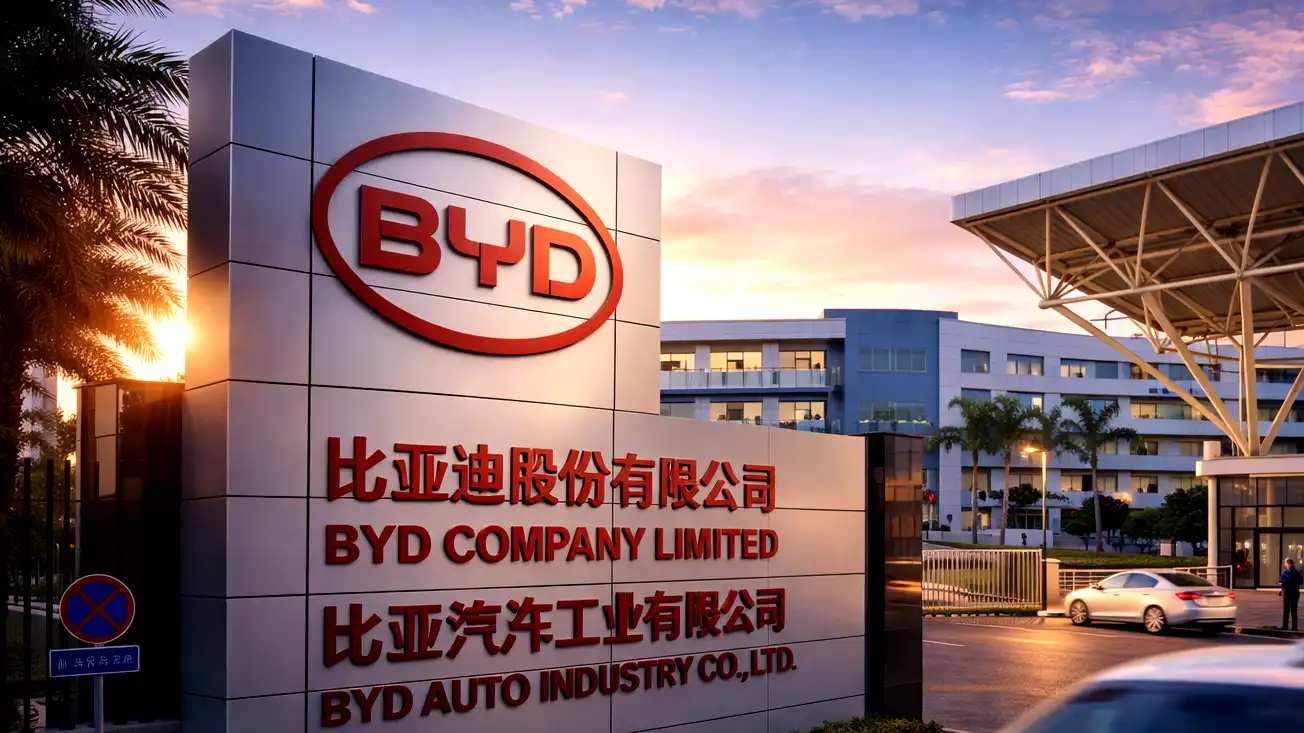
Chinese electric vehicle leader BYD has approached municipal officials to explore acquiring Stellantis’ automotive assembly plant in Brampton, Ontario, with plans to convert the facility to manufacture electric commercial buses. The surprise commercial inquiry, confirmed by Brampton Mayor Patrick Brown, marks an audacious attempt by the Shenzhen-based clean energy giant to establish a major manufacturing beachhead inside the North American automotive manufacturing heartland.
The outreach comes as global automakers navigate intense cross-border trade friction and shifting industrial policies. Canada previously enacted a 100% surtax on imported Chinese-made electric vehicles, mirroring trade barriers implemented by the United States to protect domestic automakers from subsidized foreign competition. By purchasing an existing Canadian assembly facility and manufacturing electric municipal transit buses locally, BYD is seeking a direct legal pathway to bypass 100% import tariffs, qualify for billions of dollars in Canadian clean-transit subsidies, and build an operational base inside the Great Lakes industrial basin.
However, the prospect of a Chinese automaker acquiring a major Canadian vehicle assembly plant faces formidable political, regulatory, and national security obstacles. Federal industry ministers, Ontario provincial leaders, and automotive labor unions have expressed fierce resistance to Chinese ownership of strategic automotive infrastructure. As the Canadian federal government prepares to subject any formal transaction to comprehensive national security reviews under the Investment Canada Act, BYD’s inquiry has ignited a high-stakes debate over the future of North American industrial sovereignty.
A Surprise Infiltration Into the North American Automotive Heartland
The city of Brampton, located northwest of Toronto in the province of Ontario, has served as a cornerstone of Canadian automotive manufacturing for more than three decades. The massive Brampton Assembly Plant spans several million square feet of industrial space and historically served as the exclusive global production home for flagship Chrysler and Dodge passenger vehicles.
The news that BYD made formal inquiries regarding the plant shocked the automotive industry, observers said. While BYD has expanded its manufacturing footprint across Southeast Asia, South America, and Europe by constructing new factories in Thailand, Brazil, and Hungary, the company had previously refrained from seeking direct ownership of major assembly plants in the United States or Canada due to geopolitical tensions.
Mayor Patrick Brown confirmed that municipal economic development teams received direct inquiries from BYD representatives looking into property availability, municipal utility capacity, and local industrial zoning.
While municipal leaders are eager to preserve local manufacturing employment, city officials acknowledged that any transaction involving foreign state-linked corporations requires formal approvals from provincial and federal governments.
Unpacking the Inquiry Confirmed by Brampton Mayor Patrick Brown
Mayor Brown outlined the nature of the communication, explaining that BYD’s interest centered on establishing a dedicated North American commercial electric bus and municipal fleet manufacturing hub. The Chinese automaker has long sought to expand its commercial vehicle division, which builds battery-electric transit buses, school buses, and commercial urban delivery trucks.
Mayor Brown detailed the municipal interaction:
- BYD representatives approached municipal economic development officers to evaluate the physical infrastructure, power grid connectivity, and freight rail access of the Brampton complex.
- The company expressed specific interest in repurposing the facility to manufacture heavy electric transit buses for municipal transit agencies across Canada and the United States.
- Municipal officials emphasized that while the city welcomes new industrial capital and high-wage jobs, local governments hold zero jurisdiction over foreign investment national security reviews.
- The mayor reiterated that Brampton’s primary objective remains ensuring that the plant continues to provide stable manufacturing employment for local auto workers.
The inquiry revealed that despite escalating geopolitical rhetoric between Western capitals and Beijing, Chinese clean-energy conglomerates are actively searching for commercial entry points into the North American market.
The Troubled History of Stellantis’ Retooled Ontario Assembly Complex
The vulnerability of the Brampton Assembly Plant stems from a turbulent operational transition managed by parent automaker Stellantis. Historically, the factory operated on three full production shifts, employing over 3,000 union workers represented by Unifor to build the Dodge Charger, Dodge Challenger, and Chrysler 300 sedans.
In late 2023, Stellantis ended production of those iconic internal combustion muscle cars to prepare the facility for a comprehensive clean-energy overhaul:
- Stellantis announced a joint C$3.6 billion investment program with federal and provincial governments to retool the Brampton and Windsor assembly plants for next-generation electric and flexible-fuel platforms.
- The company planned to install flexible assembly tooling to manufacture the next-generation Jeep Compass and multi-energy vehicles on the STLA Medium platform.
- However, slowing consumer adoption of pure electric vehicles across North America prompted Stellantis to delay factory retooling milestones and postpone planned production restarts.
- Hundreds of union autoworkers were placed on extended temporary layoffs, leaving the sprawling manufacturing complex largely idle and fueling community anxiety over the long-term future of the site.
The prolonged operational pause at Brampton created a window of opportunity for opportunistic competitors, prompting BYD to explore whether Stellantis would consider divesting the facility to cut fixed corporate overhead.
Bypassing the 100% Tariff Wall Through Local Canadian Assembly
The strategic logic driving BYD’s interest in Brampton is rooted in international trade law and tariff mitigation. In late 2024, the Canadian federal government implemented sweeping trade measures, enacting a 100% surtax on all electric passenger cars, buses, and commercial trucks imported into Canada from China.
The Canadian tariffs aligned directly with United States Section 301 duties, creating a unified North American protectionist wall designed to prevent subsidized Chinese electric vehicles from undercutting domestic manufacturing.
However, international trade tariffs apply exclusively to imported finished goods crossing international customs borders; they do not apply to products assembled domestically inside the country by locally registered corporate subsidiaries.
By acquiring an operational Canadian plant, hiring domestic Canadian union workers, and purchasing regional auto parts, BYD could legally classify its electric buses as domestic Canadian products, completely eliminating the 100% import penalty.
Circumventing Federal Import Surcharges on Chinese Clean Transport
Establishing a domestic Canadian manufacturing facility allows foreign automakers to transform from targeted importers into domestic industrial producers. The Canadian tariff framework contains specific provisions that differentiate between imported finished units and domestic assembly operations:
- Finished electric vehicles shipped on roll-on/roll-off ocean vessels from Chinese ports face the full 100% import surtax upon arrival at Canadian ports.
- Completely Knocked Down (CKD) kits and specialized electronic components imported for local assembly face significantly lower baseline tariffs, ranging from zero to 6%.
- Finished commercial vehicles assembled in Ontario qualify as domestic products, avoiding border surcharges when delivered to municipal buyers.
- Manufacturing vehicles in Canada allows automakers to leverage bilateral free trade provisions to export commercial vehicles to international partners across Latin America and Europe.
This trade structure provides BYD with a viable mechanism to monetize its advanced battery and motor technologies in the North American market without paying punitive border tariffs.
Capturing Lucrative Municipal Electric Transit Bus Contracts
The primary commercial target for BYD’s proposed Canadian manufacturing footprint is the rapidly expanding municipal transit sector. Canadian municipal transit operators are under strict statutory mandates from federal and provincial governments to completely decarbonize their public transportation fleets by 2035.
Federal infrastructure funding programs have allocated tens of billions of dollars to support this green transition:
- The Canada Public Transit Fund and the Zero Emission Transit Fund provide over C$30 billion in direct federal capital grants to help cities purchase zero-emission electric buses.
- Major regional transit operators, including the Toronto Transit Commission, Brampton Transit, and Ottawa’s OC Transpo, are executing multi-billion-dollar procurement plans to replace aging diesel bus fleets with battery-electric alternatives.
- Federal and provincial grant rules frequently include “Buy Canadian” local content requirements, giving preferential bidding scores to bus manufacturers with domestic assembly plants.
- North American commercial electric bus manufacturers, including New Flyer and Nova Bus, face massive order backlogs and long delivery timelines, leaving transit agencies desperate for additional manufacturing capacity.
Securing the Brampton facility would allow BYD to compete directly for these government-funded public procurement contracts, capturing hundreds of millions of dollars in taxpayer-subsidized fleet modernization spending.
The Precedent of BYD’s Previous Bus Assembly Facility in Newmarket
BYD’s interest in Ontario is not without historical precedent. In 2019, the Chinese company established a small-scale, 45,000-square-foot electric bus assembly plant in Newmarket, Ontario, just north of Toronto.
The Newmarket facility provided BYD with valuable operational experience in the Canadian market:
- The facility assembled an initial fleet of ten 40-foot electric transit buses for the Toronto Transit Commission, marking the transit agency’s first large-scale deployment of pure battery-electric buses.
- The plant hired local Canadian union workers, demonstrating that BYD could collaborate with domestic labor organizations.
- The facility sourced specialized parts from local Ontario tier-one and tier-two automotive component suppliers to meet regional content benchmarks.
- However, the small physical size of the Newmarket plant limited annual output to roughly 40 to 50 buses per year, preventing BYD from bidding on massive, multi-hundred-unit fleet contracts.
Acquiring the multi-million-square-foot Brampton complex would provide BYD with the massive physical scale needed to manufacture thousands of commercial vehicles annually, turning Ontario into the company’s primary export engine for North America.
National Security Reviews and Regulatory Barriers Under the Investment Canada Act
Despite the economic logic of the proposal, BYD faces nearly insurmountable political and regulatory barriers in Ottawa. The Canadian federal government has established an aggressive national security screening framework designed specifically to protect sensitive domestic industries from foreign state-directed influence.
Under the Investment Canada Act, any proposed acquisition of a Canadian business by a non-Canadian entity is subject to mandatory regulatory review by the Department of Innovation, Science and Economic Development.
In recent years, the Canadian government has amended foreign investment guidelines to establish strict scrutiny over investments originating from non-market economies, particularly in critical minerals, advanced manufacturing, and connected digital infrastructure.
Federal Screening Protections Over Critical Automotive Infrastructure
Federal industry ministers hold sweeping statutory powers to review, condition, or outright block foreign corporate takeovers that threaten national security or economic sovereignty. If BYD attempts to formalize an acquisition of the Brampton plant, federal regulators will launch an exhaustive national security assessment.
Federal national security reviews focus on several critical threat categories:
- Supply Chain Vulnerabilities: Assessing whether foreign ownership of major assembly plants could allow a foreign state to disrupt domestic transportation manufacturing during international geopolitical crises.
- Telematics and Data Security: Modern electric commercial buses incorporate high-definition optical cameras, LiDAR sensors, and continuous cellular connections that collect sensitive real-time mapping data along urban transit routes.
- Subsidized Market Distortion: Evaluating whether the purchasing entity receives state-directed capital subsidies that distort free-market competition and harm unsubsidized domestic competitors.
- Intellectual Property Protection: Ensuring that domestic Canadian manufacturing innovations and advanced materials engineering remain protected from unauthorized technology transfers.
Federal officials have repeatedly emphasized that Canada will not permit foreign state-subsidized corporations to acquire critical domestic manufacturing assets, making federal approval of a BYD takeover virtually impossible.
Ontario Premier Doug Ford’s Resistance to Chinese Auto Ownership
Political opposition is equally fierce at the provincial level. Ontario Premier Doug Ford and his cabinet have built their economic identity around transforming Ontario into an integrated, end-to-end electric vehicle and battery manufacturing powerhouse, securing over C$45 billion in historic investments from Stellantis, Volkswagen, Honda, and General Motors.
Premier Ford has adopted an uncompromising public stance against Chinese automotive expansion into Ontario:
- Declaring that the provincial government will do everything within its legal power to prevent Chinese electric vehicle manufacturers from establishing assembly operations in Ontario.
- Emphasizing that allowing subsidized Chinese automakers into Ontario would undermine billions of dollars in taxpayer-funded subsidies provided to Western automotive partners.
- Warning that Chinese-built connected vehicles present significant cyber and data surveillance risks for Canadian citizens.
- Reaffirming that provincial economic development grants, workforce training funds, and municipal tax abatements will be denied to foreign corporations originating from non-market economies.
With both federal and provincial governments aligned in fierce opposition, any attempt by BYD to acquire an Ontario automotive factory faces an impenetrable wall of political and regulatory resistance.
Stellantis’ Strategic Dilemma and North American Production Realignments
For Stellantis, the unsolicited interest from BYD highlights the immense strategic pressures confronting the multinational automaker. Formed through the merger of Fiat Chrysler Automobiles and the PSA Group, Stellantis operates an expansive manufacturing footprint across the United States, Canada, Mexico, and Europe.
However, the automaker has struggled with declining North American vehicle sales, bloated dealership inventories, and falling corporate profit margins.
Chief Executive Officer Carlos Tavares has faced growing criticism from corporate shareholders, automotive labor unions, and dealership networks over product delays and operational idling across North American plants.
While Stellantis is under intense financial pressure to cut fixed manufacturing overhead and reduce idle capacity, selling a flagship Canadian assembly plant to an aggressive Chinese competitor would create a public relations and political disaster for the corporate giant.
The C$3.6 Billion Retooling Commitment and Labor Union Guarantees
Stellantis moved quickly to dispel speculation regarding a potential plant sale, issuing statements reaffirming its long-term commitment to its Canadian manufacturing operations and its partnership with domestic autoworkers.
The company’s contractual and financial commitments make divesting the Brampton facility legally and politically difficult:
- Stellantis signed binding collective bargaining agreements with the Unifor labor union, guaranteeing specific product allocations and multi-billion-dollar retooling investments for the Brampton workforce.
- The automaker secured hundreds of millions of dollars in federal and provincial financial subsidies tied directly to maintaining specific employment baselines in Ontario.
- Violating union contracts by selling an active plant to a non-signatory foreign competitor would trigger nationwide industrial strikes across Stellantis facilities in Windsor and across the United States.
- Terminating government subsidy agreements would require Stellantis to repay hundreds of millions of dollars in public capital to federal and provincial treasuries.
Management reiterated that the Brampton facility remains an integral pillar of its long-term manufacturing roadmap, confirming that the plant will resume vehicle assembly once multi-energy platform retooling is finalized.
Navigating Excess Production Capacity Amid Shifting EV Consumer Demand
The core operational challenge facing Stellantis is managing excess manufacturing capacity in an era of unpredictable consumer demand. Slower-than-expected electric vehicle sales growth across North America has forced automakers to adopt flexible manufacturing strategies.
Stellantis is recalibrating its North American production network:
- Adapting vehicle platforms to assemble internal combustion engines, extended-range hybrids, and pure battery-electric powertrains on the exact same assembly line.
- Adjusting production shift models to align vehicle output with real-time retail sales velocities, avoiding expensive dealership inventory buildups.
- Consolidating component manufacturing and battery module assembly within regional supplier hubs to lower logistics overhead.
- Accelerating the launch of high-margin hybrid sport utility vehicles and light pickup trucks to generate near-term cash flow.
By adopting multi-energy manufacturing flexibility, Stellantis aims to restore production volume to the Brampton facility without taking on excessive financial risk in pure electric platforms.
Strategic Implications for the North American Free Trade Landscape
The controversy surrounding BYD’s interest in the Brampton plant carries profound implications for the broader North American automotive and trade landscape. The automotive sector represents the economic backbone of the United States-Mexico-Canada Agreement (USMCA), which governs duty-free commerce across the continent.
Under regional trade rules, vehicles manufactured within North America must satisfy strict regional value content rules, requiring that 75% of a vehicle’s components originate from within North America to qualify for duty-free cross-border shipment.
The prospect of Chinese automakers attempting to establish manufacturing footholds inside Canada or Mexico to access the broader North American market has elevated automotive trade to a top-tier national security issue in Washington and Ottawa.
Protecting Cross-Border Supply Chains Ahead of the 2026 USMCA Review
The timing of BYD’s Canadian outreach is particularly sensitive as the United States, Canada, and Mexico prepare for the mandatory 2026 joint review of the USMCA. The upcoming review provides a formal mechanism for all three signatory nations to revisit rules of origin, dispute resolution procedures, and market protections.
American lawmakers and trade negotiators have expressed intense concern regarding Chinese automotive investments across North America:
- Congressional leaders in Washington warned that Chinese automakers could attempt to use Canadian or Mexican assembly plants as backdoors to flood the United States market with subsidized vehicles.
- United States trade officials are demanding that the 2026 USMCA review incorporate strict new rules of origin that explicitly exclude components produced by foreign state-owned or state-subsidized enterprises.
- Canadian trade negotiators recognize that allowing Chinese automakers to establish manufacturing hubs in Ontario would jeopardize Canada’s duty-free automotive export access to the massive United States market.
- Maintaining total policy alignment with Washington on Chinese trade restrictions is viewed in Ottawa as essential to protecting Canada’s C$40 billion annual automotive export industry.
To preserve its vital cross-border trade relationship with the United States, Canada will continue to maintain an aggressive, unyielding stance against Chinese automotive investments.
The Long-Term Horizon for Chinese Automakers Expanding into Western Markets
While BYD’s attempt to acquire the Brampton plant faces near-certain rejection, the episode illustrates the relentless international expansion drive of China’s automotive industry. Facing domestic production overcapacity and intense price wars at home, Chinese electric vehicle manufacturers are executing aggressive global expansion strategies.
Chinese automakers are adapting their global investment playbooks:
- Expanding manufacturing mega-plants in neutral emerging markets across Latin America, Southeast Asia, and the Middle East, capturing dominant market shares in non-aligned nations.
- Building localized assembly facilities within European Union member states that offer favorable investment terms, such as Hungary and Spain, to bypass European trade tariffs.
- Forming strategic technical joint ventures and licensing agreements with established Western legacy automakers to monetize proprietary battery and motor innovations without triggering political backlash.
- Investing in localized workforce training, regional supply chain partnerships, and community benefit agreements to build local political goodwill in target markets.
As Chinese automakers scale global operations, Western governments and legacy carmakers will face continuous pressure to balance free-market investment principles with national security protections and industrial competitiveness.
BYD’s inquiry into acquiring the idled Stellantis assembly plant in Brampton, Ontario, marks an audacious attempt to breach the 100% tariff wall surrounding North America’s clean transport market. By exploring options to transform an iconic muscle-car factory into a municipal electric bus manufacturing hub, the Chinese clean-energy giant demonstrated its determination to capture a share of the Western public transit market. However, confronting the strict national security protections of the Investment Canada Act, unified political resistance from federal and provincial leaders, and Stellantis’ binding commitments to its union workforce, BYD’s Canadian manufacturing ambitions face an impenetrable barrier. As North America hardens its trade perimeter ahead of the 2026 USMCA review, the battle over Brampton proves that the global electric vehicle revolution is no longer just a commercial technology race; it is a defining struggle for industrial sovereignty, economic security, and geopolitical power.