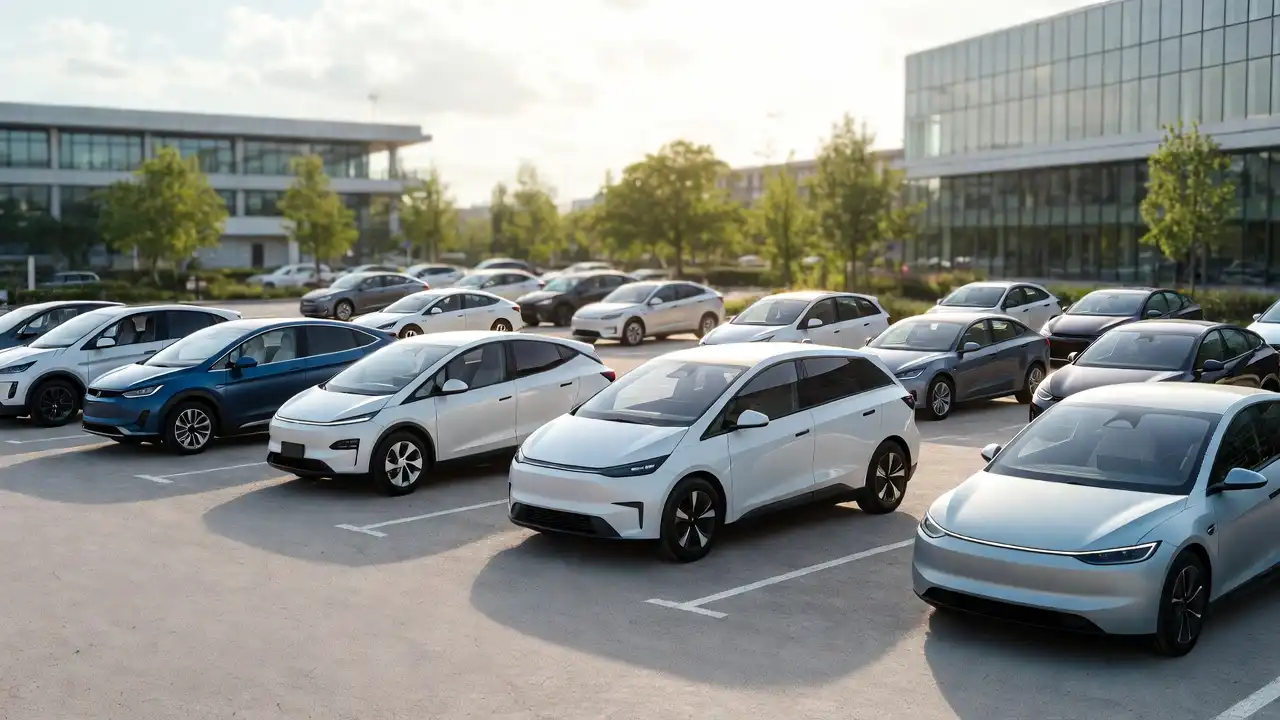
Shares of major Chinese electric vehicle manufacturers dropped sharply across Asian trading desks after regulatory authorities initiated the largest automotive recall in the nation’s history. The sweeping safety campaign affects approximately 4.3 million electric and hybrid vehicles across eleven major automotive brands. The government action targets emergency door release systems that fail to function properly during severe traffic collisions, leaving vehicle occupants trapped inside burning or disabled cabins.
The record recall rattled equity markets, sending shockwaves through an electric mobility sector already navigating intense domestic price competition. Technology conglomerate Xiaomi led the market declines as its shares tumbled 4%, while Li Auto dropped 3% and Xpeng shed 2.66%. Industry giant BYD fell 2%, Leapmotor lost 1.7%, Geely Automobile declined 1.1%, and NIO slipped 1%. In American pre-market trading, Tesla came under heavy pressure as regulatory filings revealed that the American automaker accounts for nearly 70% of the entire recall volume.
The joint action by China’s State Administration for Market Regulation and the Ministry of Industry and Information Technology marks a decisive turning point in automotive engineering. For over a decade, automakers prioritized aerodynamic efficiency and minimalist styling by replacing traditional mechanical door handles with flush, pop-out electronic buttons. The massive recall demonstrates that regulatory authorities are willing to penalize modern styling trends to guarantee passenger survival during catastrophic electrical failures.
The Largest Automotive Safety Recall in Chinese History
The scale of the current recall exceeds that of every previous vehicle callback campaign in the history of China’s domestic automotive market. While earlier recalls addressed localized battery management firmware or individual steering components, this regulatory action strikes at a fundamental physical touchpoint shared by millions of consumer cars on the road today.
The intervention arrived during a historic boom for clean-energy transport. New Energy Vehicles accounted for 60.4% of all new passenger car sales in China during July alone, with monthly domestic deliveries reaching approximately 1.56 million units. In addition, Chinese automotive plants exported roughly 553,000 electric vehicles to international markets over the same monthly period, representing a 145.5% year-over-year surge.
However, the rapid pace of electric vehicle adoption has exposed unforeseen engineering vulnerabilities. By ordering eleven major car brands to file simultaneous remediation plans, state regulators are signaling that rapid technological modernization must not outpace baseline passenger safety standards.
Breaking Down the 4.3 Million Vehicles Across Eleven Carmakers
The regulatory filings submitted to the State Administration for Market Regulation span eleven domestic and international carmakers. The targeted vehicles include a wide cross-section of entry-level commuter sedans, luxury performance fastbacks, and high-volume commercial sport utility vehicles.
While foreign brands face heavy exposure, China’s top domestic electric vehicle pioneers represent a major portion of the affected fleet. Chinese manufacturers filing comprehensive recall notices include:
- Xiaomi, recalling approximately 390,000 units of its popular SU7 electric sports sedan range.
- Leapmotor, initiating the largest product callback in the young automaker’s corporate history.
- Xpeng, submitting remediation filings for its flagship smart sedans and crossover utility platforms.
- Geely Automobile, alongside its high-end premium electric performance sub-brands Zeekr and Lynk & Co.
- State-owned legacy automotive groups, including BAIC Motor, Chery Automobile, Dongfeng Motor Corporation, and FAW Hongqi.
Automotive market analysts note that having eleven major manufacturers issue simultaneous recall notices under the exact same technical category is unprecedented. The coordinated filing highlights how universally the automotive industry adopted electronic flush handles without conducting sufficient real-world crash testing.
Tesla’s 2.98 Million Vehicle Exposure and Domestic Impact
Tesla absorbed the largest single hit from the regulatory crackdown, accounting for nearly 2.98 million of the 4.3 million recalled vehicles. The American electric vehicle pioneer popularized flush, retractable door handles when it launched the Model S more than a decade ago, establishing an aesthetic benchmark that rivals quickly copied.
According to official filings, Tesla’s recall encompasses both imported premium units and high-volume vehicles built at Gigafactory Shanghai. The affected domestic production batch includes 973,156 Model 3 sedans manufactured between March 2019 and April 2026, as well as 1,956,713 Model Y crossover utility vehicles built between November 2020 and April 2026.
The recall also covers imported luxury vehicles, including 35,590 Model 3 units, 8,328 Model X sport utility vehicles, and 2,123 Model S sedans. In a secondary, parallel filing, Tesla announced a separate safety remediation program for 2.74 million domestic vehicles to address driver-attention monitoring systems that fail to provide adequate alerts during automated steering operation.
The dual regulatory actions represent a major operational headache for Tesla in its most profitable international manufacturing and retail market.
Engineering Flaws Behind Concealed Electronic Door Handles
Concealed, flush-mounted door handles initially gained popularity as an aerodynamic enhancement. By retracting motorized handles into the vehicle’s bodywork while in motion, automakers reduced aerodynamic drag coefficients by 1.5% to 3%, directly extending the driving range of battery-powered vehicles.
Furthermore, flush exterior handles provided vehicles with a seamless, futuristic profile that appealed to tech-focused consumer buyers. Inside vehicle cabins, designers removed traditional mechanical levers, replacing them with electronic micro-switch pushbuttons integrated into door armrests.
However, substituting direct mechanical cables with electronic actuators introduced critical single-point vulnerabilities. Unlike traditional mechanical latches that operate via physical steel cables and spring mechanisms, electronic door systems depend entirely on continuous low-voltage electrical power to unlatch doors.
The Failure of Low-Voltage 12-Volt Systems in High-Impact Crashes
Modern electric vehicles utilize high-voltage traction batteries ranging from 400 volts to 800 volts to drive electric propulsion motors. However, standard auxiliary components—including interior lighting, digital infotainment screens, window motors, and electronic door latches—rely on a separate 12-volt low-voltage electrical system.
When a vehicle experiences a high-speed collision, onboard safety pyrotechnic switches immediately disconnect the main high-voltage traction battery to prevent thermal runaway and structural battery fires. In severe impacts, the localized 12-volt auxiliary battery or its wiring harnesses can be severed, crushed, or short-circuited.
Once the vehicle loses 12-volt power, electronic pushbuttons stop responding instantly. If an electric car catches fire following an accident, passengers have only seconds to escape smoke inhalation and toxic fumes. Without an intuitive, easily accessible mechanical backup release, panic-stricken occupants can become trapped inside a dark cabin.
Interior Camouflage and Trapped Occupant Rescue Hazards
While most electric vehicles include backup mechanical pull cords or hidden release levers, automotive designers frequently hide these emergency controls to preserve sleek cabin styling. In many modern vehicle interiors, emergency mechanical releases are located deep inside door storage pockets, beneath rubber bottom mats, or behind pop-off plastic trim panels.
Furthermore, interior mechanical release levers often match the exact color and texture of surrounding cabin upholstery. In a chaotic post-crash environment filled with deployment smoke from airbags, shattered glass, and darkness, vehicle occupants cannot spot these camouflaged handles.
The safety risk is equally severe for emergency first responders outside the car. When an electric vehicle loses auxiliary battery power, motorized exterior flush handles fail to pop outward. Firefighters and bystanders attempting to rescue unconscious crash victims cannot find physical grip points to pull doors open from the outside, forcing rescue crews to smash reinforced acoustic side windows or use heavy hydraulic extraction tools, wasting valuable rescue time.
Automatic Window Lowering and Physical Warning Label Solutions
To resolve the safety defect without requiring multi-billion-dollar mechanical door redesigns on existing customer cars, automakers are deploying a hybrid combination of physical retrofits and wireless over-the-air software updates.
Nine of the eleven affected carmakers, including Tesla and Xiaomi, will supply physical warning labels free of charge to all vehicle owners. Authorized service centers will install high-contrast, phosphorescent warning stickers directly adjacent to hidden emergency mechanical releases, ensuring that passengers can locate manual levers in total darkness.
In parallel, automakers are rolling out immediate firmware updates to alter crash-safety control logic:
- Automatically triggering high-speed window-lowering mechanisms immediately upon airbag deployment.
- Releasing all electronic door locking solenoids before the main 12-volt auxiliary circuit disconnects.
- Deploying hazard lighting and audible interior chime sequences to guide disoriented passengers toward manual emergency handles.
- Programming high-voltage battery management computers to preserve auxiliary power routing to cabin egress circuits during minor collisions.
By automatically lowering side windows following an impact, automakers ensure that passengers can climb out of the vehicle or allow external rescuers to access interior manual door releases even if exterior handles remain locked.
Regulatory Scrutiny and the Impending 2027 Design Ban
The massive recall serves as an enforcement bridge toward stringent new vehicle manufacturing standards. Chinese regulatory agencies had already signaled their growing impatience with styling gimmicks that compromise crash survival rates.
In early 2026, the Ministry of Industry and Information Technology published the mandatory Technical Requirements for Automobile Door Handle Safety. This sweeping standard establishes strict mechanical performance thresholds, making China the first major automotive manufacturing nation to phase out purely electronic concealed door designs.
The new national standard takes formal effect on January 1, 2027, giving automakers a limited transition window to re-engineer their vehicle platforms or face total sales bans across the Chinese mainland.
Mandating Mechanical Releases Within 300 Millimeters of Door Edges
The upcoming 2027 safety standard establishes precise physical and ergonomic requirements for vehicle egress hardware. Automakers will no longer be permitted to hide manual emergency mechanisms inside storage cubbies or under removable floor panels.
Under the new regulatory code, all production passenger vehicles sold in China must comply with the following core engineering rules:
- Exterior door handles must feature an integrated physical mechanical release that emergency workers can operate without electrical power.
- Recessed exterior handle cavities must provide a minimum physical clearance depth to allow rescuers wearing heavy emergency gloves to grab the handle firmly.
- Interior emergency mechanical releases must sit in plain sight within 300 millimeters of the door edge, directly along the natural reach path of an occupant.
- Interior emergency handles must feature high-contrast visual markings and tactile ridges to distinguish them from surrounding cabin materials.
These strict geometric mandates will force global automotive styling studios to abandon ultra-flush motorized door systems in favor of semi-recessed mechanical pull handles, permanently changing the exterior appearance of future electric vehicles.
Global Repercussions for Automakers in American and European Markets
China’s aggressive regulatory stance is creating immediate ripple effects across international safety agencies. In the United States, the National Highway Traffic Safety Administration has faced mounting consumer complaints and legal petitions regarding electronic door latch failures in popular electric vehicles.
While American regulators previously reviewed petitions regarding Tesla door handles, safety advocacy groups are calling on federal authorities to adopt binding rules similar to China’s 2027 standard. Proposed legislative measures in the United States Congress seek to require fail-safe mechanical door releases across all commercial passenger vehicles.
European regulators are following a similar path. The United Nations Economic Commission for Europe is finalizing updated safety amendments requiring automotive manufacturers to prove that electronic door systems unlock reliably during total power loss tests.
Because global automakers design vehicle platforms for worldwide distribution, regulatory bans in China and Europe will force carmakers to standardize mechanical door releases across their global vehicle lineups.
Market Reactions and Investor Sentiment Across the EV Sector
The stock market’s negative reaction to the recall highlights growing investor sensitivity surrounding electric vehicle safety and regulatory compliance. The Chinese electric vehicle market is locked in a fierce price war, with automakers slashing retail prices by 10% to 20% to defend domestic market share.
In this hyper-competitive environment, sudden recall campaigns create severe financial headwinds. Beyond the direct logistics expense of mailing warning kits and updating firmware across millions of cars, product recalls inflict lasting damage on brand equity and consumer trust.
Investors worry that heightened regulatory scrutiny will delay upcoming new vehicle launches and inflate engineering costs, squeezing already narrow corporate profit margins.
Stock Slump Across Xiaomi, Xpeng, Li Auto, and Geely
The sharp drop in electric vehicle equities reflects broader institutional reallocations away from automotive growth stocks. Xiaomi’s 4% stock tumble was particularly notable, as the consumer electronics giant had enjoyed massive investor enthusiasm following the debut of its SU7 electric sedan.
Having 390,000 SU7 models pulled into a nationwide safety recall just months after entering the automotive industry presents an early reputational challenge for Xiaomi’s executive leadership. Investors fear that safety concerns could dampen pre-orders for upcoming luxury performance trims and planned sport utility variants.
Xpeng’s 2.66% slide and Li Auto’s 3% decline underscore the broader sector contagion. Even though Li Auto was not a primary target in the door handle callback, investors sold off shares across the entire peer group, anticipating that state regulators would launch additional compliance audits targeting advanced driver assistance systems and battery enclosure integrity.
Geely’s 1.1% drop and Leapmotor’s 1.7% loss demonstrate that mid-tier manufacturers face significant financial strain when required to modify hundreds of thousands of vehicles in active circulation.
Balancing Futuristic Design Aesthetics Against Fundamental Passenger Safety
The door handle recall marks a broader cultural and technical correction within the automotive design world. For the past decade, electric vehicle marketing has emphasized software interfaces, minimalist button-free dashboards, and seamless exterior surfaces.
Automotive designers treated the automobile as an oversized consumer electronics gadget, prioritizing sleek lines over proven mechanical ergonomics. However, when critical vehicle touchpoints fail during life-or-death emergencies, the human cost becomes unacceptable.
Industry leaders now recognize that true technological sophistication requires building resilient, idiot-proof safety redundancies. Moving away from concealed motorized gadgets back toward dependable mechanical releases represents a necessary maturation of the global electric vehicle industry. Automakers that balance cutting-edge software intelligence with rugged physical safety will win long-term consumer trust in an increasingly crowded global market.
The record recall of 4.3 million electric vehicles across China signals the end of the flush electronic door handle era. By penalizing eleven major carmakers and enacting strict mechanical design standards for 2027, regulatory authorities have prioritized human life over aesthetic minimalism. As market valuations adjust and automakers deploy over-the-air updates and emergency warning labels, the global automotive sector must adapt to a new regulatory reality where passenger safety remains the ultimate metric of engineering excellence.