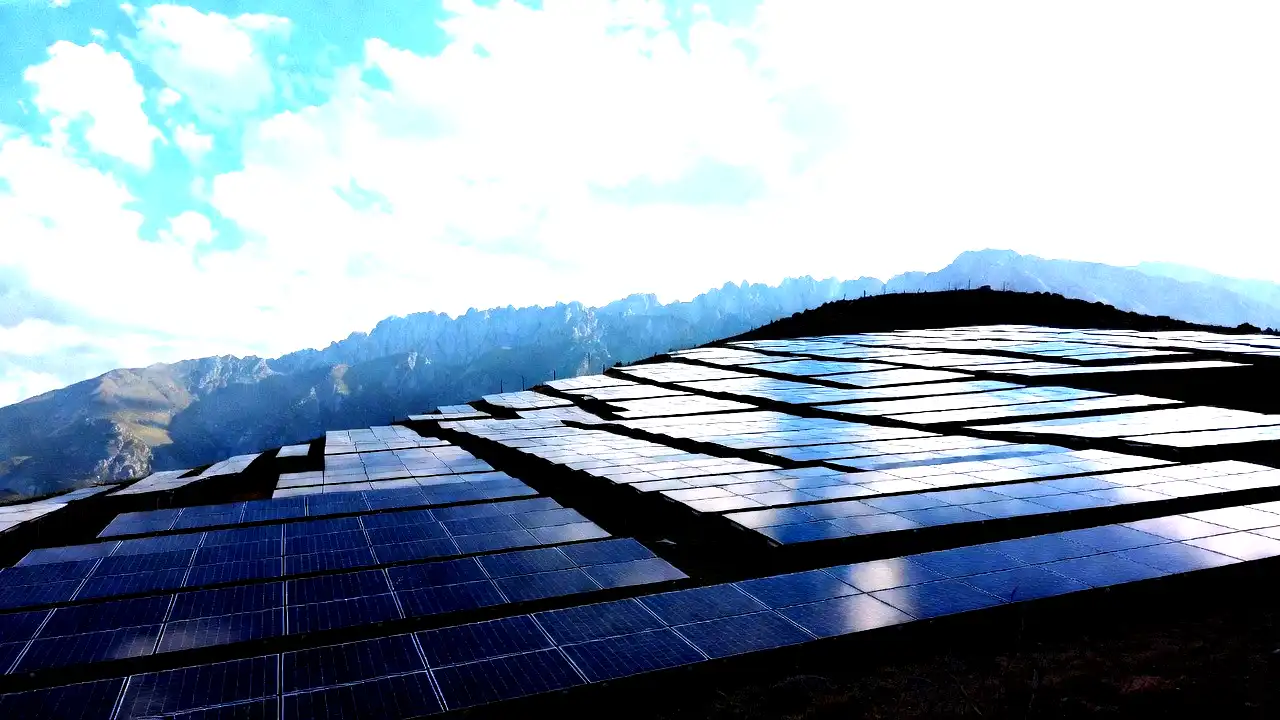
For decades, the global conversation surrounding energy and climate change has been dominated by a mindset of scarcity and conservation. Consumers have been repeatedly told to turn off lights, turn down their thermostats, buy smaller cars, and sacrifice daily comfort to reduce their carbon footprint and save the planet. This conservation narrative was a logical response to an energy system built on finite, polluting fossil fuels.
However, a massive technological shift is turning this old paradigm completely on its head. The rapid, exponential rise of solar panels, wind turbines, and utility-scale battery storage is ushering in an era of clean power abundance.
We are entering a world where, during peak hours of the day, we produce far more clean electricity than our grids can currently transmit or consume. Instead of managing scarcity, the challenge of the next decade will be learning how to consume the staggering surplus of clean energy we are creating.
This transition has reached a historic milestone. On July 1, 2026, the Australian government’s revolutionary “Solar Sharer Offer” officially went into effect across several states, requiring electricity retailers to provide households with at least three hours of free electricity in the middle of the day.
Similar reforms are gaining momentum across Europe and the United States, proving that free and ultra-cheap electricity is not a temporary market glitch.
It is the defining route to global energy abundance. If we can successfully align our economic consumption with the natural, midday peaks of renewable energy generation, we can unlock unlimited clean power to run our homes, charge our electric vehicles, and fuel the rapid growth of artificial intelligence.
The Rise of Solar Curtailment and the Zero-Cost Reality
To understand why electricity is starting to become free, we must examine the concept of “curtailment.” Curtailment occurs when solar farms and wind installations generate more electricity than the regional power grid can safely absorb or transmit to population centers.
Because electricity grids must maintain a precise balance between supply and demand to prevent transformers from blowing and lines from overloading, grid operators are often forced to command clean energy generators to turn off their systems.
This discarded energy represents a massive waste of clean electricity. Yet, as solar deployment continues to break global records, curtailment is rising at an accelerating rate.
BloombergNEF’s New Energy Outlook 2026 projects that solar will become the world’s single largest source of electricity within the next six years, driven by a massive manufacturing supply glut, rapid technology advances, and falling solar module prices.
Sizing the “Free” Electricity Opportunity
This massive overbuild of solar capacity means that periods of ultra-cheap—and sometimes effectively negative—electricity prices are becoming a regular feature of modern life.
When the sun is shining at its peak during midday hours, the wholesale price of electricity routinely plunges to zero or dips into negative territory, meaning generators must actually pay the grid to take their power.
BloombergNEF projects that curtailment-driven “free” or near-free electricity will be available for 1,000 to 3,000 hours per year in key global markets by 2030. This is the equivalent of getting up to one-third of our yearly power for virtually nothing.
Rather than viewing this negative pricing as a market failure, forward-thinking policy experts argue that it represents a massive economic opportunity. The goal of modern energy policy should not be to restrict this oversupply, but to build the smart infrastructure required to soak up every single free kilowatt.
Shifting from Efficiency to Flexibility
For years, energy policy focused heavily on improving energy efficiency—designing appliances that use fewer watts of electricity to perform the same task. While efficiency remains important, the era of clean power abundance requires a shift in focus toward “energy flexibility.”
Energy flexibility means adjusting the timing of our energy consumption to match the periods when clean electricity is most abundant and cheapest.
If we can automate our homes, offices, and factories to run their most energy-intensive processes during peak solar hours, we can slash our energy bills to zero while simultaneously reducing our reliance on dirty fossil-fuel power plants during evening demand peaks.
Real-World Experiments in Free Power: Australia’s Solar Sharer Offer
Australia has become the global testbed for this new energy paradigm, largely because the country has embraced rooftop solar at a faster rate than almost any other nation.
More than one-third of Australian households now have solar panels on their roofs, creating a massive midday electricity surplus that routinely floods the national grid.
The Mechanics of the July 1, 2026 Launch
To manage this solar deluge and lower utility bills for everyday citizens, the Australian government launched the “Solar Sharer Offer” on July 1, 2026. Under the new program, electricity retailers in New South Wales, South Australia, and Southeast Queensland are legally required to offer households a tariff that includes at least three hours of free electricity during the middle of the day, typically between 11:00 AM and 2:00 PM.
Crucially, consumers do not need to own their homes or have solar panels installed on their roofs to participate in the program. The only technological requirement is a smart meter, which allows the utility provider to track exactly when the household consumes its power.
By offering free electricity to everyone, including renters and low-income families who cannot afford solar installations, the program represents a highly progressive piece of retail energy politics that distributes the benefits of the clean energy transition fairly across society.
Shifting Demand to Soak Up the Sun
The economic goal of the Solar Sharer Offer is to encourage consumers to shift their heaviest energy loads to the middle of the day.
Households participating in the program are utilizing simple appliance timers and smart home automation tools to schedule their pool pumps, electric vehicle chargers, washing machines, and hot water boilers to run exclusively during the free three-hour window.
By shifting this demand to the middle of the day, consumers are saving between $0.20 and $0.28 per kilowatt-hour consumed during those periods.
At the same time, this shifted demand helps soak up the grid’s excess solar generation, reducing the strain on local transformers and lowering the need for utility companies to pay for expensive grid upgrades or fossil-fuel backup generators during the evening peak hours when prices typically skyrocket.
The Hidden Obstacles: Reforming Market Structures Designed for the Fossil Era
While the potential of clean power abundance is immense, the transition is being held back by regulatory frameworks and market structures that were designed for a completely different era of energy generation.
For nearly a century, electricity grids were built around highly centralized, coal-fired and natural gas power plants that could easily turn their production up or down to match consumer demand.
Our current retail electricity tariffs, network charges, and grid connection rules were written specifically to manage this centralized, fossil-fuel-driven model.
In most countries, retail electricity bills do not reflect the real-time wholesale price of power. Even when the wholesale price of solar plunges to zero or goes negative during the day, consumers continue to pay a flat, high retail rate because of rigid utility contracts, added network transmission fees, and government levies.
This means that while clean energy is cheaper than ever, households and businesses are not seeing their bills fall.
The Battle Over Nodal and Zonal Pricing
To unlock the benefits of clean power abundance, governments must reform their wholesale electricity markets. One of the most contentious debates currently occurring in the United Kingdom and Europe is whether to split national power systems into smaller, regional pricing zones, known as nodal or zonal pricing.
Currently, the UK operates as a single wholesale market, meaning a wind farm in Scotland and a business in London pay and receive the same price for electricity.
However, because Scotland has an abundance of wind power but low electricity demand, the grid operator must frequently pay Scottish wind generators to turn off their turbines because the physical transmission cables cannot carry the power south to London.
By splitting the UK into different pricing zones, the price of power in Scotland would plunge to zero during windy days, unleashing free electricity for local households and attracting energy-intensive industries to relocate to the region.
While green power developers warn that this regional pricing could create investment uncertainty, energy retailers like Octopus Energy point out that aligning prices with physical grid realities is the only way to deliver on promises to lower bills and accelerate decarbonization.
Unleashing Mass Electrification: From Data Centers to Green Hydrogen
If we can successfully reform our market structures and deliver free electricity to consumers, we can unlock a massive wave of industrial innovation and economic growth.
The Extreme Power Demands of Artificial Intelligence
The rapid development of generative artificial intelligence and high-performance computing has triggered an unprecedented surge in global electricity demand. Hyperscale data centers operated by tech giants like Microsoft, Google, and Amazon require massive, constant pools of electricity to run their advanced AI chips and cooling systems.
These companies have committed to sourcing 24/7 carbon-free electricity to power their operations, but the sheer scale of their demand is straining local grids and threatening to slow down the AI revolution.
Free midday electricity provides an elegant solution to this computing bottleneck. While some data center workloads must run continuously, many non-time-sensitive tasks—such as training large language models, processing back-office data, or executing massive cloud backups—can be scheduled flexibly.
By utilizing advanced load-shifting software, tech companies can run these heavy computing workloads during the peak hours of free, solar-driven electricity, slashing their operating costs while achieving true zero-emission operations.
Unlocking the Green Hydrogen Economy
A similar opportunity exists in the clean industrial sector, particularly in the production of green hydrogen. Green hydrogen, produced by splitting water into hydrogen and oxygen using an electrolyzer powered by renewable energy, is viewed as a vital tool to decarbonize heavy industries like steel, shipping, and fertilizer production.
However, the commercial viability of green hydrogen has been held back by the high cost of the electricity required to run the electrolyzers.
By designing electrolyzers to operate dynamically—turning on only when clean electricity prices drop to zero during peak solar and wind hours—companies can produce green hydrogen at a highly competitive price point.
This “curtailment-fueled” industrial model transforms what was once wasted, discarded electricity into a valuable commodity, providing heavy industries with the low-cost, zero-emission fuel they need to clean up their operations.
The Philosophy of Energy Abundance: Moving Beyond Scarcity
The transition to free electricity requires a fundamental shift in how we think about environmental protection and human progress.
Traditional environmentalism was built on a “scarcity mindset.” It argued that because resources are finite, humanity must reduce its consumption, restrict economic growth, and learn to live with less.
The abundance movement, which focuses on supply-side solutions to scarcity issues across housing, healthcare, and energy, offers a far more optimistic and powerful vision of the future.
It proposes that the solution to our environmental challenges is not to restrict demand, but to actively expand our material resources, opportunity, and productivity through the rapid deployment of clean technologies.
By overbuilding solar and wind capacity, we can ensure that we always have a massive surplus of clean electricity, even on cloudy or windless days.
This deliberate oversupply will naturally create thousands of hours of free, zero-emission electricity every year.
We can then use this abundant, free power to run energy-intensive climate defense technologies, such as direct air capture systems that pull carbon dioxide directly from the atmosphere, or large-scale desalination plants that provide fresh water to drought-prone agricultural regions.
In a world of clean energy abundance, we no longer have to choose between saving the planet and expanding human prosperity.
Conclusion and Future Outlook
The historic implementation of Australia’s Solar Sharer Offer on July 1, 2026, marks the beginning of a highly exciting chapter in the global energy transition. It proves that free electricity is not a utopian dream or a financial gimmick; it is the ultimate, inevitable prize of a clean power system.
While significant challenges remain, including the need to upgrade aging grid infrastructure, deploy advanced battery storage systems, and reform outdated market structures, the direction of travel is clear.
As more countries adopt smart retail pricing, distribute smart meters, and launch free midday power programs, the old mindset of energy scarcity will fade into history.
By embracing the reality of clean power abundance and aligning our economic consumption with the natural rhythms of our planet, we can finally build a fully electrified, zero-emission world where cheap, clean energy powers opportunity, dignity, and prosperity for all.